
OPENING HOOK
You’ve probably heard it in the news, maybe chatted about it at the water cooler. Something strange is happening to our money. The dollar in your pocket isn’t stretching as far as it used to. Inflation is creeping up, the value of our currency seems to be on a downward spiral. But why? What’s causing this? Today we’ll journey back in time to unravel this riddle, because as it turns out, history might have the answers we’re looking for.
TIME PORTAL
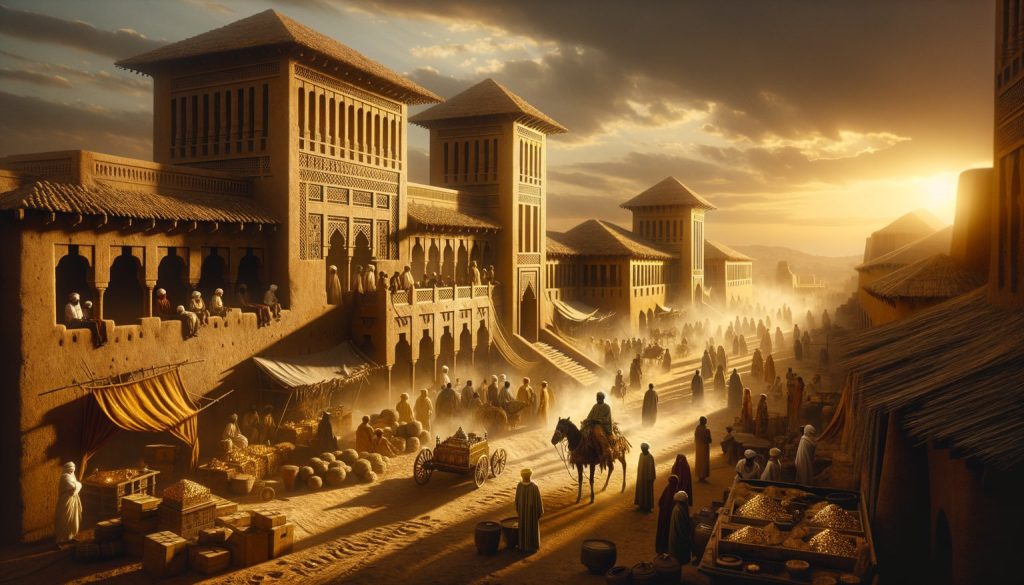
Picture this: the year is 1324, and we’re standing amidst the excitement and hustle of the bustling city of Cairo, heart of the Islamic world. Suddenly, a spectacle unfolds. A caravan of camels, horses, and men stretch as far as the eye can see, adorned in gold, the bright African sun catching every glint and sparkle. This is Mansa Musa, emperor of the Mali Empire, and he’s on his way to Mecca for his Hajj pilgrimage. His wealth is beyond imagination, so vast that he reportedly gave away enough gold to cause a currency crisis in Cairo.
PARALLEL REVELATION
Our modern predicament and Mansa Musa’s gold spree might seem worlds apart, but under the surface, they share a common thread. In 1324, Mansa Musa’s generosity destabilized the Egyptian economy. His gold flood devalued the metal, causing rampant inflation that took years to correct. Fast forward to today, we’re facing our own form of inflation, not from a gold glut, but from the overproduction of our own currency. As the government prints more money, each dollar we hold loses a bit of its value.
PATTERN RECOGNITION
History has a funny way of repeating itself. From the Mali Empire to modern America, the cardinal rule remains: an increase in money supply without corresponding growth in economic output leads to inflation. Just as the streets of Cairo were awash with Mansa Musa’s gold, our economy is being flooded with newly printed dollars, diluting their value.
ANCIENT WARNING
The aftermath of Mansa Musa’s pilgrimage was a harsh lesson on the effects of currency devaluation. The Egyptian economy took a hard hit, with prices skyrocketing and markets struggling to recover. It’s a stark warning that resonates with us today as we navigate our own economic uncertainty.
5 ACTION STEPS
1. Educate yourself about inflation: Understand what it means for you and your savings. The Self Reliance Report (https://selfreliancereport.com) presents a wealth of resources that can help you grasp how inflation impacts daily life.
2. Invest smartly: Diversify your savings. Consider assets that are resistant to inflation, such as real estate or commodities. Seven Holistics (https://sevenholistics.com) offers guides on sustainable investments.
3. Grow your own food: The price of food often rises with inflation. A practical response is to become self-reliant in your food production. The 4ft Farm Blueprint (https://4ftfarmblueprint.com) can guide you on this path.
4. Stock up on essentials: When money loses value, goods become more expensive. Survival Stronghold (https://survivalstronghold.com) is a great resource for emergency supplies and survival essentials.
5. Become more self-reliant: Learn new skills, reduce dependencies. The Homesteader Depot (https://homesteaderdepot.com) offers multitude resources and tools to help you on your journey towards self-reliance.
In closing, Mansa Musa’s saga serves as a poignant reminder that excess money supply, whether in gold or printed dollars, leads to inflation. The ancient world’s experience offers a warning and, more importantly, guidance on how to navigate our modern quandary. As we face our own economic uncertainty, it’s high time we heed the lessons history teaches us.