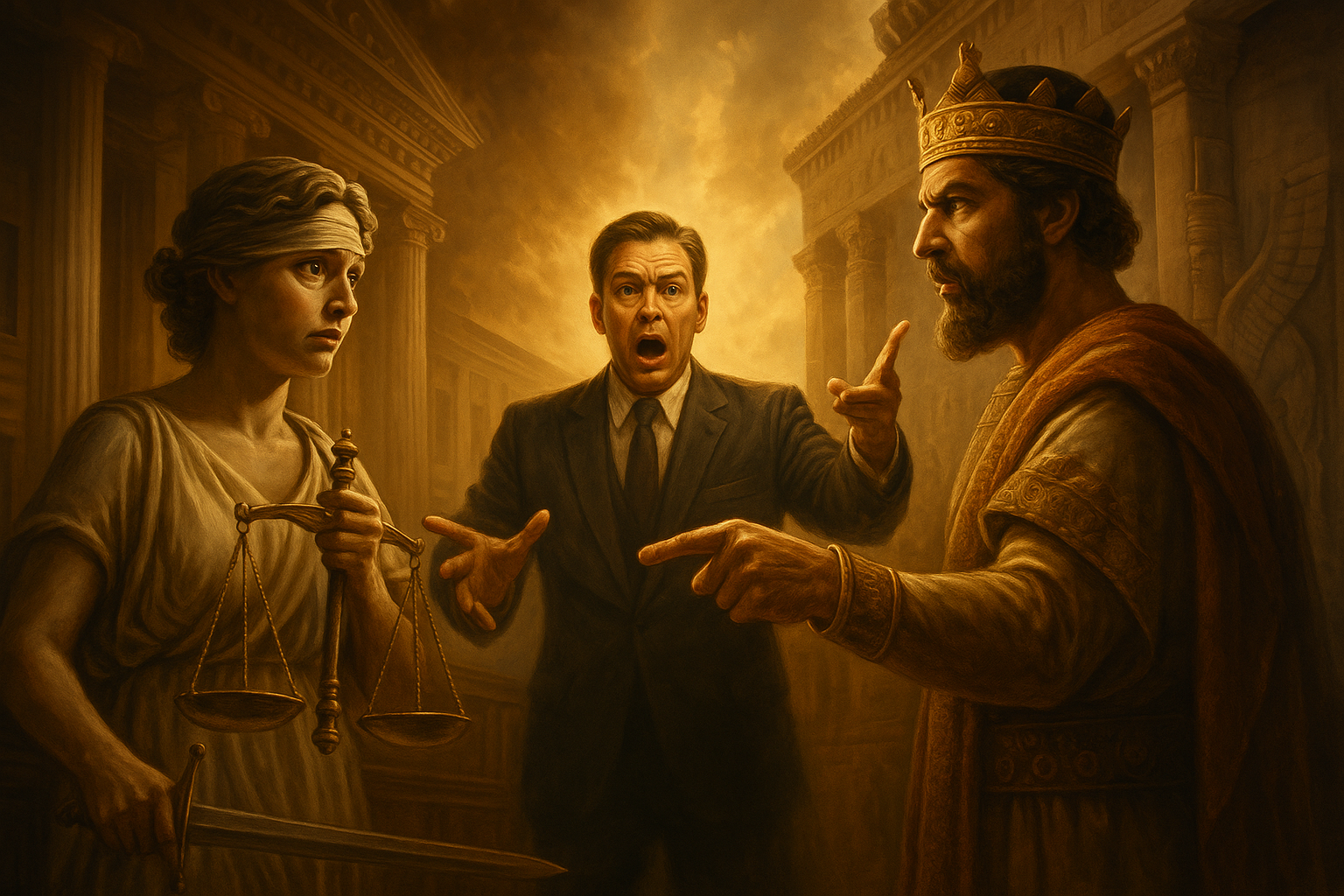
A chill wind blows through the halls of American justice. It carries the faint, metallic scent of something ancient and unsettling: the forging of law into a weapon. This week, the nation watched as New York Attorney General Letitia James, a prominent political opponent of the current administration, was indicted by a federal grand jury. The charges—bank fraud and false statements—arrived not in a vacuum, but on the heels of public demands for her prosecution from the highest office in the land.
To many, it feels like a line has been crossed. The very institutions designed to be blind to political pressure now appear to be acting at its behest. When a president can publicly call for the indictment of a political rival, and it happens, we are no longer in the realm of normal legal proceedings. We are in a story as old as power itself. This isn’t just a political drama; it’s a modern-day mystery with roots stretching back millennia, a puzzle that asks: what happens when the guardians of the law become the instruments of a ruler’s revenge?
To find the answer, we must open a time portal and travel back 2,500 years to the heart of the mighty Persian Empire, where a ruthless king etched a terrifying lesson in justice into the very skin of a corrupt judge.

A mystical portal connecting our modern crisis to ancient Persia’s lessons
The Time Portal
Imagine the year is 525 BC. The Persian Empire, under the iron-fisted rule of King Cambyses II, son of Cyrus the Great, is the largest empire the world has ever known. Its reach is vast, its power absolute. In this sprawling kingdom, justice is not an abstract concept; it is a direct reflection of the king’s will. And Cambyses II is a king known for his volatile temper and his obsession with absolute truth.
In the bustling heart of this empire sits a royal judge named Sisamnes. He is a man of power and influence, entrusted with the sacred duty of dispensing impartial justice. But Sisamnes has a fatal flaw: greed. He accepts a bribe, a bag of silver slipped into his hand in the dead of night, and in exchange, he delivers an unjust verdict. He thinks his transgression is a secret, a minor sin buried beneath the weight of his authority.
He is wrong. Word of the corrupt judgment reaches the ears of King Cambyses II. The king, who saw dishonesty as a cancer that could rot his empire from within, does not hesitate. He summons Sisamnes to the royal court. The judge arrives, perhaps with a knot of fear tightening in his stomach, but confident in his station. He is, after all, a royal judge. What could the king possibly do?
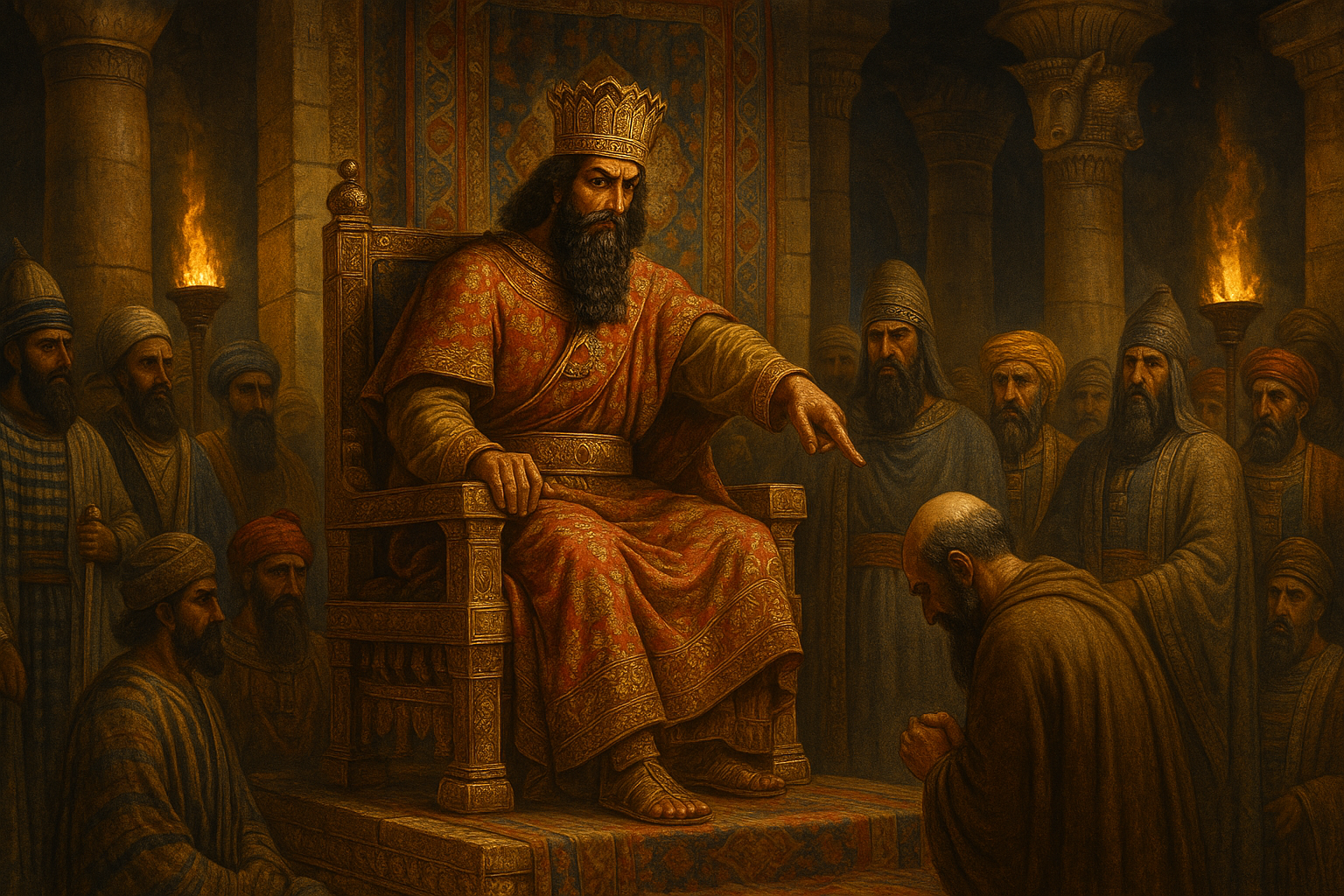
King Cambyses II pronounces his terrible judgment upon the corrupt judge Sisamnes
The Parallel Revelation
What Cambyses does next is the stuff of nightmares, a brutal spectacle of justice designed to be remembered for centuries. He doesn’t just imprison Sisamnes. He doesn’t just execute him. He orders the judge to be arrested and, in a display of horrifying precision, flayed alive. His skin, the very vessel of his corrupt life, is peeled from his body by expert executioners.
But the king’s gruesome lesson is not over. He has the skin of the flayed judge meticulously cut into leather strips. These strips are then stretched and sewn onto the very seat of judgment, the official chair from which Sisamnes had dispensed his tainted rulings. The message is as clear as it is terrifying: the seat of justice is now upholstered with the consequences of corruption.
And then, in a final, chilling twist, Cambyses II appoints a new judge to take Sisamnes’s place: his own son, Otanes. The young man is forced to sit on this ghastly throne, to feel the skin of his own father beneath him every time he presides over a case. Cambyses’s warning to Otanes, as recorded by the historian Herodotus, echoes through the ages: “Let the sight of the chair you sit on teach you to be just.”
Does this ancient horror not resonate with a chilling familiarity? A ruler, feeling his power absolute, uses the mechanisms of the state not for justice, but for a personal, brutal form of retribution. The legal system becomes a stage for a political vendetta. The indictment of Letitia James, following public demands from a president she had previously prosecuted, feels like a modern echo of Cambyses’s court. The charges may be different, the methods less gruesome, but the underlying principle is the same: the law is being bent to the will of a powerful individual, used as a tool to punish a political enemy.
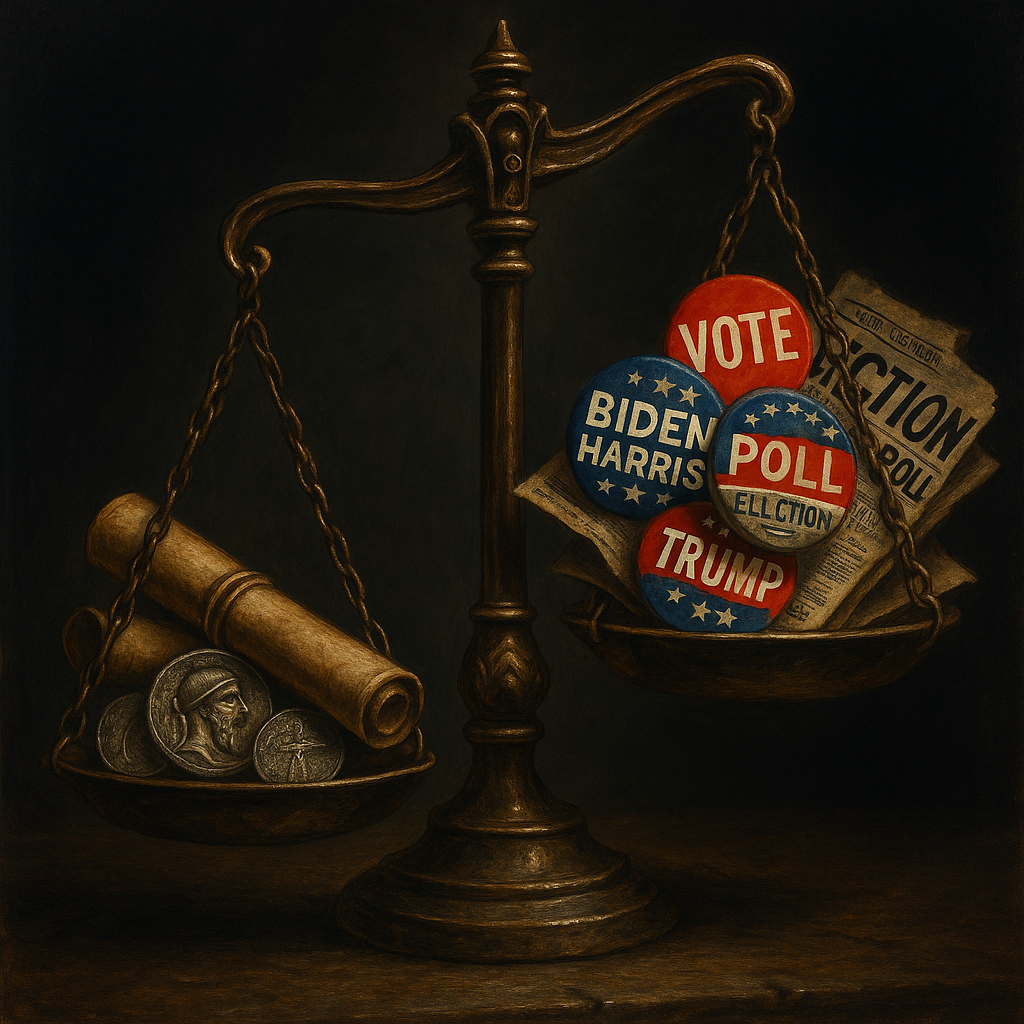
The scales of justice, weighted down by political pressure across the ages
The Pattern Recognition
Why does this pattern repeat? From ancient Persia to modern America, the temptation to weaponize justice is a constant threat in any society where power becomes concentrated. Human nature, in its rawest form, has not changed in 2,500 years. The desire for revenge, the impulse to crush one’s enemies, and the intoxicating belief that one is above the law are timeless human failings.
When a leader sees the legal system not as a check on their power, but as an extension of it, the foundation of a free society begins to crack. The institutions of justice—prosecutors, courts, and grand juries—are designed to be buffers against the whims of any single individual. They are meant to follow facts and law, not the dictates of a political master. When that independence erodes, when prosecutors are replaced and investigations are driven by public pressure from the top, we are witnessing the decay of that essential buffer.
This is the ancient warning of Sisamnes’s chair. It is a story about more than just a corrupt judge; it is about a system where the rule of law has been replaced by the rule of a man. The skin on the chair is a visceral reminder that when justice is no longer impartial, it becomes a grotesque parody of itself, a tool of terror and oppression.
The Ancient Warning
What happened next in Persia? Cambyses II’s reign was short and marked by increasing paranoia and brutality. His use of fear and violence to maintain control ultimately weakened the empire, paving the way for instability and rebellion after his death. His story serves as a timeless warning: a society that allows its legal system to be used for political persecution is a society on the path to tyranny and self-destruction.
The indictment of a political opponent under these circumstances is not a sign of a healthy republic. It is a symptom of a system in distress, a sign that the ancient battle between the rule of law and the will to power is once again being fought on our own soil.
5 Things You Can Do This Week
History is not a spectator sport. It is a living, breathing force that shapes our present and our future. Here are five practical steps you can take this week to better prepare for the echoes of history that are reverberating through our nation:
- Fortify Your Knowledge: Don’t rely on headlines. Read about the history of judicial independence in the United States. Understand the constitutional checks and balances that are designed to prevent the weaponization of justice. A great place to start is by understanding the principles of self-reliance and critical thinking, which you can explore at Self-Reliance Report.
- Support Independent Journalism: In an era of political spin, it is more important than ever to support news organizations that are committed to factual, impartial reporting. Seek out and subscribe to sources that provide in-depth analysis of legal and political issues, free from partisan cheerleading.
- Secure Your Household: Economic instability often follows political turmoil. Take practical steps to make your family more resilient. Consider starting a small, high-yield garden to supplement your food supply. The 4ft Farm Blueprint offers a simple, effective plan for producing your own food, even in a small space.
- Engage in Local Civics: The fight for the rule of law is not just a national issue. It happens in our own communities. Pay attention to local elections for judges and prosecutors. Attend town hall meetings and make your voice heard on issues of justice and accountability.
- Prioritize Your Health: Stress and uncertainty take a toll on our physical and mental well-being. Make a conscious effort to eat healthy, exercise, and get enough sleep. A strong mind and body are your best assets in turbulent times. For natural ways to support your health, explore the resources at Freedom Health Daily.
🌱 Sponsored by 4ft Farm Blueprint
In an uncertain world, the ability to produce your own food is the ultimate form of self-reliance. Learn how to turn a 4×4 foot space into a source of fresh, healthy food for your family. Click here to learn more.