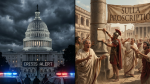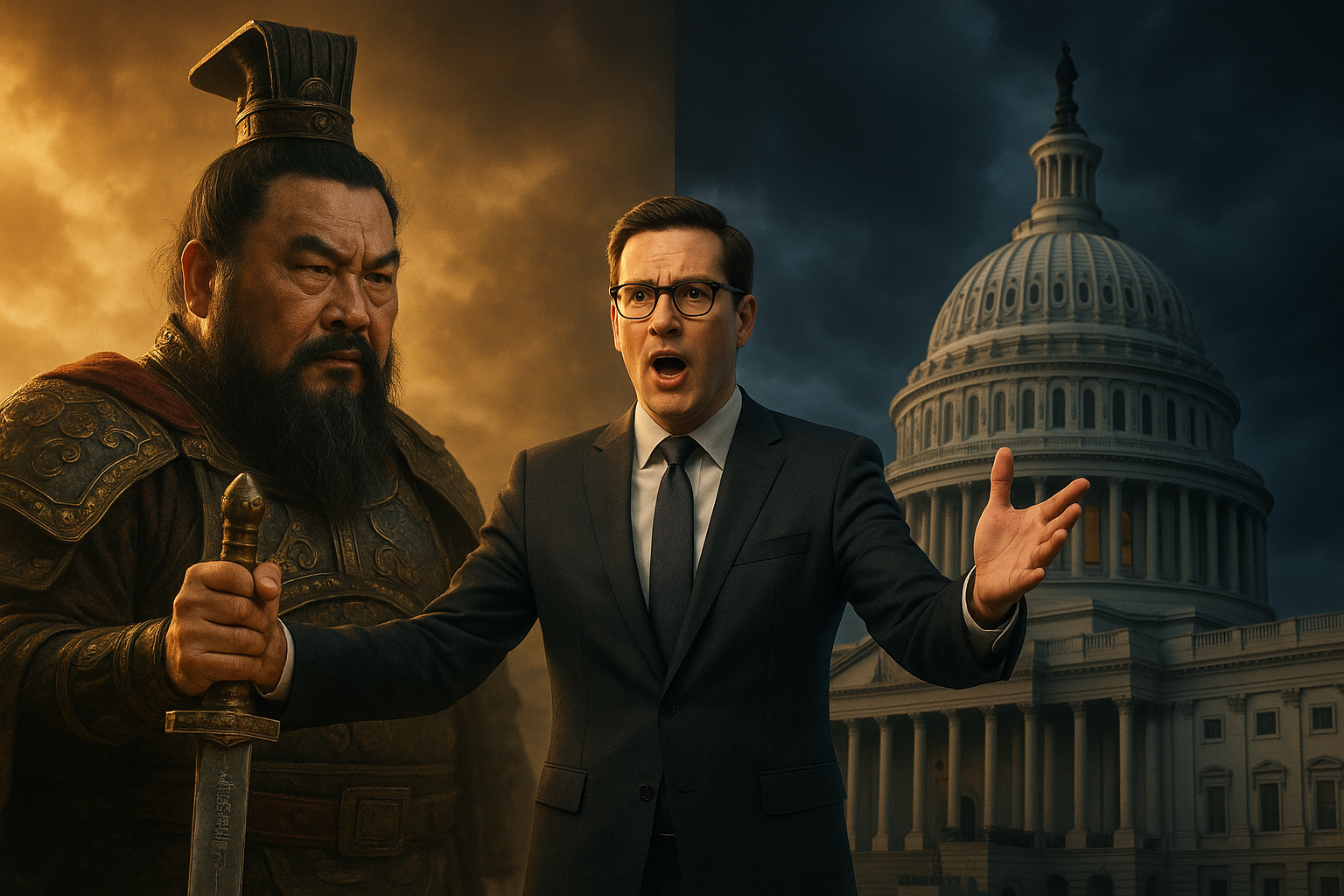
Something is grinding to a halt in Washington. You can feel it, can’t you? It’s not just the usual political theater. The U.S. federal government is now deep into its third week of a full shutdown, the eighth attempt by the Senate to pass a funding bill has just failed, and both sides are digging in for what they’re calling a “long conflict.”
For most, this is an infuriating but temporary inconvenience. A political staring contest. But what if it’s something more? What if this paralysis isn’t a bug in the system, but a feature of a system beginning to break? As the gears of the American republic seize up, a strange and unsettling silence is falling over the nation’s capital, a silence that carries a chilling echo from 1,800 years in the past.
The Time Portal
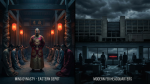
Picture the imperial court of China in the year 189 AD. The Han Dynasty, a global superpower that had reigned for four centuries, was rotting from the inside out. The real power wasn’t in the hands of the emperor, a weak and distracted ruler named Ling, but with a shadowy cabal of ten court eunuchs known as the “Ten Attendants.”
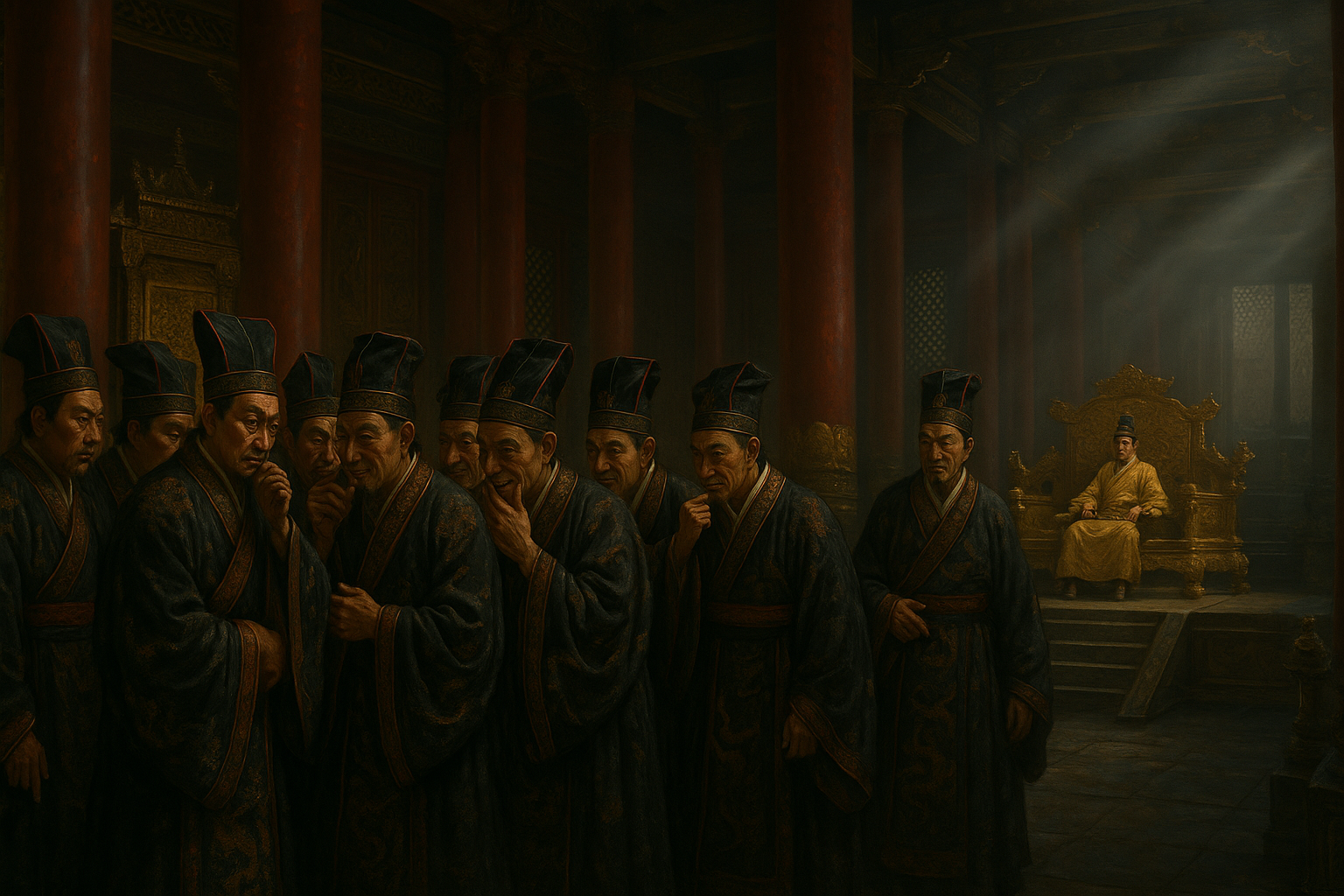
These were not just palace servants; they were a parallel government, a deep state of unelected bureaucrats who controlled access to the emperor, sold government offices to the highest bidder, and enriched themselves while the empire crumbled. Their corruption was so rampant that honest officials were driven from the court, and the people were squeezed by ever-increasing taxes to fund the eunuchs’ lavish lifestyles. The government had lost all institutional credibility.
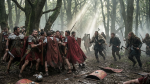
Outside the palace walls, the country was in flames. A massive peasant uprising, the Yellow Turban Rebellion, had swept across the land, a desperate response to the government’s corruption and neglect. To crush the rebellion, the desperate Emperor Ling made a fatal error: he decentralized power, granting provincial governors the authority to raise their own armies and levy their own taxes. He had, in effect, created a nation of warlords.
The Parallel Revelation
In the fall of 189 AD, Emperor Ling died, leaving his 13-year-old son on the throne. The government, already hollowed out by corruption, immediately fractured. The General-in-Chief, He Jin, plotted with an ambitious official named Yuan Shao to exterminate the powerful eunuchs. But the Empress Dowager, He Jin’s own sister, refused to sanction the massacre.
This is the moment the gears of the Han government seized completely. In a move of stunning recklessness, General He Jin summoned a battle-hardened warlord, Dong Zhuo, to march his army on the capital and “pressure” the government into action. It was a political bluff with a loaded gun.
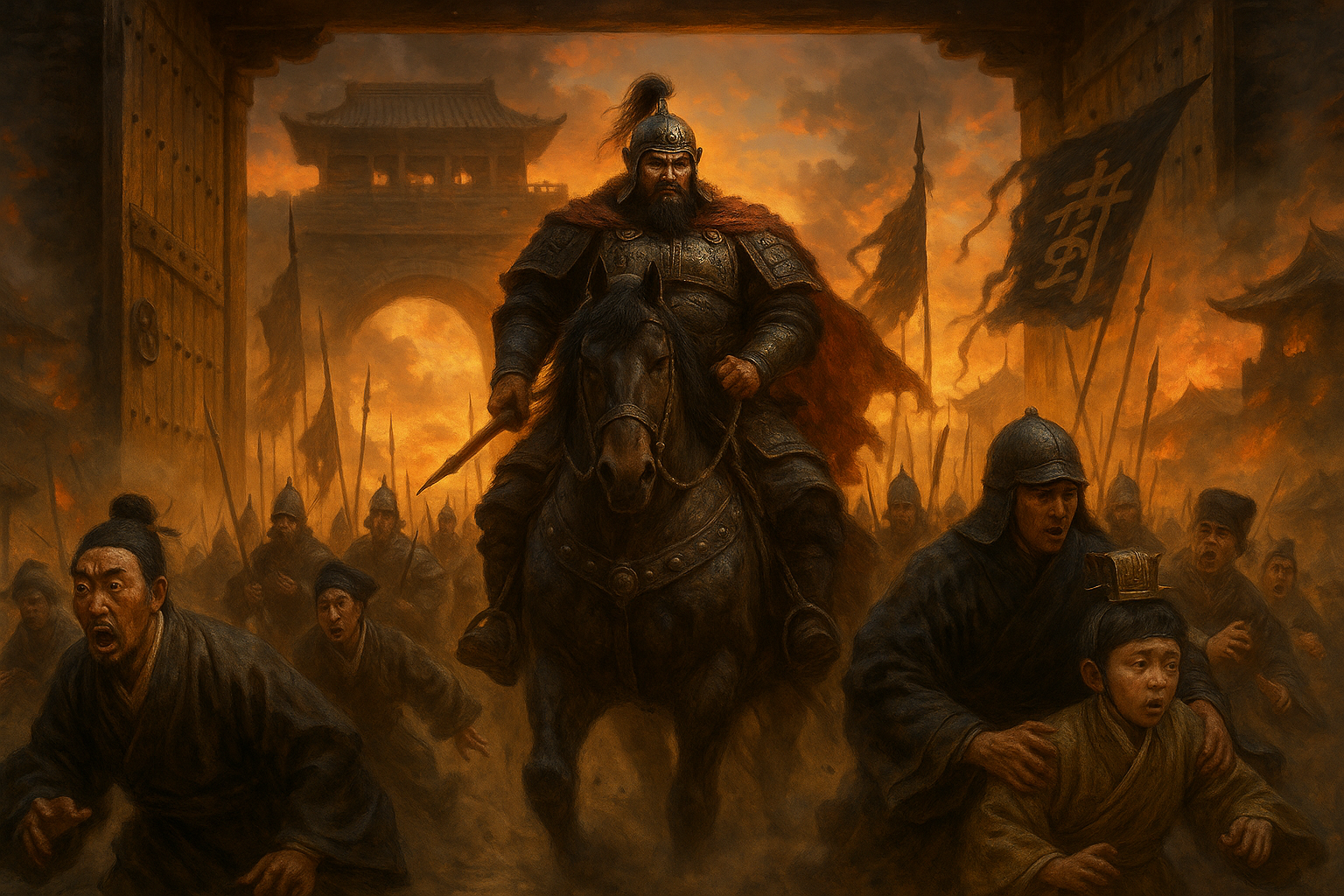
The eunuchs, discovering the plot, struck first. They lured He Jin into the palace and murdered him. In retaliation, Yuan Shao’s troops stormed the palace, slaughtering every eunuch they could find. In the chaos, the surviving eunuchs kidnapped the young emperor and fled, only to be cornered and forced to commit suicide.
And then Dong Zhuo arrived. The warlord who had been invited to “pressure” the government now found the capital in chaos and the emperor a terrified child on the run. He seized the opportunity. He deposed the young emperor, installed an even younger puppet in his place, and declared himself Chancellor of State. The Han government was no longer just paralyzed; it was a hostage.
Does any of this sound familiar? A government so divided it can’t perform its basic functions. Political factions willing to risk total system collapse to win a power struggle. The summoning of outside forces to break a political stalemate, only to have those forces take over completely. The American government shutdown of 2025 isn’t just a budget dispute; it’s a symptom of the same institutional paralysis that brought the Han Dynasty to its knees.
The Pattern Recognition
Why does this pattern repeat? Because human nature is a constant. Across millennia, when a government becomes so sclerotic and corrupt that it can no longer serve its people, a power vacuum is created. And a vacuum never stays empty for long.
In both ancient China and modern America, a hyper-partisan political class, more loyal to their faction than to the nation, created a crisis of legitimacy. They engaged in zero-sum political warfare where compromise was seen as weakness and total victory was the only goal. This gridlock wasn’t an accident; it was a strategy. And it’s a strategy that always ends in disaster.
When the central government can’t or won’t act, power flows to the periphery. In Han China, it was the provincial governors who became warlords. In modern America, we see a similar pattern, with states increasingly defying federal authority and acting as independent entities. The very fabric of the nation begins to tear.
The Ancient Warning
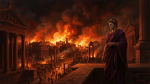
What happened after Dong Zhuo took the emperor hostage? The government shutdown in China didn’t last for a few weeks or months. It lasted for more than thirty years. A coalition of warlords formed to challenge Dong Zhuo, but they were just as divided and self-interested as the politicians in the capital. They bickered over strategy while Dong Zhuo consolidated his power, even burning the old capital of Luoyang to the ground to cover his retreat.
The Han Empire shattered into the Three Kingdoms, a period of brutal and relentless warfare that lasted for decades and killed millions. The emperor remained a powerless puppet, passed from one warlord to another, a symbol of a legitimacy that no longer existed. The final, formal end of the Han Dynasty in 220 AD was a mere formality. The real end came in 189 AD, the moment the government stopped working and a warlord stepped in to fill the void.
5 Things You Can Do This Week
History is not a spectator sport. The same patterns are playing out right now, and you and your family are in the middle of it. Here are five things you can do this week to prepare for what might be coming.
1. Build Your Own Granary. The collapse of the Han Dynasty led to widespread famine. Today, our just-in-time supply chain is incredibly fragile. Learn how to build a resilient food supply with the 4ft Farm Blueprint. It’s a step-by-step guide to creating a high-yield, low-maintenance food system in your own backyard.
2. Declare Your Financial Independence. When governments become unstable, so do their currencies. Explore ways to protect your wealth from inflation and economic turmoil. The Self-Reliance Report has in-depth guides on alternative investments and financial preparedness.
3. Secure Your Castle. In times of chaos, security becomes a primary concern. Learn the fundamentals of home defense and situational awareness. Survival Stronghold offers practical advice for protecting your family in any crisis.
4. Master the Art of Barter. When the formal economy breaks down, the informal economy takes over. Start thinking about what skills and goods you have that would be valuable in a barter-based community. Homesteader Depot has resources on building local trade networks.
5. Fortify Your Health. A crisis is the worst time to have a health emergency. Take proactive steps to improve your physical and mental resilience. Freedom Health Daily provides cutting-edge information on natural health and wellness.
This article is sponsored by the 4ft Farm Blueprint. Don’t wait for the grocery store shelves to go empty. Learn how to turn a tiny patch of your yard into a food-producing powerhouse. Click here to learn more.