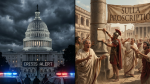
There’s a chill wind blowing through the halls of America’s most prestigious universities, and it has nothing to do with the autumn weather. In the last 24 hours, a story broke that should send a shiver down the spine of every American who values freedom of thought. The White House is turning up the heat on our nation’s top academic institutions, and they’re using a weapon as old as power itself: money.
Reports confirm that the administration has been quietly offering lucrative federal funding deals to universities, but with a dangerous catch. These deals come with strings attached, demanding that universities align their programs and even their research with the administration’s political agenda. Those who refuse are being labeled “anti-American,” and are facing the threat of having their federal grants choked off. Five major universities have already bravely rejected this intellectual hostage-taking, but others are quietly conceding, fearing financial ruin.
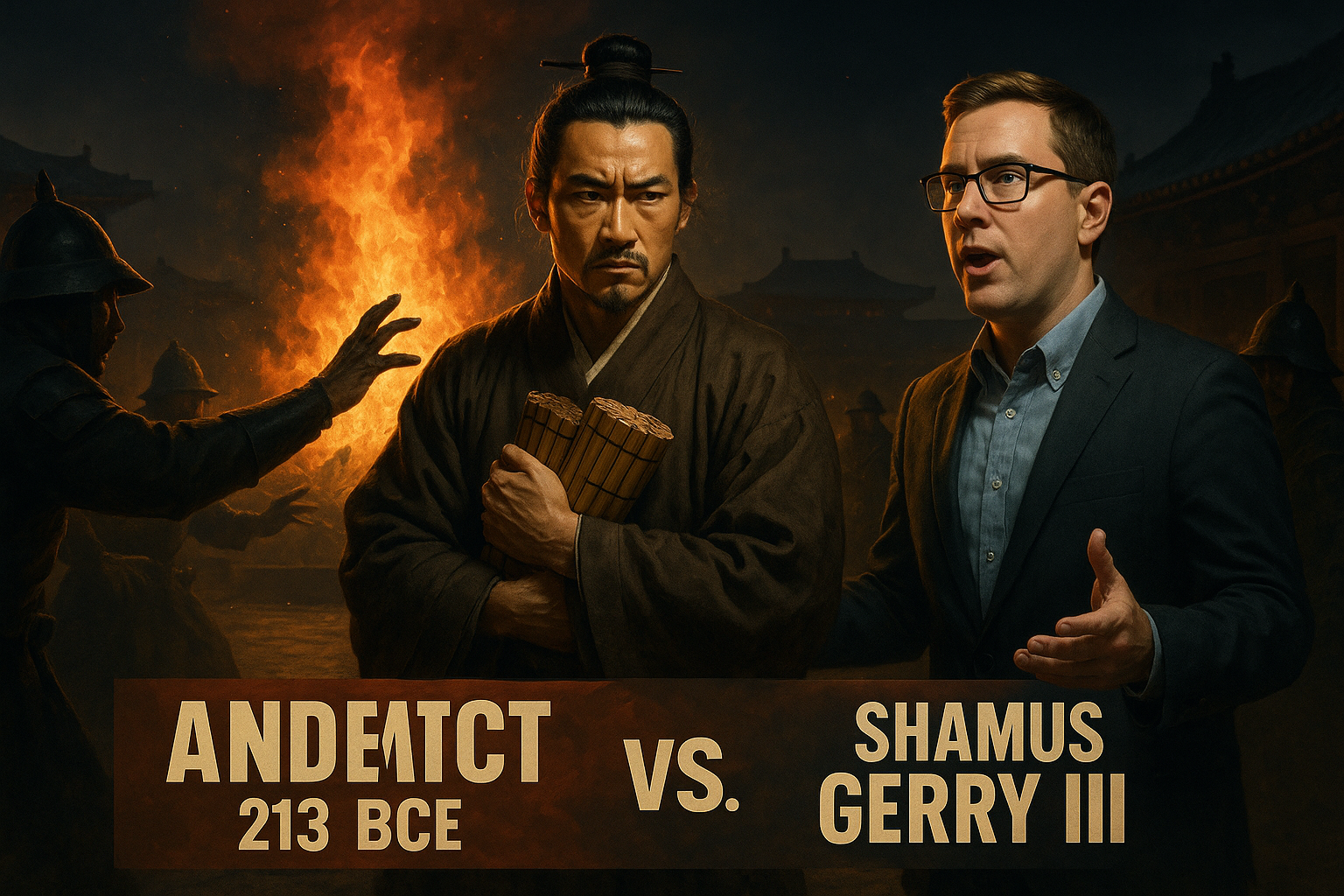
It feels like a modern-day shakedown, a power play to control what is taught and what is learned. But this isn’t a new tactic. It’s a terrifying echo from the past, a ghost from a 2,200-year-old bonfire that consumed an empire. To understand what’s truly at stake, we have to travel back in time, to an ancient dynasty that tried to burn its way to absolute control.
The Time Portal
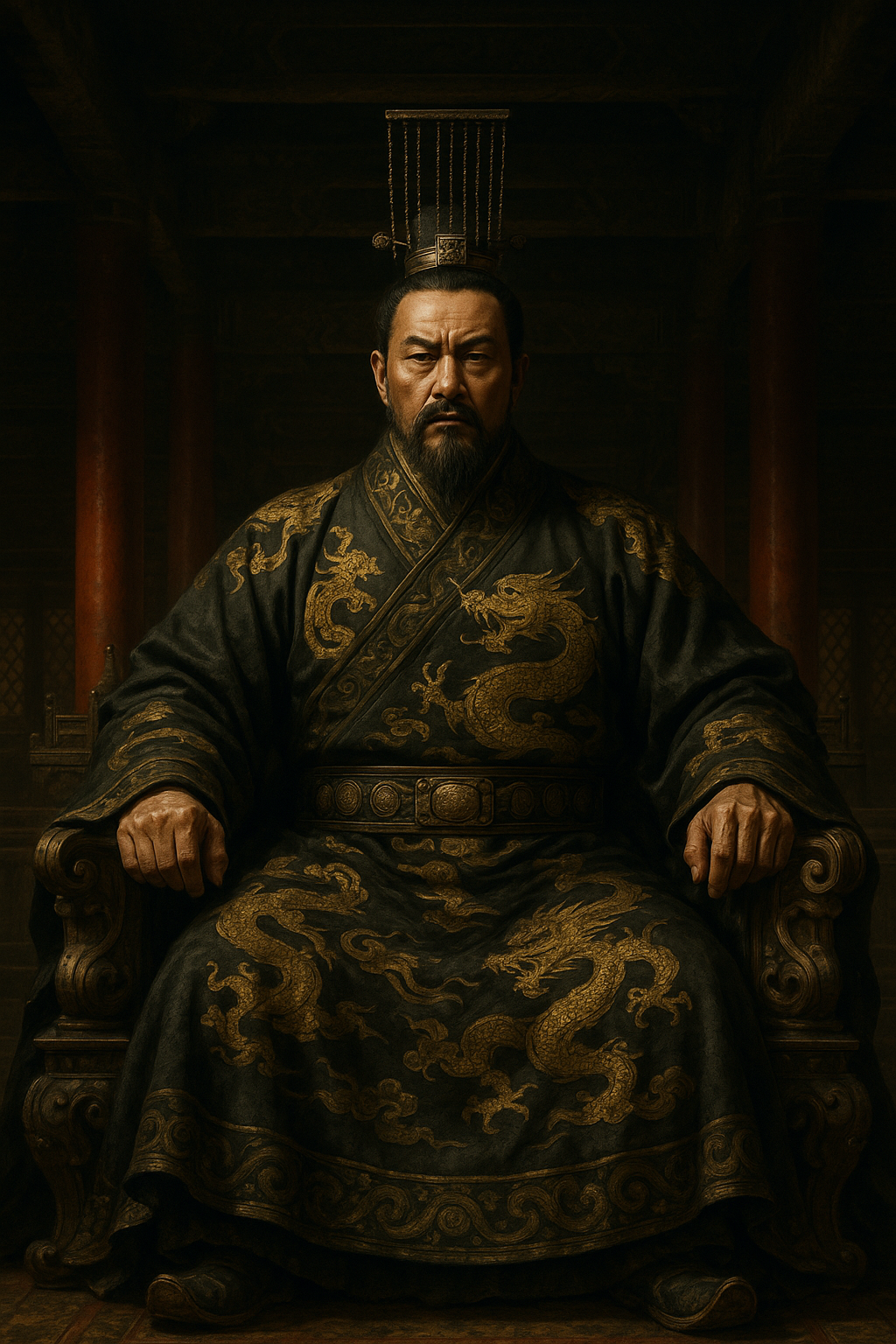
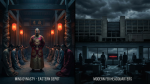
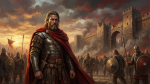
Imagine the year is 213 BCE. We are in Xianyang, the bustling capital of the newly unified Chinese empire. The man in charge is Qin Shi Huang, the first emperor. He is a figure of immense power and paranoia, a leader who has conquered all his rivals and forged a single nation from the warring states. But conquering the land was the easy part; conquering the mind is another challenge entirely.
At the emperor’s side is his most trusted advisor, the shrewd and ruthless Chancellor Li Si. Li Si sees a threat not from rival armies, but from the ink and bamboo scrolls that fill the libraries of the empire’s scholars. He hears whispers in the court, scholars who dare to praise the “golden age” of past dynasties, using history to subtly criticize the emperor’s iron-fisted rule. They talk of ancient, virtuous rulers, and in doing so, they plant seeds of doubt about the present.
In a fateful court meeting, Li Si makes a proposal that will set the course for centuries of tyranny. He tells the emperor, “These scholars use the past to slander the present. If we do not stop them, the emperor’s authority will be questioned, and the stability of the empire will be at risk.” He proposes a simple, brutal solution: burn the books.
The Parallel Revelation
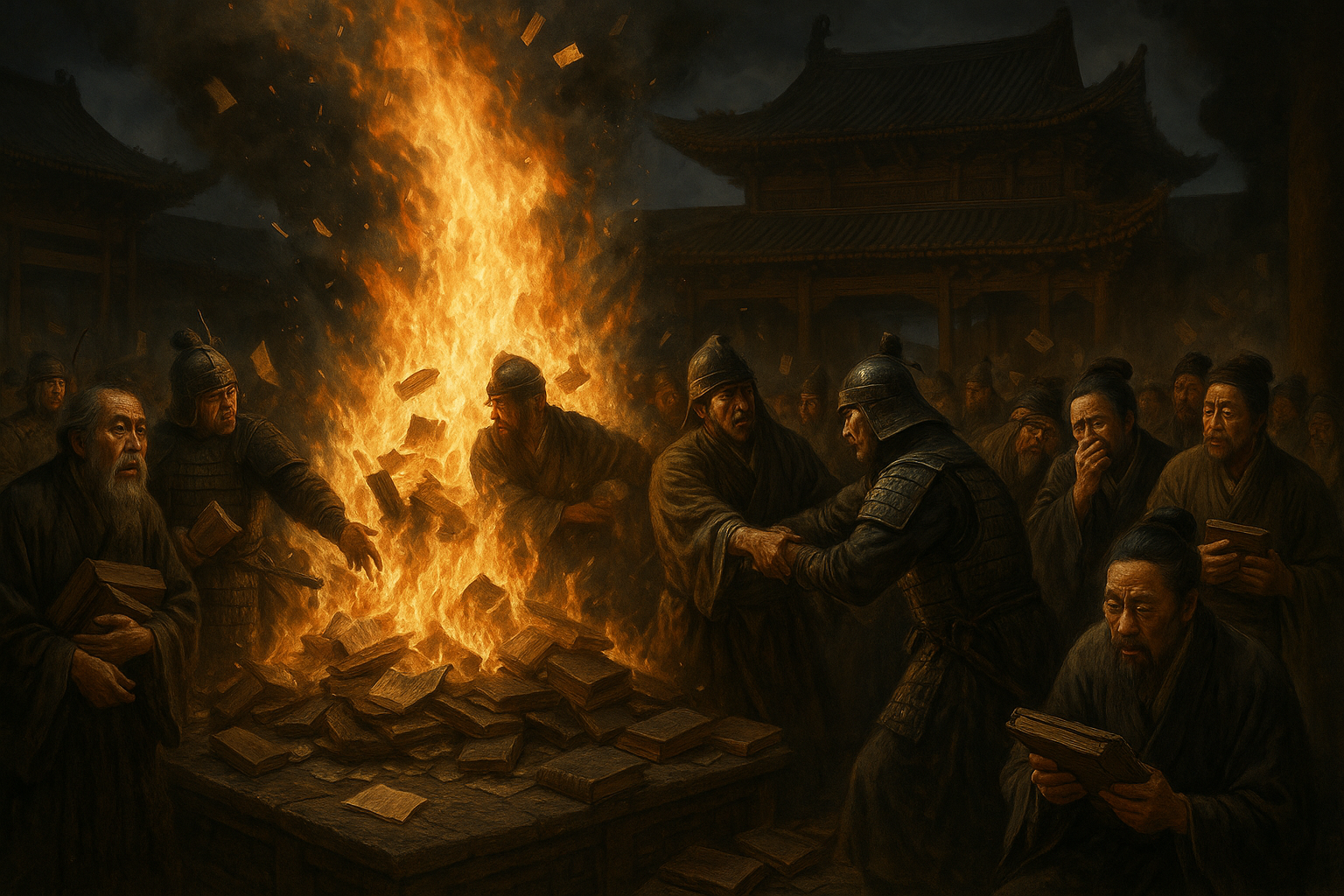
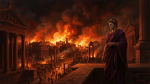
The emperor agrees. A decree is issued, one of the most infamous in human history. All historical records, except those of the Qin state, are to be burned. All philosophical texts from the “Hundred Schools of Thought” are to be destroyed. Anyone who dares to discuss these forbidden texts in public will be executed. Anyone who fails to surrender their books within thirty days will be tattooed and sent to forced labor on the Great Wall.
Sound familiar? The tactics are eerily similar. The White House, like Emperor Qin, is using its power—in this case, the power of the purse—to demand ideological conformity. Universities are being told, in no uncertain terms, that if they want to receive federal funds, they must toe the line. The books may not be literally burning (yet), but the effect is the same: the suppression of ideas that challenge the official narrative.
Just as Li Si feared that stories of past heroes would make the emperor look bad, the current administration seems to fear that an educated populace, exposed to a wide range of ideas, will question its authority. The goal is not to foster a marketplace of ideas, but to create an echo chamber where only one voice is heard.
The Pattern Recognition
This is a pattern that has repeated itself throughout history. Authoritarian regimes, whether ancient or modern, always target the institutions of learning. They know that knowledge is power, and they cannot tolerate any power that is not their own. They seek to control not just what people do, but what they think.
The strategy is always the same: first, discredit the intellectuals. Then, control the institutions. Finally, erase the history that contradicts the regime’s version of reality. It happened in the Qin Dynasty, it happened in Nazi Germany, it happened in the Soviet Union, and we are seeing the warning signs of it happening in America today.
This is not a partisan issue. It is an issue of freedom versus control. The moment we allow the government to dictate what can and cannot be taught, we have surrendered the very foundation of a free society.
The Ancient Warning
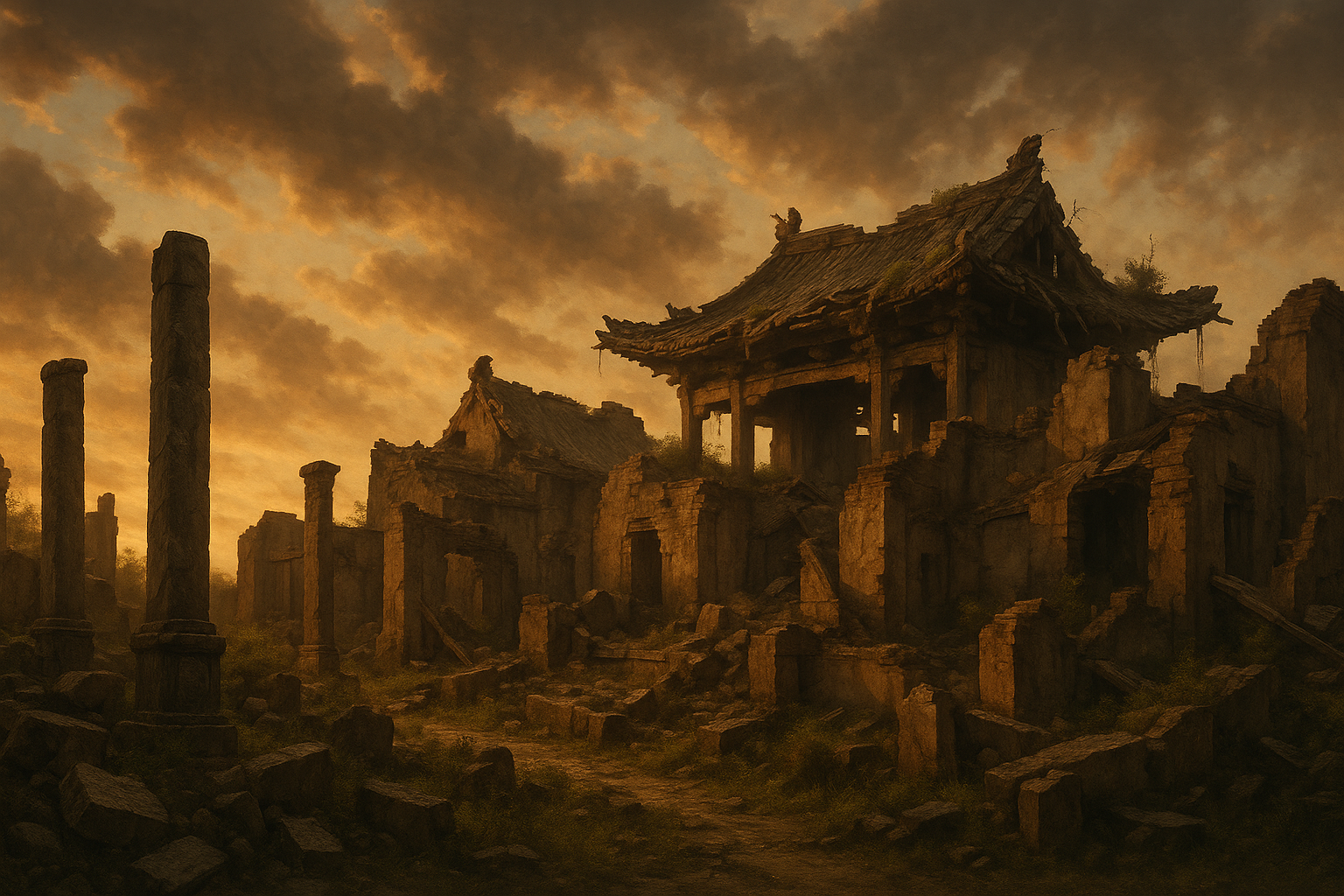
So, what happened to the Qin Dynasty? Li Si’s plan worked, for a time. The books were burned. The year after, 460 scholars were executed. Dissent was crushed. But the victory was short-lived. The intellectual and cultural destruction created a spiritual vacuum. The brutal suppression bred a deep and simmering resentment among the people.
Just six years after the book burning, in 207 BCE, the Qin Dynasty collapsed. The empire that was meant to last for 10,000 generations lasted a mere 15 years. The emperor who sought to control everything ended up losing it all. The historical lesson is clear and chilling: a regime that wages war on knowledge is a regime at war with its own future. It is a house built on sand, destined to fall.
5 Things You Can Do This Week to Prepare
History’s echoes are a warning, but they are also a guide. If we are to avoid the fate of the Qin, we must be vigilant and prepared. Here are five practical steps you can take this week to protect your family and your freedom:
1. Build Your Own Library: Don’t rely on the internet or public institutions to preserve knowledge. Start collecting physical books on history, philosophy, and practical skills. A great place to start is understanding the foundations of self-reliance. Check out this article on The Pillars of a Self-Reliant Life to get started.
2. Secure Your Food Supply: An unstable government often leads to an unstable food supply. Learn to grow your own food, even in a small space. The 4ft Farm Blueprint is an incredible resource that teaches you how to create a high-yield survival garden in just a 4×4 foot space. It’s the ultimate insurance policy against food shortages.
3. Protect Your Health Naturally: In times of crisis, access to modern medicine can be limited. Learn about natural remedies and holistic health practices. Freedom Health Daily has a wealth of information on how to stay healthy without relying on the pharmaceutical industry.
4. Create a Strong Community: A strong community is the best defense against tyranny. Get to know your neighbors. Form mutual aid groups. A resilient community can withstand shocks that would shatter individuals. Learn more about building a resilient homestead and community at Homesteader Depot.
5. Stay Informed, But Skeptical: Don’t take anything at face value. Question everything. Read a wide range of sources, especially those that challenge your own beliefs. And remember, the ultimate goal of self-reliance is not just to survive, but to thrive as a free and independent individual. For a deeper dive into what it means to be truly self-sufficient, read Survival Stronghold.
Your Best Defense Against an Uncertain Future
When the system becomes unreliable, you have to become your own system. The 4ft Farm Blueprint is more than just a gardening guide; it’s a declaration of independence. In a world of uncertainty, the ability to produce your own food is the ultimate form of security. Don’t wait for the shelves to go empty.
Disclaimer: Shamus Gerry III is an alias for the chief editor of AmericanDownfall.com. This site is part of the Brain2 Project x Oyolokorai Family. Copyright 2025. All articles are for entertainment and educational purposes only. We may receive affiliate commissions for links in our content.