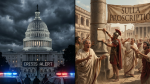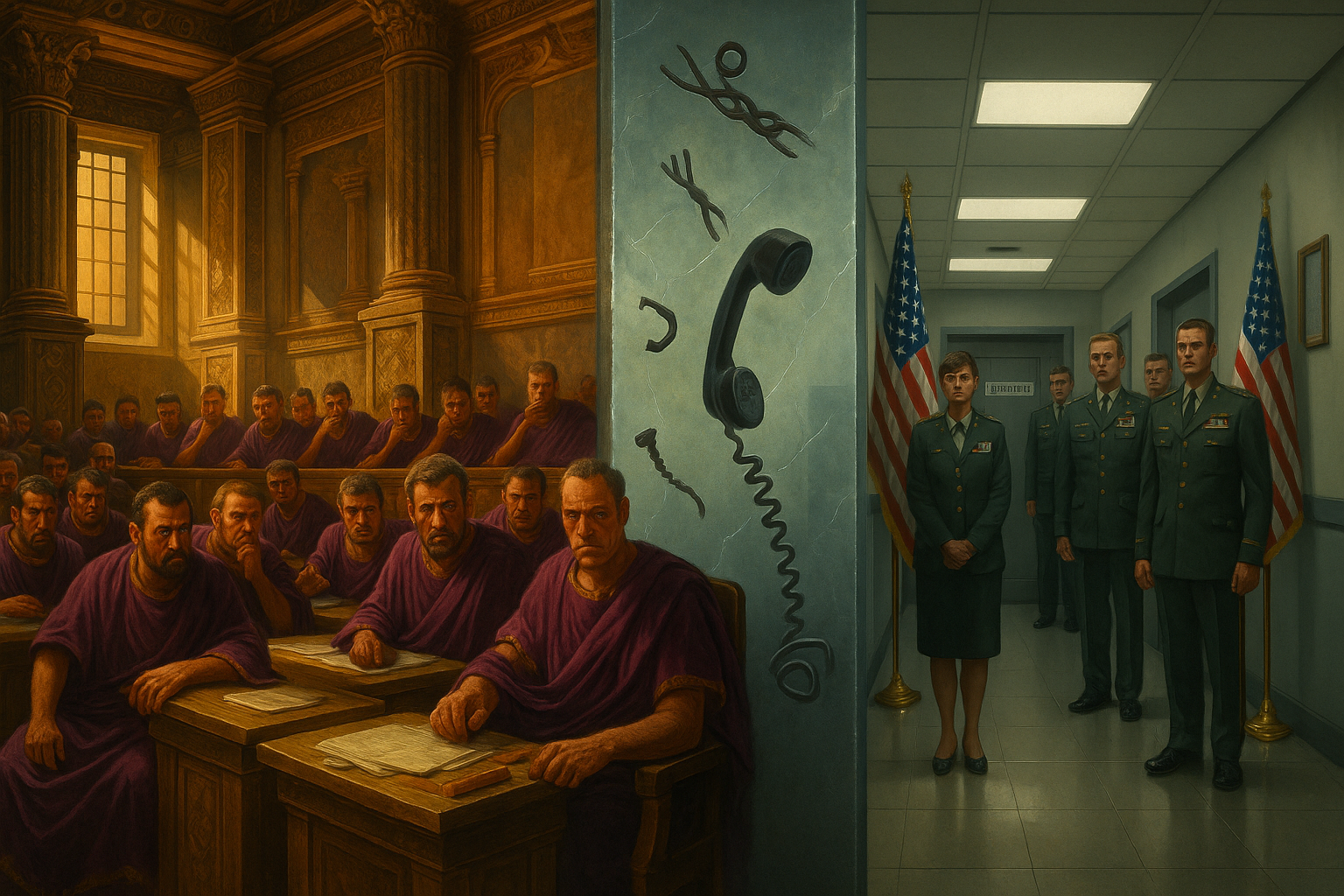
A quiet memo, dated October 15th, has sent a tremor through the foundations of American power.
In a move that would be unthinkable just a few years ago, Defense Secretary Pete Hegseth has effectively gagged the nation’s top military brass.
The Joint Chiefs of Staff, the secretaries of the Army, Navy, and Air Force—all are now forbidden from speaking directly with Congress unless their conversations are coordinated through a centralized office reporting directly to Hegseth himself.
The memo, which refers to the Pentagon by the archaic and chilling name “Department of War,” warns that “unauthorized engagements with Congress…may undermine Department-wide priorities.”
To the average American, this might sound like bureaucratic inside baseball. But to those who understand the delicate architecture of a republic, this is a five-alarm fire.
Congress has constitutional oversight authority over the military. It’s not a suggestion; it’s the law. For generations, lawmakers and military leaders have communicated freely, a constant dialogue that ensures accountability and prevents the concentration of power.
Now, that line of communication has been severed.

Senator Jack Reed, a man not given to hyperbole, called the move a product of “paranoia,” suggesting the Pentagon’s new leadership is “afraid of the truth.” His assessment of their mindset is bone-chilling: “We do what we want, no one checks us.”
Why would the world’s most powerful military suddenly build a wall between itself and its civilian overseers?
The question hangs in the air, thick with an unspoken dread. It feels new, unprecedented.
But it’s not.
History is whispering a warning, a ghost story from a fallen empire that made the exact same mistake, with catastrophic results.
The Time Portal
Let’s travel back more than two thousand years, to the sun-drenched shores of the Mediterranean.
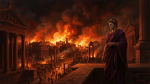
The city of Carthage, a jewel of the ancient world, hums with the activity of a global superpower. Its ships dominate the seas, its merchants control the trade routes, and its coffers overflow with gold.
But inside the city’s opulent senate chamber, a different kind of currency is being traded: fear.

The senators, a council of wealthy aristocrats who hold their positions for life, are the true power in Carthage. They are an oligarchy, a club of the rich and powerful, and their primary concern is maintaining their own status and wealth.
They are men who, as one historian noted, “preferred to spend the people’s tax money on their own luxuries.”
And there is one man they fear above all others: Hannibal Barca.
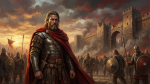
Even now, his name echoes through history. A military genius, a master strategist, a man who led his army, elephants and all, across the frozen Alps to bring war to Rome’s doorstep.
He is fighting for Carthage, but he is not one of them. He was elected not by the senate, but by the popular assembly. His loyalty is to the people, not the oligarchy.
And that makes him dangerous.

The Parallel Revelation
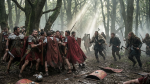
From his campaigns in Italy, Hannibal sends urgent pleas back to Carthage. He has Rome on its knees. After the catastrophic Roman defeat at Cannae, he is poised for total victory.
He needs more men, more supplies, more money. He is on the verge of winning the war for them.
But his requests are met with a deafening silence.
The Carthaginian senate, terrified of what a victorious Hannibal might do, deliberately withholds support. They fear that a general leading a battle-hardened army loyal to him, not to them, would be a threat to their own power.
They create a special council, the Tribunal of 104, a body of senators who hold their positions for life, tasked with “assessing” the performance of generals after their campaigns. The punishment for failure could be anything from a fine to crucifixion.
It is a system designed to ensure that even in victory, a general remains dependent on the senate’s goodwill.

Isocrates, an Athenian politician, perfectly described the bizarre power dynamic: “Carthage was ruled by an oligarchy at home, by a king in the field.”
Does this sound familiar?
A powerful military operating at a distance, with civilian leaders attempting to control it through bureaucratic means, crippled by paranoia and a desire to protect their own power?
The parallels are stunning.
- Fear of Accountability: The Carthaginian senate feared a popular and successful general. Today, the Pentagon leadership seems to fear congressional oversight.
- Information Control: The Carthaginian elite used distance and sporadic news to justify their suspicion and control. The Pentagon is now using a memo and a centralized office to achieve the same effect.
- Institutional Power Struggle: In Carthage, it was a battle between the military and the oligarchy. In America, it is a battle between the military leadership and the elected representatives of the people.
In a stunning reversal of the ancient dynamic, it is now the military leadership that is attempting to cut off civilian oversight, not the other way around.
But the underlying motive is the same: a desperate grasp for unchecked power.
A Message From Our Sponsor
History teaches us that self-reliance is the ultimate currency in times of uncertainty. While governments and institutions falter, the ability to provide for yourself and your family remains the one true source of security.
That’s why we believe in the 4ft Farm Blueprint. It’s more than a garden; it’s a declaration of independence. In a space no bigger than a parking spot, you can grow a significant portion of your own food, free from the whims of broken supply chains and political turmoil.
Don’t wait for history to repeat itself. Click here to learn how you can build your own fortress of food security.
The Pattern Recognition
Why does this pattern repeat?
Why do powerful institutions, separated by thousands of years, fall into the same self-destructive traps?
Because human nature is constant.
The desire for power, the fear of losing it, the corrosive effects of greed and paranoia—these are the timeless forces that shape history. The Carthaginian senators were not evil men in their own minds. They were simply protecting their interests, blind to the fact that in doing so, they were destroying the very foundation of their empire.
When an institution begins to believe that it is above accountability, that it knows better than the people it is meant to serve, it has already begun to rot from within.
It creates a closed loop of information, a feedback chamber of its own priorities, and a deep-seated suspicion of any outside influence.
This is the fatal flaw of any unchecked power. It becomes an end in itself, and its own preservation becomes more important than the health of the republic it is sworn to protect.
The Ancient Warning
And what became of Carthage?
Starved of resources, Hannibal was eventually forced to abandon his campaign in Italy. Rome, given the breathing room it needed, recovered, regrouped, and brought the war to Africa.
At the Battle of Zama, Hannibal was finally defeated.
Carthage lost the war. Its empire crumbled. And in the end, the city itself was utterly destroyed by the Romans, its fields sown with salt.
The senators who had so jealously guarded their power and wealth lost everything. Their paranoia became a self-fulfilling prophecy. In their attempt to control their most brilliant general, they ensured their own destruction.
This is the ghost of Carthage. It is a warning that echoes through the centuries.
When the lines of communication and accountability between a nation’s military and its civilian government are severed, it is not a sign of strength, but of a deep and dangerous sickness.
5 Things You Can Do This Week
History is not a spectator sport. It is a living, breathing force that shapes our present and our future. Here are five things you can do this week to build your own resilience in the face of these timeless patterns:
- Declare Your Food Independence. Don’t just read about the fall of empires; take concrete steps to insulate yourself from their failures. Explore how to create your own sustainable food source with the 4ft Farm Blueprint. True security begins in your own backyard.
- Understand the Power of Self-Reliance. The patterns of history show that we are ultimately responsible for our own well-being. Deepen your knowledge of what it means to be truly self-sufficient by reading the articles at the Self-Reliance Report.
- Build a Modern Homestead. You don’t need a hundred acres to start living a more resilient life. The Homesteader Depot offers practical advice and tools for creating a productive homestead, no matter where you live.
- Take Control of Your Health. A strong nation is made of strong individuals. Don’t leave your health in the hands of a fragile system. Freedom Health Daily provides insights on how to achieve and maintain robust health, naturally.
- Embrace Holistic Wellness. True strength is more than just physical. It is a balance of mind, body, and spirit. Learn about the ancient wisdom and modern science of holistic health at Seven Holistics.
Sources:
- The Price of Greed: Hannibal’s Betrayal by Carthage. World History Encyclopedia.
- Carthaginian Government. World History Encyclopedia.
- Miles, Richard. Carthage Must Be Destroyed: The Rise and Fall of an Ancient Civilization. Penguin Books, 2011.
- Pete Hegseth imposes new restrictions on Pentagon communications with Congress. MSNBC, October 22, 2025.