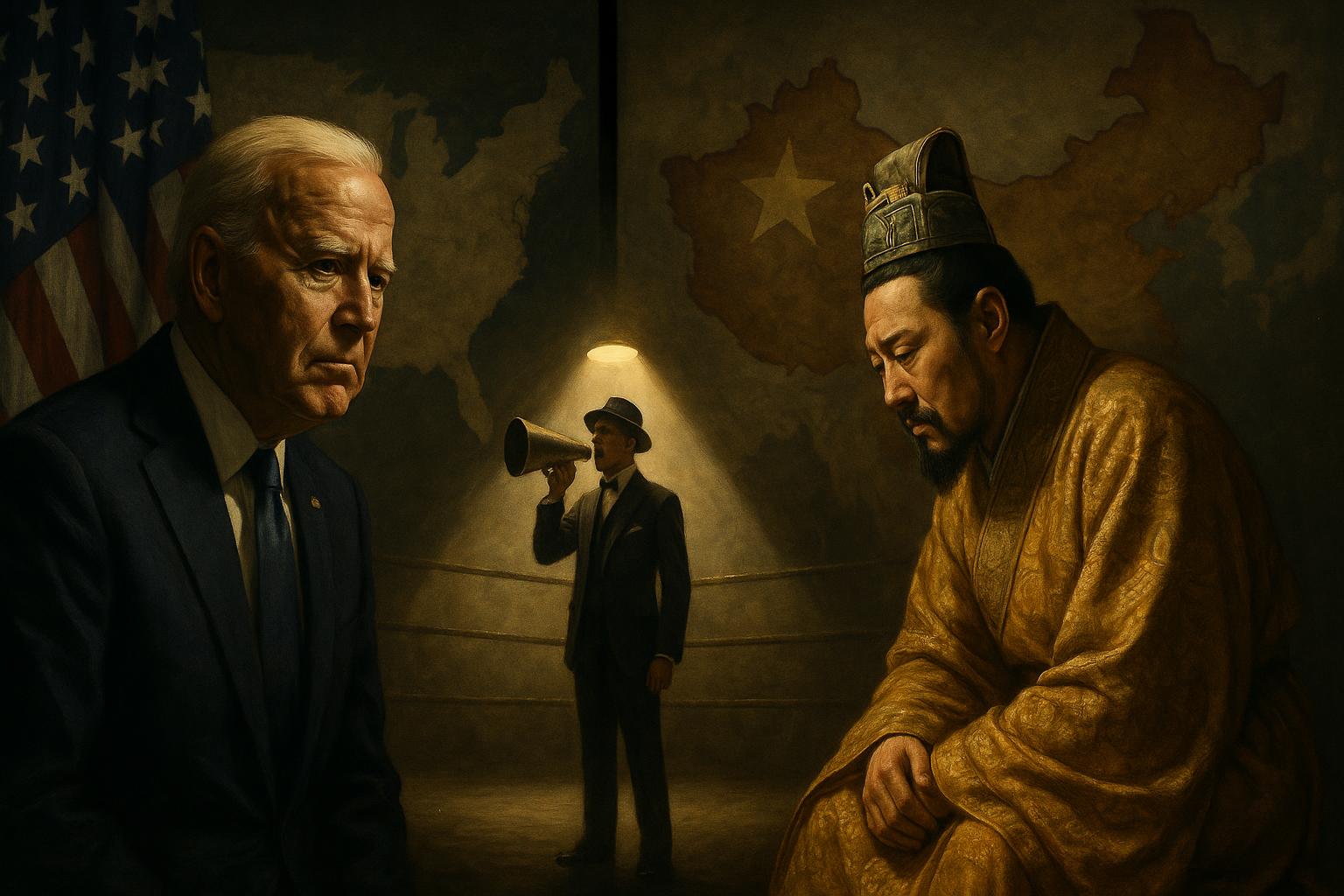
It happened with a handshake and a forced smile, a carefully choreographed photo-op on the world stage. But beneath the pleasantries, a seismic shift was taking place.
Just days ago, at the APEC summit in South Korea, the President of the United States met his Chinese counterpart, and for the first time in a generation, the American leader was not negotiating from a position of strength. He was there to make concessions.
For months, a crippling trade war had backfired. The White House, confident in its economic might, had miscalculated. They believed their opponent would fold quickly.
They were wrong.
Now, facing a stalemate and a looming election, the President was forced to roll back tech sanctions and reduce tariffs. The Chinese leader, meanwhile, spoke of “two captains at the helm of a ship,” a subtle but clear declaration of equal status.
A Chinese state-run newspaper was more blunt: “The era in which the US could unilaterally contain and suppress China is over.”
How did this happen? How did the world’s undisputed superpower find itself in a position of weakness, forced to bend to the will of its chief rival?
The answer, it turns out, is nearly a thousand years old. It’s a story of immense wealth, fatal arrogance, and a national humiliation so profound it’s still known today as the day an emperor knelt.
The Time Portal
Let’s travel back to the 12th century.
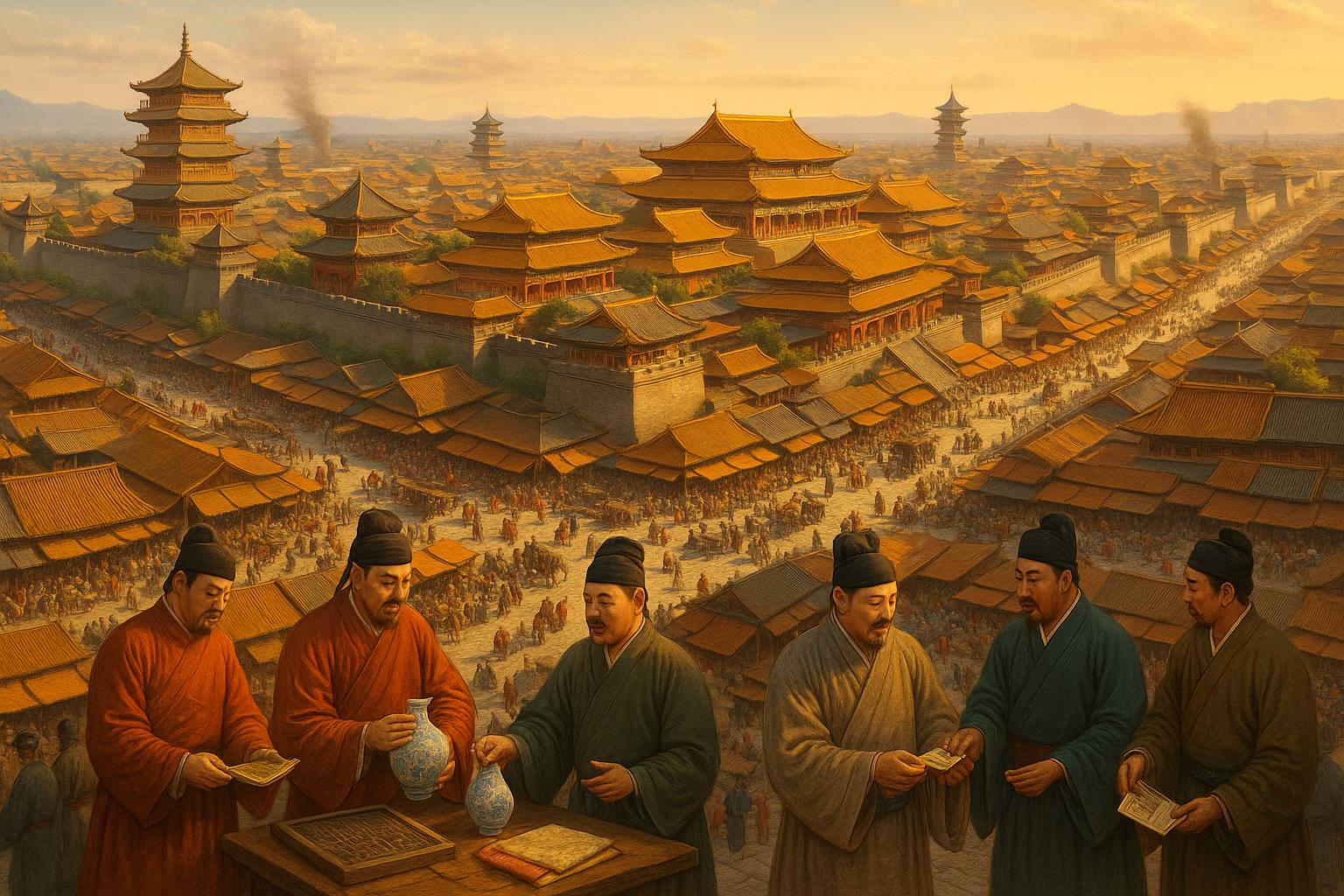
The Song Dynasty of China was, by every measure, the most advanced civilization on Earth. Its cities were vibrant metropolises of a million people, its economy a marvel of innovation.
They had invented gunpowder, movable type printing, and paper money. Their iron production was centuries ahead of Europe. Their navy was the most powerful in the world.
They were, in short, the undisputed economic and cultural superpower of their time.
But the Song Dynasty had a fatal flaw.
Haunted by the memory of military coups that had plagued previous dynasties, the founders deliberately created a system to keep their own generals weak. The policy was known as “strong trunk, weak branches.”
The central government held all the power, while the military was kept divided, underfunded, and under the thumb of civilian bureaucrats who knew little of warfare.
They believed their immense wealth could buy them security.
They were about to learn a brutal lesson.
To their north, a new power was rising: the Jurchen people, who had established the Jin Dynasty. The Song, in a moment of strategic arrogance, allied with the Jin to crush a mutual rival, the Liao.
But the campaign exposed the Song’s military incompetence. The Song army couldn’t even break through the Liao’s defenses.
The Jin, however, were a formidable fighting force. They crushed the Liao and, seeing the Song’s weakness, decided to keep going.
The Parallel Revelation
What happened next is a chilling echo of our own time.
The Jin, having seen the Song’s military weakness firsthand, turned on their former allies. They marched south, and the Song, who had neglected their own defenses, were powerless to stop them.
In 1126, the Jin army besieged the magnificent Song capital of Bianjing. The Song emperor, a cultured man who preferred painting to politics, was forced to pay a massive ransom to get them to leave.
But the humiliation was not over.
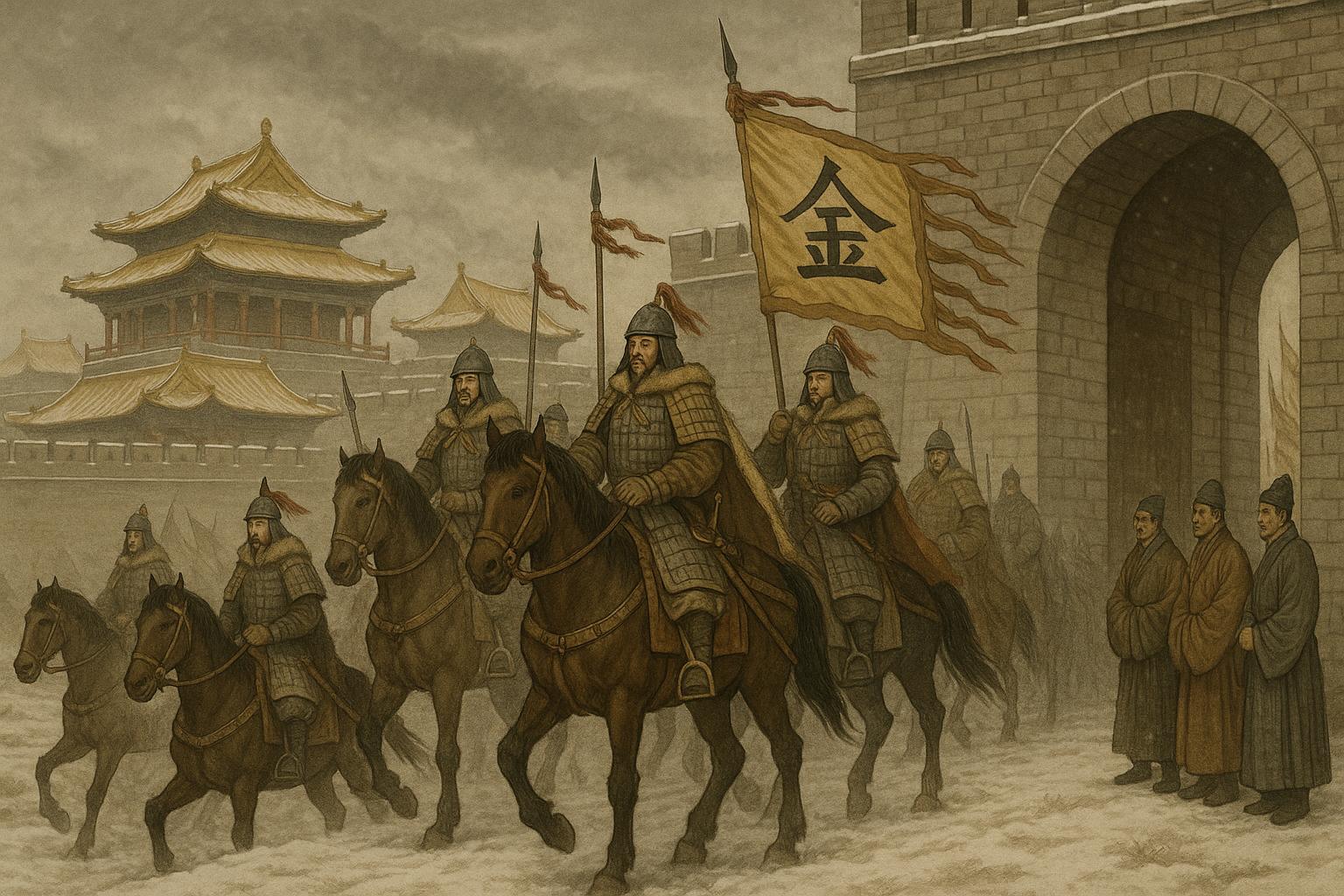
The next year, the Jin returned. This time, they would not be bought off.
In January 1127, the city fell. The Jin soldiers looted the palaces, but their real prize was the emperor himself.
In an event that would be seared into Chinese history as the “Jingkang Humiliation,” the Jin captured not one, but two Song emperors—the reigning emperor and his abdicated father. Along with thousands of members of the imperial family, they were forced to march north into captivity.
The parallels to today are stunning.
A wealthy, advanced civilization, confident in its economic power, neglects its strategic foundations. It miscalculates the ambition and resolve of a rising rival.
It finds itself in a position where its wealth is not enough to protect it from humiliation on the world stage.
The Song Dynasty believed its economic superiority made it invincible. The United States, for decades, has believed the same.
Both were forced to confront a new reality where a determined rival could leverage strategic weaknesses to dictate terms.
The Pattern Recognition
Why does this pattern repeat? Because human nature is constant.
The arrogance of the powerful, the temptation to believe that wealth and technology are substitutes for strength and resolve—these are timeless human failings.
The Song Dynasty’s leaders were not stupid; they were simply blinded by their own success. They had created a system so prosperous, so culturally vibrant, that they could not imagine it failing.
They had forgotten that in the brutal calculus of geopolitics, strength is not just about how much money you have, but about your will to use it.
The United States now finds itself in a similar position.
For decades, it has been the world’s sole superpower, its economic and military might unmatched. But that era is ending.
A new rival has risen, one that has studied our weaknesses and is not afraid to exploit them.
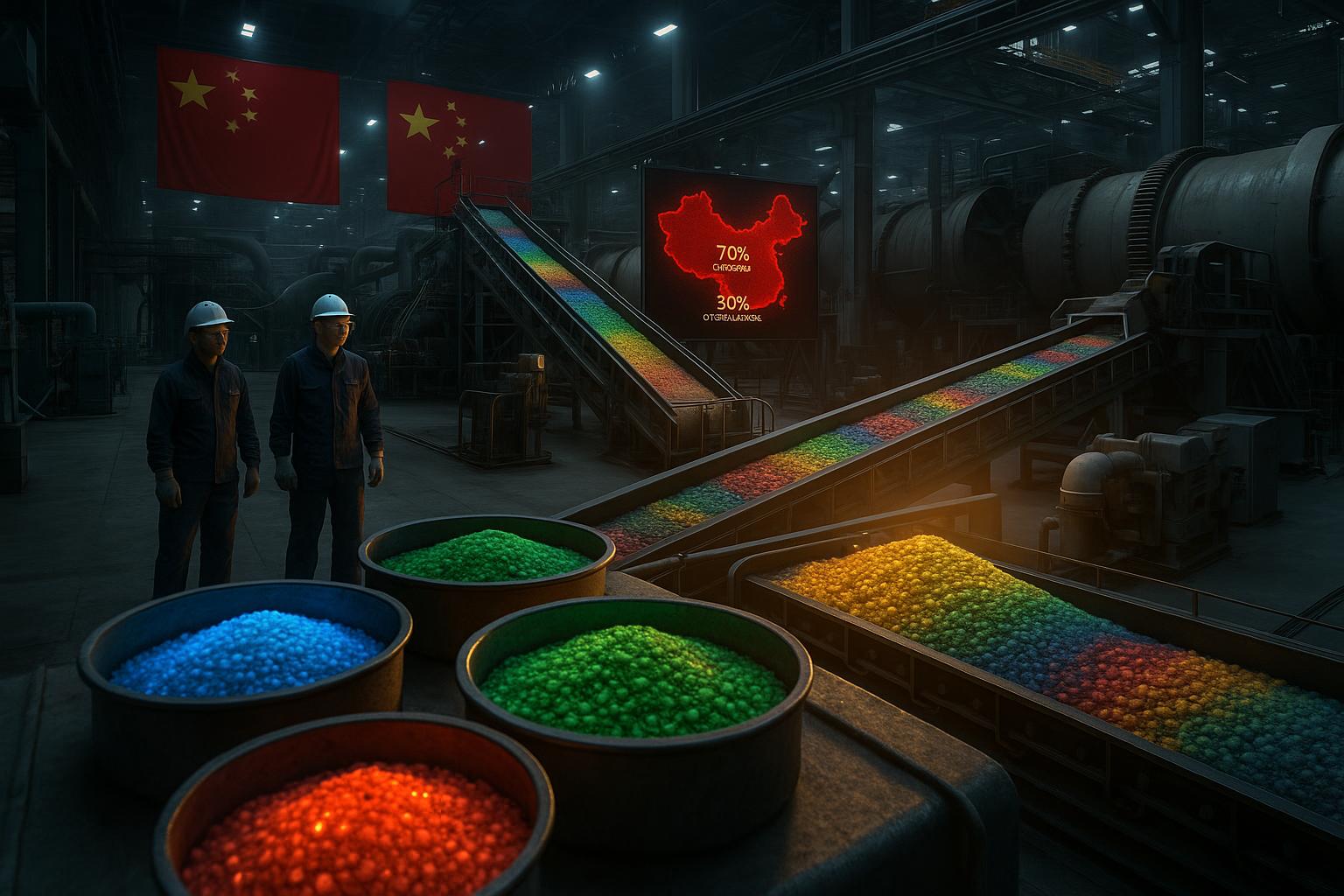
China’s control over rare earth minerals—the essential components of everything from smartphones to fighter jets—is a strategic chokepoint that gives it immense leverage. Just as the Jin controlled the territory and military might to threaten the Song capital, China now controls the resources to threaten the global economy.
The Ancient Warning
The story of the Song Dynasty did not end with the Jingkang Humiliation, but it was a turning point from which they never fully recovered.
The dynasty survived, but only by retreating to the south and accepting the status of a vassal state to the Jin. They continued to pay tribute to their northern rivals for another century and a half, a constant reminder of their humiliation.
The world’s richest and most advanced civilization had become a shadow of its former self, its fate dictated by a stronger power.
This is the ancient warning for America.
The forced smiles and handshakes at the APEC summit are not just a momentary setback; they are a sign of a fundamental shift in the global balance of power.
They are a warning that economic strength alone is not enough to guarantee security and that a nation that forgets the importance of strategic strength does so at its peril.
The question we must ask ourselves is this: Are we living through our own Jingkang moment?
And if so, what are we going to do about it?
5 Things You Can Do This Week to Prepare
History is not just a story; it’s a warning. The patterns of the past are the blueprints for the future. Here are five things you can do this week to prepare for a world where America is no longer the undisputed superpower:
- Secure Your Supply Chain: The 4ft Farm Blueprint is more than just a gardening guide; it’s a declaration of independence from a fragile global supply chain. Learn how to grow your own food and you’ll never be at the mercy of empty grocery store shelves.
- Understand the Real Threats: The headlines are designed to distract you. To understand the real threats to your freedom and prosperity, you need to look deeper. The articles at SurvivalStronghold.com cut through the noise and give you the information you need to protect yourself and your family.
- Build Your Self-Reliance: In a world of uncertainty, the only person you can truly rely on is yourself. SelfRelianceReport.com is your guide to developing the skills and mindset you need to thrive in any environment.
- Take Control of Your Health: A strong nation starts with strong individuals. FreedomHealthDaily.com provides the latest news and research on natural health and wellness, so you can take control of your health and reduce your dependence on a broken medical system.
- Nourish Your Body and Mind: The ancient wisdom of holistic healing has never been more relevant. SevenHolistics.com offers a range of products and resources to help you nourish your body and mind, so you can face the challenges ahead with strength and clarity.
Sponsored by 4ft Farm Blueprint
Worried about the next crisis? The next empty shelf? The next time the “just in time” delivery system breaks down?
Stop worrying and start building.
The 4ft Farm Blueprint is a revolutionary system that teaches you how to turn a tiny 4×4 foot space into a high-yield, organic food factory.
No green thumb required. No back-breaking work. Just a simple, step-by-step plan to provide you and your family with fresh, healthy food, no matter what’s happening in the world.
Don’t be a victim of the next supply chain collapse. Be a provider. Be a protector. Be a prepper.