
Washington D.C. – As Americans watch their grocery bills climb and their savings shrink, the White House is scrambling for answers. President Trump, facing the same brutal economic reality that plagued his predecessor, is now rolling out a series of increasingly desperate-sounding proposals.
From tariff-funded stimulus checks to 50-year mortgages, the administration is throwing everything at the wall, hoping something will stick before the midterm elections. But for those who know their history, this isn’t a new political drama. It’s a rerun of a 1,700-year-old tragedy that ended with an emperor giving up and retiring to his cabbage patch.
This is the story of how a powerful leader, disconnected from the economic pain of his people, tried to command-and-control his way out of an inflation crisis he didn’t create, and in doing so, pushed his empire one step closer to the edge.
The Breaking Point: A Tale of Two Leaders
Just this week, President Trump, once dismissive of the public’s financial pain, has been forced to confront a stubborn truth: Americans despise higher prices. Despite cooling inflation rates, the cost of everyday goods remains painfully high, a hangover from years of economic turmoil. The administration’s response? A flurry of policy ideas that sound suspiciously like quick fixes.
He’s rolled back tariffs on some food items, floated the idea of sending out $2,000 checks funded by other tariffs, and even suggested ultra-long mortgages to make housing seem more affordable. He promises that massive corporate investments will bear fruit, telling the public, “you’re going to see the results in a year when these plants start to open up.”
It’s a promise of future relief for present-day suffering.
And it’s a promise that has been made before.
The Ancient Warning: An Emperor’s Desperate Gamble
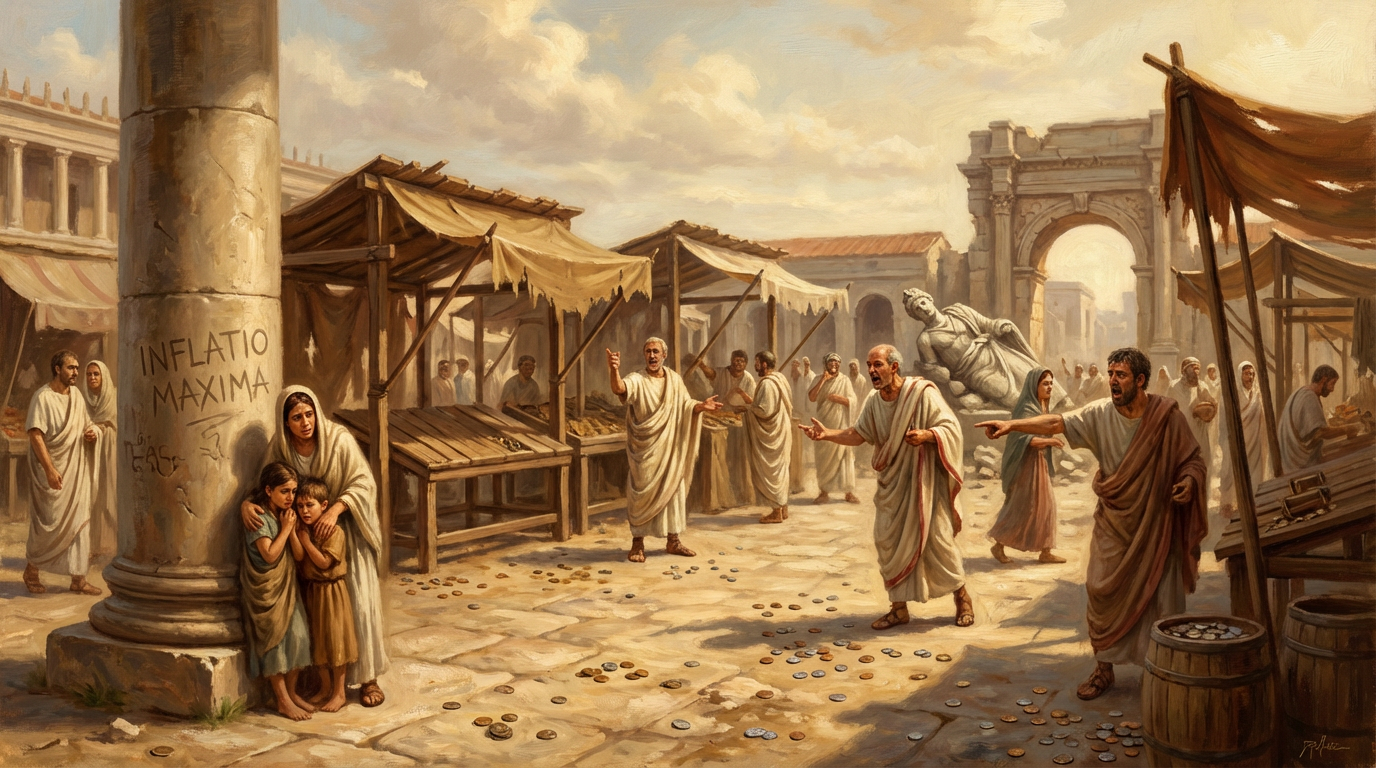
Travel back to 301 CE. The Roman Empire is on its knees. Decades of civil war, foreign invasions, and rampant plagues have shattered the economy. This was the “Crisis of the Third Century,” and the man who inherited the mess was Emperor Diocletian.
Like Trump, Diocletian was a strongman, a brilliant administrator who rose from humble beginnings to command the most powerful empire in the world. And like Trump, he faced an inflation crisis that was eroding the very foundation of his power: the loyalty of his soldiers, whose pay was becoming worthless.
Diocletian, in his own words, was filled with “deep outrage” at the runaway prices, which had climbed “not fourfold or eightfold but so much that the human tongue’s reckoning cannot untangle” the cost. He didn’t see a complex economic problem. He saw greed. He saw “effrontery hijacking the public interest.”
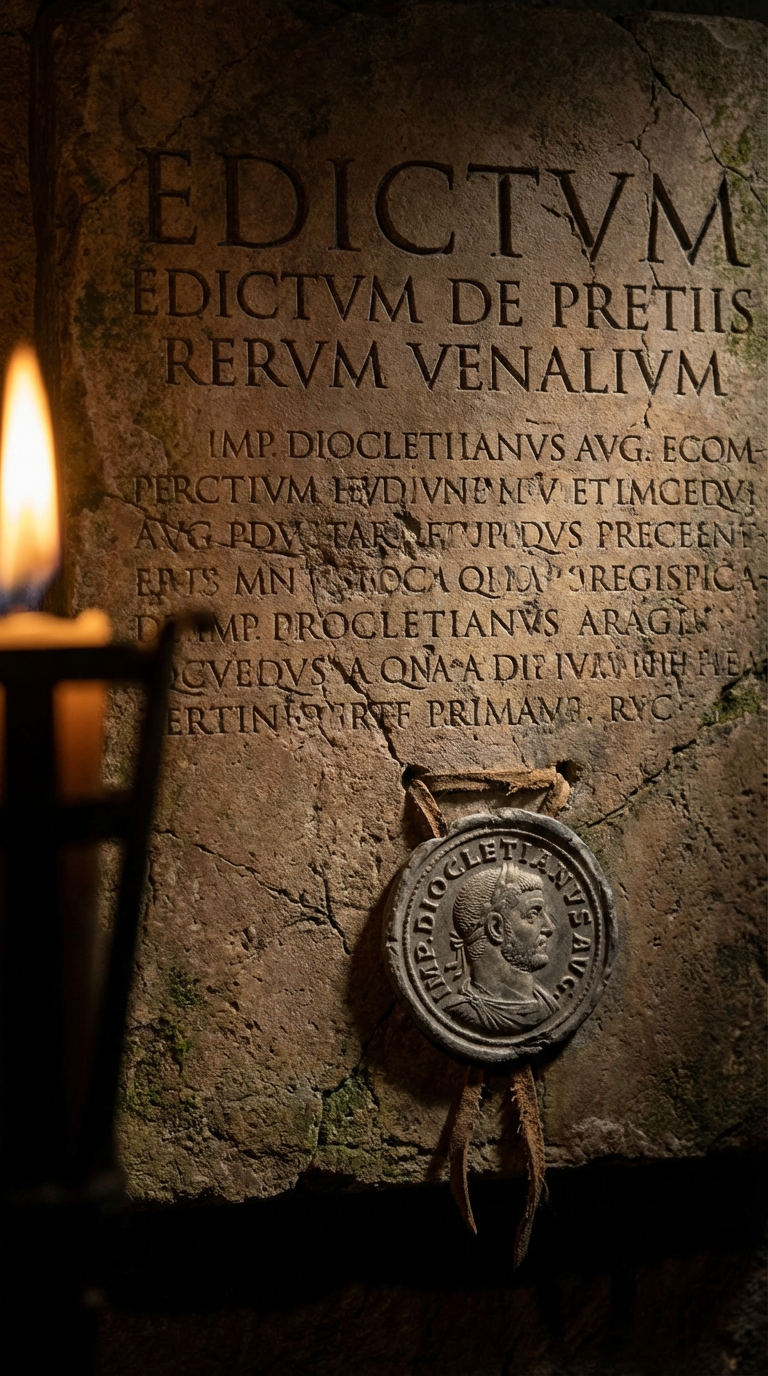
His solution was not to fix the debased currency or shattered supply chains. It was to issue a command. The Edict on Maximum Prices was a decree that set price caps on over 1,200 goods and services across the entire empire. The penalty for violating it? Death.
It was the ultimate top-down solution from a leader utterly disconnected from the reality of the marketplace.
And it was a catastrophic failure.
Merchants simply stopped selling goods at a loss. A massive black market erupted overnight. The very items Diocletian tried to make affordable disappeared from the shelves, hoarded and sold in secret at even higher prices. The edict, meant to save the economy, only made the shortages and suffering worse.
Frustrated and defeated by an economic reality he could not bend to his will, Diocletian did the unthinkable. In 305 CE, he voluntarily abdicated, becoming one of the only Roman emperors to ever willingly give up power. He retired to his magnificent palace in modern-day Croatia to spend the rest of his days gardening.

When his old co-emperor begged him to return to politics and save the fragmenting empire, Diocletian famously replied that if his friend could only see the magnificent cabbages he was growing, he would understand the impossibility of the suggestion.
He had traded the fate of the world for a vegetable patch.
He had given up.
5 Things You Can Do Before History Repeats Itself
The parallels are chilling. A powerful leader, facing an economic crisis he can’t control, resorts to top-down commands and quick-fix promises, all while seeming disconnected from the daily struggles of his people. Diocletian’s story is a stark warning: when leaders try to defy economic gravity, the fall can be devastating.
But you don’t have to be a victim of history. The same patterns of decline that toppled Rome are visible today, and the wise prepare. Here are five practical steps you can take this week to secure your family’s future:
1. Build Your Personal Stockpile. The Romans faced empty shelves because of a failed government decree. Today, our supply chains are just as fragile. Learn the fundamentals of creating a reliable food and water stockpile with guides on SurvivalStronghold.com that detail how to start building a resilient pantry, ensuring your family doesn’t have to depend on a fragile system.
2. Master a Self-Reliance Skill. Diocletian retired to a farm. While you may not have a palace, learning to produce your own food is a powerful step toward independence. The 4ft Farm Blueprint offers a revolutionary way to grow your own food in a tiny space, turning a small patch of your yard into a source of security and sustenance.
3. Secure Your Health, Naturally. The Roman crisis was compounded by plagues. Our own modern healthcare system is brittle and often focuses on profits over people. Explore natural and holistic health solutions to reduce your dependence on a fragile pharmaceutical supply chain. Websites like FreedomHealthDaily.com and SevenHolistics.com offer a wealth of information on natural remedies and building a resilient immune system.
4. Embrace the Homesteader Mindset. The ultimate form of self-reliance is the ability to provide for yourself. Whether you live in the city or the country, you can adopt the principles of homesteading. HomesteaderDepot.com is a treasure trove of knowledge for anyone looking to become more independent, from off-grid energy solutions to traditional skills.
5. Stay Informed with Independent Sources. The mainstream narrative often misses the real story. Diocletian’s subjects were fed propaganda while their world crumbled. The Self-Reliance Report provides news and analysis that cuts through the noise, helping you understand the real threats and opportunities in our increasingly unstable world.
History is not just a story. It is a warning. The echoes of Diocletian’s failure are a wake-up call. The time to prepare is now, before the leaders of today decide to join the emperors of yesterday in their cabbage patches.
Tired of empty promises and emptier shelves?
The same government incompetence that led to Rome’s collapse is playing out in real-time. While politicians offer soundbites, you’re left staring at a grocery bill that looks like a car payment.
It’s time to take control. The 4ft Farm Blueprint is your declaration of independence. This simple, step-by-step system shows you how to grow a surprising amount of fresh, healthy food in a space so small you won’t believe it.
Stop worrying about what the White House will do next and start building your own personal food supply. Click here to learn how to secure your family’s future, one delicious harvest at a time.
References
[1] Reuters. “Trump faces same reality as Biden: Americans despise higher prices.” November 22, 2025. https://www.reuters.com/world/us/trump-faces-same-reality-biden-americans-despise-higher-prices-2025-11-22/
[2] The Conversation. “Skyrocketing prices are an age-old problem. Here’s how Roman emperors battled runaway inflation.” December 29, 2024. https://theconversation.com/skyrocketing-prices-are-an-age-old-problem-heres-how-roman-emperors-battled-runaway-inflation-243921
[3] History Today. “Abdication of the Emperor Diocletian.” May 5, 2005. https://www.historytoday.com/archive/abdication-emperor-diocletian