
It ended not with a bang, but with a whimper.
The “Department of Government Efficiency,” the much-hyped, Musk-led agency tasked with gutting the federal government, has been quietly dismantled. After just eight months of chaos, 200,000 firings, and a trail of broken promises, the Trump administration has confirmed it’s over. “That doesn’t exist,” a senior official told Reuters, confirming the rumors that have swirled for months.
They promised a revolution. They delivered a quiet, unceremonious collapse.
For those of us who watch the patterns of history, this story is chillingly familiar. It’s a story that played out over 2,400 years ago in the cradle of democracy, Athens. It’s the story of a temporary “reform” committee that promised to restore order and ended up unleashing a reign of terror that lasted… you guessed it… eight months.
They were called the Thirty Tyrants. And their story is a terrifying warning about what happens when a society, desperate for change, hands absolute power to men who promise to burn it all down.
The Time Portal: Athens, 404 BCE
Imagine Athens. Not the gleaming city of philosophers and playwrights, but a city on its knees. The Peloponnesian War, a brutal 27-year conflict with their rival, Sparta, had ended in a humiliating defeat. The city was starving, its walls were torn down, and its democratic spirit was broken.
Into this power vacuum stepped the victorious Spartans. They didn’t want to rule Athens directly, but they demanded the Athenians tear down their own democracy and install an oligarchy—a government run by a select few. The exhausted, desperate Athenian assembly agreed.
They were instructed to choose thirty men to “draw up the ancestral laws” and restore a more “traditional” form of government. These thirty men, led by the ruthless ideologue Critias, were mostly aristocrats who had been exiled by the democracy. They presented themselves as reformers, patriots who would cleanse the city of corruption and restore its former glory.
They were the Thirty Tyrants. And their first act was to promise a return to “efficiency.”
The Story: The Rise and Fall of the Thirty
At first, the Thirty were popular. They rounded up and executed known criminals and “sycophants”—the corrupt officials who had plagued the democracy. The citizens of Athens, weary of chaos, applauded. This was the efficiency they had been promised. This was the strong leadership they craved.
But the purges didn’t stop there.
Emboldened by their initial success, the Thirty hired 300 “whip-bearers” to act as their personal enforcers. They requested a Spartan garrison to be stationed in the city, not for defense, but to protect them from their own people. The mask of reform was slipping.
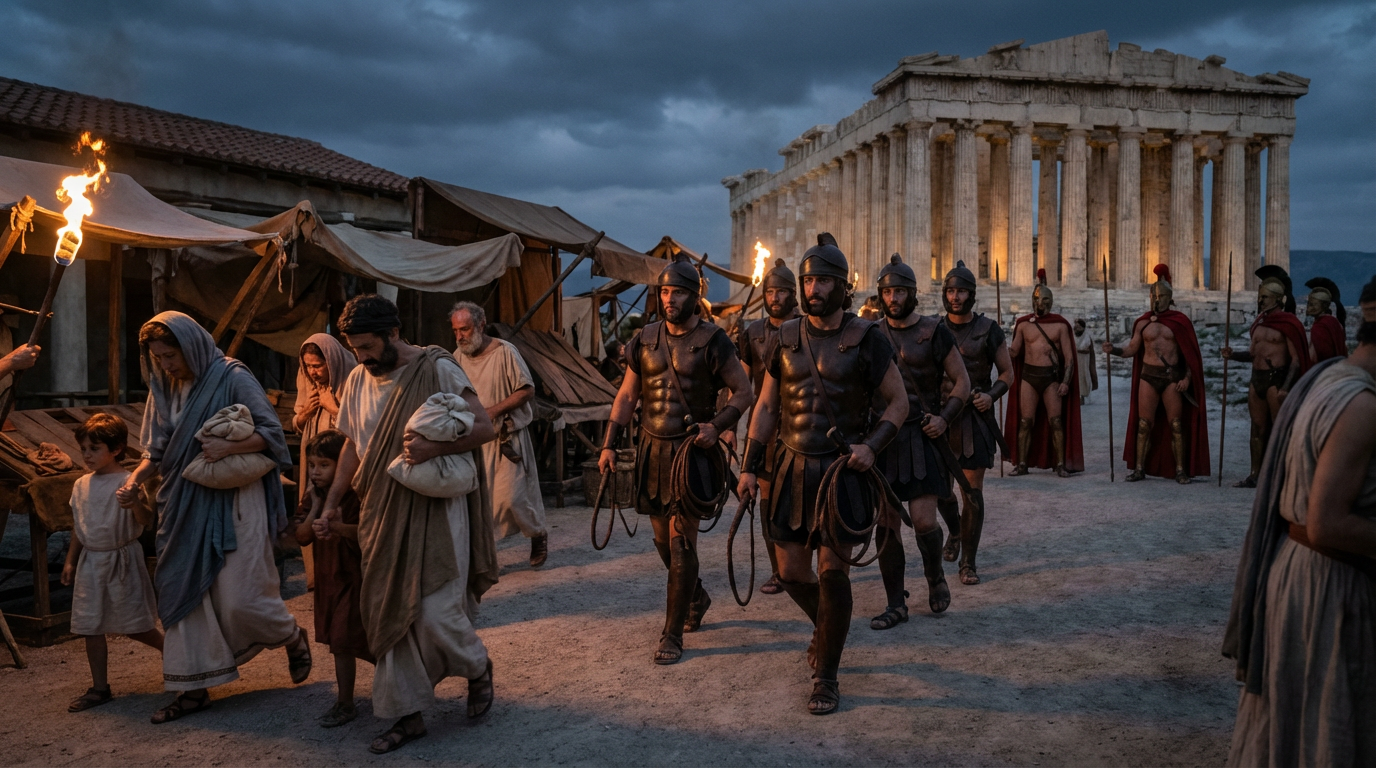
The real terror began when the Thirty turned their attention to the wealthy. They began executing rich citizens and metics (foreign residents) not for any crime, but to confiscate their property. The assets of the dead were distributed among the Thirty and their supporters. It was a government-run shakedown, a brutal campaign of murder for profit.
To consolidate their power, the Thirty then stripped citizenship from all but 3,000 hand-picked loyalists. Only these 3,000 were allowed to carry weapons, serve on juries, or even live within the city walls. Everyone else was a second-class citizen, stripped of their rights and living in constant fear.
One of the Thirty, a man named Theramenes, grew sickened by the violence. He had initially supported the oligarchy but was horrified by the monster it had become. He argued that the regime was creating more enemies than it was eliminating. He pleaded with Critias to stop the killings and broaden the base of citizenship.
Critias’s response was swift and brutal. He accused Theramenes of treason in front of the council. When the council hesitated, Critias, flanked by his whip-bearers, struck Theramenes’ name from the list of the 3,000, stripping him of his right to a trial. He was then dragged away and forced to drink hemlock, the state-sanctioned poison.
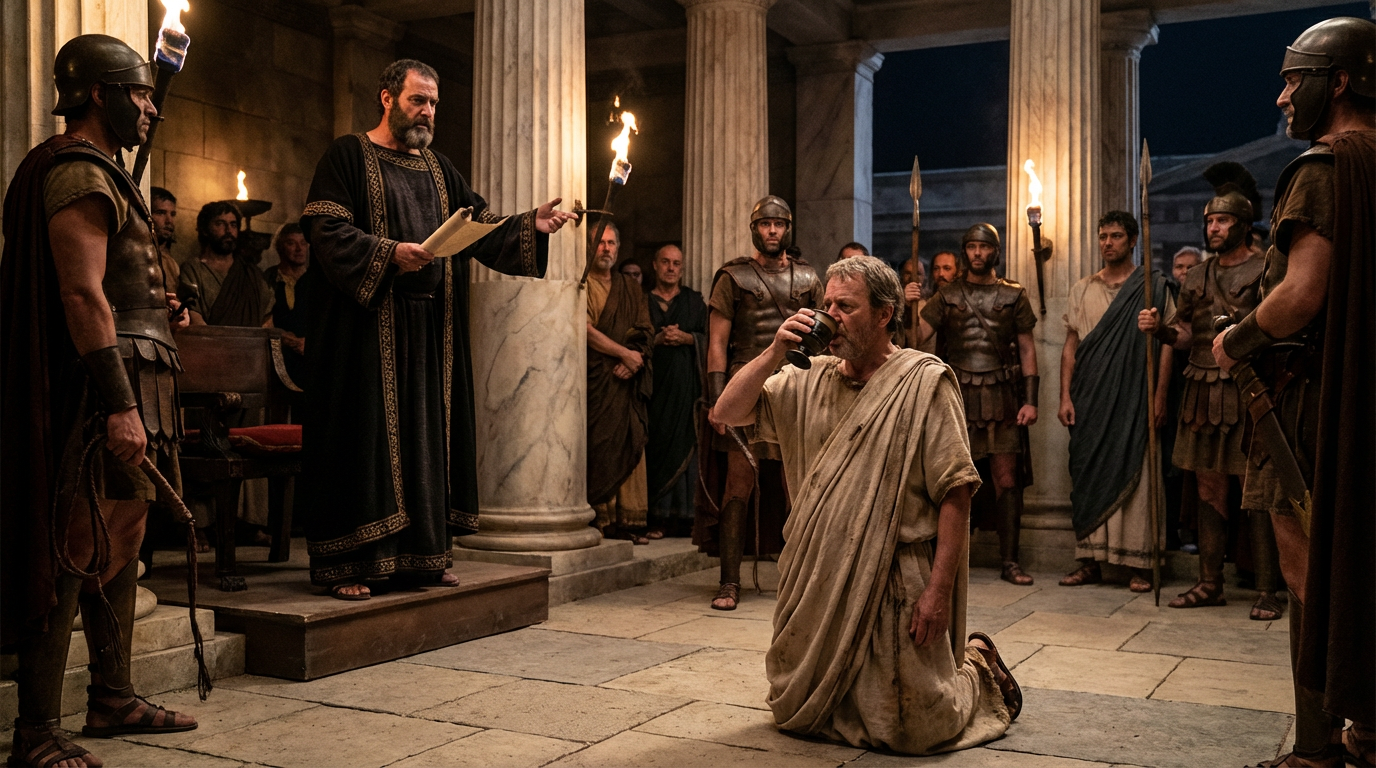
The message was clear: no dissent would be tolerated.
But the terror could not last. An exiled Athenian general named Thrasybulus gathered a small force of 70 men and seized a fortified outpost on the border of Attica. His small band of rebels grew as more and more exiles and disaffected citizens flocked to his banner. In a decisive battle at the port of Piraeus, the democratic forces defeated the army of the Thirty. Critias himself was killed in the fighting.
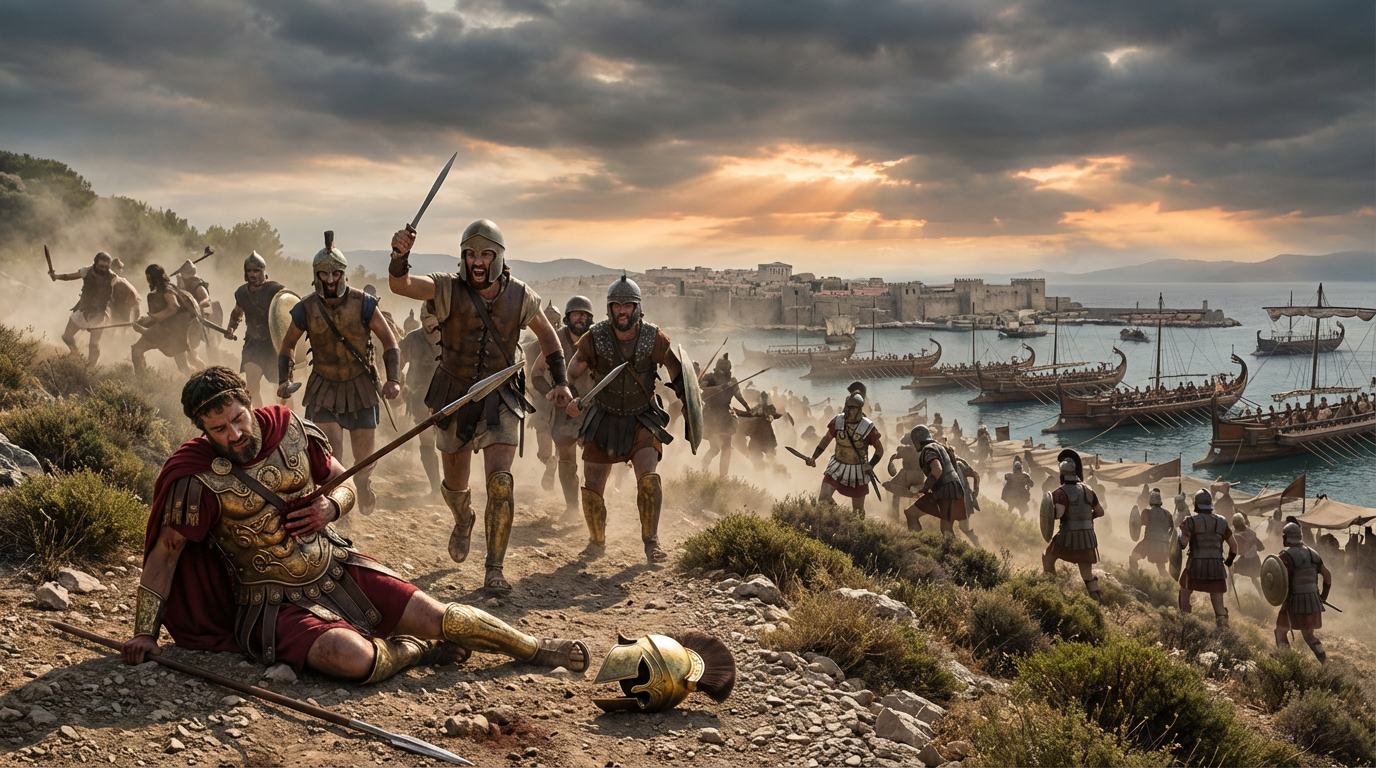
After just eight months, the reign of terror was over. The Thirty were deposed, and democracy was restored. The people of Athens had looked into the abyss, and they had chosen to turn back. So profound was the trauma that the concept of “oligarchy” was discredited for generations. The Thirty Tyrants became a byword for tyranny, a permanent stain on the history of Athens.
The Lesson: The Pattern of Failed Reform
So what does a 2,400-year-old story about a failed Athenian oligarchy have to do with us today? Everything.
Look at the parallels between the Thirty Tyrants and the “Department of Government Efficiency”:
| Feature | The Thirty Tyrants (404 BCE) | The DOGE Committee (2025) |
|---|---|---|
| Origin | Installed after a crisis with promises of reform | Created by executive order with promises of efficiency |
| Leadership | A small group of unelected ideologues | A small group of unelected ideologues |
| Methods | Purges, executions, property confiscation | Mass firings, budget slashing, lack of consultation |
| Justification | Cleansing the city of “unjust men” | Eliminating “waste, fraud, and abuse” |
| Accountability | None. They were the law | None. Operated in secrecy with no public accounting |
| Duration | 8 months | 8 months |
| Outcome | Overthrown, legacy of tyranny | Quietly disbanded, legacy of chaos |
This is not a coincidence. It is a pattern.
When a society becomes convinced that its institutions are hopelessly corrupt and broken, it becomes vulnerable to the siren song of the strongman, the reformer who promises to burn it all down. They promise efficiency, but they deliver chaos. They promise to drain the swamp, but they create a cesspool of their own.
The DOGE committee, like the Thirty Tyrants, operated on the premise that the existing system was so rotten that it needed to be destroyed, not reformed. They saw themselves as outsiders with a special mandate to ignore the rules and get things done. They were not accountable to the people, only to their own ideology.
And the result, just like in ancient Athens, was a brief, chaotic reign that did immense damage before collapsing under the weight of its own arrogance and incompetence.
This is the lesson of history. The road to tyranny is paved with promises of efficiency.
The Action: What You Can Do This Week
The collapse of DOGE is not the end of the story. It is a warning. The forces that created it are still at work. The belief that our institutions are failing is widespread, and for good reason. The desire for a strong leader to fix things is a powerful and dangerous impulse.
So what can you do? You can start by making yourself and your family less dependent on the fragile systems that are so clearly failing.
1. Build Your Own Food Supply. The most basic form of self-reliance is the ability to feed yourself. The 4ft Farm Blueprint is a revolutionary system that allows you to grow a massive amount of food in a tiny space. It’s the single best step you can take to declare your independence from the broken food system. Click here to learn more.
2. Secure Your Home. As institutions crumble, security becomes a primary concern. Visit SurvivalStronghold.com for expert advice on how to turn your home into a fortress.
3. Get Informed. You can’t rely on the mainstream media to tell you the truth. SelfRelianceReport.com provides independent news and analysis that you won’t find anywhere else.
4. Take Control of Your Health. Our healthcare system is a bureaucratic nightmare. Learn how to take care of yourself and your family with natural, time-tested remedies from SevenHolistics.com and FreedomHealthDaily.com.
5. Learn Real Skills. In a world of failing institutions, practical skills are the ultimate currency. HomesteaderDepot.com is your go-to resource for learning the skills of self-sufficiency, from canning and preserving to off-grid energy.
History has given us a clear warning. The question is, will we listen?
Sponsor: The 4ft Farm Blueprint
Are you tired of relying on a fragile food system that could collapse at any moment?
For less than the cost of a single trip to the grocery store, you can own the revolutionary 4ft Farm Blueprint and build a food-producing powerhouse in your own backyard. This isn’t just a garden plan; it’s a complete system for food independence.
- Grow 10x more food in the same space
- Slash your grocery bills and eat healthier
- Protect your family from the next supply chain crisis
Don’t wait for the shelves to go empty. Click here to get your 4ft Farm Blueprint today and secure your family’s future.
References
[1] The Guardian. (2025, November 23). ‘That doesn’t exist’: Doge reportedly quietly disbanded ahead of schedule. https://www.theguardian.com/us-news/2025/nov/23/trump-musk-doge-reportedly-disbanded
[2] World History Encyclopedia. (2015, November 13). The Thirty Tyrants. https://www.worldhistory.org/The_Thirty_Tyrants/
[3] Xenophon. Hellenica, Book 2, Chapter 3.
[4] Aristotle. Athenian Constitution, 35.
[5] Xenophon. Hellenica, Book 2, Chapter 3, Sections 50-56.
[6] Xenophon. Hellenica, Book 2, Chapter 4.