***
## The Modern Mystery
The air in America today is thick with a strange, unsettling contradiction.
On one hand, you hear the triumphant pronouncements from the halls of power. We are told the economy is strong, perhaps even in a “golden age.” The official numbers are polished and presented with a flourish.
Yet, on the other hand, you feel the undeniable, grinding pressure of the grocery store aisle and the gas pump. For the average American family, the numbers on the receipt tell a very different story.
This is the modern mystery: a profound and growing disconnect between the official narrative and the lived reality of the people. It is a feeling of being told one thing while your wallet screams another.
The political spin doctors assure us that the rising cost of living is temporary, a minor adjustment, or even a sign of success. But the persistent anxiety in the national conversation suggests something deeper is at play.
It is the fear that the very foundation of our prosperity is being quietly eroded, a fear that history tells us is not only rational but urgently necessary.
This is not the first time a great power has faced a crisis of confidence in its own currency. In fact, the pattern is so old it is literally stamped on the face of a forgotten, tarnished coin.
***
## The Time Portal
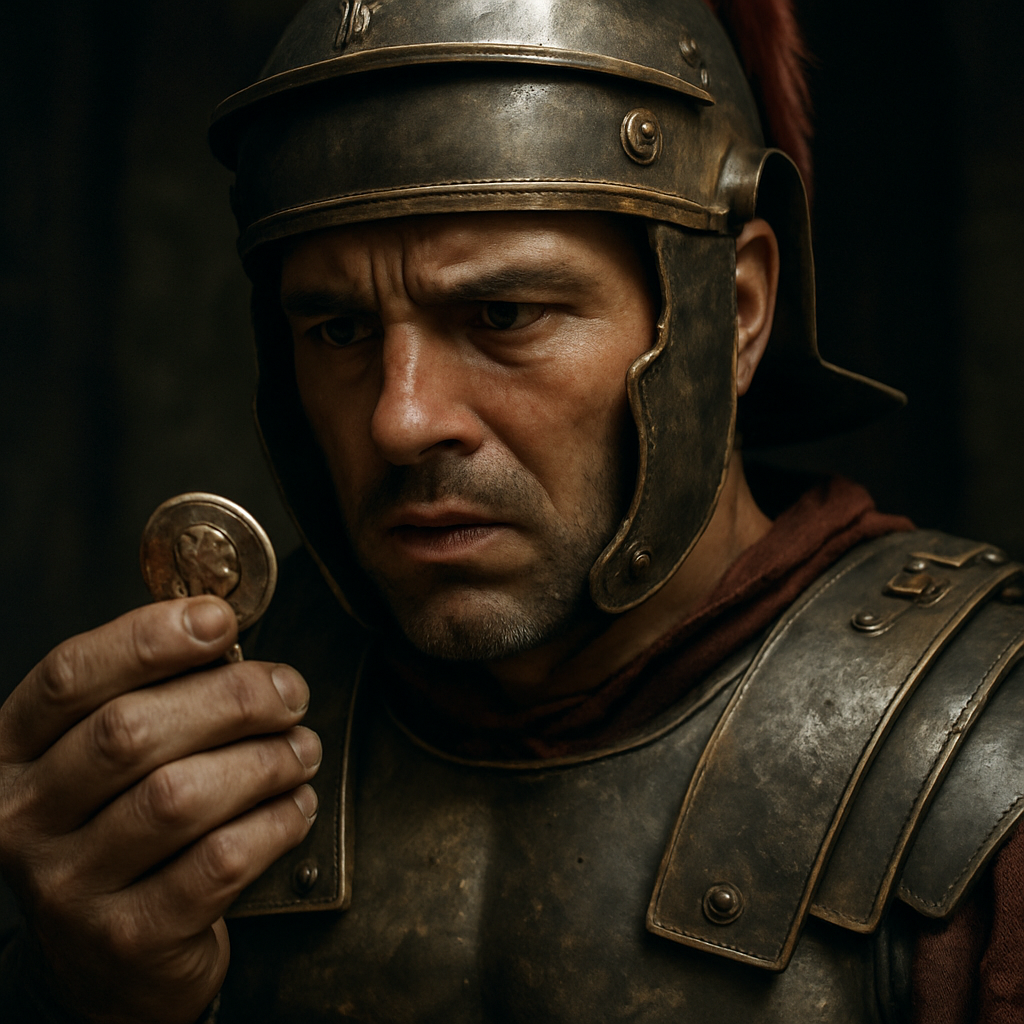
Step into the year 260 AD, into the heart of the Roman Empire during the tumultuous **Crisis of the Third Century** [1].
The streets of Rome are still magnificent, but the grandeur is a thin veneer over a crumbling foundation. The empire is being torn apart by civil wars and barbarian invasions on every frontier.
Imagine a soldier named Lucius, stationed far from home, receiving his monthly pay. It is a handful of coins, the *antoninianus*, which is supposed to be the backbone of the Roman economy.
Lucius holds the coin up to the weak Mediterranean sun. It has a thin, silvery wash, a deceptive gleam that quickly rubs off to reveal the dull, reddish copper beneath.
The coin is a lie.
His grandfather’s pay was in solid silver. His father’s was mostly silver. But Lucius’s coin is less than 5% silver, yet the imperial decree insists it holds the same value [3].
The Emperor, desperate to pay the legions and fund the endless wars, has been systematically debasing the currency. It is the ultimate political sleight of hand: print more money without actually having more wealth.
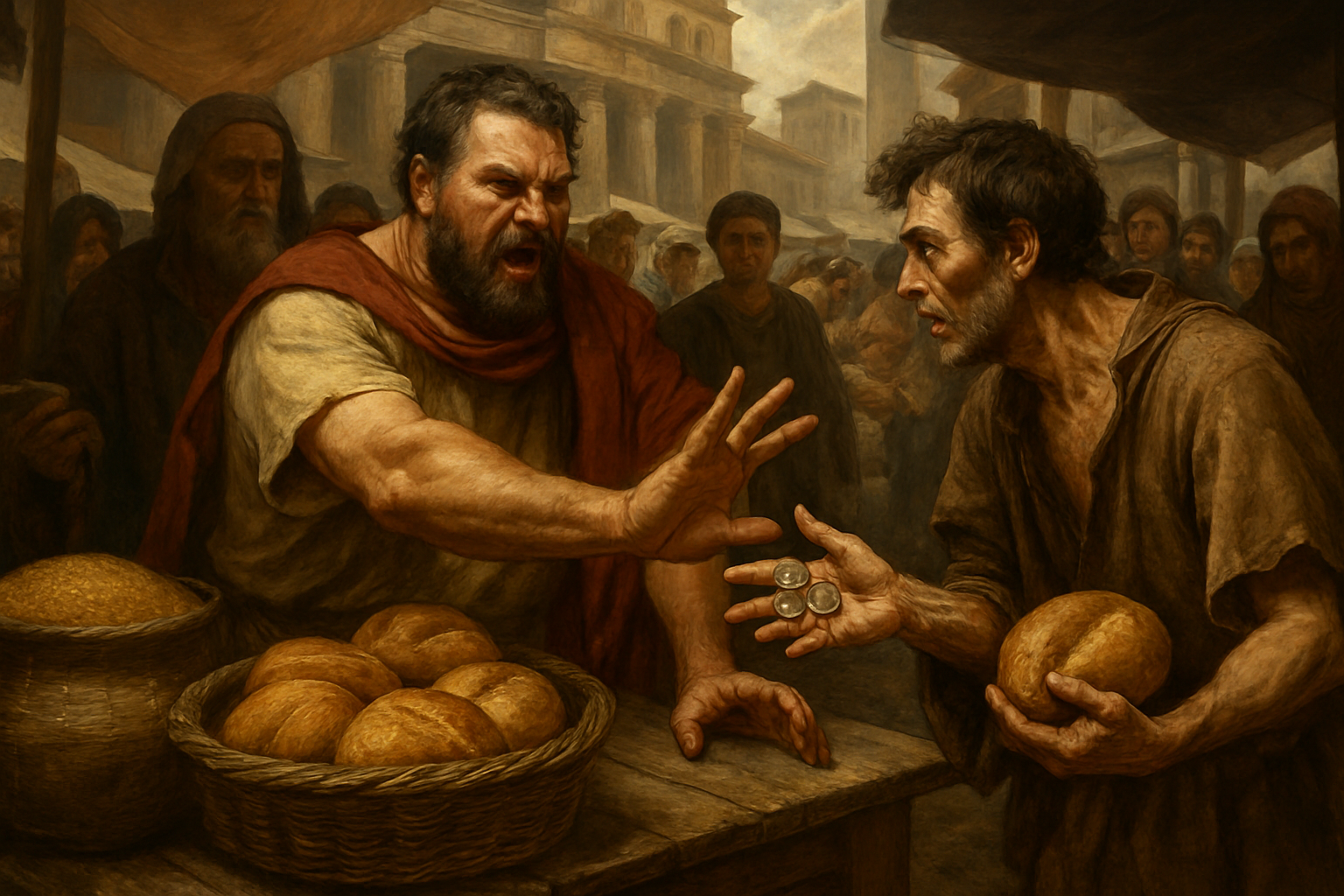
Lucius takes his copper-core coin to the market to buy grain for his family. The merchant, who is not a fool, knows the coin is worthless. He demands twice as many coins as last month, or perhaps he refuses the imperial currency altogether, demanding payment in actual grain or labor instead.
The soldier, the very man who defends the empire, is being robbed by the empire itself.
***
## The Parallel Revelation

The stunning parallel between Lucius’s Rome and our modern America is not about the metal content of our money, but the **integrity of the promise** behind it.
In 260 AD, the Roman government was engaged in a massive, systemic campaign of economic denial. They were spending far beyond their means, and instead of raising taxes (a politically suicidal move), they chose the silent, insidious tax of inflation [4].
They simply lied about the value of the currency.
Today, our government does not shave silver from the coin, but it achieves the same effect through unrestrained fiscal policy and the expansion of the money supply. The result is identical: the purchasing power of the dollar is silently, relentlessly debased.
Just as the Roman merchant lost faith in the *antoninianus*, the modern American loses faith in the stability of their savings and the future value of their wages.
The political spin in both eras is chillingly similar. The Emperors blamed greedy merchants, foreign invaders, or bad luck. Our modern leaders blame supply chain issues, corporate greed, or global conflicts.
The truth, then and now, is that the crisis is **internal**. It is a crisis of political will, where short-term political survival is prioritized over long-term economic stability.
The Roman citizen saw their life savings evaporate in a wave of hyperinflation, forcing them to abandon the cities and return to a localized, barter-based economy. The central government’s economic control collapsed because its promise—the value of its money—was broken [2].
***
## The Pattern Recognition
Why does this pattern repeat across two millennia? Because human nature, and the nature of political power, has not evolved.
The pattern is simple: **The path of least resistance is always the path to ruin.**
When a government faces a financial crisis, it has three choices: raise taxes, cut spending, or print money (debase the currency).
Raising taxes is unpopular. Cutting spending is political suicide. Printing money is the quiet, invisible option. It allows the politician to fund their projects and pay their debts without a public outcry—at least not immediately.
This is the **eternal temptation of the state**: to solve a solvency problem with a liquidity trick.
The Roman Emperors, like modern politicians, were trapped in a cycle of short-term thinking. They needed to win the next battle, pay the next legion, and secure the next year of power. The long-term consequence—the collapse of the entire economic system—was always a problem for the next Emperor.
This pattern reveals a fundamental truth: **The health of a nation’s currency is a direct reflection of the integrity of its leadership.** When the leadership lies about the value of the money, they are lying about the health of the nation.
***
## The Ancient Warning
The final, terrifying lesson from the Crisis of the Third Century is what happened next.
As the central currency failed, the vast, interconnected Roman Empire began to **fracture**. People stopped relying on Rome for their economic survival.
Local governors, generals, and wealthy landowners began to hoard real assets—land, gold, and food—and created their own localized economies. The empire broke into three pieces: the Gallic Empire in the West, the Palmyrene Empire in the East, and the weakened central core.
The warning for us is clear: **When the central economic promise is broken, people will inevitably turn to local, tangible, and self-reliant solutions.**
The Crisis of the Third Century was not solved by a new coin, but by a radical decentralization of life. The people who survived were the ones who had already prepared for the collapse of the central system. They were the ones who could feed themselves, protect their assets, and trade with their neighbors without relying on the Emperor’s tarnished coin.
***
## 5 Things Readers Can Do This Week
History is not a death sentence; it is a warning. The patterns of the past give us the blueprint for survival in the present. Here are five practical steps you can take this week to prepare for the modern debasement of the dollar:
1. **Audit Your Financial Fortress:** Just as the Romans hoarded gold and silver, you must secure your financial records and assets. Create a **Financial Preparedness Binder** that details all your accounts, insurance policies, and essential documents, ensuring you have a clear picture of your true wealth outside of the fluctuating currency. [Link to Survival Stronghold Article on Financial Preparedness](https://survivalstronghold.com/financial-preparedness-binder-guide/)
2. **Master the Art of Self-Reliance:** The Roman citizens who survived the collapse were those who could produce their own necessities. Start learning the skills of **self-reliance** today. This includes everything from basic repair to water purification, making you less dependent on a fragile, centralized supply chain. [Link to Self-Reliance Report Article on Core Skills](https://selfreliancereport.com/core-self-reliance-skills/)
3. **Secure Your Food Supply:** Inflation hits food prices first and hardest. Take control of your family’s most basic need by building a **long-term food storage** that can weather any economic storm. This is your personal, non-debasable currency. [Link to Homesteader Depot Article on Food Storage](https://homesteaderdepot.com/long-term-food-storage-guide/)
4. **Protect Your Mental Health from Economic Stress:** The constant anxiety of economic uncertainty is a weapon against your well-being. Learn **stress management techniques** and natural remedies to keep your mind sharp and your body healthy, ensuring you can make clear decisions when others are panicking. [Link to Freedom Health Daily Article on Stress](https://freedomhealthdaily.com/stress-management-economic-crisis/)
5. **Invest in Tangible Assets:** The Romans abandoned the copper coin for land and hard goods. Look for ways to convert your paper wealth into **tangible assets** that cannot be printed into oblivion, such as tools, durable goods, or even a small, productive garden. [Link to Seven Holistics Article on Natural Living/Tangible Assets](https://sevenholistics.com/investing-in-tangible-assets/)
***
## Sponsor Spotlight: Never Be Powerless Again
The Roman Empire’s collapse was a slow-motion disaster, but a modern crisis can happen in an instant. When the grid goes down, your self-reliance skills are useless without power.
Don’t be caught in the dark.
**The Lost Generator** is a 100-year-old secret that slashes power bills by 90% and keeps your home running when the lights go out. This simple, forgotten technology is the ultimate defense against a fragile, centralized power grid.
[**Click Here to Discover the 100-Year-Old Secret That Slashes Power Bills by 90%**](https://hop.clickbank.net/?affiliate=magneticmb&vendor=thelostgen&pid=cbmainvsl&tid=hd72425pm11)
***
## Special Offer: Your Family’s Food Security Blueprint
The most important lesson from Rome is that when the system fails, **food is the only true currency**.
That is why we are proud to feature the **4ft Farm Blueprint**. This is not just a gardening guide; it is a comprehensive, step-by-step plan to create a hyper-efficient, high-yield food source in a tiny space.
It is your family’s personal, non-debasable food bank, ensuring you can feed your loved ones no matter what the government does to the dollar.
[**Get the 4ft Farm Blueprint and Start Growing Your Own Economic Security Today!**](https://4ftfarmblueprint.com/)
***
## References
[1]: The Crisis of the Third Century. *Wikipedia*. [URL: https://en.wikipedia.org/wiki/Crisis_of_the_Third_Century]
[2]: Hyperinflation: The Silent Force Behind Rome’s Fall and Its Echoes in Modern Economies. *Medium*. [URL: https://hansenvalueinvesting.medium.com/hyperinflation-the-silent-force-behind-romes-fall-and-its-echoes-in-modern-economies-d3a8af97f231]
[3]: Debasement and the decline of Rome. *University of Warwick*. [URL: https://warwick.ac.uk/fac/arts/classics/intranets/staff/butcher/debasement_and_decline.pdf]
[4]: The Economics of Government and the Fall of Rome. *Social Studies*. [URL: https://www.socialstudies.org/system/files/publications/articles/se_77021360.pdf]