A special report from Shamus Gerry III
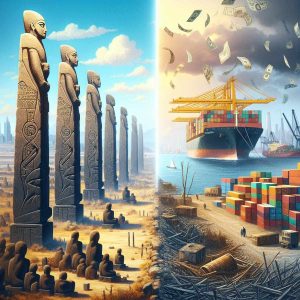
An empire does not die by the sword alone. It dies when it can no longer feed itself. It dies when it devours the very people who work the land, sacrificing its foundation for the short-term greed of a powerful few.
This is not ancient history. This is a warning.
This week, a bipartisan group of 27 former U.S. agricultural leaders sent a letter to Congress with a chilling message: President Trump’s economic policies risk triggering a “widespread collapse of American agriculture.”
The numbers are a death knell for the American family farm. Farmer bankruptcies have doubled. Barely half of all farms will be profitable this year. The U.S. is running a historic agriculture trade deficit. China, once the buyer of 40% of U.S. soybeans, has all but vanished. 315 farms filed for Chapter 12 bankruptcy in 2025 alone, a 46% increase.
“Our farmers and ranchers can compete with the world,” said one former industry leader, “but they can’t compete with the world with a chaotic set of policy circumstances.”
It feels like a new and unique American crisis.
It is not.
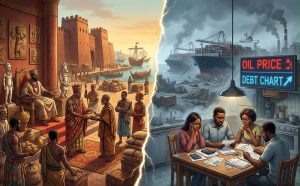
A thousand years ago, the most powerful empire in the world faced the exact same crossroads. It chose the path of greed and self-destruction. And in doing so, it signed its own death warrant. The story of the Byzantine Empire’s agricultural collapse is a terrifyingly precise blueprint for the disaster America is now courting.
The Soldier-Farmers Who Forged an Empire
For centuries, the strength of the Byzantine Empire was not in its gilded palaces, but in its fields. The backbone of its legendary army was the “theme system.” The empire was divided into military districts, or themes, where land was granted to farmers in exchange for military service.
These were not serfs. They were free men, loyal soldiers, and productive farmers all in one. This system created a vast, motivated, and affordable army. The theme of Thrakesion alone could field nearly 10,000 men. It was the foundation of Byzantine power, a perfect union of military might and agricultural prosperity.
But there were wolves at the door. A class of wealthy, powerful aristocrats known as the dynatoi began to covet the small farms of their neighbors. They used their wealth and influence to buy up land, creating vast, consolidated estates.
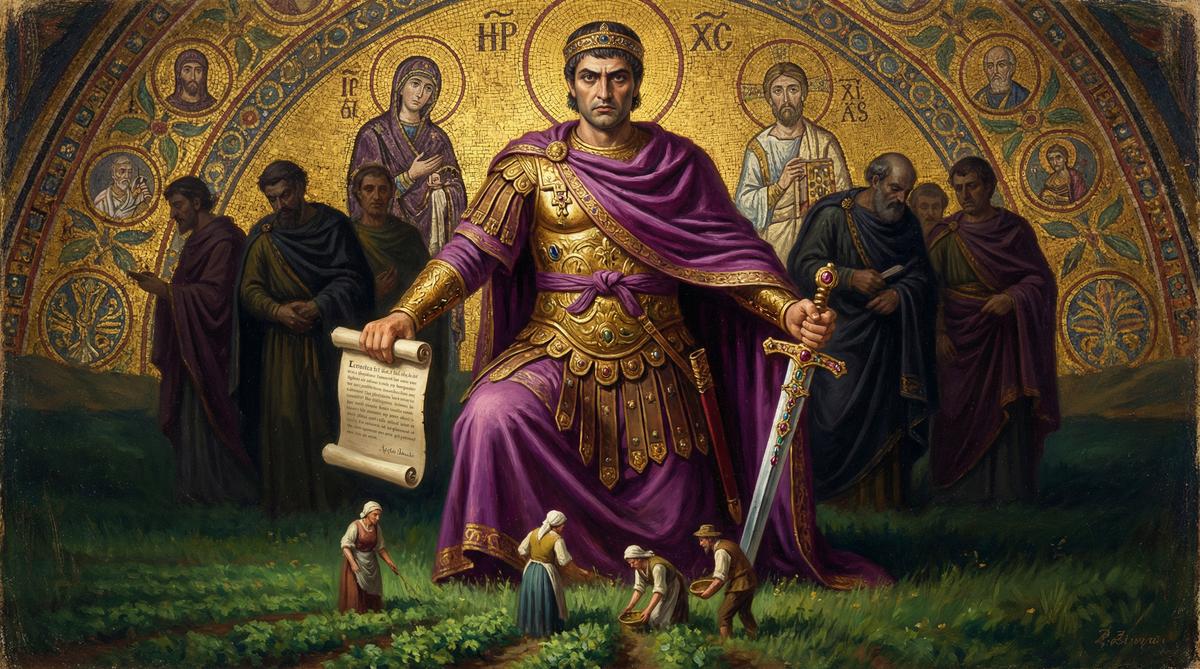
Emperor Basil II, known as the “Bulgar-Slayer,” was one of the last great emperors to understand the danger. He saw the dynatoi for what they were: a cancer on the empire. He passed ruthless laws to protect small farmers, even creating a special tax, the allelengyon, that forced the wealthy to cover the tax debts of the poor.
For nearly 50 years, Basil II held the line. He fought the aristocrats at home as fiercely as he fought the empire’s enemies abroad. He left behind a treasury overflowing with gold and an empire that was strong, stable, and secure.
But the wolves were patient.
The Empire That Ate Its Own
After Basil II’s death in 1025, the aristocrats he had suppressed seized control. His successors were weak, decadent, and easily manipulated. Within three years, the allelengyon tax was abolished. The laws protecting small farmers were dismantled.
The dynatoi fell upon the small farms like a plague of locusts. They bought out, pushed out, and squeezed out the soldier-farmers who had been the empire’s strength. The land was consolidated into massive, unproductive estates, often worked by serfs with no loyalty to the empire.
The final, fatal blow came under Emperor Constantine IX Monomachos. In a stunning act of short-sighted greed, he disbanded the army of the entire Iberian theme — 50,000 men who guarded the empire’s critical eastern frontier. He converted their military service into a simple tax payment.
The soldier-farmers were gone. The themes were hollowed out. The army that had once been the envy of the world was replaced by a patchwork of expensive, unreliable foreign mercenaries.
The stage was set for disaster.
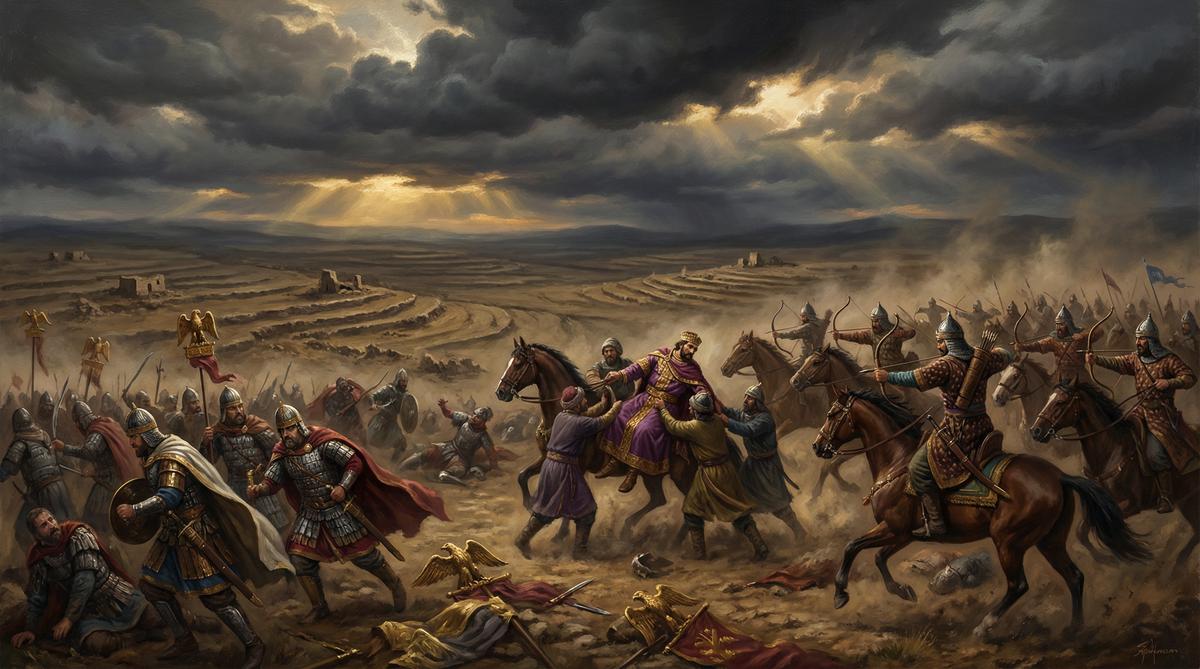
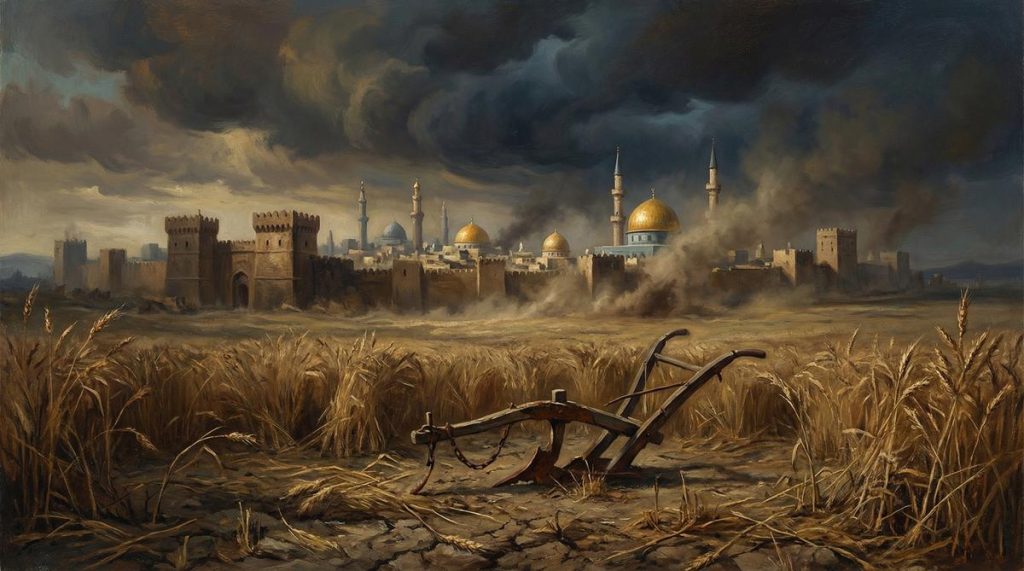
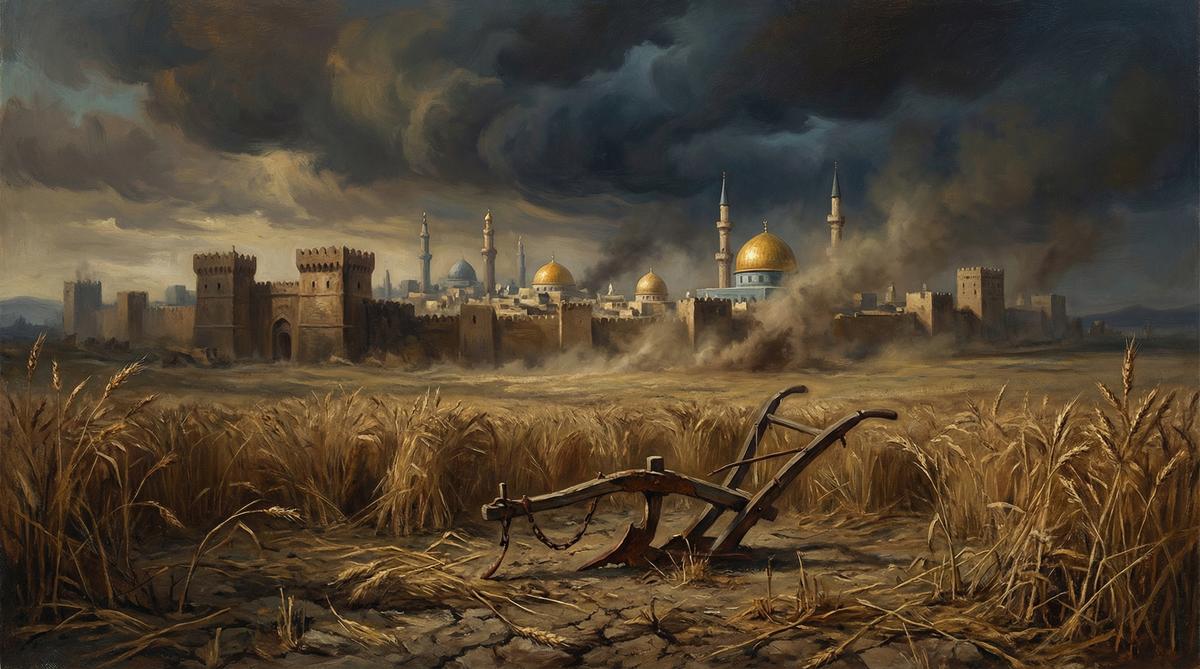
In 1071, at the Battle of Manzikert, the Seljuk Turks smashed the Byzantine army. Emperor Romanos IV was captured. The mercenaries fled or turned traitor. Anatolia, the agricultural heartland of the empire, was lost forever.
The empire never recovered. It had starved its own foundation. It had chosen the wealth of a few over the strength of the many. And it paid the ultimate price.
The Lesson: A Nation That Destroys Its Farmers, Destroys Itself
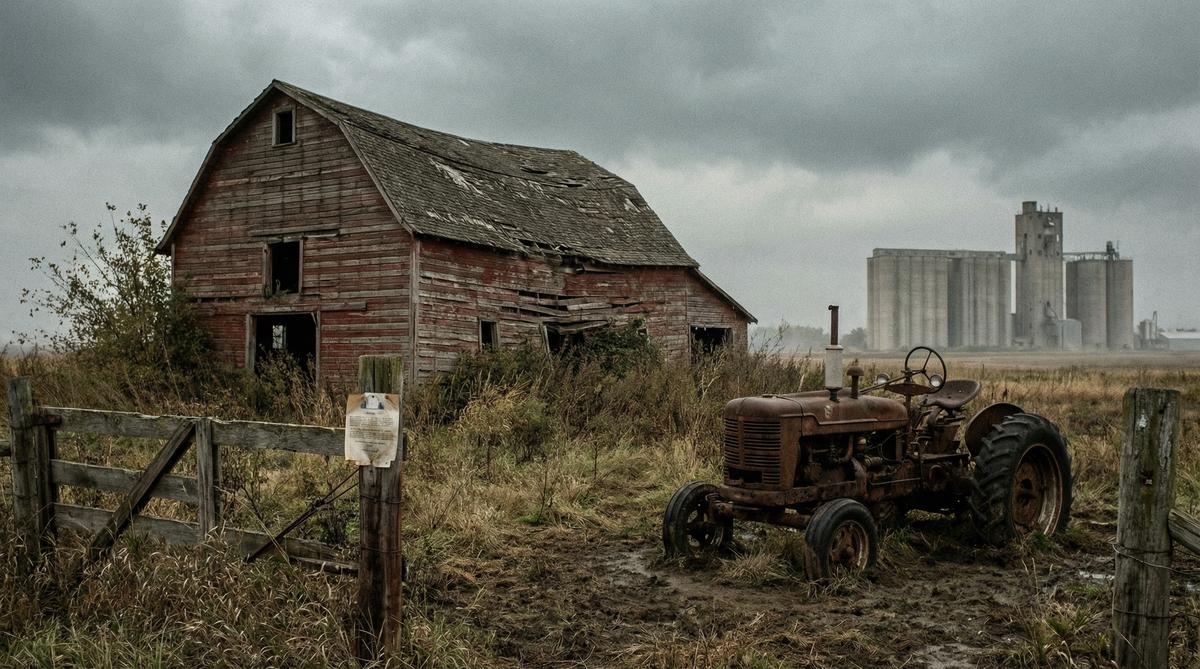
The parallels to America’s current crisis are impossible to ignore. The modern dynatoi are the multinational corporations and the politicians who serve them. The chaotic tariff policies are the modern equivalent of abolishing the allelengyon — a deliberate sacrifice of the small producer for the benefit of a powerful few.
The warnings from America’s own agricultural leaders are the same warnings that were ignored in 11th-century Constantinople. The doubling of farm bankruptcies, the collapse of exports, the soaring costs of fertilizer and machinery — this is the sound of a nation hollowing out its own foundation.
When the family farms are gone, who will grow the food? When the heartland is a patchwork of corporate-owned mega-farms, where will the nation’s resilience lie? The Byzantine Empire learned the answer the hard way: a nation that destroys its farmers destroys itself.
The crisis in American agriculture is not just an economic issue. It is a national security issue.
The Action: Declare Your Independence
When the empire begins to eat itself, the only sane response is to build your own kingdom. The chaos in Washington and the collapse of our agricultural heartland are a deafening alarm bell. The time for depending on these fragile, corrupt systems is over.
True security is not found in a government that sacrifices its own people. It is found in the soil. It is the independence of knowing you can provide for your family, no matter what happens in the halls of power.
That is why we created the 4ft Farm Blueprint. It is more than a guide to growing food. It is a declaration of independence from a broken system. It is the practical, step-by-step knowledge you need to build your own resilient homestead, your own small kingdom in a world of failing empires.
To understand the full scope of the challenges we face and the solutions available, explore our network of resources:
- HomesteaderDepot.com: Tools and knowledge for the self-reliant life.
- SelfRelianceReport.com: In-depth analysis of the threats to our freedom.
- SurvivalStronghold.com: Strategies for protecting your family in a crisis.
- SevenHolistics.com: Health independence from a broken medical system.
The Byzantine Empire chose the path of ruin. America is now making the same choice.
You do not have to follow them.