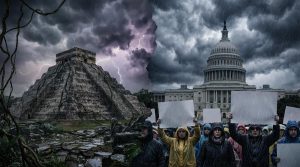
The world is on fire, and America is holding the match.
As U.S. forces deepen their engagement in Iran, the shockwaves are hitting home. Oil has surged past $90 a barrel, a brutal tax on every American family. The stock market is tumbling on fears of a new inflation crisis. And in the clearest sign of economic sickness, the U.S. economy didn’t just slow down in February — it shed 92,000 jobs.
This is not a drill.
While the nation is distracted by a costly foreign war, the foundations of its economic power are cracking. But the true danger isn’t the war itself. It’s the isolation that comes with it. For the first time in a generation, America is fighting a war, and its allies are nowhere to be seen.
This is a story that has played out before. 500 years ago, the most powerful empire in the Americas collapsed not because it was weak, but because it was alone.
The Fortress Built on Fear
The Aztec Empire was a marvel of engineering and military might. From their island capital of Tenochtitlan, they dominated central Mexico for nearly a century. But their empire was not built on loyalty. It was built on coercion and fear.
Through brutal seasonal campaigns, the Aztecs subjugated their neighbors, demanding a constant flow of tribute — goods, food, and human lives for their sacrificial altars. They were the undisputed masters of their world, but they were surrounded by enemies who seethed with resentment.
In 1428, the Triple Alliance of Tenochtitlan, Texcoco, and Tlacopan was formed. For nearly 100 years, it ruled through a combination of military force and a tributary system that extracted wealth from conquered city-states across central Mexico.
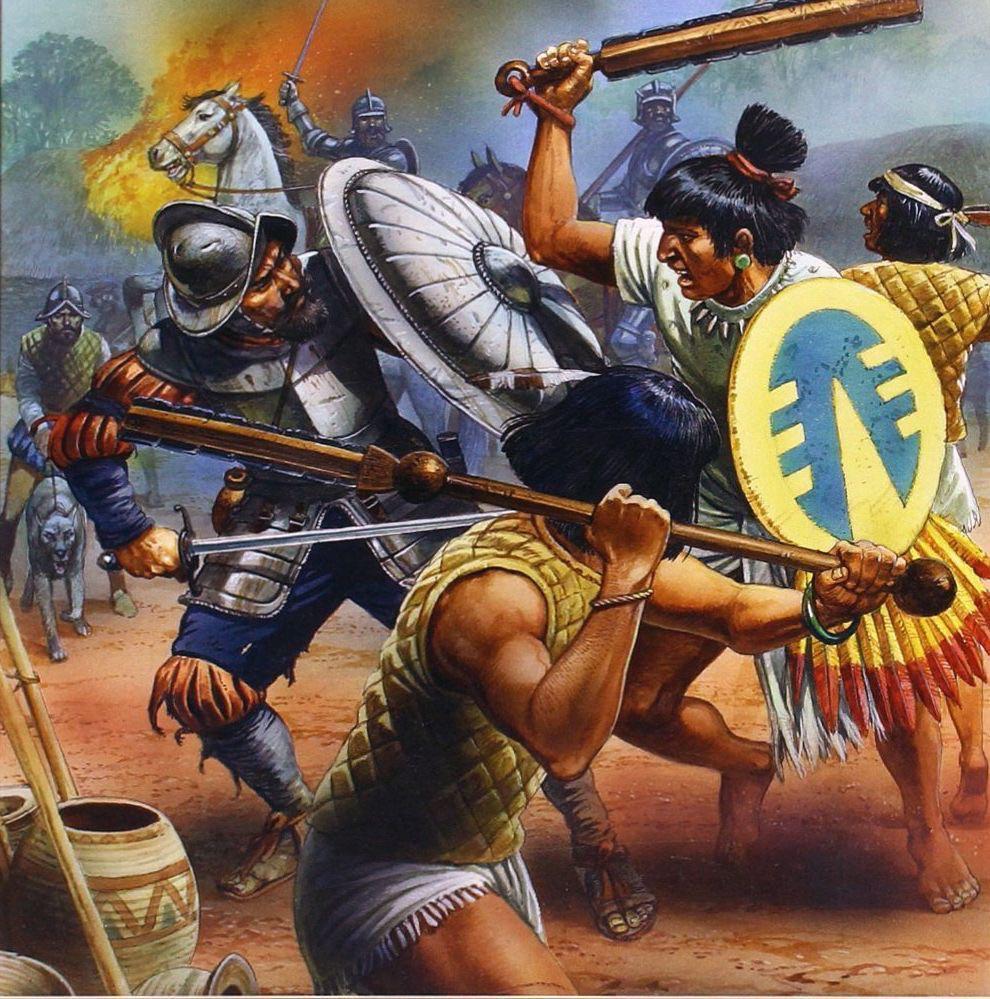
When a small band of Spanish conquistadors led by Hernán Cortés arrived in 1519, they found a continent ripe for rebellion. Cortés’s genius was not in his military tactics, but in his political strategy. He didn’t have to defeat the Aztecs; he just had to unite their enemies.
The enemy of my enemy is my army.
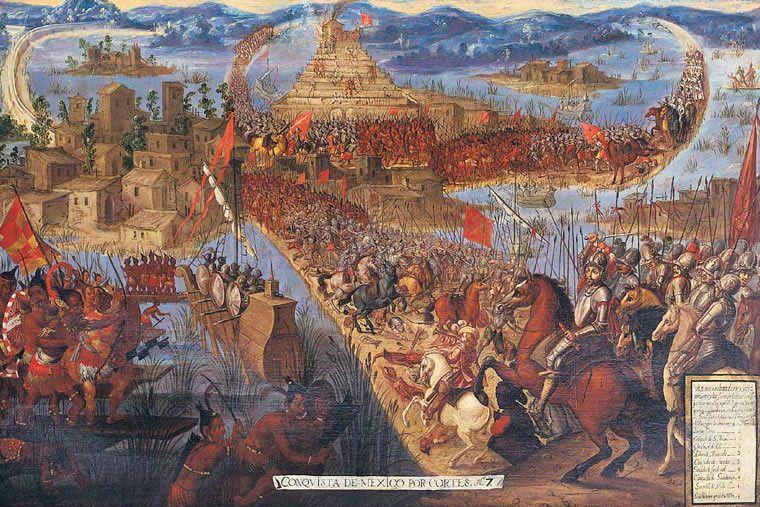
The Knock at the Door That Never Came
As Cortés and his tens of thousands of indigenous allies laid siege to Tenochtitlan in 1521, the Aztecs faced their moment of truth. They were outnumbered and desperate. Their only hope was the one power they had never conquered: the Tarascan Kingdom to the west.
The Tarascans were fierce warriors, renowned for their 40,000 archers. An alliance could have crushed the Spanish and their allies, rewriting the history of the Americas. The Aztecs sent emissaries, pleading for help.
But the Tarascans remembered. They remembered the decades of border wars, the constant threats, the arrogance. They saw no difference between the Spanish invaders and their Aztec rivals. The first Aztec emissaries were sacrificed. The second group arrived to find that Tenochtitlan had already fallen.
The Aztecs, the masters of a continent, died alone — surrounded by the silence of neighbors who chose to watch them burn.
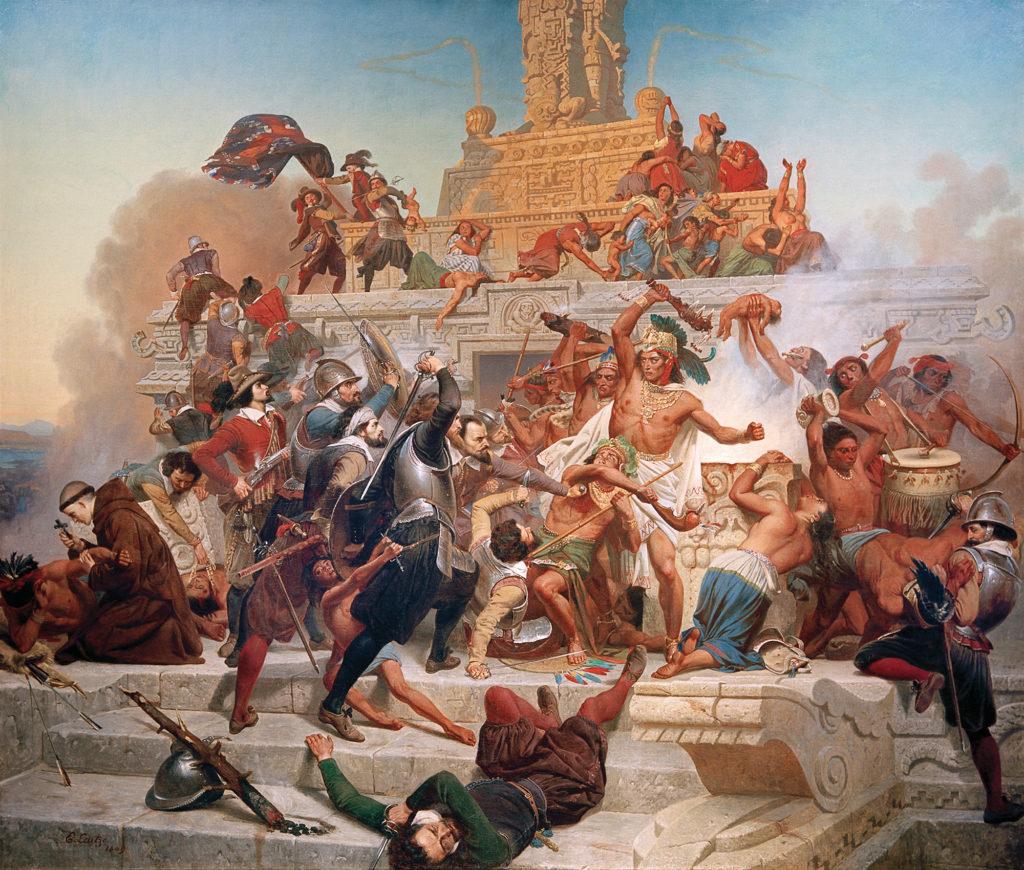
The American Parallel: When Allies Stop Answering
The parallels to America in 2026 are not subtle. They are glaring.
The U.S. is now fighting a war in Iran that costs an estimated $1 billion per day, according to congressional sources. Oil above $90 is a direct tax on every American household. The February jobs report — a loss of 92,000 positions — is not a blip. It is the labor market sending a distress signal.
But the deeper crisis is diplomatic. In the past year, the United States has threatened tariffs on Canada, Mexico, Colombia, and Panama. It has demanded Greenland. It has questioned NATO’s value. It has alienated the very allies whose cooperation makes American power sustainable.
“The failing was a fundamental flaw in the political strategy of the empire — it was built on coercion and fear, leaving a ready force to challenge its authority when it was most vulnerable.” — Jay Silverstein, Senior Lecturer, Nottingham Trent University, The Conversation, January 2026
The Aztecs didn’t lose because Cortés was brilliant. They lost because they had spent a century making enemies. When the crisis came, there was no one left to call.
America is burning through its Tarascan moment right now.
The Turn: The Path to Resilience
It is easy to look at this pattern and feel a sense of despair. To see yourself as a pawn in a game of empires.
But history teaches another, more powerful lesson. When great, centralized systems built on force begin to fail, they create a vacuum. And into that vacuum rushes the opportunity for something new.
The survivors of the Aztec collapse weren’t the ones who clung to the old empire. They were the ones who rebuilt — who focused on their local communities, who strengthened their own skills, and who created resilient networks of mutual support.
This is not a call to hide from the world. It is a call to build a better one, starting in your own backyard.

The Action: The Blueprint for Hope
Building a resilient future starts with a single, powerful step: taking control of your own food supply. The 4ft Farm Blueprint is not just about survival; it’s about sovereignty. It’s the first chapter in your family’s story of independence — a story where you are the builder, not the victim.
True resilience, however, goes beyond the garden. It requires knowledge and a community of like-minded individuals. The Self Reliance Report and Survival Stronghold provide the intelligence and tools you need to navigate the coming chaos, while Homesteader Depot offers the practical supplies for a self-sufficient life.
And as we face a future of economic uncertainty, our health becomes our most valuable asset. Seven Holistics offers a path to wellness that is independent of a fragile and failing healthcare system. For those who want to stay ahead of the economic and health shocks, The Ready Report delivers the intelligence briefings you need before the mainstream media catches up.
The empire of coercion will fall. But the empire of strong hands — the hands of builders, creators, and producers — will endure.
Join us in building that future.