
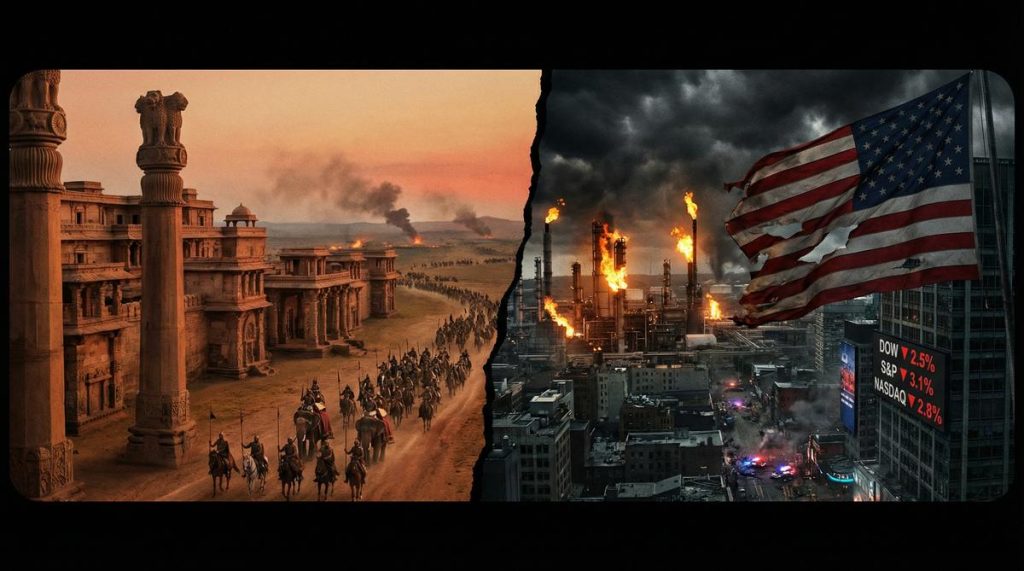
Oil is $115 a barrel.
Gasoline is up 50 cents in a week.
Another 92,000 Americans are out of work.
The headlines are a drumbeat of crisis. A disastrous war in Iran, a shuttered Strait of Hormuz, and a global economy grinding to a halt. The odds of a full-blown recession have spiked to 33% in a matter of days.
It feels like a sudden, shocking heart attack. A system that seemed invincible just months ago is now teetering on the brink.
But it is not sudden.
This is the final, predictable stage of a disease that has been rotting the core of our empire for decades. It is the price of overreach. The cost of endless wars, of a hollowed-out industrial base, of a political class that is both corrupt and incompetent.
We have seen this exact story before. 2,200 years ago, another superpower stood at the pinnacle of its power, having just won its greatest military victory. It controlled a vast territory, commanded a massive army, and seemed destined to rule for a thousand years.
Then, it collapsed.
This is the story of the Mauryan Empire of ancient India. And it is a terrifyingly precise blueprint for the catastrophe that is now unfolding before our eyes.
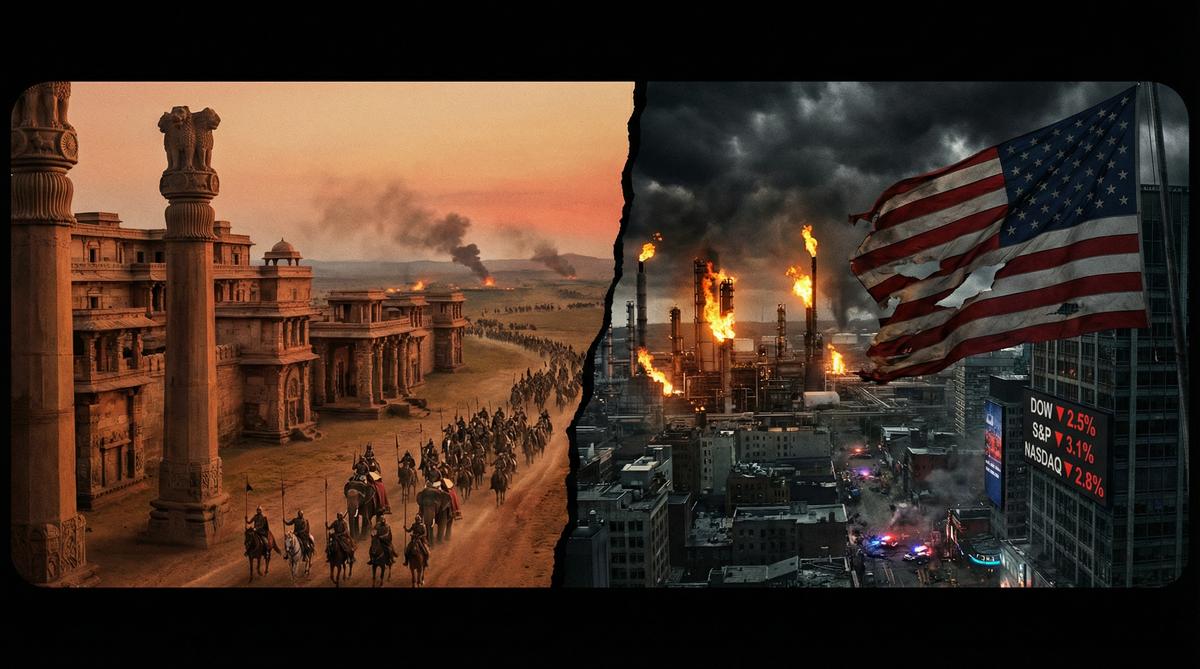
The Price of Total Victory
In 261 BCE, the Mauryan Emperor Ashoka stood on the battlefield of Kalinga. He had just won the most brutal and decisive war in the history of the Indian subcontinent.
An estimated 100,000 were killed. Another 150,000 were taken captive. The rivers ran red. The fields were ash.
The victory was total. The Mauryan Empire now stretched from modern-day Afghanistan to Bangladesh — the largest empire India had ever known.
But the cost was staggering. The war had been a massive drain on the imperial treasury. The empire, already vast and complex, was now burdened with the administration of a devastated new territory.
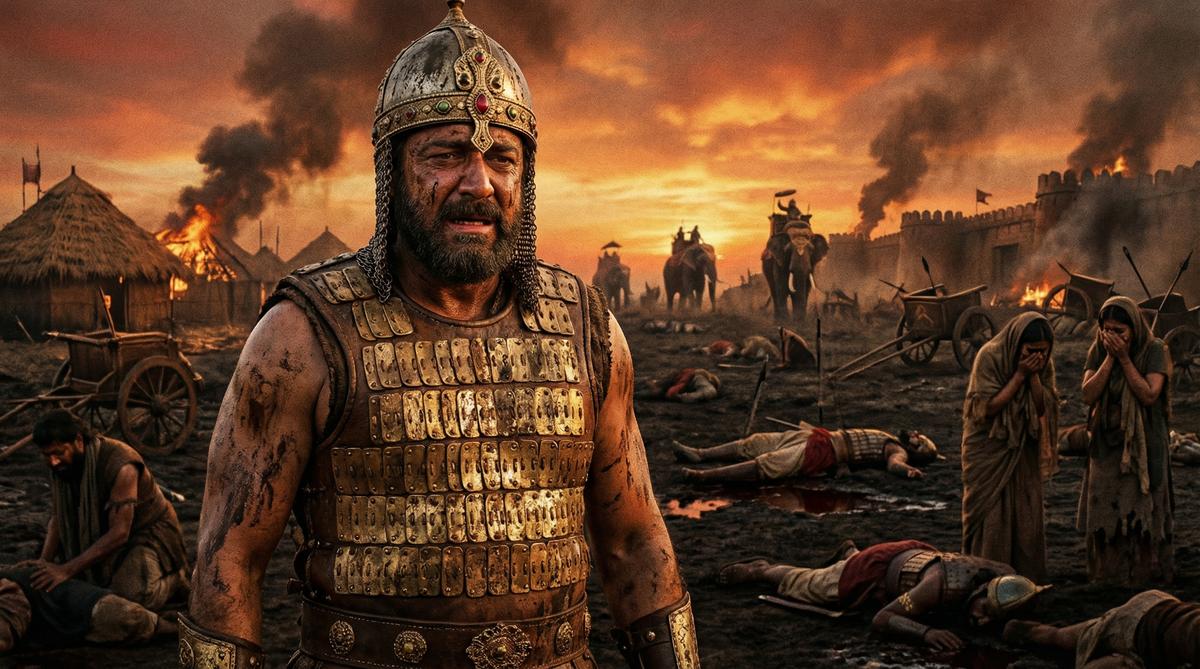
Ashoka, horrified by the carnage, famously converted to Buddhism and swore off violent conquest. He spent the rest of his reign on a massive campaign of public works — building stupas, hospitals, and universities. He sent Buddhist missionaries across the known world.
It was a golden age of peace and prosperity.
But it was built on a foundation of sand.
The immense cost of the Kalinga War, followed by decades of lavish spending on welfare and religious projects, had exhausted the Mauryan treasury. The empire’s vast army, once a tool of conquest, became a massive financial burden with no return.
The Mauryan state maintained a huge army and a large bureaucracy, which must have been a heavy drain on the imperial exchequer. The payments were made in cash — and the cash was running out.
When Ashoka died, he left his successors a hollowed-out empire. They were weak, ineffective rulers who could not command the loyalty of the provinces or the respect of the military. The empire began to fracture.
The Slow, Inevitable Decay
The collapse was not immediate. It was a slow, grinding decay that lasted for nearly 50 years.
First, the provinces began to break away. The distant territories in the northwest — secured at great cost — were the first to go. Then the newly conquered territory of Kalinga declared its independence. The empire was shrinking, its authority evaporating.
The highly centralized administration, once a source of strength, became a fatal weakness. Under weak kings, the vast bureaucracy became corrupt and oppressive, sparking revolts in the provinces that remained.
Then came the final, humiliating blow.
In 185 BCE, the last Mauryan emperor, Brihadratha, was inspecting his troops. His own commander-in-chief, a general named Pushyamitra Shunga, stepped forward, drew his sword, and assassinated the emperor in full view of the army.
The Mauryan Empire was dead.
It was not killed by a foreign invader. It was killed from within — by the very forces that had once made it great: its military might, its centralized power, and its vast wealth.
The Pattern of Collapse
The parallels to modern America are undeniable and chilling.
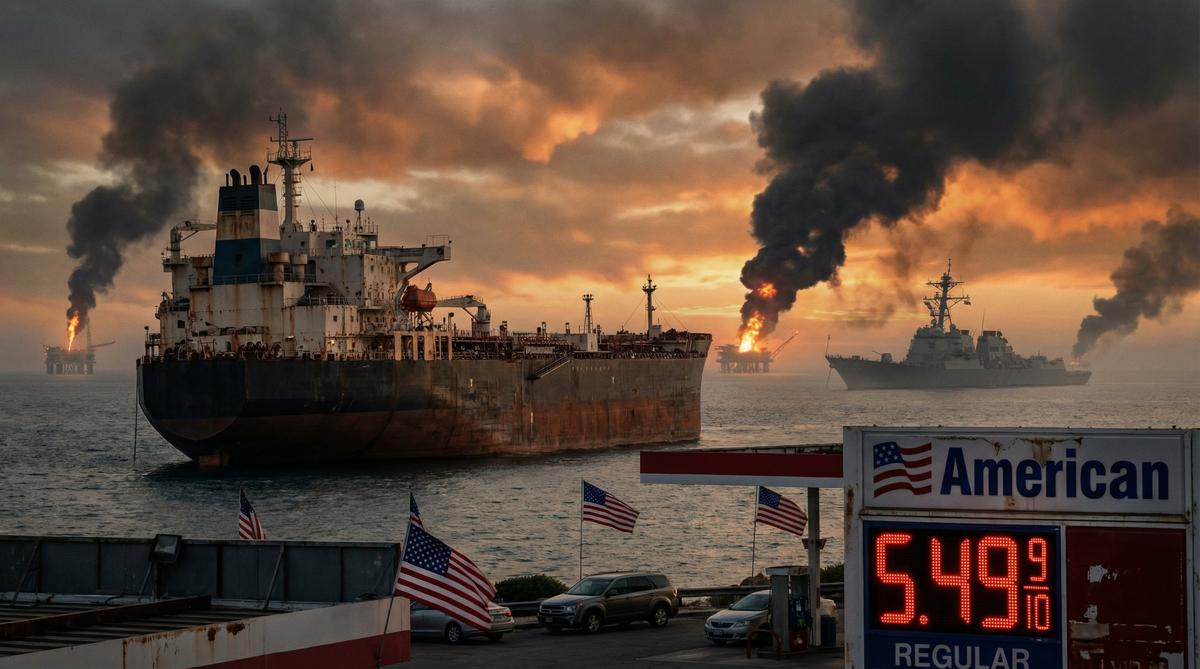
Military Overextension: Like the Mauryans after the Kalinga War, America has spent decades engaged in costly, indecisive wars across the globe. The war in Iran is not a new problem; it is the culmination of a failed foreign policy that has drained our treasury and exhausted our military.
Financial Exhaustion: The US national debt is projected to hit $64 trillion. We are spending trillions on a bloated military and a vast welfare state, all while our industrial base has been shipped overseas. Like the Mauryans, we are funding our empire with borrowed money — and the bill is coming due.
Weak and Divided Leadership: Our political class is corrupt, incompetent, and hopelessly divided. Like the weak successors of Ashoka, they are incapable of uniting the country or commanding the respect of the world.
Oil prices of $125 a barrel could cut US gross domestic product by 0.8% even as inflation surpasses 4%. The oil shock resembles those seen in the 1970s, when conflict in the Middle East dragged advanced economies into persistent slumps. — RSM Economic Analysis, March 2026
The system is brittle. And a brittle system shatters when it is hit.
The Iran war and the resulting oil shock are not the cause of our collapse. They are the external shock that is exposing the internal decay that has been festering for decades.
The Turn: The Path to Resilience
It is easy to look at this pattern and feel a sense of despair. To see yourself as a pawn in a game of empires.
But history teaches another, more powerful lesson. When the great, centralized systems fail, they create a vacuum. And into that vacuum rushes the opportunity for something new.
The survivors of the Mauryan collapse weren’t the ones who simply hid. They were the ones who rebuilt — who focused on their local communities, who strengthened their own skills, and who created resilient networks of trade and mutual support.
This is not a call to hide from the world. It is a call to build a better one, starting in your own backyard.
This is a moment of profound opportunity. The failure of the old system is a chance to create something new, something better. Something resilient. Something free.
The Action: The Blueprint for Hope
Building a resilient future starts with a single, powerful step: taking control of your own food supply. The 4 Foot Farm Blueprint is not just about survival; it’s about sovereignty. It’s the first chapter in your family’s story of independence, a story where you are the builder, not the victim.
True health is the foundation of resilience. In a world of collapsing systems, you cannot rely on a fragile medical establishment. Seven Holistics provides the knowledge and the tools to build a foundation of natural, robust health for you and your family — before the next crisis hits.
When the supply chains break and the stores are empty, you will need more than just food. You will need the skills and the tools to be self-reliant. Survival Stronghold is the ultimate resource for those who are serious about preparing for what’s to come.
Stay informed. The patterns are repeating. The Ready Report and the Self Reliance Report are your intelligence briefings for navigating the collapse — and building what comes next.
This is not the end. It is the beginning. The end of the American Empire is the birth of a new era of American resilience.
It is time to build.