The United States is conducting a great retreat. It is a retreat not from a battlefield, but from the world itself.
In the last year, the U.S. has withdrawn from 66 international organizations. It has slashed foreign aid, abandoned its allies, and signaled its intent to leave the North Atlantic Treaty Organization (NATO), the alliance that has kept the peace for nearly 80 years.
This is not a defeat. It is an abdication.
America is voluntarily giving up its throne. And history has a chilling lesson about what happens when an empire simply walks away.
The Unravelling
A thousand years ago, another global network quietly unravelled. It wasn’t conquered. It wasn’t defeated. It just… ended.
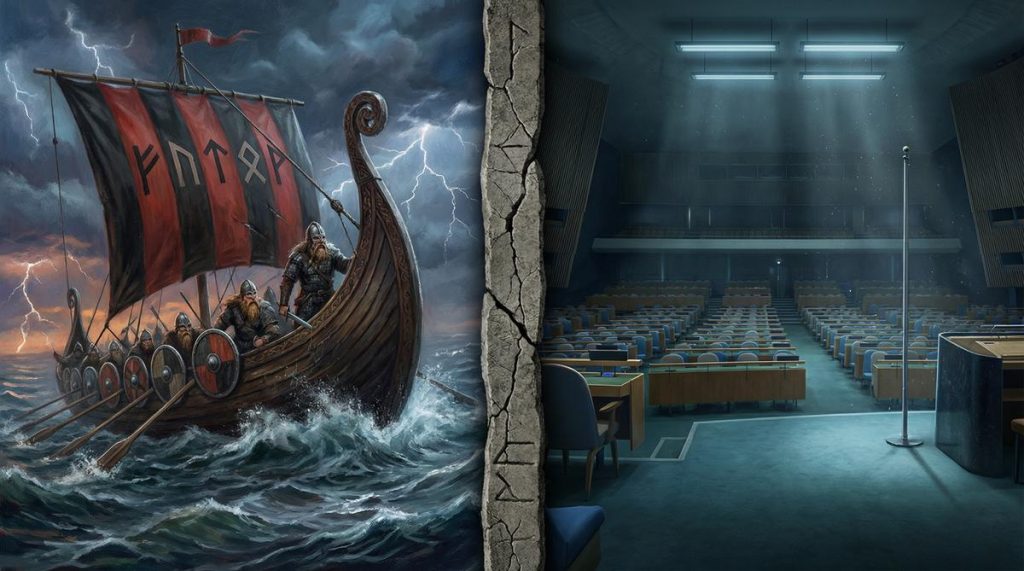
This was the world of the Vikings. A network of trade, raiding, and settlement that stretched from the shores of North America to the markets of Baghdad. They were the globalists of their time, a force of nature that reshaped the world.
And then they were gone.
They didn’t lose a final, cataclysmic war. They simply went home. They assimilated. They chose to stop being Vikings. And in doing so, they offer a stark warning to an America that is now choosing the same path of isolation.
The Age of the Northmen
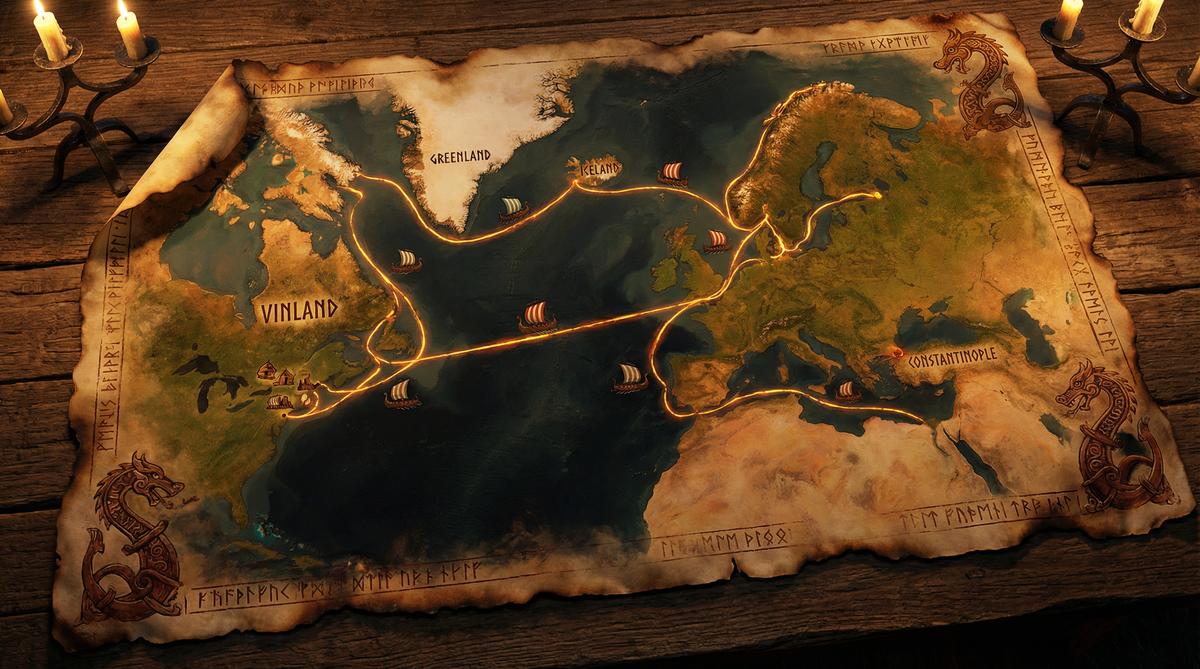
From roughly 800 to 1066 AD, the Vikings were the most dynamic force in the world. Their longships were technological marvels, capable of crossing open oceans and navigating shallow rivers. This gave them unparalleled reach.
They weren’t just raiders. They were explorers, traders, and nation-builders.
Vikings sailed down the rivers of Russia to trade with the Byzantine Empire, serving as the elite Varangian Guard for the Emperor in Constantinople. They established a dynasty in Kiev. They traded for silver dirhams in the markets of the Middle East.
They settled Iceland, a land of fire and ice. From there, Erik the Red established a colony in Greenland that lasted for 500 years. His son, Leif Erikson, sailed even further west, establishing a settlement at L’Anse aux Meadows in modern-day Canada — nearly 500 years before Columbus.
At their peak under Cnut the Great, they ruled a North Sea Empire that included England, Denmark, and Norway. They were the undisputed masters of the northern world.
But empires are fragile things.
The symbolic end of the Viking Age came in 1066. The Norwegian King Harald Hardrada — often called “the last great Viking” — invaded England and was defeated at the Battle of Stamford Bridge. His death marked the end of the great Viking invasions.
But the true end was quieter. In Greenland, the climate grew colder. The sea lanes became choked with ice. The isolated colonies, cut off from the world, slowly withered and died.
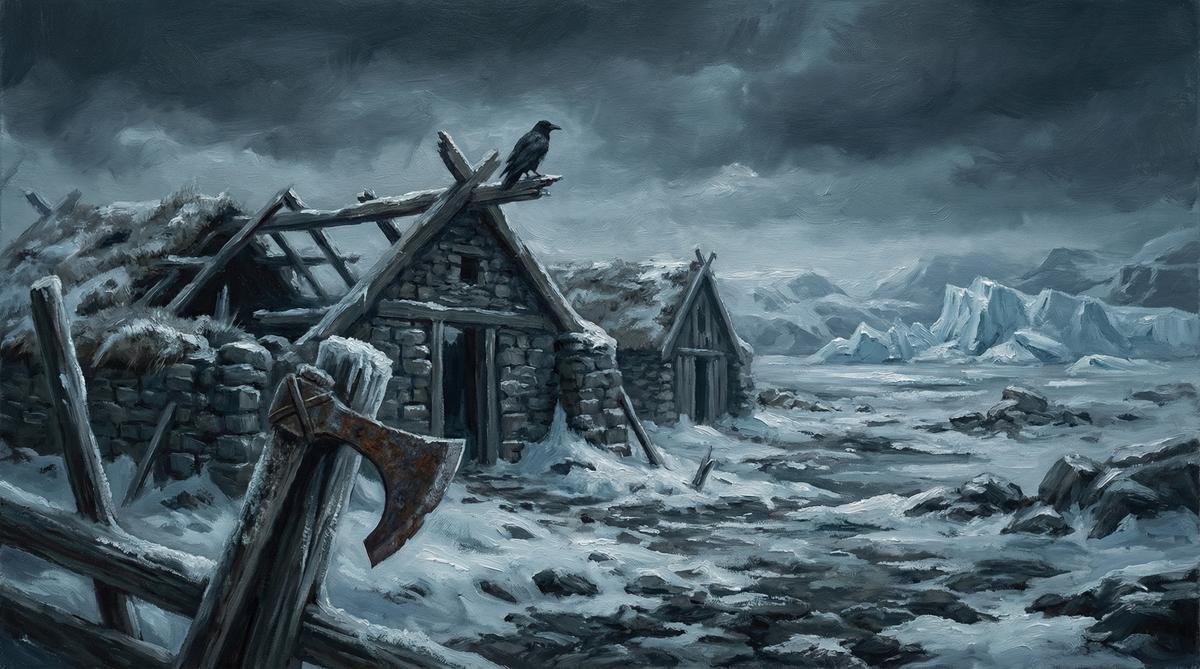
Across Scandinavia, the old gods were replaced by Christianity. The warrior ethos of the raider gave way to the settled life of the farmer and the merchant. The Vikings became Danes, Norwegians, Swedes. They became Europeans.
They didn’t fall. They faded.
The World Moves On
And what happened when the Vikings walked away from their global network? The world didn’t stop. It re-routed.
The power vacuum they left in the Baltic and North Seas was filled by the Hanseatic League, a powerful German trading confederation. The trade routes they had pioneered were taken over by others. The lands they had discovered were forgotten.
The world simply moved on without them.
Their story is a lesson in the brutal reality of power. It is not enough to build an empire. You must have the will to maintain it. The moment you turn your back, the world will carve it up and forget you were ever there.
The American Mirror
Today, America is turning its back on the world it created.
The “America First” policy is not a strategy. It is a declaration of surrender. It is a belief that America can retreat behind its oceans and let the rest of the world fend for itself.
In January 2026, the U.S. withdrew from 66 international organizations, including 31 UN entities. It has cut 200 NATO positions. It has slashed foreign aid. It has abandoned the WHO, the World Bank’s climate programs, and the international frameworks it spent 80 years building. And as it retreats, China is stepping in to fill every single void — rewriting the rules of global trade and finance in its own image.
Polls show that trust in American leadership has plummeted to historic lows. The world is losing faith in the United States. And just like with the Vikings, it is beginning to move on.
This is not a political issue. It is a structural one. The global system, built and maintained by American power for 80 years, is now fracturing. And the consequences will be felt by every single American — in higher prices, fewer opportunities, and a world that no longer plays by rules America wrote.
The Path to Resilience
It is easy to look at this pattern and feel a sense of despair. To see the end of an era and fear what comes next.
But history teaches another lesson. The end of one system is the beginning of another. And those who build are the ones who inherit the future.
When the Viking longships stopped sailing, the people who thrived were not the ones who waited for the empire to return. They were the ones who focused on their local communities. The ones who strengthened their own skills, who built resilient networks of trade and mutual support.
The survivors of the Viking Age’s collapse weren’t the ones who mourned the longships. They were the ones who built the next thing — the farms, the guilds, the local economies that outlasted the empire by centuries.
This is not a call to hide from the world. It is a call to build a better one, starting in your own backyard.
The Blueprint for Hope
Building a resilient future starts with a single, powerful step: taking control of your own life and your own community.
It starts with the knowledge of how to provide for yourself and your family. The 4ft Farm Blueprint is not just about survival; it’s about sovereignty. It’s the first chapter in your family’s story of independence — the same story the Norse settlers of Iceland wrote when they left the chaos of the Viking Age behind and built something that lasted.
It continues with the skills to protect what you have built. Survival Stronghold and Ready Report offer the timeless playbook for weathering any storm — the same playbook that kept communities alive when the longships stopped coming and the trade routes went dark.
It expands with the wisdom to build a healthy, independent life. Seven Holistics and Homesteader Depot are your guides to a life of strength and self-sufficiency — the kind of life that doesn’t depend on an empire to survive.
And it is grounded in the understanding of the patterns that shape our world. Self Reliance Report and The Pattern Ledgers provide the clarity to see what is coming, and the wisdom to act before the ice closes in.
The age of American globalism is ending. The age of personal sovereignty has just begun.
The question is not whether the world will move on without America. It already is. The question is whether you will be ready when it does.