The war in Iran is sixteen days old.
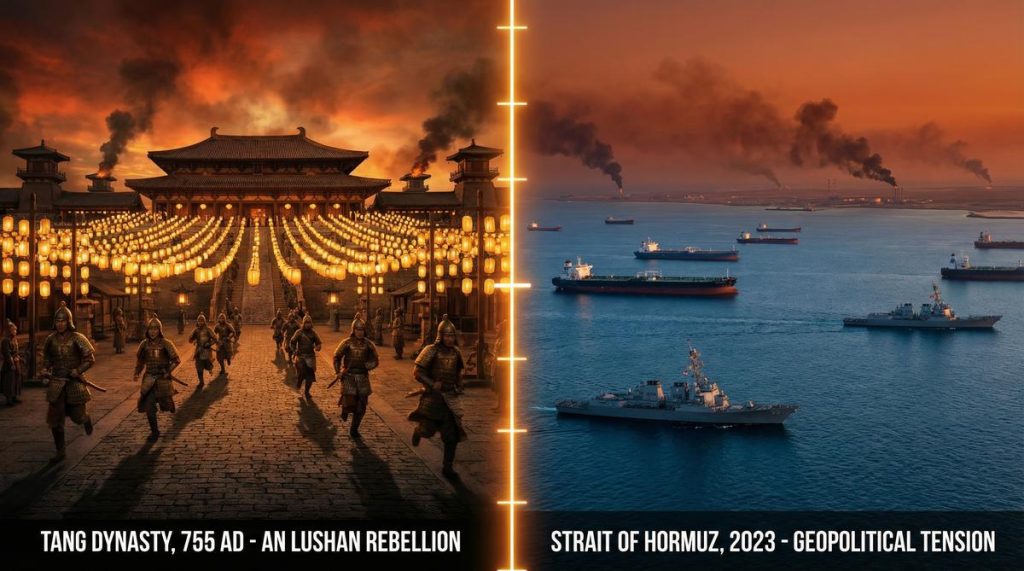
Sixteen days. Over two weeks of headlines that blur into a single, droning hum of crisis. The numbers are already staggering. A war that is costing the American taxpayer over $1 billion per day, with the total cost already exceeding $16.5 billion. Oil prices have spiked to over $95 a barrel as the Strait of Hormuz, the jugular vein of the global economy, is “controlled” by Iranian forces. The White House is begging for a coalition of allies to help, but so far, no one is answering the call.
And there is no end in sight.
This is the anatomy of a quagmire. A self-inflicted wound that festers and spreads, draining the lifeblood of an empire. It feels unprecedented. A uniquely American catastrophe.
But it is not.
The Golden Age and the Hidden Rot
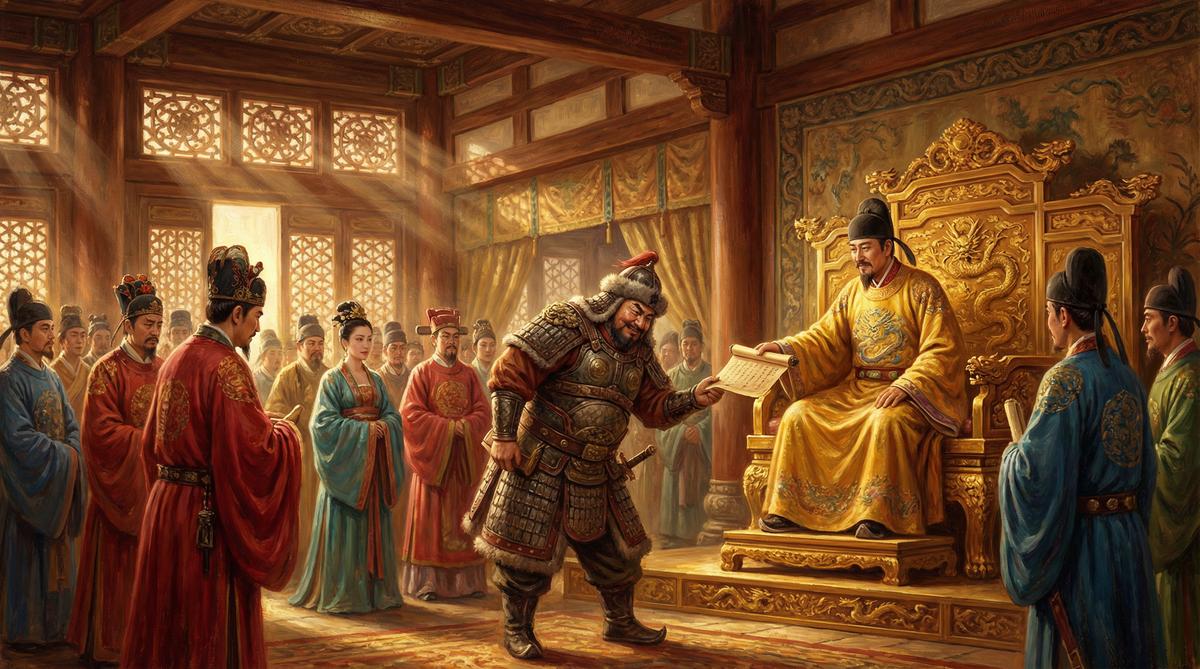
In the middle of the 8th century, the Tang Dynasty of China was the envy of the world. It was a true golden age. Its capital, Chang’an, was the largest and most cosmopolitan city on earth. Its armies were victorious, its culture was vibrant, and its emperor, Xuanzong, presided over a court of unparalleled luxury and sophistication.
But beneath the glittering surface, a fatal rot had set in. The empire had grown too large, too confident, too reliant on others to do its dirty work. The professional, disciplined armies that had forged the dynasty had been replaced by a system of regional military governors, or jiedushi. These governors were given immense power, controlling vast territories and enormous armies.
And the most powerful of them all was a man named An Lushan.
An Lushan was not even Chinese. He was a general of Sogdian and Turkic descent — a foreigner who had risen through the ranks through a combination of brute talent and cunning flattery. Emperor Xuanzong, in his later years, had grown complacent. He trusted An Lushan completely, showering him with titles and power. By 755, An Lushan commanded three of the most powerful garrisons in the empire, a combined force of over 164,000 battle-hardened men.
He had been given the sword. And now he was ready to use it.
The Rebellion That Broke the World
On December 16, 755, An Lushan rebelled. His massive, battle-hardened army swept down from the north, and the once-mighty Tang dynasty crumbled.
The imperial armies, long neglected and poorly led, were no match for the rebels. The eastern capital of Luoyang fell in a matter of weeks. The main Tang army, sent to block the path to the capital, was annihilated. In the summer of 756, with the rebels closing in, Emperor Xuanzong fled his own capital in a panic.
The once-proud emperor, the Son of Heaven, was a refugee in his own empire.
To stop the bleeding, the Tang court made a desperate choice. They turned to foreigners for help. They begged the powerful Uyghur Khaganate for military aid, promising them riches and the right to plunder the recaptured cities. The Uyghurs were fierce warriors. They were also mercenaries, loyal only to the highest bidder.
It was a deal with the devil, and it would have devastating consequences.
The combined Tang and Uyghur forces eventually managed to defeat the rebellion. An Lushan was assassinated by his own son. The rebel dynasty he had proclaimed collapsed. By 763, the war was over.
But the Tang Dynasty would never be the same.
The Empire That Never Recovered
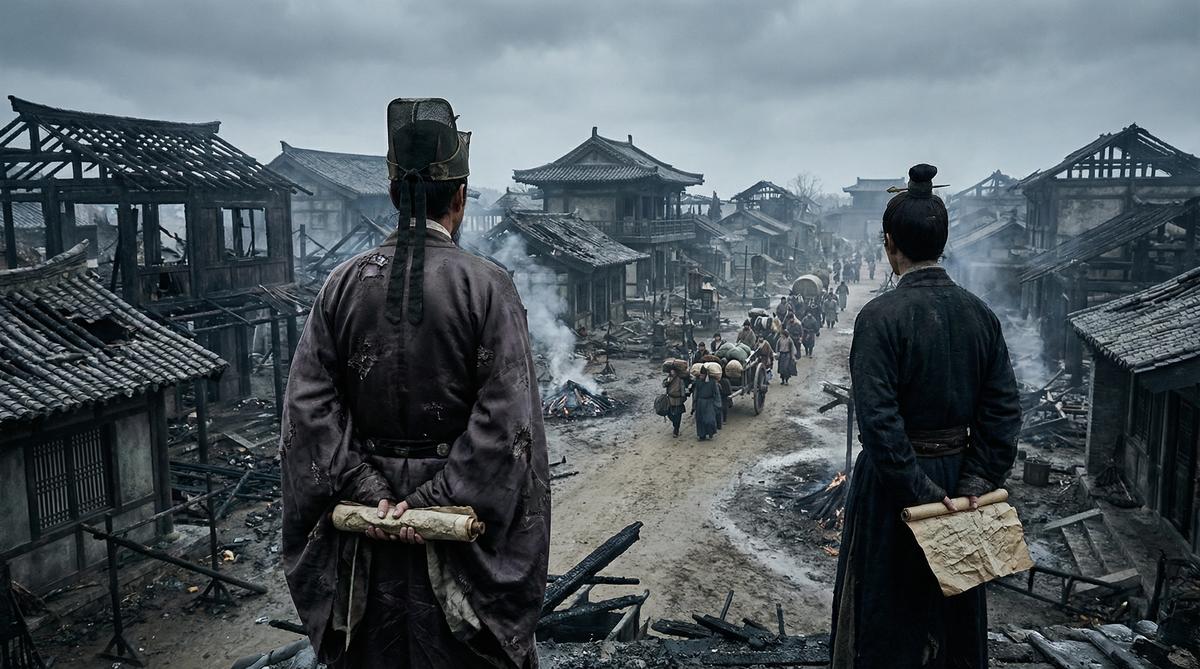
The An Lushan Rebellion was a catastrophe on an almost unimaginable scale. The devastation was absolute.
The census of 755, taken just before the rebellion, recorded a population of 52.9 million people in 8.9 million households. The census of 764, the year after the war ended, recorded just 16.9 million people in 2.9 million households.
While scholars debate the exact numbers, the trend is undeniable. Tens of millions of people had been killed, displaced, or had simply vanished from the tax rolls of a shattered state. The economic heartland of the empire in the north was destroyed. The central government was broke, its authority in tatters.
And the warlords who had helped “save” the dynasty now held it hostage. The very same military governors who had failed to stop An Lushan were now the de facto rulers of their provinces. They collected their own taxes, raised their own armies, and ruled as independent kings. The Tang empire had become a hollow shell.
The dynasty had won the war, but it had lost the empire.
It lingered on for another 150 years, a shadow of its former self, until it finally collapsed in 907. The golden age was a distant memory. The empire had outsourced its own collapse, and it had paid the ultimate price.
The American Mirror
Today, America stands at a similar precipice. A war in Iran, launched with the same overconfidence that marked Emperor Xuanzong’s reign, has become a quagmire. The administration, like the Tang court, is now desperately seeking a coalition of the willing to share the burden. But our allies are nowhere to be found.
We have outsourced our supply chains, our manufacturing base, and now we are attempting to outsource our wars. We have the most powerful military in the world, yet we are bogged down in a conflict with a regional power, unable to achieve a decisive victory.
The parallels are chilling:
- Over-reliance on foreign actors: The Tang relied on Uyghur mercenaries to fight their own war. America is relying on a coalition that does not exist. Japan said the bar would be “too high.” No country has confirmed joining.
- Economic devastation at home: The An Lushan rebellion destroyed the Tang economy. The Iran war is already costing over $1 billion per day, with Goldman Sachs now pricing in a 25% chance of recession over the next 12 months.
- A divided nation: The rebellion shattered the Tang emperor’s authority. The Iran war is dividing America — 53% of the population is opposed to the conflict, according to the latest Quinnipiac poll.
- No exit strategy: The Tang court had no plan for what came after the rebellion. America has no plan for what comes after Iran. The Strait of Hormuz remains “controlled.” The war grinds on.
We are repeating the same mistakes, 1,300 years later. We have become a nation that is powerful in name, but hollow at its core.
The Path to Resilience

It is easy to look at this pattern and feel a sense of despair. To see yourself as a pawn in a game of empires, helpless before the forces of history.
But history teaches another, more powerful lesson. When the great, centralized systems fail, they create a vacuum. And into that vacuum rushes the opportunity for something new.
The survivors of the Tang Dynasty’s collapse weren’t the ones who simply hid. They were the ones who rebuilt — who focused on their local communities, who strengthened their own skills, and who created resilient networks of trade and mutual support. The population that migrated south built new cities, new farms, and new economies. They didn’t wait for the emperor to save them. They saved themselves.
This is not a call to hide from the world. It is a call to build a better one, starting in your own backyard.
The Blueprint for Hope
Building a resilient future starts with a single, powerful step: taking control of your own food supply. The 4ft Farm Blueprint is not just about survival; it’s about sovereignty. It’s the first chapter in your family’s story of independence — a story where you are the builder, not the victim.
While the empires of men rise and fall, the earth remains. The ability to grow your own food, to provide for your family, to build a community of like-minded individuals — these are the things that endure. These are the skills that will see you through the coming storm.
Learn more about how you can build your own foundation of resilience:
- 🌱 4ft Farm Blueprint — The complete guide to food self-sufficiency, even in a small space.
- 🏡 Homesteader Depot — Tools, seeds, and supplies for the modern homesteader.
- 📰 Self Reliance Report — News and analysis for the prepared, independent citizen.
- 🛡️ Survival Stronghold — In-depth guides to building resilience against any crisis.
- 🌿 Seven Holistics — Health and wellness strategies for a resilient life.
- 📋 The Ready Report — Premium intelligence for those who take preparedness seriously.
The Tang Dynasty’s golden age ended because its leaders trusted the wrong people and outsourced the wrong things. Don’t outsource your family’s security. The time to build is now — before the next crisis arrives.