
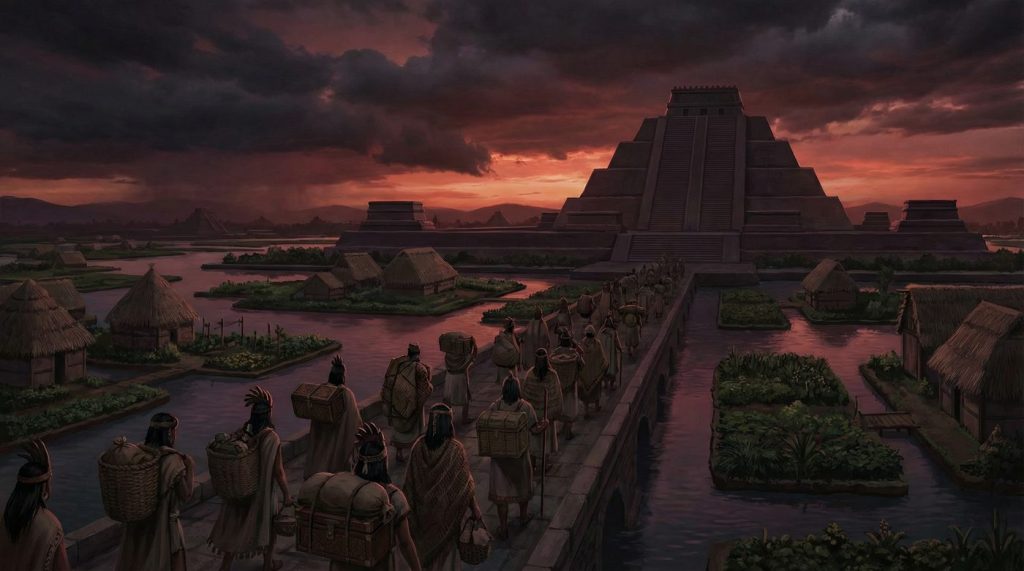
The numbers are no longer hypothetical.
As of this week, the United States is officially in a debt death spiral. The Congressional Budget Office has confirmed that by 2031—just five years from now—the interest we pay on our national debt will grow faster than our entire economy.
The tribute is now greater than the empire.
For decades, we’ve been able to outrun our obligations. We printed money, we sold bonds, and we relied on the world’s addiction to the dollar to keep the system afloat. But the math has finally caught up. The U.S. Treasury just posted a $1 trillion deficit in the first five months of this fiscal year alone — the third-worst start in history.
Billionaire investor Ray Dalio is no longer mincing words. He calls it a “debt death spiral.”
As the Federal Reserve meets today, paralyzed by the twin threats of stagflation and a war in Iran that is costing billions with no end in sight, the American people are being crushed. One in three Americans cannot afford a $1,000 emergency. They are paying the tribute — in the form of inflation and taxes — to a system that no longer serves them.
We have seen this story before. It is not a story of foreign invasion or military defeat. It is the story of an empire that became so obsessed with extracting wealth from its subjects that it rotted from the inside out.
It is the story of the Aztec Empire.
The Most Sophisticated Tribute Machine in History
Five hundred years ago, in the valley of Mexico, the Aztec Triple Alliance built the most efficient wealth-extraction machine the world had ever seen. Their capital, Tenochtitlan, was a marvel of engineering — a floating city of pyramids and canals that was larger and cleaner than any European capital of the time.
But this splendor was built on a brutal foundation: tribute.
The Aztecs were not a unified empire in the Roman sense. They were a loose confederation of three city-states — Tenochtitlan, Texcoco, and Tlacopan — that had conquered or intimidated over 371 other city-states into submission. These conquered peoples were not citizens; they were assets. Their sole purpose was to send a steady stream of wealth back to the capital.
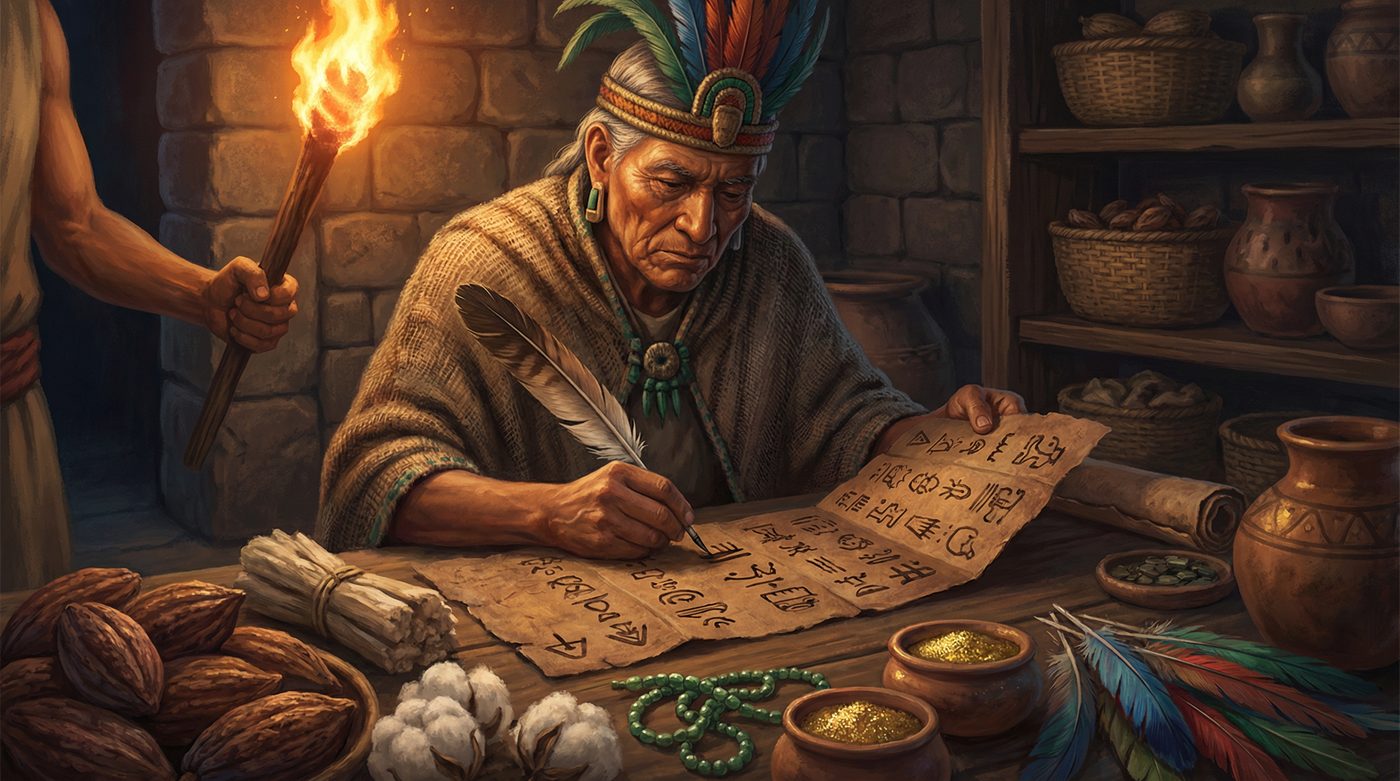
The Matrícula de Tributos, the Aztec’s own tax ledger, details the crushing demands: biannual payments of everything from warrior costumes and jade beads to cacao beans and raw cotton. One province was required to send 4,000 scoops of salt every six months. Another had to provide 20 chests of white copal incense.
This system was incredibly efficient. The Aztecs didn’t need to occupy every town or enforce their culture. They simply sent their collectors — their calpixque — to ensure the tribute was paid. If a city refused, the Aztec army would descend, make an example of them, and the tribute would resume.
For a time, it worked brilliantly. The empire grew rich, not by producing, but by taking.
But the system had a fatal flaw.
The tribute demands were relentless and ever-increasing. To fund their lavish spending and constant warfare, the Aztec rulers squeezed their subjects harder and harder. The resentment simmered. Rebellions became more frequent. The empire was spending more and more of its energy just holding its tributaries in line.
And on the edge of the empire, one nation refused to bow.
The Tlaxcalans: The Empire’s Unhealed Wound
Just 60 miles east of the capital, the city-state of Tlaxcala stood defiant. Surrounded on all sides by the Aztec empire, the Tlaxcalans had fought off multiple Aztec invasions and remained a free, unconquered people.
They were a constant reminder that the empire was not invincible. They were a beacon of hope for the hundreds of resentful city-states groaning under the weight of Aztec tribute.
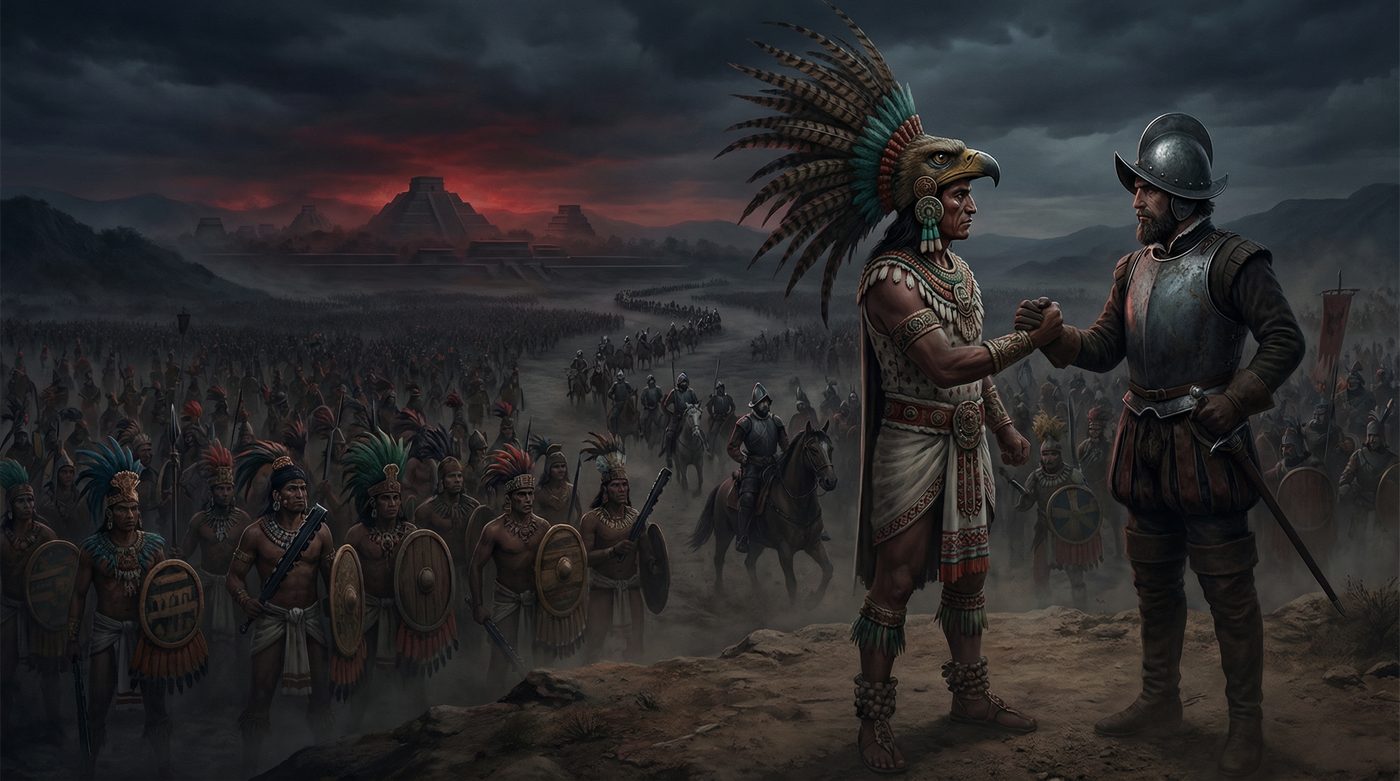
When Hernán Cortés and his 508 Spanish conquistadors landed in Mexico in 1519, they did not find a unified, monolithic empire. They found a pressure cooker of ethnic hatreds and economic desperation — and the Tlaxcalans were ready to light the fuse.
After a few brief, fierce battles, the Tlaxcalans realized the Spaniards were not just another invader. They were a weapon. A weapon they could aim at their hated enemy, Tenochtitlan.
“Indeed everyone among the commoners went about overwrought; often they rose in revolt. It was just as if the earth moved, just as if the earth rebelled, just as if all revolved before one’s eyes.” — The Florentine Codex, describing the chaos as subject peoples realized the Aztec grip was weakening.
The alliance was immediate. The Tlaxcalans provided Cortés with tens of thousands of warriors — some estimates say up to 200,000 over the course of the campaign. They provided the food, the shelter, the intelligence, and the sheer manpower that a few hundred Spaniards could never have mustered.
The Aztec Empire was not conquered by Spain. It was overthrown by its own people.
The tribute collectors had finally come to collect their due.
The American Mirror: The Tribute of Debt
Today, the American empire is not demanding tribute in the form of cacao beans and feathers. It demands it in the form of debt.
The federal government, through the Federal Reserve, has created a system where it can print money to fund its endless wars, its bloated bureaucracy, and its political promises. The cost of this system is not paid by the politicians in Washington. It is paid by the American people — through the silent, relentless tax of inflation.
The parallels to the Aztecs are not just poetic. They are mathematical.
| Aztec Empire (1500 CE) | United States (2026) |
|---|---|
| Tribute demands exceeding what subjects could produce | Interest payments set to grow faster than GDP by 2031 |
| 371+ city-states paying under coercion, not loyalty | Middle class crushed; 1 in 3 can’t cover a $1,000 emergency |
| Military overextension in failed Tlaxcala campaigns | Iran war, Day 17, no coalition, no exit strategy |
| Tribute collectors as the visible face of oppression | Inflation, IRS, and debt service as the invisible tax |
| Subject peoples waiting for a crack in the system | Record-low institutional trust; Americans seeking alternatives |
We have become a nation of tribute collectors. Our financial system is no longer about funding innovation and production. It is about extracting wealth from the productive class to feed the unproductive political class.
The empire is eating itself.
And just like the Aztecs, we have an unhealed wound. A growing number of Americans who are simply checking out of the system. They are the new Tlaxcalans — seeking their own form of sovereignty, their own parallel economy, their own way of life outside the tribute machine.
The Turn: The Path to Resilience
It is easy to look at this pattern and feel a sense of despair. To see yourself as a pawn in a game of empires, your life’s work devalued to pay for wars you didn’t ask for and programs you don’t support.
But history teaches another, more powerful lesson.
When the great, centralized systems fail, they create a vacuum. And into that vacuum rushes the opportunity for something new. The survivors of the Aztec collapse weren’t the ones who clung to the old system. They were the ones who had maintained their own identity, their own skills, their own resilient communities.
This is not a time for fear. This is a time for building.
The end of one system is the beginning of countless others. The failure of the centralized monolith is the birth of the decentralized network. The death of the tribute empire is the dawn of the sovereign individual.
The Blueprint: Building Your Own Tlaxcala
If you are tired of paying tribute to a system that is actively working against you, it is time to declare your own independence. This is not about hiding in a bunker. It is about building a life of resilience, purpose, and freedom — right where you are.
Reclaim Your Food Sovereignty. The most basic form of tribute we pay is to the industrial food system. By learning to grow your own food, you are not just saving money. You are taking back control of your health and your family’s well-being. The 4ft Farm Blueprint is not just a gardening guide; it is a declaration of independence from a fragile, extractive system.
Build Your Local Network. The Tlaxcalans survived because they were a tight-knit community. Get to know your neighbors. Start a local trading group. Support local farmers and businesses. A strong community is the ultimate insurance policy against systemic collapse. Our friends at Homesteader Depot provide the tools and knowledge to build a more self-reliant life.
Strengthen Your Body’s Constitution. A failing system creates stress and uncertainty, which takes a toll on your health. Now is the time to invest in your physical resilience. Explore the natural, time-tested remedies that our ancestors used to stay strong in the face of hardship. Seven Holistics is a vital resource for anyone looking to build a foundation of natural health, free from the dependencies of the modern medical-industrial complex.
Stay Informed and Prepared. The legacy media will not tell you the truth about the fragility of our systems. You need reliable, independent sources of information. Follow the real-world preparedness strategies at Survival Stronghold and get the unvarnished truth from the Self Reliance Report.
The Aztec empire looked invincible, right up until the moment it wasn’t. The tribute system that made it rich also made it fragile. Today, America’s debt-based system is facing the same mathematical certainty.
You cannot change the trajectory of the empire.
But you can change your own.
Start building today.