The United States is currently burning up to $2 billion a day on the Iran war.
Every single dollar of that staggering cost is being piled onto a national deficit that is already buckling under its own weight.
But the real crisis isn’t just the debt—it’s who holds the leverage.
Right now, the 30-year Treasury yield is climbing toward 4.90% as global markets price in the reality of endless American war spending. Meanwhile, the BRICS nations have quietly operationalized their replacement for the US dollar.
The mBridge platform has already processed over $55 billion in transactions, bypassing the Western financial system entirely. Central banks around the world are dumping US Treasuries and buying gold at record, historic rates.
The world is preparing for a post-dollar reality.
For decades, America has enjoyed the ultimate economic privilege: the ability to print the world’s reserve currency. We traded paper for real goods, real labor, and real power.
But history shows us exactly what happens when a dominant power becomes hopelessly dependent on foreign economic systems to sustain its lifestyle.
The bill always comes due, and the price is always sovereignty.
The Kingdom That Traded Its Future
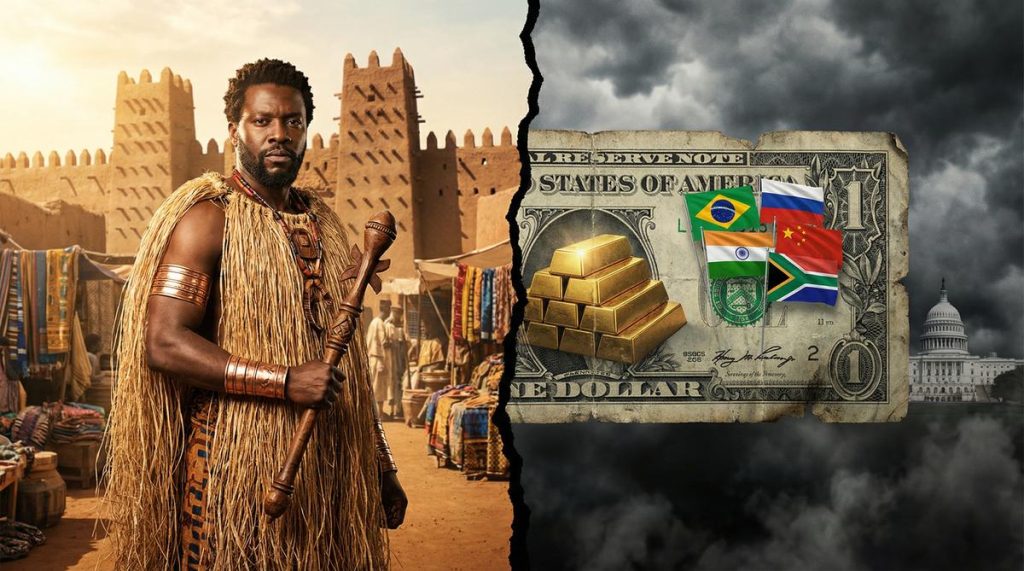
In the late 15th century, the Kingdom of Kongo was the undisputed superpower of west-central Africa.
Spanning across modern-day Angola and the Democratic Republic of Congo, it was a highly centralized, wealthy, and sophisticated empire. With a population of over two million, Kongo thrived on a robust internal economy, trading copper, ivory, and finely woven raffia fabrics.
They were entirely self-sufficient.
Then, the Portuguese arrived.
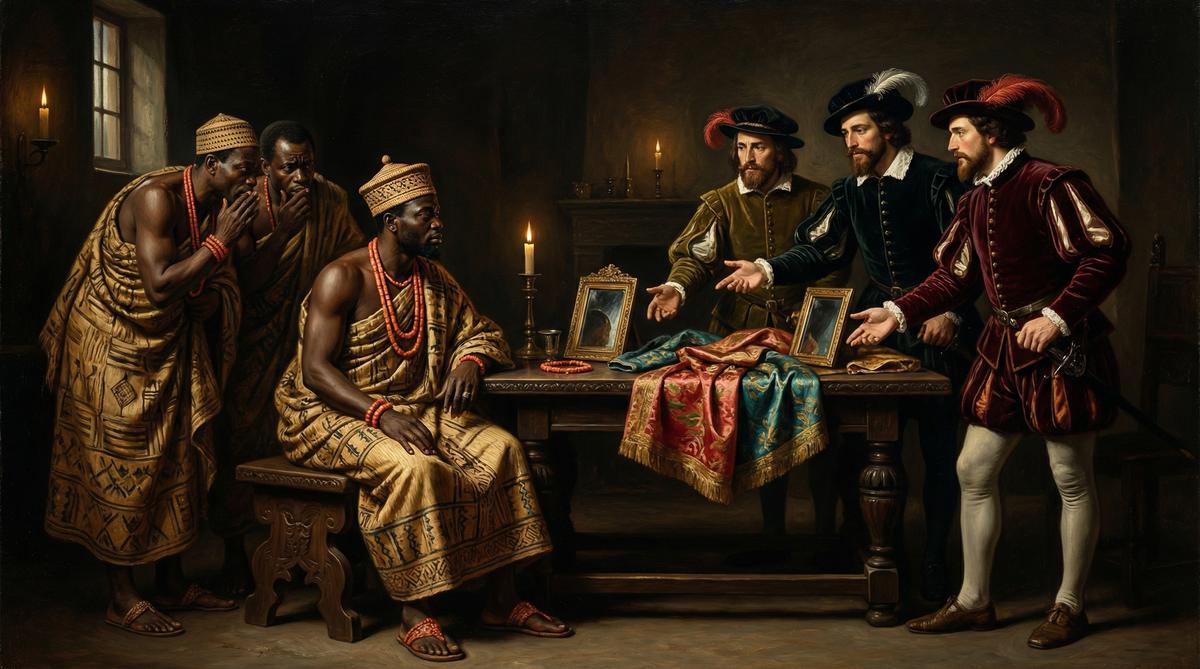
At first, the relationship seemed mutually beneficial. The Portuguese brought exotic luxury goods: silk, glazed china, glass mirrors, and European weaponry.
The Kongolese elite, eager to display their status, quickly developed an insatiable appetite for these foreign imports.
But the Portuguese didn’t want copper or ivory in return. They wanted labor.
To finance their addiction to European luxury goods, the Kongolese aristocracy began trading away their most vital resource: their own people, sold into the transatlantic slave trade.
They traded their foundational strength for foreign trinkets.
The Trap of Economic Dependency
The parallel to modern America is chilling.
Just as the Kongolese elite became addicted to Portuguese silk and mirrors, America became addicted to cheap foreign manufacturing and endless credit.
We hollowed out our industrial base, shipped our manufacturing overseas, and financed our consumption by selling US Treasury bonds to foreign nations.
We traded our self-reliance for cheap televisions and smartphones.
In the Kingdom of Kongo, the economic dependency quickly turned toxic. When the Kongolese kings tried to regulate the trade and protect their sovereignty, the Portuguese simply bypassed them.
The European traders began dealing directly with regional governors, fracturing the kingdom’s centralized power. They launched their own raids, destabilizing the entire region.
The Kongolese kings realized too late that by relying on a foreign power for their economic structure, they had handed over the keys to their kingdom.
Economic dependency is the ultimate Trojan Horse.
By the time the Battle of Mbwila occurred in 1665, the Kingdom of Kongo was a hollow shell of its former glory. It suffered a crushing defeat, leading to decades of civil war and the total collapse of the state.
They were not conquered by a superior military force. They were dismantled from the inside out by an economic system they could no longer control.
The End of the Dollar Illusion
Today, the United States is facing its own “Portuguese moment.”
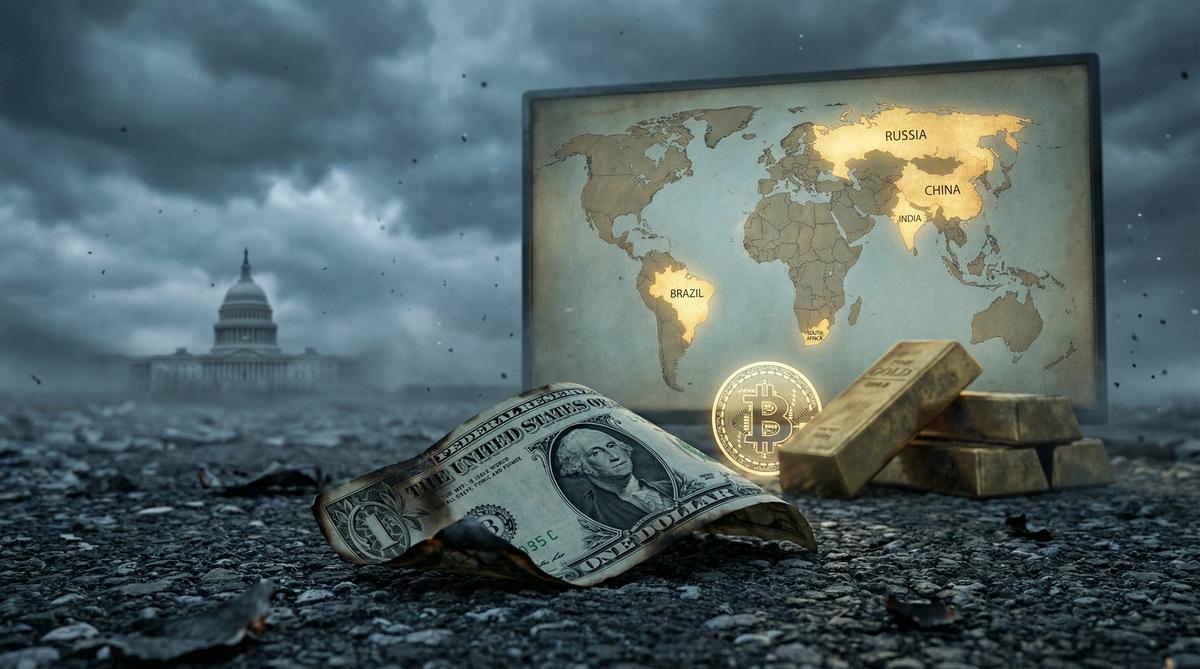
The BRICS nations—representing 45% of the global population and 28% of global GDP—are actively building the infrastructure to replace the US dollar.
They are no longer playing by our rules.
With Russia and China settling 90% of their bilateral trade in rubles and yuan, and the BRICS Unit (backed 40% by gold) gaining traction, the American monopoly on global finance is fracturing.
Just as the Portuguese bypassed the Kongolese kings, the rest of the world is building financial networks that bypass Washington and Wall Street.
When a nation loses control of its economic destiny, it loses its sovereignty.
If the US dollar loses its reserve status, the endless printing press stops. The cost of imported goods will skyrocket. The ability to finance trillion-dollar deficits will vanish overnight.
The illusion of infinite American wealth will shatter.
The Path to Resilience
It is easy to look at the accelerating de-dollarization and the staggering cost of global conflict and feel a profound sense of despair. To see the shifting tectonic plates of global finance and feel like a helpless bystander.
But history teaches another, more powerful lesson.
When massive, centralized systems fail, they create a vacuum. And into that vacuum rushes the opportunity for something new. The people who survive the collapse of empires are not the ones who simply hide.
They are the ones who rebuild, who focus on their local communities, who strengthen their own skills, and who create resilient networks of mutual support.
This is not a call to hide from the world. It is a call to build a better one, starting in your own backyard.
The end of dollar dominance does not have to mean the end of your family’s prosperity. It simply means that the era of relying on a fragile, globally entangled financial system is over.
The future belongs to those who recognize this reality and take immediate, decisive action to decouple their lives from a failing paradigm.
True sovereignty is not granted by a central bank. It is built by individuals.
The Blueprint for Hope
Building a resilient future starts with a single, powerful step: taking control of your own foundational needs.
When the centralized financial systems fracture, the most valuable assets will not be digital numbers on a screen or paper currency, but tangible skills, local resources, and the ability to provide for your own family. This is the essence of true independence.
The 4ft Farm Blueprint is not just about growing food—it is about reclaiming your sovereignty. It is the first chapter in your family’s story of independence, a story where you are the builder, not the victim of a collapsing economic empire.
For the tools and knowledge required to build this resilient lifestyle, Homesteader Depot provides the essential gear that empowers you to step away from the fragile supply chains that a debt-ridden nation can no longer guarantee.
To understand the deeper patterns of history and prepare for the shifts ahead, the Self Reliance Report and Survival Stronghold offer the intelligence you need to navigate the coming transition.
And because true resilience requires physical vitality, Seven Holistics and Freedom Health Daily provide the foundational health strategies to ensure you have the strength to build the future you deserve.
The empire of debt is crumbling. It is time to start building your own stronghold.