The numbers hitting American communities this week are sickening.
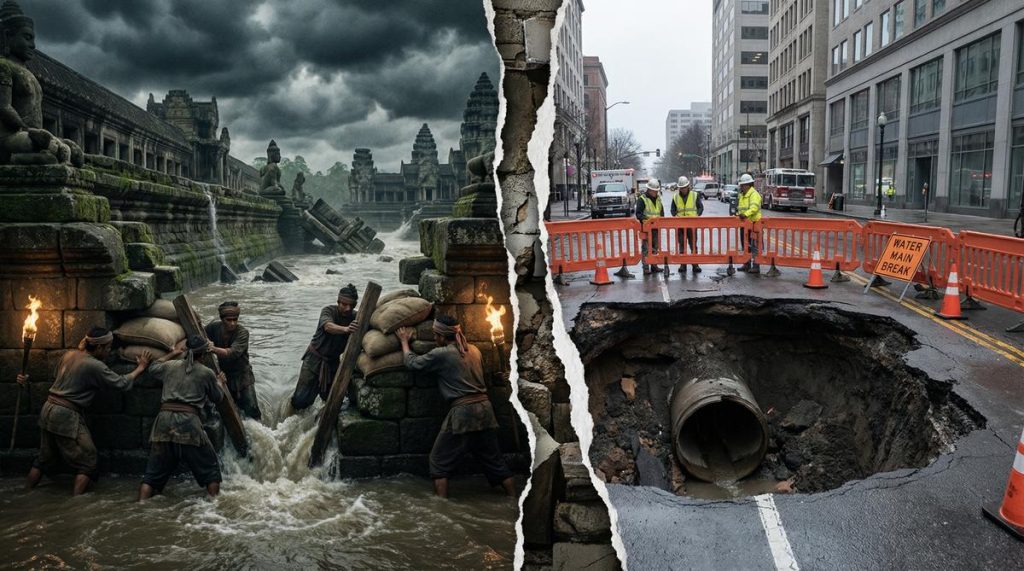
In January, a collapsed pipe dumped 244 million gallons of raw sewage into the Potomac River, sending gut-wrenching bacteria drifting past Washington D.C. for weeks.
And it is not an isolated incident.
At least 18.7 million Americans are currently served by utilities in serious violation of federal pollution limits. The EPA estimates that fixing our flooding and water quality needs over the next two decades will cost a staggering $630 billion.
But instead of fixing the pipes, we are cutting the funding.
The new FY2026 federal budget slashes State Revolving Funds for water infrastructure by 89%. Meanwhile, the Department of Government Efficiency (DOGE) has cancelled over $85 billion in federal contracts, and the national debt just breached $39 trillion.
We are watching the physical foundation of a superpower rot from the inside out.
But we are not the first great empire to let our most critical infrastructure crumble while politicians argued over the budget.
Over 600 years ago, the most sophisticated hydraulic city in the pre-industrial world faced the exact same crisis.
They were the Khmer Empire of Angkor.
And their failure to maintain their water systems didn’t just cause a public health crisis. It destroyed their civilization.
The Hydraulic City That Had No Equal on Earth
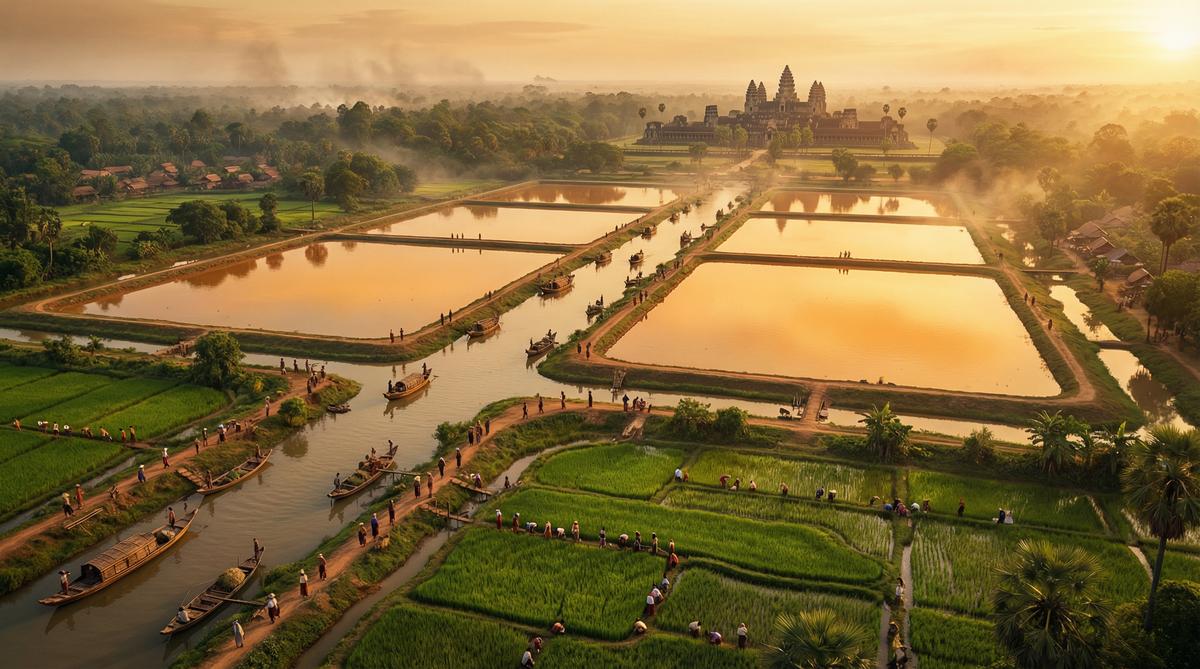
In the 12th century, Angkor was the undisputed marvel of the medieval world.
Long before London or Paris were major cities, Angkor was a sprawling urban complex home to nearly one million people. And its lifeblood was water.
The Khmer engineers built a “hydraulic city” that had no equal on Earth. They constructed massive reservoirs called barays, intricate canals, and complex sluices to capture monsoon rains, control flooding, and irrigate vast rice paddies that fed the entire empire.
“It was a water management infrastructure that had no equal on Earth. Water was not only a resource that had to be managed… It was also tied up with the power of the king.” — Dan Penny, University of Sydney
This system allowed the empire to thrive for centuries, producing massive agricultural surpluses that funded the construction of the legendary Angkor Wat — the largest religious monument ever built.
But a complex system requires constant, meticulous maintenance.
And the Khmer leadership stopped paying the maintenance bill.
When the Canals Filled with Silt
By the mid-1300s, the climate began to shift.
Angkor suffered from a persistent, decades-long drought. The massive reservoirs dried up, and the canals filled with silt. The empire’s leaders — distracted by religious shifts, external wars, and internal power struggles — failed to dredge the canals or reinforce the embankments.
Then, the weather violently reversed.
Years of unusually strong monsoon rains slammed into the weakened, neglected infrastructure. The system could not cope.
The water that once brought life now brought destruction.
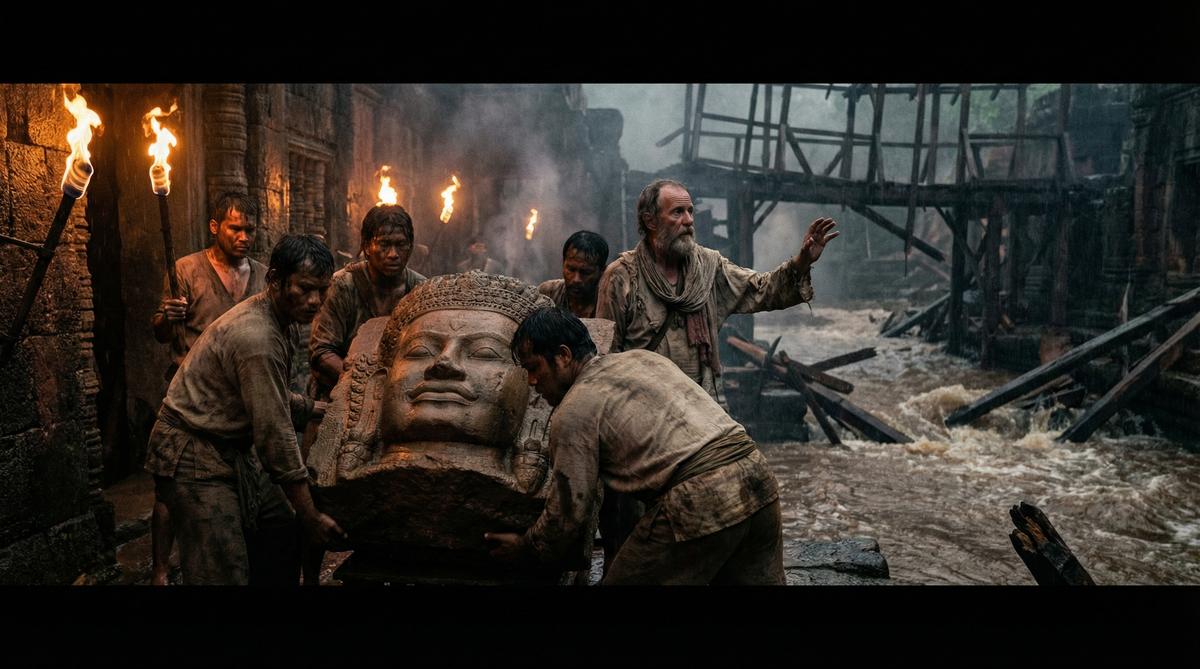
Massive floods tore through the city, severing vital canal links and destroying bridges. The damage was so severe that engineers desperately tore apart sacred stone temples just to build emergency bridges — a sign of total systemic panic.
“That they would take apart a temple and use it for something as mundane as a bridge suggests there is something seriously going wrong,” said researcher Dan Penny.
But it was too late. The infrastructure cascade had begun.
With their water system destroyed, the agricultural base collapsed. The population starved, disease spread from stagnant pools, and the weakened city was easily sacked by the Siamese army in 1431.
The jungle swallowed the greatest city on Earth.
The American Infrastructure Cascade
The parallels to America in 2026 are not subtle.
Like Angkor, we built the most impressive infrastructure network in the world during our golden age. And like Angkor, we have spent decades neglecting it.
Our water systems are over a century old. Baltimore’s sewer system — where 15 million gallons of sewage spilled just since last year — has some pipes that were mapped only in recent decades.
The American Society of Civil Engineers gives U.S. drinking water infrastructure a C- and wastewater a D+. The EPA estimates a $630 billion funding gap over the next 20 years. And the federal government just cut the primary funding mechanism by 89%.
We are experiencing unprecedented climate volatility — from severe droughts in the West to catastrophic flooding in the East.
And just as the stress on the system peaks, we are slashing the budget to fix it.
When 244 million gallons of sewage flood the Potomac, or when basements in Baltimore back up with human waste, it is not just a local problem. It is the modern equivalent of Angkor’s canals filling with silt.
It is the sound of a complex system beginning to fail.
And when the federal government cuts water infrastructure funding by 89% to service a $39 trillion debt, they are making the exact same fatal miscalculation the Khmer kings made.
They are assuming the foundation will hold forever.
It will not.
Build Your Own Reservoir
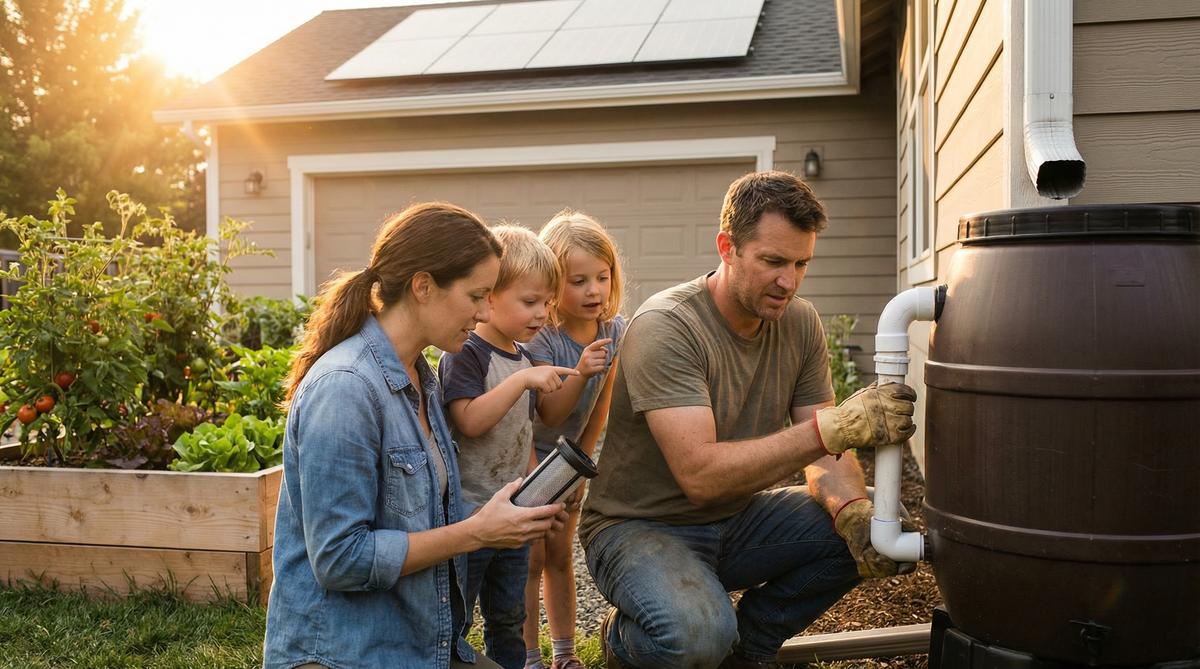
The citizens of Angkor who survived the collapse were the ones who didn’t wait for the god-king to fix the canals.
They moved to higher ground. They secured their own local water sources. They adapted to the new reality before the final flood hit.
You must do the same.
You cannot rely on a bankrupt federal government to keep the water clean, the power on, or the supply chains running. The infrastructure cascade has already begun.
True resilience starts at your own property line.
It starts with securing your own water, growing your own food, and building systems that don’t depend on a fragile, century-old grid that no one is funding to fix.
This is exactly why we built the 4ft Farm Blueprint — a proven, step-by-step system to build your own localized food and water security, no matter where you live or how much space you have.
For daily intelligence on the systems that are breaking down — and how to position yourself ahead of them — read The Ready Report and The Self Reliance Report.
And if you want to understand the health consequences of living through an infrastructure collapse — the stress, the contaminated water, the food insecurity — Survival Stronghold has the preparedness protocols you need.
The empire’s pipes are breaking.
Make sure yours are secure.