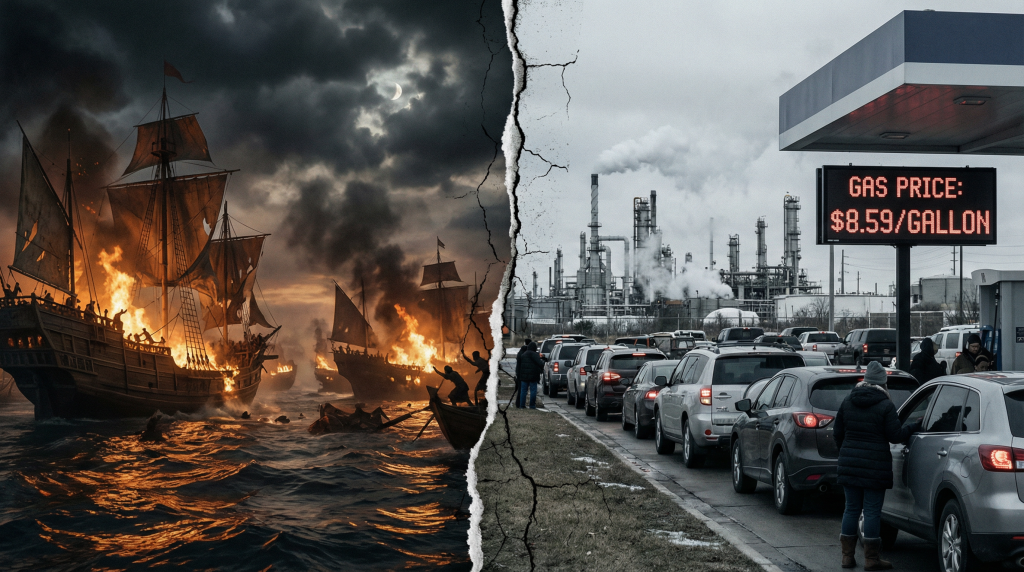
Oil just hit $116 a barrel.
The US-Iran conflict is entering its fifth week, and the Strait of Hormuz—the artery that pumps 20% of the world’s oil—is effectively choked off.
Federal Reserve Chair Jerome Powell is openly warning of an “energy supply shock.”
Stagflation fears are no longer whispers in financial backrooms; they are screaming headlines.
We are watching the real-time vulnerability of a superpower that outsourced its lifeblood to a volatile chokepoint halfway across the globe.
But this is not the first time an empire has been brought to its knees by a closed strait.
To understand what happens next to the American economy, we have to look back to the 15th century.
We have to look at the Majapahit Empire.
The Masters of the Spice Route
In the 14th century, the Majapahit Empire—centered in modern-day Indonesia—was the undisputed superpower of Southeast Asia.
They didn’t just participate in global trade; they controlled the chokepoints.
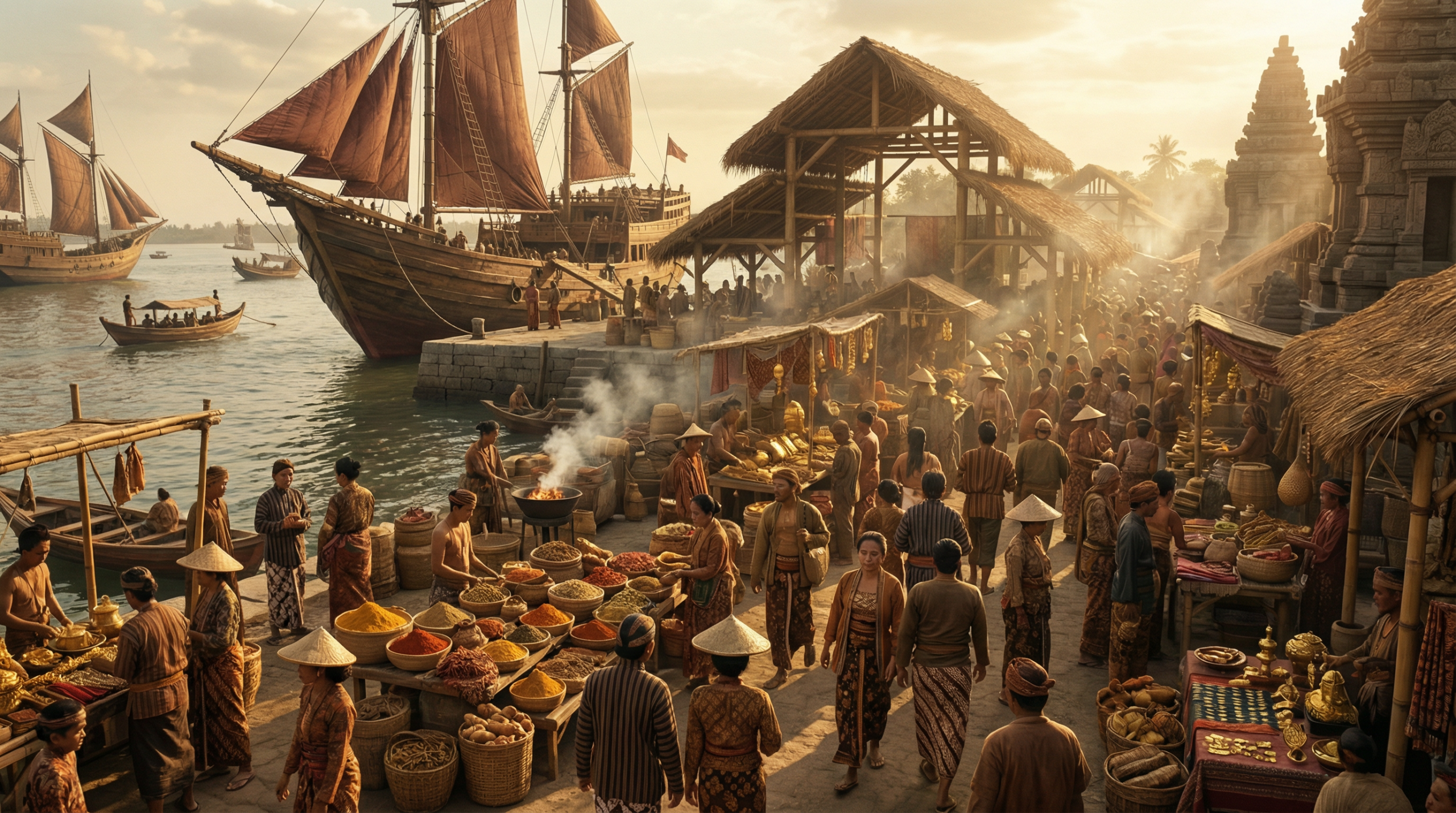
The Majapahit dominated the Strait of Malacca and the Java Sea. This was the medieval equivalent of the Strait of Hormuz.
Through these waters flowed the world’s most valuable commodities: nutmeg, cloves, mace, and sandalwood from the Spice Islands.
If you were a merchant in China, India, or the Middle East, you paid the Majapahit toll.
Their capital, Trowulan, was a sprawling metropolis of brick canals, massive temples, and unimaginable wealth. They had a highly monetized economy, importing millions of Chinese copper coins (kepeng) just to handle the sheer volume of daily transactions.
They were a thalassocracy—an empire of the sea. Their massive wooden jong ships projected power from Sumatra to New Guinea.
They believed their dominance was permanent. They believed their control of the chokepoints made them invincible.
They were wrong.
The Chokepoint Collapses
The Majapahit made a fatal miscalculation: they confused the control of trade routes with true, internal resilience.
In the early 15th century, the geopolitical tectonic plates shifted.
The Chinese Ming Dynasty, eager to project its own power, began backing a rival port city: the Sultanate of Malacca.
With Chinese protection, Malacca began to siphon off the spice trade. They offered better terms, safer harbors, and a new religious alignment that appealed to the merchants coming from the West.
The Majapahit didn’t lose a massive, decisive land battle. They lost the strait.
As the trade revenue dried up, the internal rot of the Majapahit Empire was exposed.
Without the constant influx of foreign wealth, they couldn’t maintain their massive bureaucracy. They couldn’t pay their provincial governors.
A brutal civil war drained their treasury. The empire fractured. The coastal cities, now aligned with Malacca and the new trade networks, broke away. The Majapahit capital was eventually sacked, and the remnants of the royal court fled into the mountains of Bali.
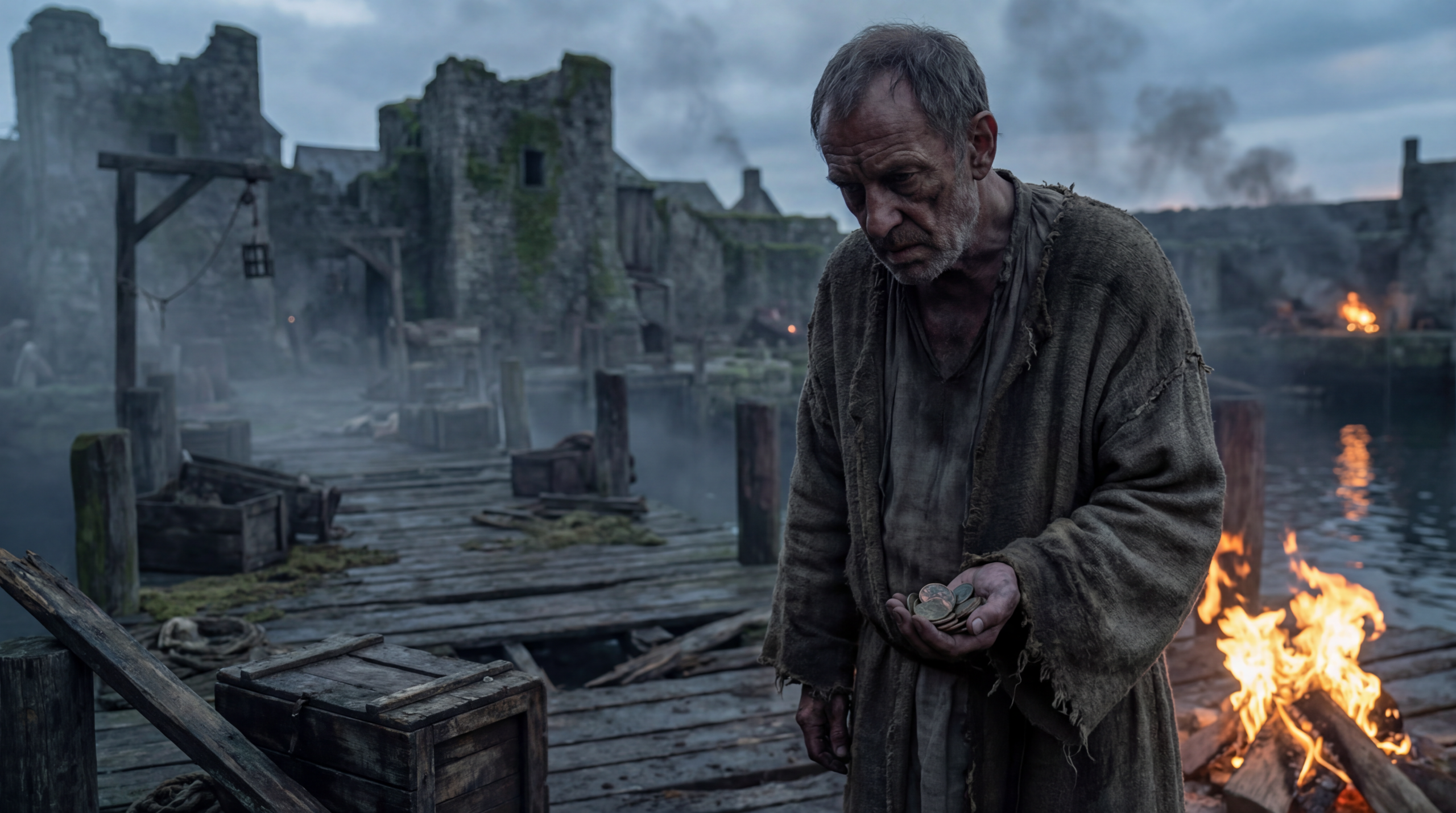
An empire that had controlled the world’s most vital economic artery starved to death when that artery was bypassed.
The Lesson for an Energy-Starved America
The parallels to our current crisis are chilling.
Like the Majapahit, the modern American economic engine is entirely dependent on a fragile, globalized supply chain.
We don’t trade in nutmeg and cloves; we trade in crude oil, semiconductors, and rare earth metals.
And just like the Strait of Malacca in the 15th century, the Strait of Hormuz is the chokepoint that can bring the whole system crashing down.
When oil hits $116 a barrel, it doesn’t just mean more expensive gas.
It means the cost of everything goes up.
It means the fertilizer needed to grow our food becomes unaffordable. It means the diesel needed to transport that food to the grocery store doubles in price.
It means the highly complex, just-in-time delivery systems that keep our cities functioning begin to seize up.
The Majapahit collapsed because they outsourced their prosperity to a trade route they could no longer defend.
America is facing the exact same vulnerability. We have built a society that assumes the cheap energy will always flow, that the straits will always remain open, and that the global market will always provide.
That assumption is currently burning in the Middle East.
The Turn: The Path to Resilience
It is easy to look at the fragility of these global systems and feel a sense of despair. To see yourself as a pawn in a game of empires, vulnerable to the whims of foreign conflicts and central bank policies.
But history teaches another, more powerful lesson.
When the great, centralized systems fail, they create a vacuum. And into that vacuum rushes the opportunity for something new.
The survivors of the Majapahit collapse weren’t the ones who simply hid in the ruins of Trowulan. They were the ones who adapted. They were the ones who moved, who rebuilt, who focused on their local communities, and who created resilient networks of mutual support in places like Bali.
This is not a call to hide from the world. It is a call to build a better one, starting in your own backyard.
The end of the era of cheap, globally sourced energy is not the end of the world. It is the beginning of the era of local resilience.
It is the moment when the skills of self-reliance—growing your own food, securing your own water, building your own local economy—transition from being a hobby to being the most valuable assets on earth.
The Action: The Blueprint for Hope
Building a resilient future starts with a single, powerful step: taking control of your own supply chain.
You cannot control the Strait of Hormuz. You cannot control the Federal Reserve.
But you can control what happens on your own property.
The 4ft Farm Blueprint is not just about survival; it’s about sovereignty.
It is the first chapter in your family’s story of independence—a story where you are the builder, not the victim.
It teaches you how to generate high-yield, nutrient-dense food in a fraction of the space, completely insulated from the shocks of the global energy market.
When the cost of diesel doubles the price of groceries, the food you grow yourself remains immune.
Stop outsourcing your family’s security to fragile global chokepoints.