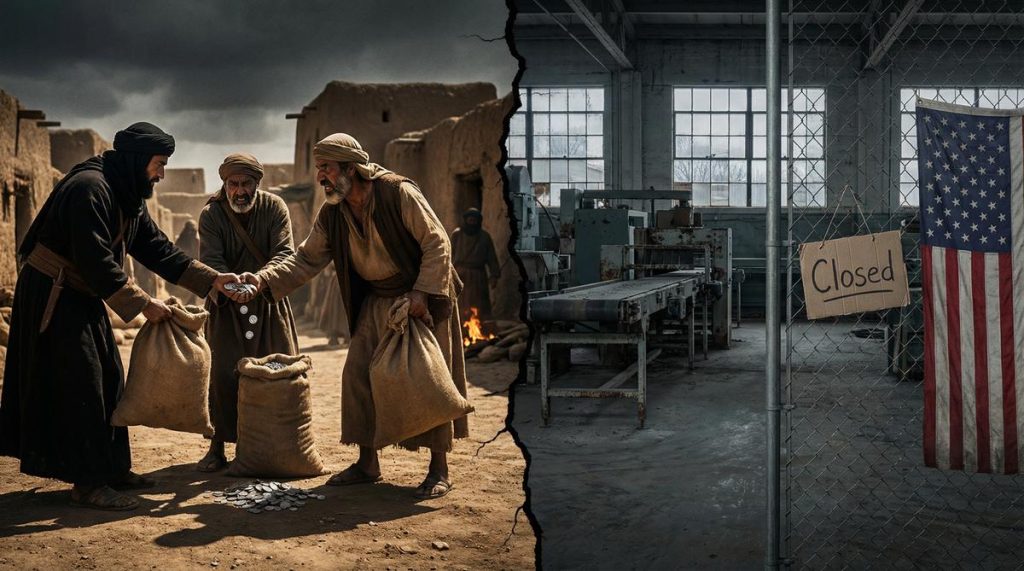
One year ago today, the American economy was promised liberation.
On April 2, 2025, the “Liberation Day” tariffs were enacted — sweeping, unprecedented taxes on global imports. The promise was simple: protect American jobs, rebuild domestic manufacturing, and punish foreign competitors.
But the math tells a different story.
Today, the U.S. goods trade deficit has hit an all-time high. The manufacturing sector has shed 100,000 jobs. U.S. manufacturers hired 388,000 fewer workers in 2025 than the year before. And the ratio of manufacturing workers to total nonfarm employment has plummeted to its lowest point since 1939.
We are watching a superpower attempt to tax its way to prosperity — only to crush the very citizens it promised to protect.
But this is not the first time an empire has made this fatal miscalculation.
The Illusion of Infinite Wealth
In the mid-8th century, the Umayyad Caliphate was the largest empire the world had ever seen.
Stretching from the sun-baked plains of Spain in the west to the borders of India in the east, it was a military and economic juggernaut. It controlled the most lucrative trade routes on earth. Its capital, Damascus, overflowed with the wealth of three continents.
To the outside observer, the Umayyads were invincible.
But beneath the surface, the foundation was rotting.
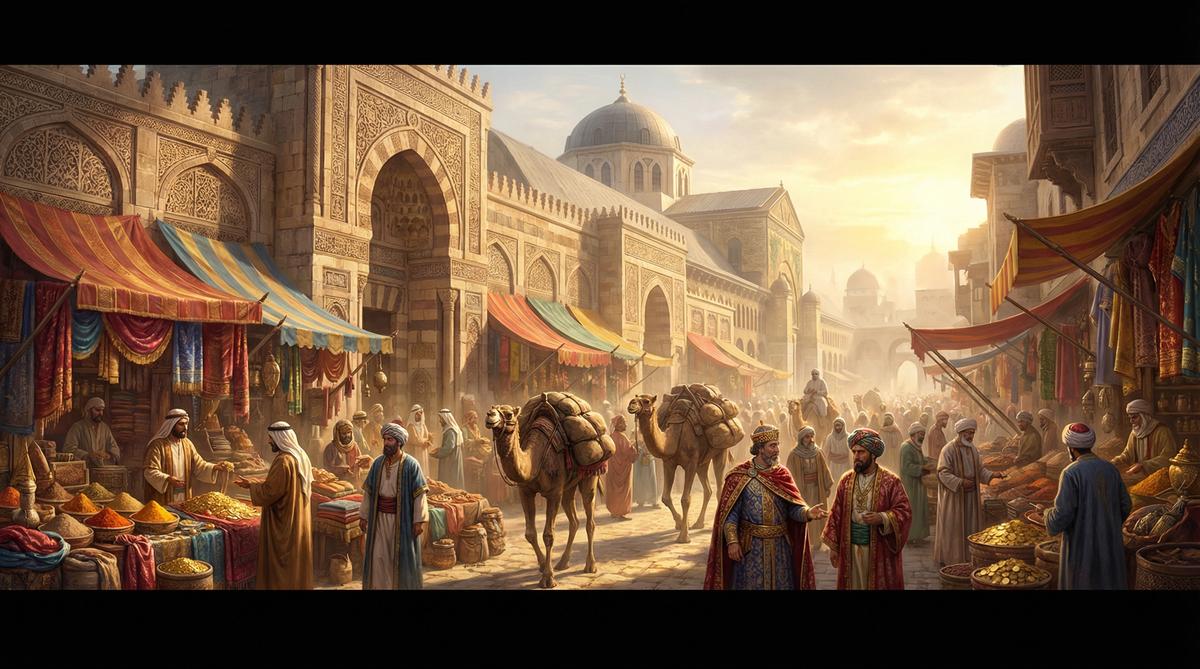
The Umayyad economy was built on a dangerous premise: that the ruling class could extract endless wealth from its subjects without consequence. The empire relied heavily on the jizya, a discriminatory tax levied on non-Muslims, and the kharaj, a crushing agricultural tax.
As the empire expanded, it needed more money to fund its massive military campaigns and the extravagant lifestyles of its elite. The solution was always the same: tax more, spend more, extract more.
Sound familiar?
The Breaking Point: When the Taxed Stop Paying
When conquered peoples began converting to Islam in massive numbers, they expected to be freed from the crushing jizya tax.
The Umayyad rulers panicked.
Faced with a sudden drop in revenue, the government made a fatal decision. They refused to lift the tax burden. They treated the new converts — the mawali — as second-class citizens, forcing them to pay the same exorbitant taxes while denying them positions in the government or military.
The Umayyads had created a two-tiered economy. The elite enjoyed the spoils of empire, while the working class — the farmers, the merchants, the builders — were squeezed dry to fund a system that actively worked against them.
The resentment began to boil.
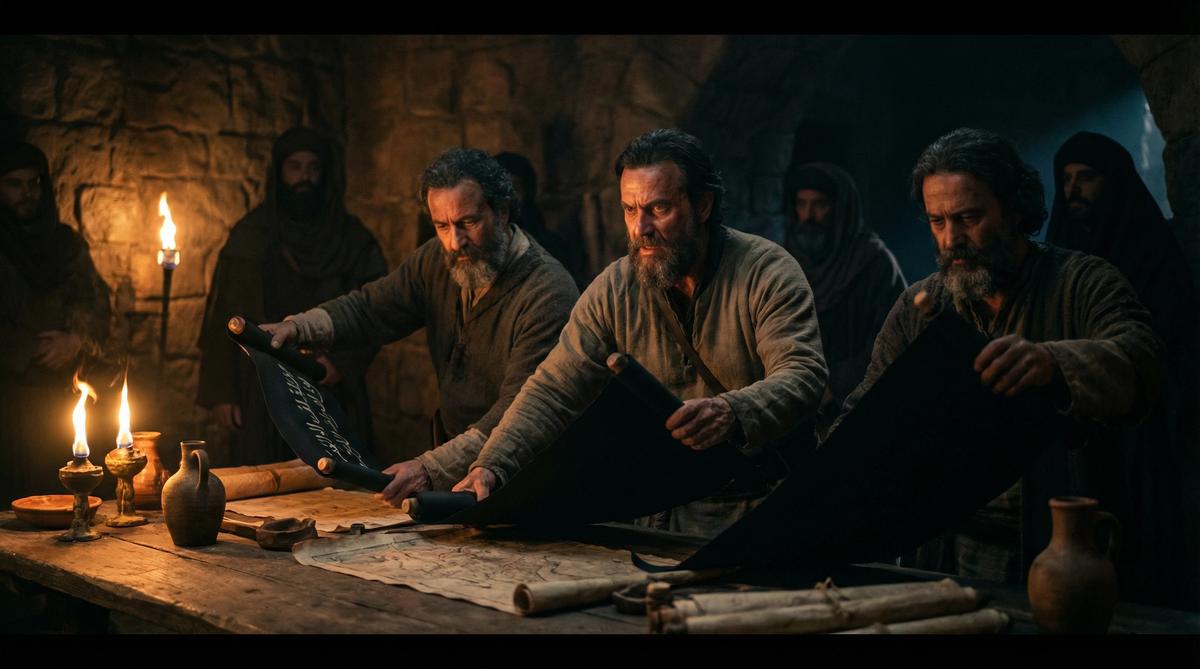
In 747 AD, the breaking point arrived. The Abbasid Revolution erupted in the eastern province of Khorasan. It wasn’t just a religious uprising; it was an economic revolt. The mawali, crushed by taxation and marginalized by the state, rose up alongside disgruntled Arab settlers who had watched their empire become a machine for elite enrichment.
By 750 AD, the Umayyad Caliphate — the largest empire on earth — was completely overthrown. They didn’t fall to a foreign invader. They fell because they taxed their own foundation into oblivion.
The Modern Parallel: Who Actually Pays the Tariff?
Look at America today.
The “Liberation Day” tariffs were sold as a tax on foreign nations. But tariffs are not paid by foreign governments. Tariffs are paid by domestic consumers and businesses.
When the cost of imported steel, aluminum, and agricultural chemicals skyrockets, who pays the price?
The American builder. The American farmer. The American family.
Over half of U.S. imports are industrial supplies or capital goods used to make things in the United States. By taxing these inputs, the government has made it harder for American manufacturers to survive — not easier.
The data is unambiguous. One year after Liberation Day:
- Trade deficit: Hit an all-time high in 2025 — the exact opposite of the stated goal
- Manufacturing jobs: The sector shed 100,000 positions
- Hiring: U.S. manufacturers hired 388,000 fewer workers in 2025 vs. 2024
- Farm bankruptcies: Climbing, with agricultural exports declining and input costs surging $958 million from February to October 2025 alone
- Manufacturing share of employment: Lowest since 1939
Just like the Umayyad mawali, the American working class is being squeezed to fund a top-down economic experiment. The people who build things, grow things, and make things are paying the price for decisions made in rooms they’ll never enter.
We are repeating the Umayyad mistake: assuming the foundation can bear infinite weight.
The Turn: The Path to Resilience
It is easy to look at this pattern and feel a sense of despair. To see yourself as a pawn in a game of empires, crushed by economic forces beyond your control.
But history teaches another, more powerful lesson.
When the great, centralized systems fail, they create a vacuum. And into that vacuum rushes the opportunity for something new. The survivors of the Umayyad collapse weren’t the ones who simply hid. They were the ones who rebuilt, who focused on their local communities, who strengthened their own skills, and who created resilient networks of trade and mutual support.
The Abbasid era that followed the Umayyad collapse became one of the greatest periods of intellectual and economic flourishing in human history — the Islamic Golden Age. It was built by the same people who had been marginalized and taxed into rebellion.
This is not a call to hide from the world. It is a call to build a better one, starting in your own backyard.
When the centralized economy becomes a trap, the only logical response is to decentralize your own life. Reduce your dependence on the systems that are failing. Build the skills, the resources, and the community that no tariff can touch.

The Blueprint for Hope: What You Can Build Today
Building a resilient future starts with a single, powerful step: taking control of your own supply chain.
You cannot control the tariffs in Washington. You cannot control the trade deficit. But you can control what happens on your own property.
The 4ft Farm Blueprint is not just about survival; it’s about sovereignty. It’s the first chapter in your family’s story of independence — a story where you are the builder, not the victim. It teaches you how to create a high-yield, sustainable food source in a fraction of the space, insulating your family from the shocks of a failing system.
But true resilience requires a holistic approach.
If you want to protect your wealth from the silent theft of inflation and understand the economic patterns playing out right now, the Self Reliance Report delivers the analysis the mainstream media won’t.
If you want to build a homestead that can weather any economic storm — from tariff shocks to supply chain collapses — the Homesteader Depot provides the tools and knowledge you need to get started today.
And if you want to ensure your family’s health and preparedness when the systems fracture, Seven Holistics and Survival Stronghold offer the critical insights you won’t find in the mainstream media.
For premium intelligence on what’s coming next — and how to position your family ahead of it — The Ready Report is where serious builders go for serious analysis.
The empire may be taxing itself to death. But you don’t have to go down with it.
Start building today.