The Empire That Dried Up: What the Fall of the Toltecs Teaches Us About America’s Water Crisis
The American West is running out of water.
In 2026, the Colorado River—the lifeblood for 40 million Americans—is facing a catastrophic shortfall. Snowpack in the Rocky Mountains has hit record lows.
Federal plans to ration water are already sparking bitter legal wars between states.
Cities are imposing emergency restrictions. Ranchers are selling off herds because they can’t water them.
But this is not just a weather problem. It is a civilization problem.
When the water stops flowing, the infrastructure of society begins to crack. Food prices skyrocket. Power grids fail. Populations are forced to move.
We are watching the early stages of a resource collapse.
And history tells us exactly how this ends.
The City of Reeds
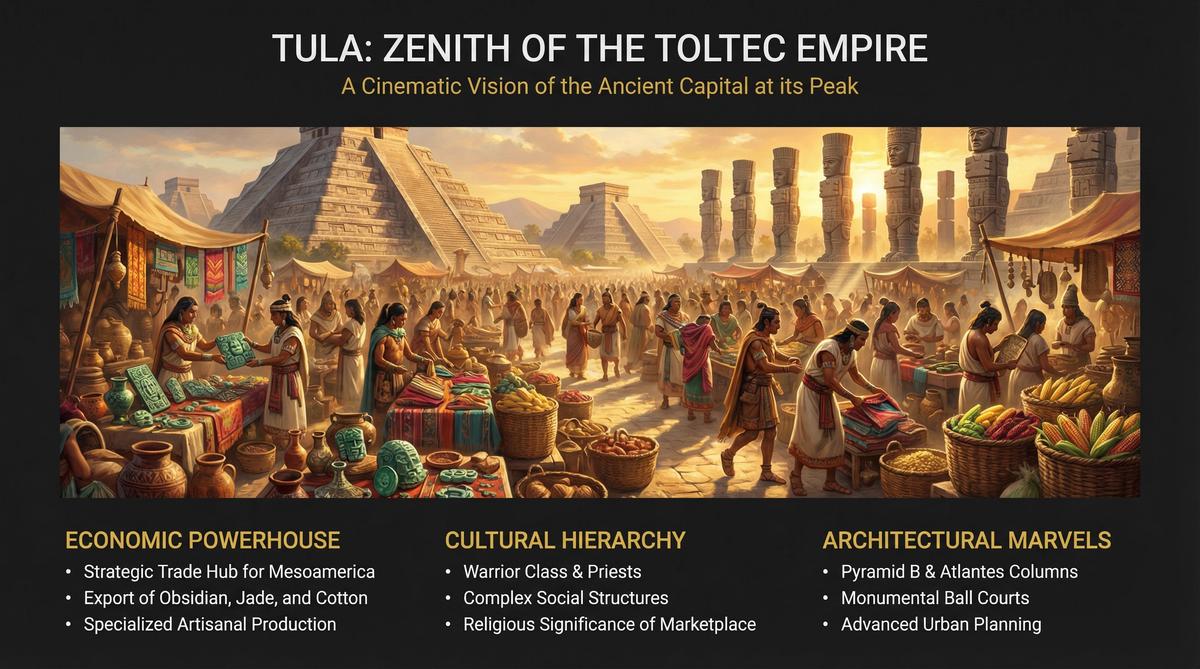
In the 10th century, the Toltec Empire was the undisputed superpower of Mesoamerica.
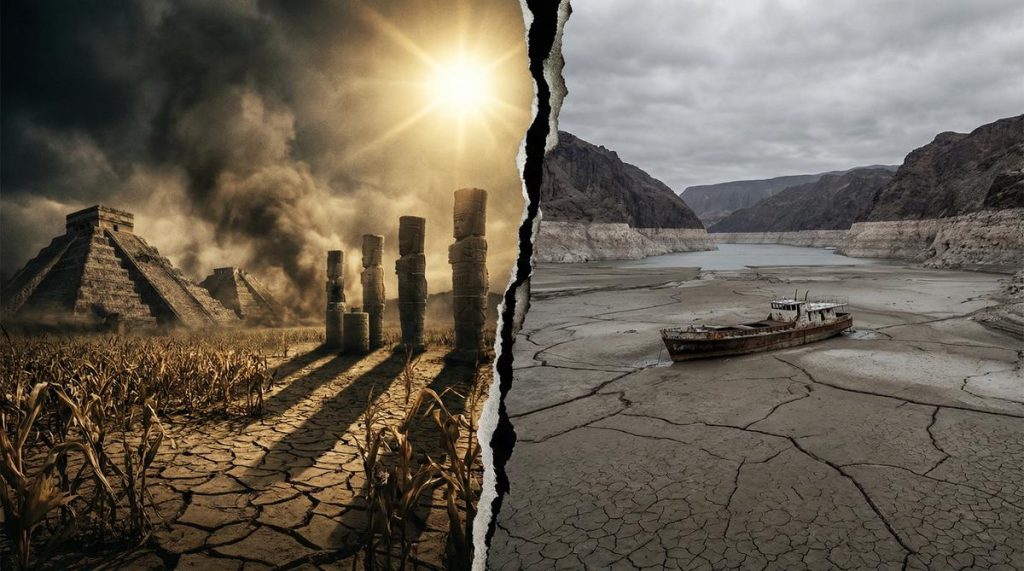
Their capital, Tollan (Tula), was a marvel of engineering and wealth. It was home to 40,000 people, featuring massive pyramids, sprawling palaces, and complex trade networks that stretched for thousands of miles.
The Toltecs were masters of their environment.
They built sophisticated agricultural systems that produced massive yields of maize and cotton. They were a warlike, dominant culture that demanded tribute from surrounding tribes.
To the outside world, the Toltecs seemed invincible.
But their entire empire was built on a fragile foundation: predictable weather.
The 650-Year Drought
Around 1150 AD, the rain stopped.
It wasn’t just a bad season. It was the beginning of a megadrought that would ravage the region.
The Toltec agricultural machine, which had fed tens of thousands and fueled their military dominance, ground to a halt.
Without water, the crops failed. Without crops, the tribute system collapsed.
The ruling class, desperate to maintain control, likely squeezed the population harder. But you cannot tax dust.
Hunger breeds desperation. And desperation breeds violence.
Internal disputes tore the power structure apart. The legendary stories of the Toltecs speak of a bitter civil war between the followers of the god Quetzalcoatl and the dark deity Tezcatlipoca.
In reality, it was a society tearing itself apart over dwindling resources.
The Great Migration
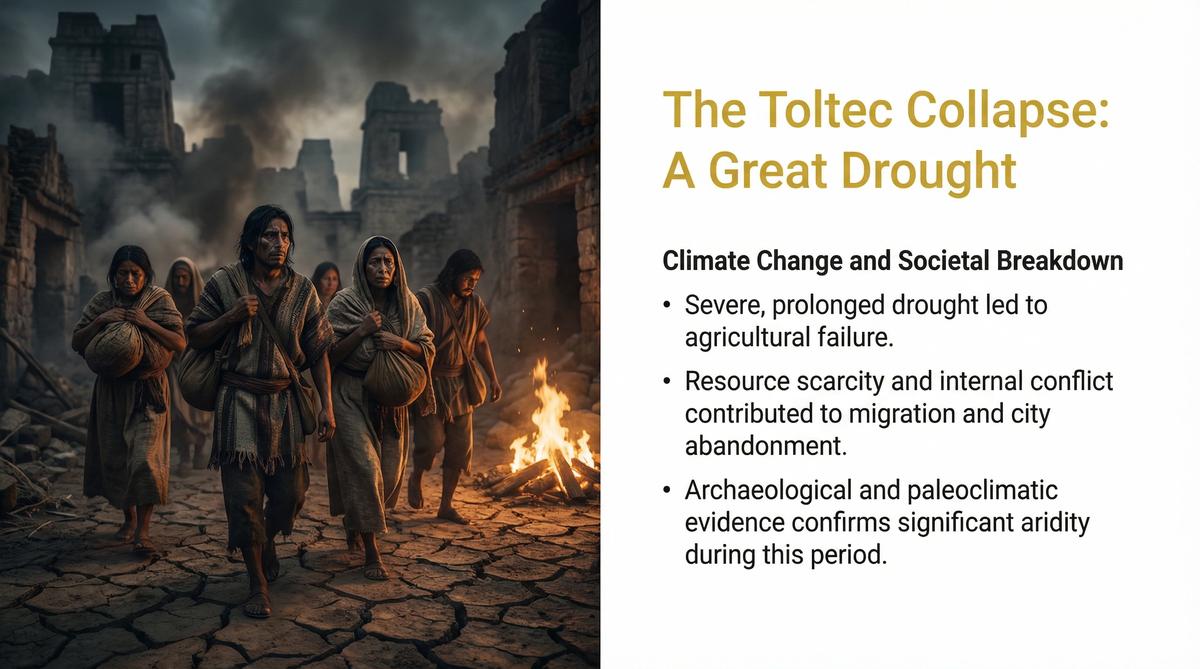
By the mid-12th century, Tollan was in ruins.
Archaeological evidence shows that the city’s grand architectural columns and statues were burned and purposely buried. The capital was systematically looted.
The Toltec Empire didn’t fall to a superior foreign army. It collapsed from within because it ran out of water.
The survivors had no choice but to flee. Led by their final ruler, Huemac, the remnants of the Toltec people abandoned their magnificent city and migrated south, eventually settling near Lake Texcoco.
They became refugees in their own land.
The empire that had mastered nature was ultimately destroyed by it.
The American Megadrought
Fast forward to 2026.
The American Southwest is facing its own megadrought. The reservoirs that power our cities and irrigate our crops—Lake Mead and Lake Powell—are sitting at critical, historic lows.
We have built massive, water-intensive cities in the middle of the desert, assuming the climate would never change.
Just like the Toltecs, we rely on a highly complex, centralized system to keep our society functioning.
When the Colorado River can no longer meet demand, the ripple effects will be devastating.
Agricultural yields in California and Arizona will plummet. Food prices at your local grocery store will surge. Hydroelectric power generation will falter, leading to rolling blackouts.
And just like in Tollan, resource scarcity will breed political conflict.
We are already seeing states threaten lawsuits over water rights. As the crisis deepens, that political balkanization will only accelerate.
Build Your Own Oasis
The Toltecs who survived the collapse of Tollan were the ones who moved. They adapted.
But in the modern world, you don’t have to wait until the city burns to take action.
You can build your own resilience right now.
The government cannot make it rain. And their rationing plans will prioritize corporate interests over your family’s needs.
True sovereignty means controlling your own resources.
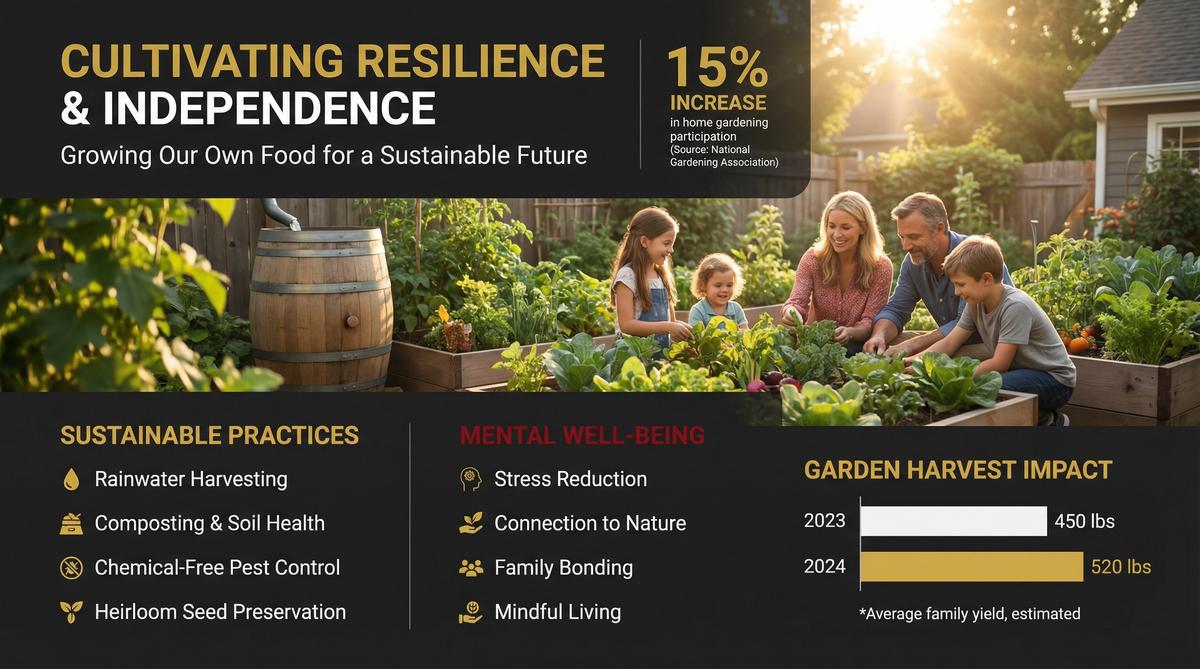
Start by securing your own water supply. Invest in rainwater harvesting systems, high-capacity storage tanks, and advanced filtration.
Build local food resilience. A raised-bed garden or a greenhouse requires a fraction of the water used by industrial agriculture, and it insulates you from the coming grocery store price shocks.
The Toltec Empire dried up and blew away.
But your family doesn’t have to.
Prepare now. Build your oasis. And when the centralized systems fail, you will be the one left standing.
For more insights on building resilience across all areas of your life, explore our portfolio:
- 4 Foot Farm Blueprint: Build your own food oasis with high-yield, low-water gardening techniques.
- Survival Stronghold: Secure your family’s future against infrastructure collapse.
- Homesteader Depot: The tools and skills you need to thrive outside the centralized system.