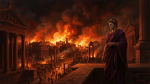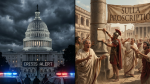
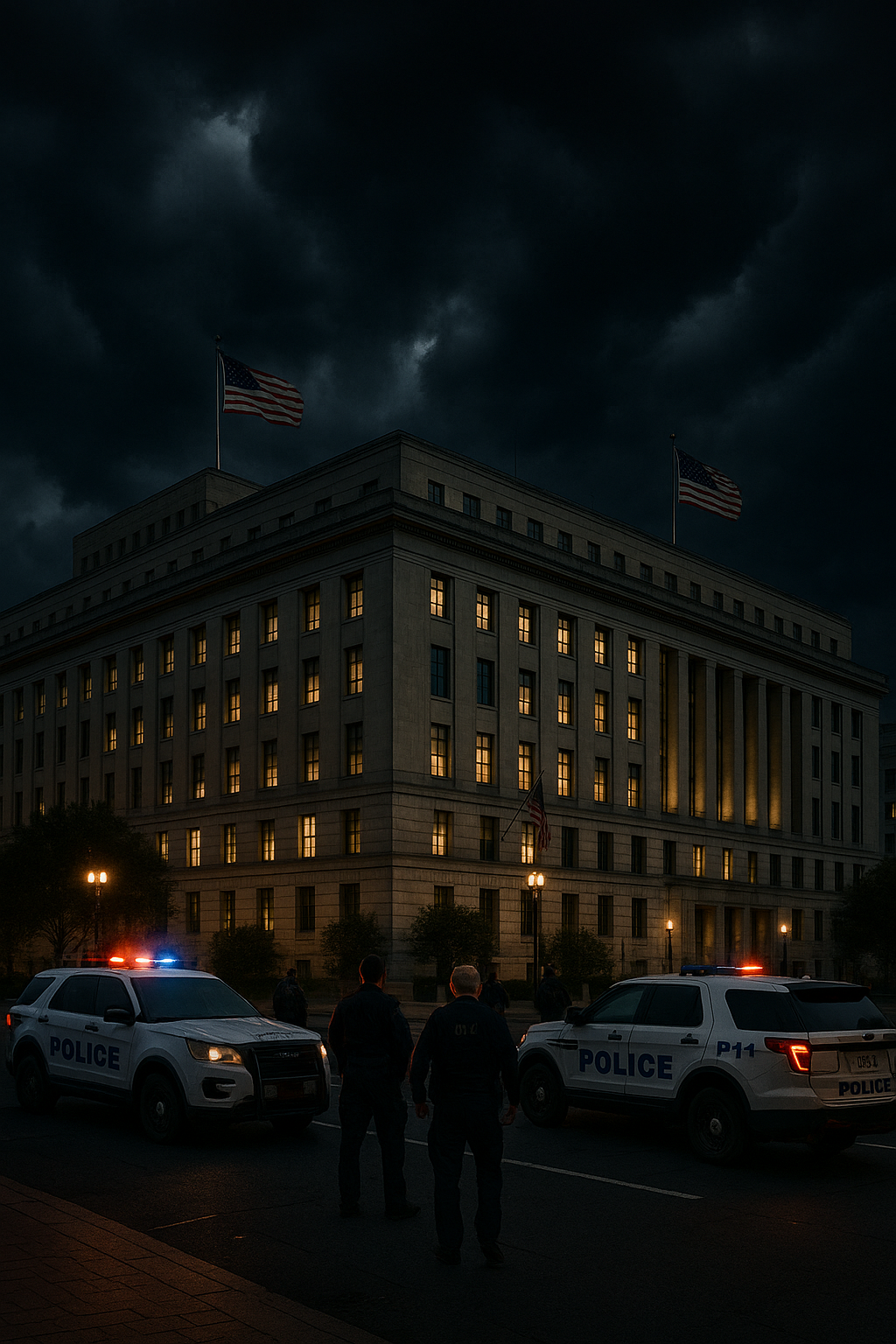
In the sweltering heat of a Washington D.C. summer, a political firestorm erupted, not with the usual rhetoric of cable news, but with a chilling display of federal power. In a move that sent shockwaves through the nation’s capital, the White House announced a “public safety initiative” that was anything but ordinary.
For seven days, the federal government seized control of the city’s own Metropolitan Police Department, appointing a DEA administrator as its emergency head. The official justification was a surge in crime, a familiar refrain in the political theater of our times. But to many, this was something different, something more sinister.
The move was immediately condemned as a constitutional crisis, a blatant violation of D.C.’s home rule. The city’s own elected officials were sidelined, their authority usurped by a federal decree. Protests erupted, not just on the streets, but in the courts, as legal battles began over the very nature of American federalism.
The incident laid bare a deep and troubling partisan divide: a staggering 72% of Republicans expressed confidence in the federal intervention, while a mere 18% of Democrats shared that sentiment. This wasn’t just a political disagreement; it was a fundamental schism in how Americans viewed the role of their own government.
As the dust settled, a question lingered in the air, a question that went beyond the immediate political squabbles: was this a one-time event, a desperate measure for a desperate time? Or was it a test, a blueprint for a new kind of federal power, a power that could be wielded not just in the nation’s capital, but in any city, at any time? The events in D.C. felt like a modern mystery, a puzzle with missing pieces. But what if the key to understanding this puzzle wasn’t in the present, but in the distant past? What if this had all happened before?
The Time Portal
Let’s wind back the clock, not by decades, but by centuries. Imagine a world without the internet, without cable news, without the constant hum of modern life. We arrive in the year 861 CE, in the heart of the Islamic Golden Age. The city is Samarra, the glittering new capital of the Abbasid Caliphate, a sprawling metropolis on the banks of the Tigris River.

This is the center of the world, a hub of science, art, and commerce. The Caliph, al-Mutawakkil, rules over a vast empire that stretches from North Africa to Central Asia. He is, in theory, the most powerful man on Earth.
But in the opulent palaces of Samarra, a different power is stirring. The Caliph’s own personal guard, an elite force of Turkish soldiers, has grown powerful, their influence reaching into the very heart of the court. They are the protectors of the Caliph, but they are also his keepers. The air is thick with intrigue, with whispers of plots and counter-plots.
The Turkish commanders, men like Wasif and Bugha, are no longer just soldiers; they are kingmakers, and they are growing restless.
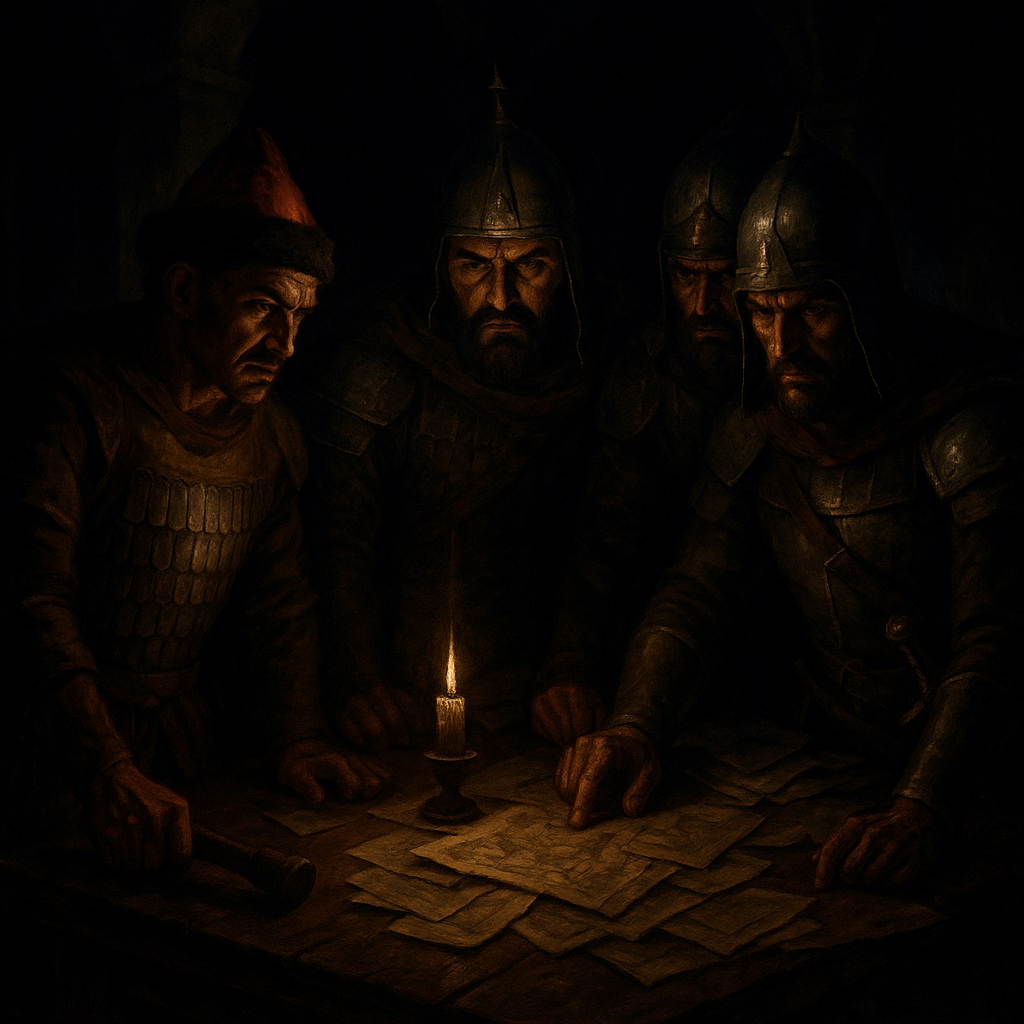
One fateful night, the whispers turn to action. The Turkish guards, the very men sworn to protect the Caliph, storm the palace. Al-Mutawakkil is assassinated, his reign brought to a bloody and abrupt end. In his place, his son, al-Muntasir, is installed on the throne. But he is a Caliph in name only. He is a puppet, his strings pulled by the very men who murdered his father.
This is the beginning of the “Anarchy at Samarra,” a nine-year period of chaos and violence where the central government collapses and the military seizes control. The glittering capital of the Islamic world becomes a playground for ambitious generals, a place where caliphs are disposable and power is the only currency that matters.
The Parallel Revelation
The story of the Anarchy at Samarra, a distant and seemingly unrelated chapter of history, holds a chillingly familiar echo of the events that unfolded in Washington D.C. in the summer of 2025. The parallels are not just superficial; they are deeply structural, revealing a timeless pattern of power, control, and institutional decay.
The seizure of the D.C. police department, justified as a necessary measure for “public safety,” was a modern-day version of the Turkish guard’s takeover of the Abbasid Caliphate. In both cases, a central authority, driven by its own political agenda, usurped local control, creating a crisis of legitimacy.
The Turkish commanders in Samarra didn’t just want to influence the Caliph; they wanted to be the Caliph, to wield his power for their own ends. They turned the head of the Islamic world into a figurehead, a puppet whose only purpose was to legitimize their own rule. Similarly, the appointment of a DEA administrator to run the D.C. police was not just a change in leadership; it was a fundamental shift in the balance of power, a move that subordinated local authority to the will of the federal government.
The constitutional crisis that erupted in D.C. was a modern-day reflection of the institutional breakdown that occurred in Samarra. The violation of D.C.’s home rule was a direct assault on the principles of federalism, just as the Turkish guard’s actions were a direct assault on the traditional authority of the Caliphate. In both cases, the established rules of governance were cast aside, replaced by the raw exercise of power.
The result was the same: a deep and lasting erosion of public trust. The partisan divide in the U.S. over the D.C. takeover mirrors the fragmentation of the Abbasid Empire, where provinces began to break away from central control, no longer trusting the legitimacy of the government in Samarra.
The Pattern Recognition
Why does this pattern repeat itself across centuries, in vastly different cultures and political systems? The answer lies in the timeless dynamics of human nature and the seductive allure of centralized power. The story of the Anarchy at Samarra and the D.C. police takeover are not just historical coincidences; they are manifestations of a recurring political pathology.
At its core, this is a story about the eternal struggle between the center and the periphery, between the desire for centralized control and the need for local autonomy. In times of real or perceived crisis, the temptation to centralize power is always strong. The argument is always the same: “We need to restore order,” “We need to ensure security,” “We need to protect the people.”
But as the Anarchy at Samarra so brutally demonstrates, the line between protection and control is dangerously thin. The Turkish guards who seized power in the 9th century did so under the guise of protecting the Caliphate, but their actions ultimately destroyed it. The federal intervention in D.C., justified as a “public safety initiative,” created a similar crisis of legitimacy, eroding the very foundations of public trust.
This pattern is not about left versus right, or one political party versus another. It is about the inherent fragility of institutions and the enduring human tendency to abuse power. When the checks and balances that restrain power are weakened, when the rule of law is subordinated to political expediency, the door is opened to the kind of chaos that consumed Samarra.
The Ancient Warning
The story of the Anarchy at Samarra does not have a happy ending. The Abbasid Caliphate never fully recovered from the nine years of chaos. The central government was permanently weakened, its prestige shattered. The provinces, which had once been loyal subjects of the Caliph, broke away, forming their own independent dynasties.
The Islamic Golden Age, a period of unprecedented cultural and scientific achievement, began to decline. The Anarchy at Samarra was not just a temporary crisis; it was the beginning of the end for the Abbasid Empire.
This is the ancient warning that echoes down to us today. The erosion of trust, the breakdown of institutions, the centralization of power – these are not just abstract political concepts; they have real-world consequences. The events in D.C. are a chilling reminder that the same forces that brought down the Abbasid Caliphate are still at play in the 21st century.
5 Things Readers Can Do This Week
History is not just a collection of stories; it’s a roadmap to the future. The events in Samarra are a stark reminder that the institutions we take for granted are fragile, and that the price of liberty is eternal vigilance. Here are five things you can do this week to better prepare yourself and your family for a future where history may be repeating itself:
- Build Your Own Fortress of Knowledge. Don’t rely on the mainstream media to tell you what’s really happening. Do your own research, read alternative news sources, and learn to think critically about the information you consume. Start by creating an emergency preparedness binder with all your important documents and information.
- Forge Local Alliances. In times of crisis, your most valuable asset is your community. Get to know your neighbors, build local networks, and create a support system that doesn’t depend on the federal government. True self-reliance starts at the local level.
- Secure Your Own Sustenance. Don’t be dependent on a fragile supply chain. Learn how to grow your own food, store long-term food supplies, and become more self-sufficient. Explore the world of homesteading and discover the freedom of off-grid living.
- Take Control of Your Health. In a world of institutional decay, you can’t afford to be dependent on a broken healthcare system. Learn about natural remedies, alternative medicine, and how to take control of your own health and wellness.
- Achieve Financial Freedom. The ultimate form of self-reliance is financial independence. Learn how to manage your money, invest wisely, and build a financial future that is not dependent on the whims of the government or the stock market.
The 4ft Farm Blueprint
Ready to take the first step towards food independence? The 4ft Farm Blueprint is a revolutionary new system that teaches you how to grow your own food in a small space, with minimal effort.
Biblical Herb for Inflammation
Discover the power of natural healing with this #1 biblical herb that can help fight inflammation and is a powerful alternative to traditional pain relievers.