The Modern Mystery
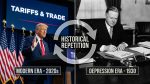
Washington is burning, but not with the usual summer heat. A different kind of firestorm is raging, a political battle that strikes at the very heart of our economy. The target? The Federal Reserve.
President Donald Trump has declared war on the nation’s central bank. He wants lower interest rates, and he’s not afraid to say it. His public attacks are a direct challenge to a long-held American tradition: the independence of the Fed.
This isn’t just another political headline. It’s a high-stakes game of chicken with the global economy. Are we watching a president go too far? Or is this a story as old as time itself, a historical echo that warns of dangers to come?
To understand what’s truly at stake, we must look to the past. Our story takes us not to the Gilded Age or the Great Depression, but to 8th century China, where a powerful emperor faced a crisis that would determine the fate of his dynasty.
## The Time Portal
The year is 734 AD. The Tang Dynasty shines as a beacon of civilization. Its capital, Chang’an, is the center of the world, a vibrant hub of trade and ideas. Silk, spices, and stories flow through its streets, a testament to the empire’s golden age.
But a shadow looms over this prosperity. The empire is running out of money. The official bronze coins, the lifeblood of commerce, are scarce. The economy is booming, but the government can’t keep up with the demand for currency. A crisis is brewing, one that threatens to bring the mighty Tang Dynasty to its knees.
In the opulent Daming Palace, Emperor Hsüan-tsung, a man of art and ambition, presides over a tense and divided court. His ministers are locked in a bitter debate. What is to be done about the coin shortage? The air is thick with the scent of incense and the weight of their decision.
One man, Chang Chiu-lin, a brilliant scholar, offers a bold solution: let the people make their own money. He argues that the free market can solve the crisis, that private minting will provide the currency the economy so desperately needs. But the Legalists, the emperor’s conservative advisors, are horrified. They see only chaos and the erosion of their power. They warn of counterfeiters and economic collapse.
The emperor is trapped. He is a man who has built an empire, a man who has known only success. But now he faces an enemy he cannot conquer, a force he cannot control. He is at war with the market, with the very idea of economic freedom.
## The Parallel Revelation
The story of Emperor Hsüan-tsung is a chilling echo of our own time. His struggle to control his empire’s currency is a mirror image of President Trump’s battle with the Federal Reserve. The names have changed, but the story is the same.
Both leaders, driven by a desire for economic growth and political power, have tried to force their will upon their nation’s financial systems. The emperor’s price controls and the president’s public pressure are two sides of the same coin. They are both attempts to defy the laws of economics.
The arguments in the Tang court are the same arguments we hear today. The Legalists’ fear of chaos is the same fear that drives modern economists to defend the Fed’s independence. Chang Chiu-lin’s call for free markets is the same call we hear from those who believe that the Fed should be free from political meddling.
And the emperor’s final decision? He chose denial. He decreed that cloth should be used as money, a clumsy solution that the people simply ignored. They continued to use the more efficient, illegal, counterfeit coins. The emperor’s decree was a failure.
This is the most important lesson of all. When political power clashes with economic reality, economic reality always wins. The market is a powerful force, and those who try to control it will ultimately be swept away.
## The Pattern Recognition
Why does this story repeat itself? Why do powerful leaders, centuries apart, make the same mistakes? The answer is in our own human nature.
The mind of a politician is different from the mind of an economist. The politician wants control. They want to impose their will on the world. They believe that with enough power, they can solve any problem.
The economist knows better. They know that the market is a force of nature, a decentralized network of a million individual choices. It cannot be controlled, only understood. It is a world of supply and demand, of cause and effect.
When these two worlds collide, the politician is always the loser. The ruler who tries to control the price of bread will find that the bakers have gone on strike. The emperor who forces his people to use a worthless currency will find that they have created their own. And the president who tries to bully his central bank will find that the market has a mind of its own.
## The Ancient Warning
What happened to Emperor Hsüan-tsung? His story is a cautionary tale. His failed attempt to control the currency was the beginning of the end for the Tang Dynasty. The economic chaos he created weakened the empire, leaving it vulnerable to its enemies.
A few decades later, a rebellion tore the empire apart. The An Lushan Rebellion, fueled by economic hardship and popular anger, was the death knell for the Tang Dynasty. The golden age was over. A long, slow decline had begun.
This is the warning from the past. It is a warning that when leaders put their own power above the well-being of their people, they are leading their nation to ruin. It is a warning that when we ignore the lessons of history, we are doomed to repeat them.
As we watch the events in Washington unfold, we must ask ourselves: are we on the same path as the Tang Dynasty? Are we ignoring the same warnings? Are we destined to make the same mistakes?
## 5 Things Readers Can Do This Week
History is not just a collection of stories; it is a roadmap to the future. The patterns of the past provide us with a powerful lens through which to view the present, and a set of tools to help us prepare for what lies ahead. Here are five things you can do this week to better understand the lessons of the Tang Dynasty and to protect yourself and your family from the consequences of history repeating itself:
1. **Educate Yourself on Economic Independence:** The conflict between Trump and the Fed is a complex issue with far-reaching implications. Take some time this week to read up on the history of the Federal Reserve and the importance of central bank independence. A great place to start is [SurvivalStronghold.com](https://survivalstronghold.com), where you can find articles on economic preparedness and financial self-reliance.
2. **Diversify Your Assets:** In times of economic uncertainty, it is more important than ever to have a diversified portfolio. Don’t put all your eggs in one basket. Consider investing in a mix of assets, including stocks, bonds, real estate, and precious metals. For more information on building a resilient financial future, check out the resources at [SelfRelianceReport.com](https://selfreliancereport.com).
3. **Build a Resilient Household:** True wealth is not just about money; it’s about the ability to provide for yourself and your family, no matter what the future may hold. This week, take one step towards building a more resilient household. Plant a garden, learn a new skill, or stock up on essential supplies. [HomesteaderDepot.com](https://homesteaderdepot.com) is a great resource for all things homesteading and self-sufficiency.
4. **Prioritize Your Health:** Economic stress can take a toll on your physical and mental health. Make sure you are taking care of yourself. Eat a healthy diet, get regular exercise, and make time for activities that help you relax and de-stress. For tips on natural health and wellness, visit [FreedomHealthDaily.com](https://freedomhealthdaily.com).
5. **Connect with Your Community:** In times of crisis, our greatest strength is each other. Get to know your neighbors, build strong relationships with friends and family, and get involved in your local community. A strong social network is one of the most valuable assets you can have. For more on holistic living and community building, check out [SevenHolistics.com](https://sevenholistics.com).
—
Sponsored by 4ft Farm Blueprint**
Ready to take the first step towards food independence? The [4ft Farm Blueprint](https://4ftfarmblueprint.com/) is a revolutionary new system that allows you to grow your own fresh, organic produce in just 4 square feet of space. It’s the perfect solution for anyone who wants to eat healthier, save money on groceries, and become more self-reliant. Click here to learn more and to get your own 4ft Farm Blueprint today!
—
Sponsored by The C60 Company**
Looking for a natural way to boost your energy, improve your focus, and protect your body from the effects of aging? The C60 Company offers a range of high-quality C60 products that can help you feel your best. C60 is a powerful antioxidant that has been shown to have a wide range of health benefits. To learn more and to get 15% off your first order, visit [TheC60Company.com/Gerry](https://TheC60Company.com/Gerry).
—
Sponsored by The Wellness Company**
Don’t let the next pandemic catch you unprepared. The Wellness Company offers a range of products and services to help you and your family stay healthy and safe. From emergency medical kits to telemedicine consultations, they have everything you need to be prepared for any health crisis. Visit [TWC.health/Gerry](https://TWC.health/Gerry) to learn more and to get your own emergency medical kit today.