The Modern Mystery
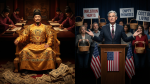
In the autumn of 2025, a specter is haunting American democracy. It’s not a foreign enemy or an economic collapse, but a crisis of faith in the very foundations of the Republic. A recent poll sends a shiver down the spine of anyone who cherishes the nation’s founding principles: a staggering 59% of Americans believe the President is “going too far” with executive power. The sentiment is so potent that it has given rise to a new protest movement, their banners bearing a simple, powerful message: “NO KINGS.”
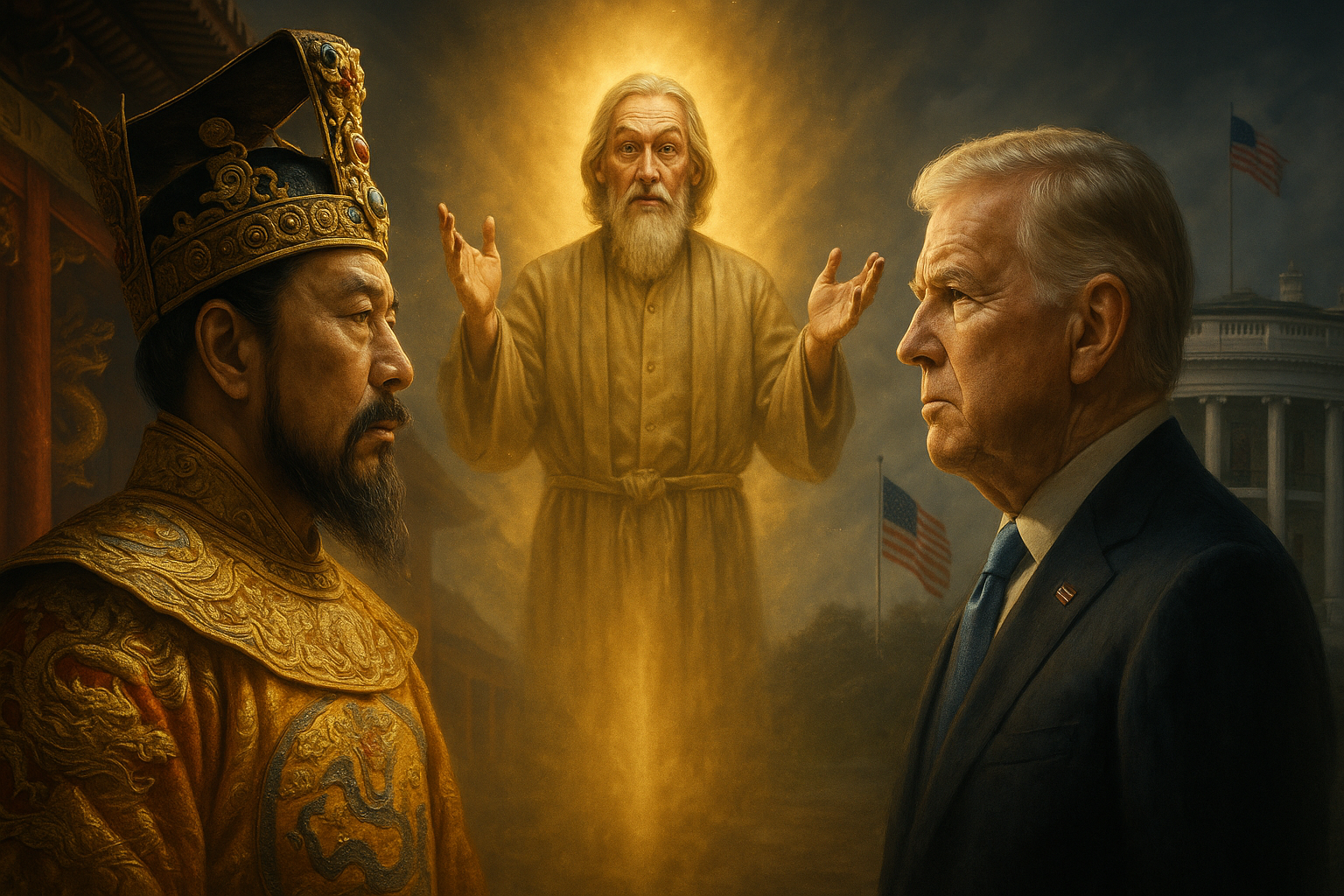
This isn’t just partisan bickering. It’s a deep, bipartisan anxiety that the delicate balance of power, so carefully crafted by the Founding Fathers, is tipping towards an imperial presidency. The very idea of a government “of the people, by the people, for the people” feels threatened. But what if this crisis, this fear of a ruler unbound by law, is not new? What if this exact scenario played out 3,000 years ago, not in the marble halls of Rome, but in the heart of ancient China?
The Time Portal
Let’s travel back to 1046 BCE. The air is thick with the smoke of burning villages and the scent of bronze. The once-mighty Shang Dynasty, which had ruled for over 500 years, is crumbling under the weight of its own corruption. The last Shang king, Di Xin, is a tyrant of legendary cruelty, indulging in debauchery while his people starve. He has lost what the Chinese call the “Mandate of Heaven.”
From the west, a new power is rising: the Zhou. Their leader, King Wu, is a charismatic and virtuous warrior who claims that Heaven itself has chosen him to overthrow the corrupt Shang. On the fields of Muye, the two armies clash. The Shang soldiers, demoralized and disgusted with their king, turn their spears against their own ruler. The battle is a rout. King Di Xin, seeing his doom, retreats to his palace, adorns himself in his finest jewels, and sets himself ablaze.
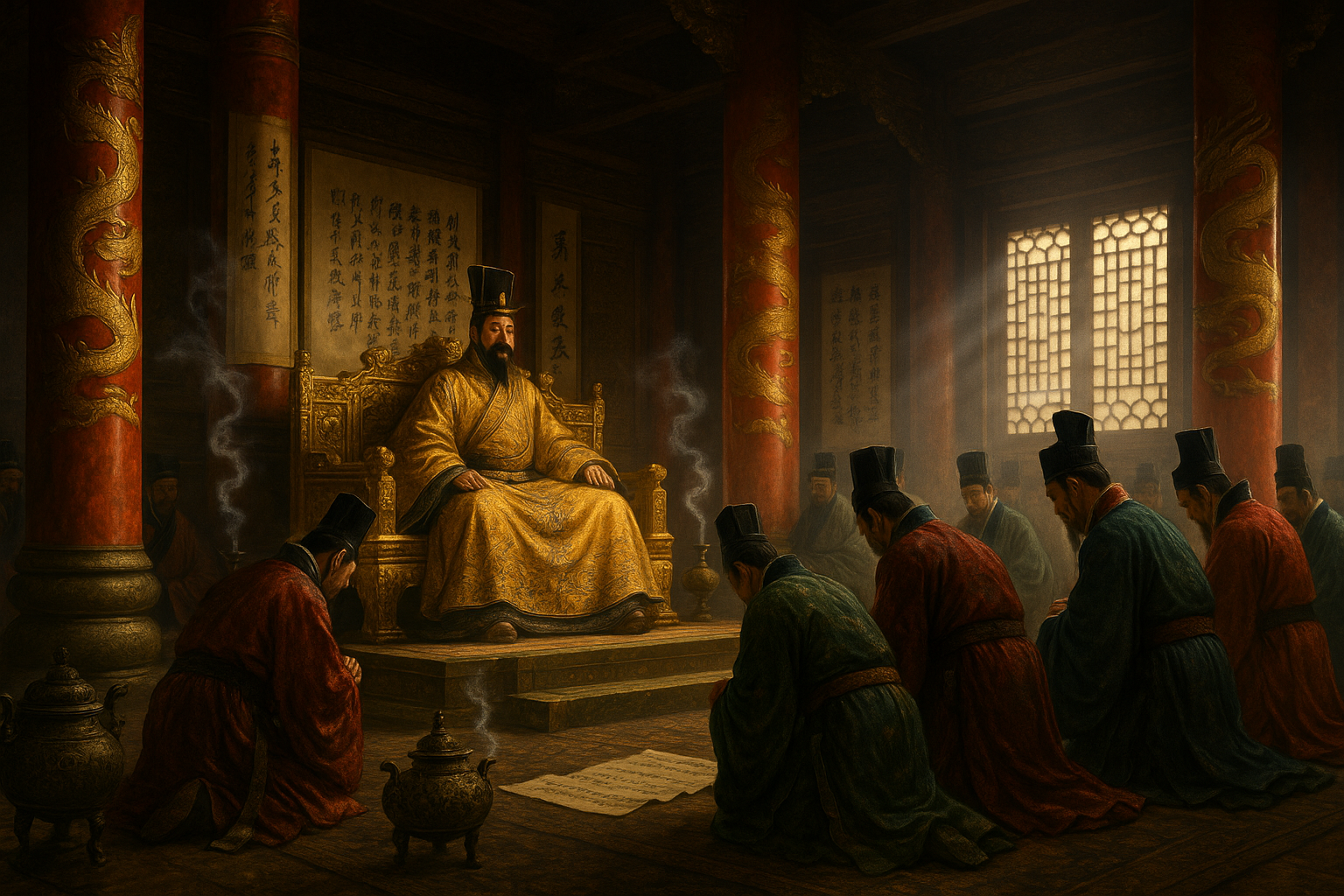
In the aftermath, the Zhou leaders face a monumental task: how to justify their rebellion? How to legitimize their rule? Their answer is a revolutionary political doctrine that will shape Chinese civilization for millennia: the Mandate of Heaven. It is a simple yet profound idea: the right to rule is not based on noble birth or brute force, but on the moral character of the ruler. Heaven grants the mandate to a just and benevolent leader, the “Son of Heaven,” who governs for the good of the people. But if a ruler becomes corrupt and tyrannical, Heaven will withdraw its mandate and bestow it upon another, more worthy leader. For the first time in history, a system of checks and balances is born, not from a written constitution, but from a divine principle.
The Parallel Revelation
The parallels between the Mandate of Heaven and the American Constitution are nothing short of stunning. Both systems were designed to prevent the concentration of absolute power in a single individual. The Mandate of Heaven, with its explicit “right of rebellion” against an unjust ruler, is a direct echo of the Declaration of Independence’s assertion that when a government becomes destructive of the people’s rights, “it is the Right of the People to alter or to abolish it.”
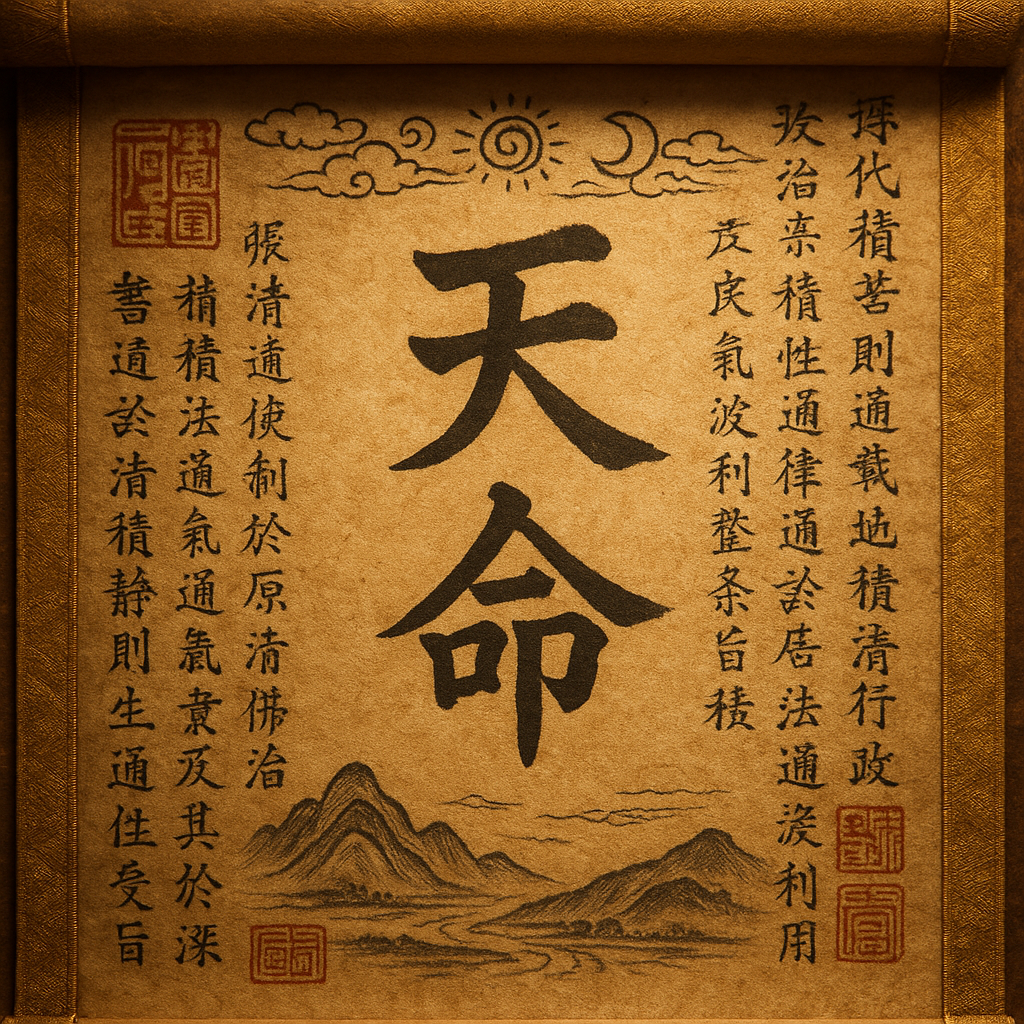
The ancient Chinese philosopher Mencius, a follower of Confucius, articulated this principle with breathtaking clarity: “The people are of supreme importance; the altars of soil and grain come next; last comes the ruler.” This is the very essence of the American ideal that government derives its just powers from the consent of the governed. The Mandate of Heaven was not a blank check; it was a performance-based contract. If the emperor failed to maintain justice and order, if he neglected the welfare of his people, he would lose the mandate. Natural disasters like floods and famines were seen as cosmic votes of no-confidence, signs that Heaven was displeased. In modern America, we don’t look to the skies for signs of divine displeasure; we look to the polls, to the protests, to the op-eds. But the principle is the same: when the people lose faith in their leader, the mandate is in jeopardy.
The Pattern Recognition
Why does this pattern repeat itself across millennia, across cultures, across continents? Because human nature is constant. Power, as the saying goes, corrupts. And the temptation for rulers to overstep their bounds, to accumulate more power, to silence dissent, is eternal. The genius of both the Mandate of Heaven and the American Constitution is that they recognize this fundamental truth and build in mechanisms to counteract it.
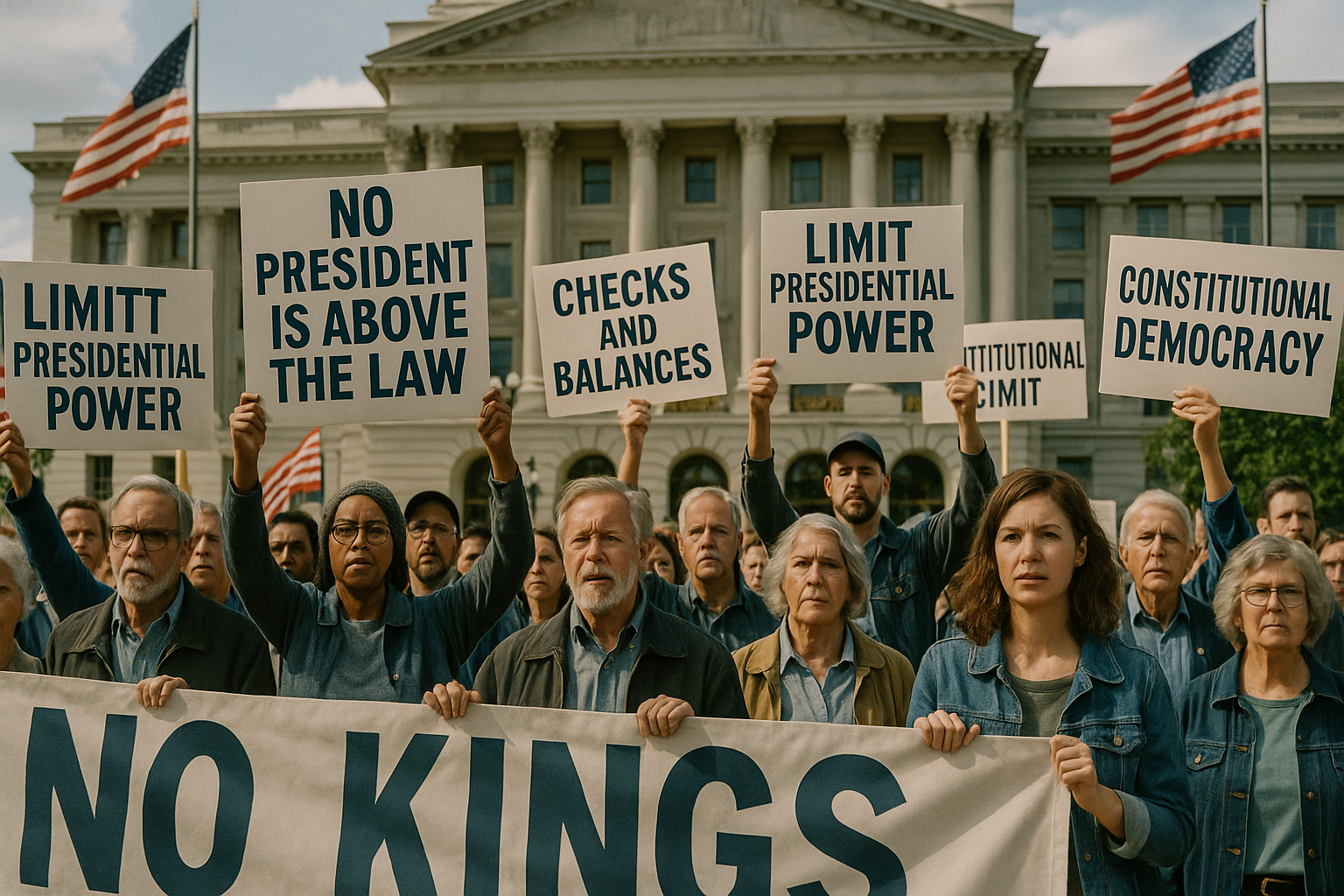
For centuries, both systems worked, more or less. The Mandate of Heaven provided a framework for dynastic change, a safety valve for popular discontent. The American Constitution, with its separation of powers and its checks and balances, has, until now, prevented the rise of an American king. But both systems rely on a crucial element: the willingness of leaders to respect the limits of their power. When that respect erodes, the system begins to crumble.
The Ancient Warning
What happened in China when emperors began to see the Mandate of Heaven not as a sacred trust, but as a tool of political propaganda? The system failed. The Han Dynasty, which came to power through a popular rebellion, found itself in a bind. Its rulers could neither deny their own history nor embrace the idea that they, too, could be overthrown. They paid lip service to the Mandate of Heaven, but in practice, they sought to consolidate their power, to crush dissent, to create a centralized, autocratic state. The result was a cycle of rebellion and repression that ultimately led to the collapse of the dynasty.
The warning for modern America is clear. When a president, regardless of party, begins to see the Constitution not as a set of binding limits, but as a collection of inconvenient obstacles, the republic is in peril. When the people’s faith in their institutions erodes, when they begin to believe that the system is rigged, that their voices don’t matter, the very fabric of society begins to unravel.
5 Things Readers Can Do This Week
History is not a spectator sport. It is a living, breathing force that shapes our present and our future. Here are five things you can do this week to prepare for the possibility that history is repeating itself:
- Strengthen Your Stronghold: A constitutional crisis can lead to social and economic instability. Now is the time to ensure your home and family are prepared. Visit SurvivalStronghold.com for practical tips on everything from food storage to home security.
- Cultivate Self-Reliance: In times of uncertainty, self-reliance is your greatest asset. Learn new skills, from gardening to first aid. SelfRelianceReport.com is an excellent resource for anyone looking to become more independent.
- Secure Your Homestead: Whether you live in the city or the country, your home is your castle. HomesteaderDepot.com offers a wealth of information on how to make your home more secure and self-sufficient.
- Protect Your Health: A healthy body and mind are your best defense against stress and uncertainty. FreedomHealthDaily.com provides daily tips on how to stay healthy and vibrant, no matter what’s happening in the world.
- Embrace Holistic Wellness: True wellness is about more than just physical health. It’s about finding balance in all aspects of your life. SevenHolistics.com offers a holistic approach to health and wellness that can help you navigate these challenging times.
Author: Shamus Gerry III
Sponsor: Ready to take your self-reliance to the next level? The 4ft Foot Farm Blueprint shows you how to grow a year’s worth of food in just 4 square feet. It’s the ultimate insurance policy against food shortages and supply chain disruptions.
Sponsor: This article is brought to you by The Patriot’s Gold. In times of economic uncertainty, gold is the ultimate safe-haven asset. Protect your wealth and your future with physical gold and gold and silver from The Patriot’s Gold.
References:
- Poll Shows US Majority Wants Checks on Presidential Overreach
- Mandate of Heaven – Wikipedia
- Mencius – Stanford Encyclopedia of Philosophy
- The Dynastic Cycle and the Mandate of Heaven