

There’s a strange and unnerving silence in the halls of American economic power. The Federal Reserve, the institution tasked with steering the world’s largest economy, is about to make a critical decision on interest rates—a move that will ripple through the finances of every American.
But they are flying blind.
A government shutdown has choked off the flow of official economic data. To make matters worse, a crucial private data feed from payroll giant ADP, which provided a real-time pulse on a fifth of the nation’s workforce, has been inexplicably cut. Former Bureau of Labor Statistics Commissioner Erica Groshen warns the situation is “very concerning,” leaving Fed Chairman Jerome Powell to navigate a fragile economy without his most essential instruments. One wrong move could tip the nation into recession or ignite runaway inflation. The pilots of our economy have lost their dashboard.
This isn’t just a policy debate. It’s a high-stakes gamble with the nation’s future. And frighteningly, this has happened before. To understand the gravity of our situation, we must travel back a thousand years, to a jungle empire that made a fatal error by trying to build its future on missing information.
The Time Portal
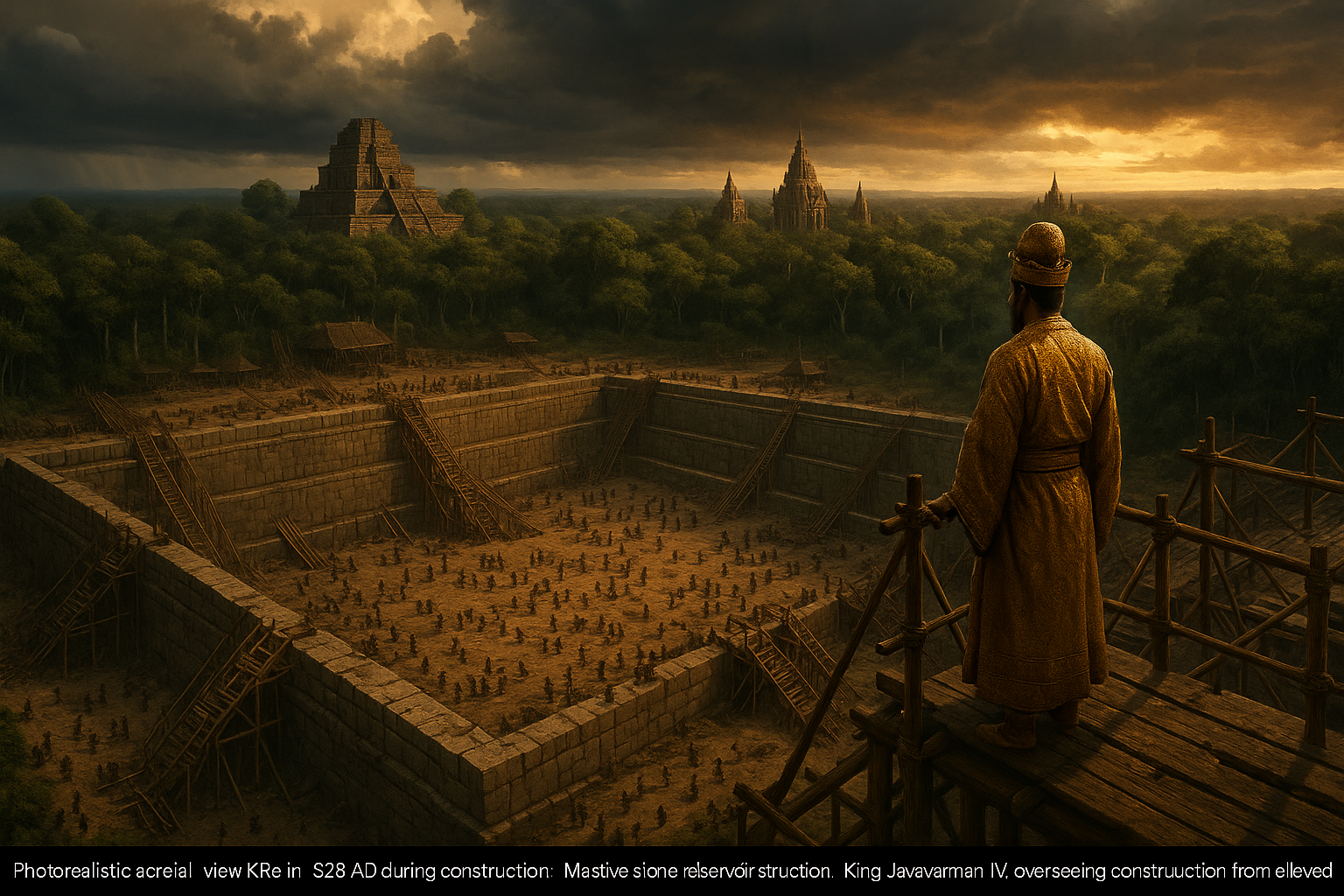
Imagine the year is 928 AD. The air in Southeast Asia is thick with the scent of incense and damp earth. The Khmer Empire, a civilization of god-kings and architectural marvels, is at its zenith. But King Jayavarman IV, a ruler of immense ambition and ego, is not content.
He abandons the magnificent capital of Angkor, with its sophisticated, centuries-old water management system, and moves his court 80 kilometers into the remote jungle. He will build a new capital, Koh Ker, a city to rival the gods themselves. At its heart will be a colossal reservoir, a man-made lake designed to sustain his new metropolis and proclaim his power over nature itself.
There was just one problem. In the 10th century, there were no satellites, no meteorological models, no ground-penetrating radar. The king’s engineers had to rely on observation, intuition, and perhaps a healthy dose of hubris. They were building a system to control the ferocious monsoons of Southeast Asia without any real data on how much water would actually pour from the heavens.
The Parallel Revelation
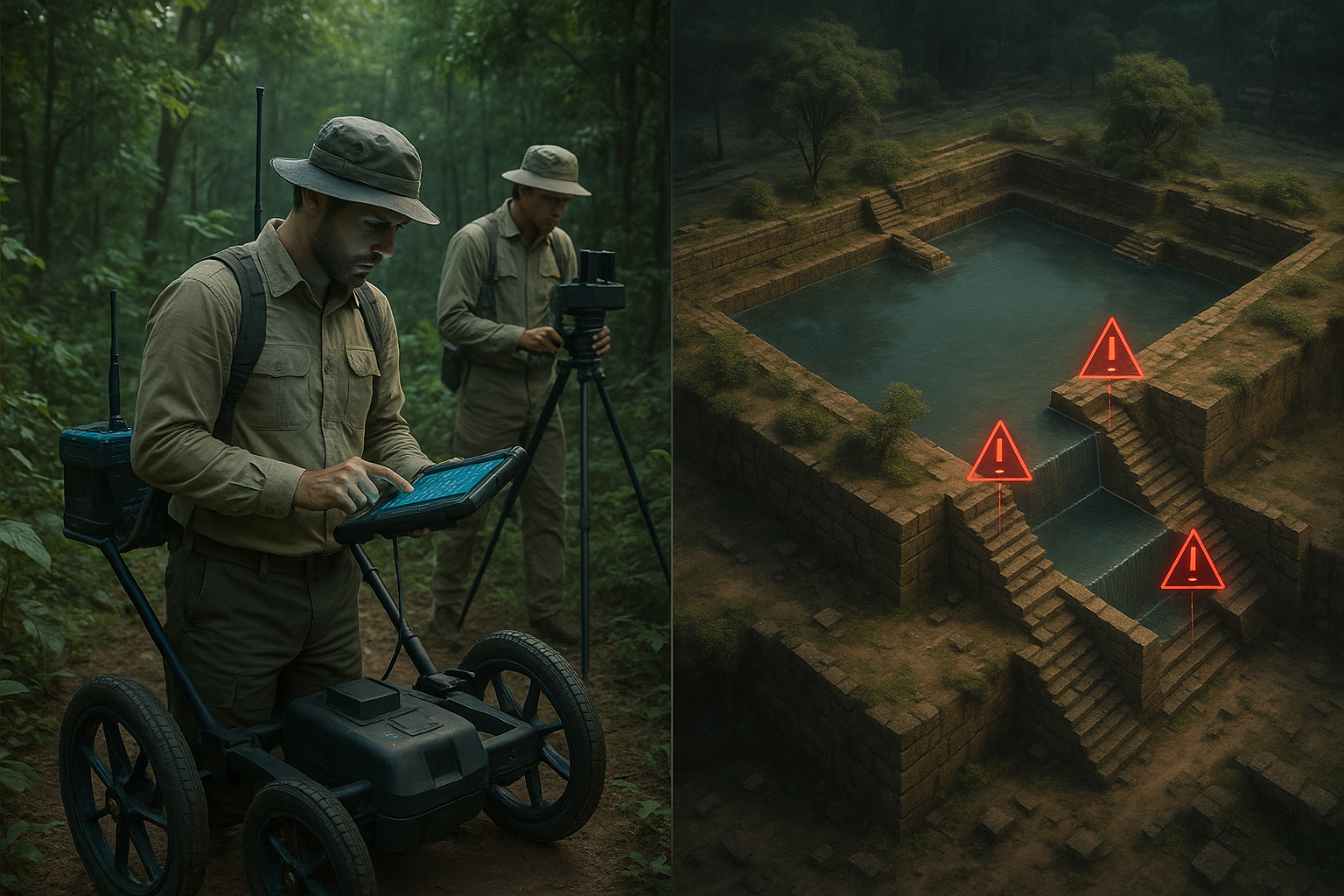
For a thousand years, the city of Koh Ker was swallowed by the jungle, its story a mystery. It wasn’t until recently that a team of international archaeologists, armed with LiDAR and ground-penetrating radar, uncovered the king’s fatal flaw. They peered through the soil and saw what Jayavarman IV’s engineers could not: a catastrophic design failure.
Their models, based on modern rainfall data, revealed a shocking truth. The massive reservoir’s spillways were hopelessly undersized. The system wasn’t just flawed; it was doomed from the start. The archaeologists concluded the reservoir would have catastrophically failed during its very first rainy season, unleashing a devastating flood and wiping out the city’s water supply.
The Khmer king was making a decision of existential importance with no data. He was flying blind. Just like the Federal Reserve today, he was operating on a patchwork of incomplete information, forced to make a critical judgment call in a high-stakes environment where the margin for error was zero.
The Pattern Recognition

Why does this pattern repeat? Why do powerful leaders, separated by a millennium, find themselves in the same perilous position? The answer lies in the timeless fragility of the systems that underpin great civilizations.
The Khmer Empire’s power was built on its mastery of water. The Federal Reserve’s authority is built on its mastery of data. In both cases, the infrastructure that provides this vital resource—be it a network of canals or a stream of economic statistics—is the bedrock of stability. When that infrastructure fails, the leadership’s ability to govern effectively collapses with it.
As anthropologist Alison Carter notes, “Water management networks do not build themselves, but rely on a complex set of social interactions on top of understanding landscape engineering and knowledge of the environment.” The same is true of our economic data systems. They are not acts of nature; they are complex human creations that require constant maintenance, investment, and trust. When that trust is broken, or the system is neglected, the consequences can be dire.
The Ancient Warning

King Jayavarman IV’s grand vision for Koh Ker ended in humiliation. Faced with the catastrophic failure of his central infrastructure project, his authority would have been shattered. He couldn’t control the water. He couldn’t provide for his people. His reign at the new capital lasted less than two decades before his successor was forced to abandon the city and return to Angkor.
Koh Ker stands today as a haunting monument to the dangers of making critical decisions without information. It is a 1,000-year-old warning etched in stone: you cannot manage what you cannot measure. An empire that flies blind is an empire on the brink of a fall.
As the Federal Reserve prepares for its next meeting, surrounded by a fog of uncertainty, we must hope they heed the ghost of Koh Ker. Because when the data disappears, history teaches us that disaster is not far behind.
5 Things You Can Do This Week to Prepare
History shows that when institutions fail, self-reliance becomes our greatest asset. Here are five practical steps you can take to insulate your family from the kind of systemic fragility we’re seeing today:
- Build Your Own Data Dashboard: Don’t rely on the mainstream narrative. Start tracking the economic indicators that matter to your family. Websites like Self-Reliance Report offer insights and analysis that go beyond the headlines, helping you see the patterns the experts miss.
- Secure Your Food Supply: The Khmer understood that water meant food. In our world, a fragile economy threatens complex supply chains. Learn how to produce your own food, even in a small space. The 4ft Farm Blueprint provides a step-by-step guide to creating a resilient and productive home garden.
- Take Control of Your Health: When systems are stressed, public health can suffer. Bolster your family’s well-being with natural, time-tested remedies. Explore the resources at Freedom Health Daily to learn about strengthening your body’s own defenses.
- Master a Practical Skill: Economic downturns reward those with tangible skills. Whether it’s preserving food, purifying water, or basic first aid, the knowledge offered at a site like Survival Stronghold can become more valuable than gold in a crisis.
- Cultivate a Resilient Mindset: The greatest preparation is mental. Understand the historical patterns of collapse and renewal. This knowledge, the core mission of AmericanDownfall.com, removes fear and replaces it with a calm, clear-eyed understanding of the challenges and opportunities ahead.
🌱 Sponsored: Take Control of Your Food Supply
In an age of uncertainty, the most important investment you can make is in your own resilience. The 4ft Farm Blueprint is a comprehensive, easy-to-follow system for producing a bounty of fresh, healthy food for your family on just a tiny patch of land.
Don’t wait for the grocery store shelves to go empty. Take control of your food supply today.
References
- Fritts, R. (2020). Poor Water Management Implicated in Failure of Ancient Khmer Capital. Eos, 101. https://doi.org/10.1029/2020EO139666
- Roytburg, E. (2025). Former BLS chief warns Powell is “flying blind” at a pivotal time for the Fed. Fortune. https://fortune.com/2025/10/23/bls-chief-adp-data-powell-interest-rates-flying-blind/
- Lustig, T., et al. (2018). Evidence for the breakdown of an Angkorian hydraulic system, and its historical implications for understanding the Khmer Empire. Journal of Archaeological Science: Reports, 17, 10-22.
- Evans, D., et al. (2007). A comprehensive archaeological map of the world’s largest preindustrial settlement complex at Angkor, Cambodia. Proceedings of the National Academy of Sciences, 104(36), 14277-14282.


