
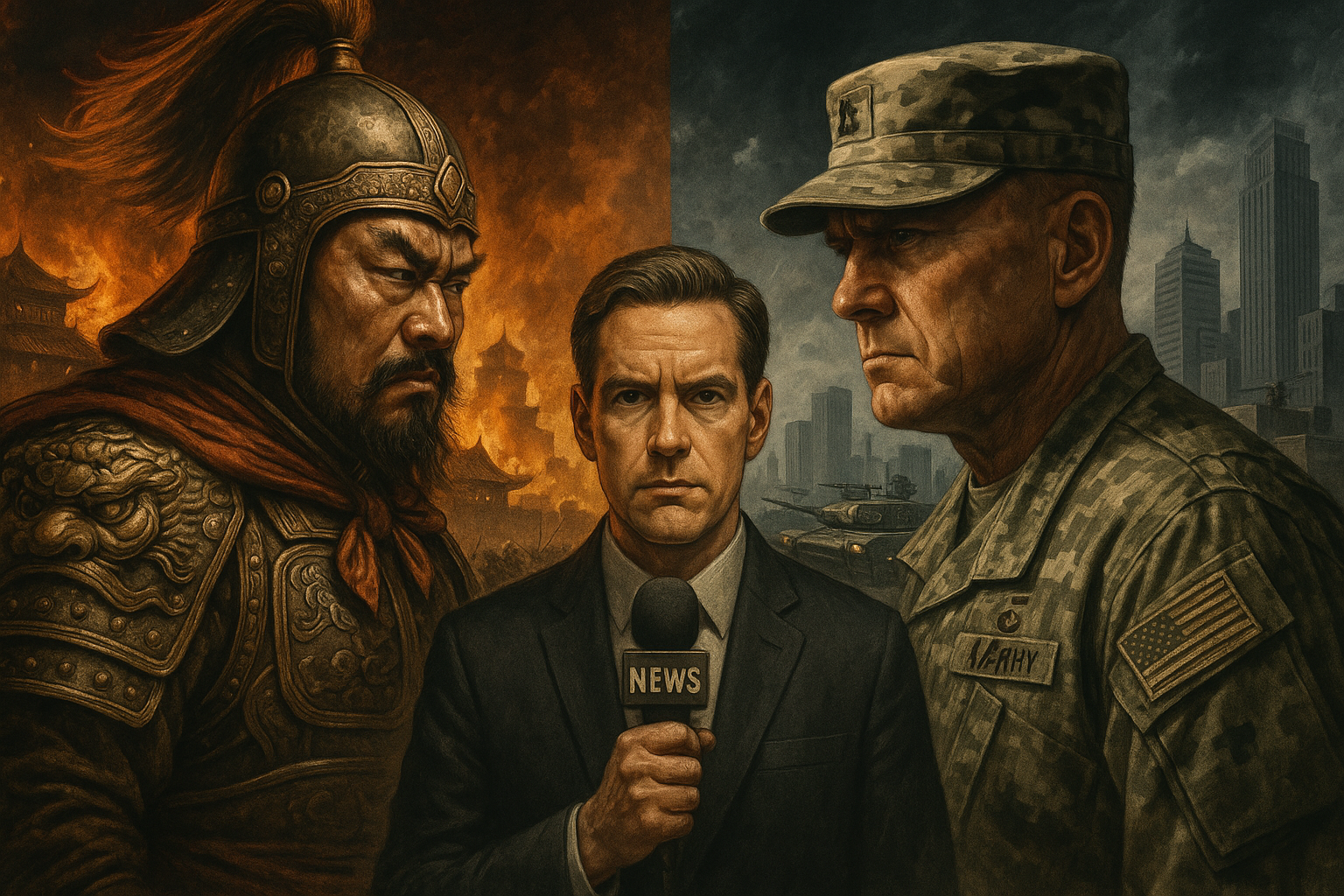
The Modern Mystery
A chill is running down the spine of America, and it has nothing to do with the autumn air. In the last 24 hours, a federal appeals court handed the White House a staggering power: the authority to deploy federalized troops into American cities, even against the explicit wishes of state and local leaders. In Oregon, the Attorney General warned this gives the president “unilateral power to put Oregon soldiers on our streets with almost no justification.”
The governor was even more blunt, stating, “We are on a dangerous path in America.” The news comes as the government shutdown enters its 20th day, a backdrop of institutional paralysis against which the specter of military force on domestic soil feels particularly menacing. It begs a question that cuts to the heart of any republic: What happens when the very forces meant to protect a nation are turned against its own people? History offers a terrifying answer, written in the blood of millions.

The Time Portal
Let’s travel back to the 8th century, to the height of China’s glorious Tang Dynasty. It was a golden age of poetry, art, and commerce. The empire was a glittering jewel, its capital, Chang’an, the most cosmopolitan city on Earth. At the head of this magnificent state sat Emperor Xuanzong, a ruler who had presided over decades of prosperity.
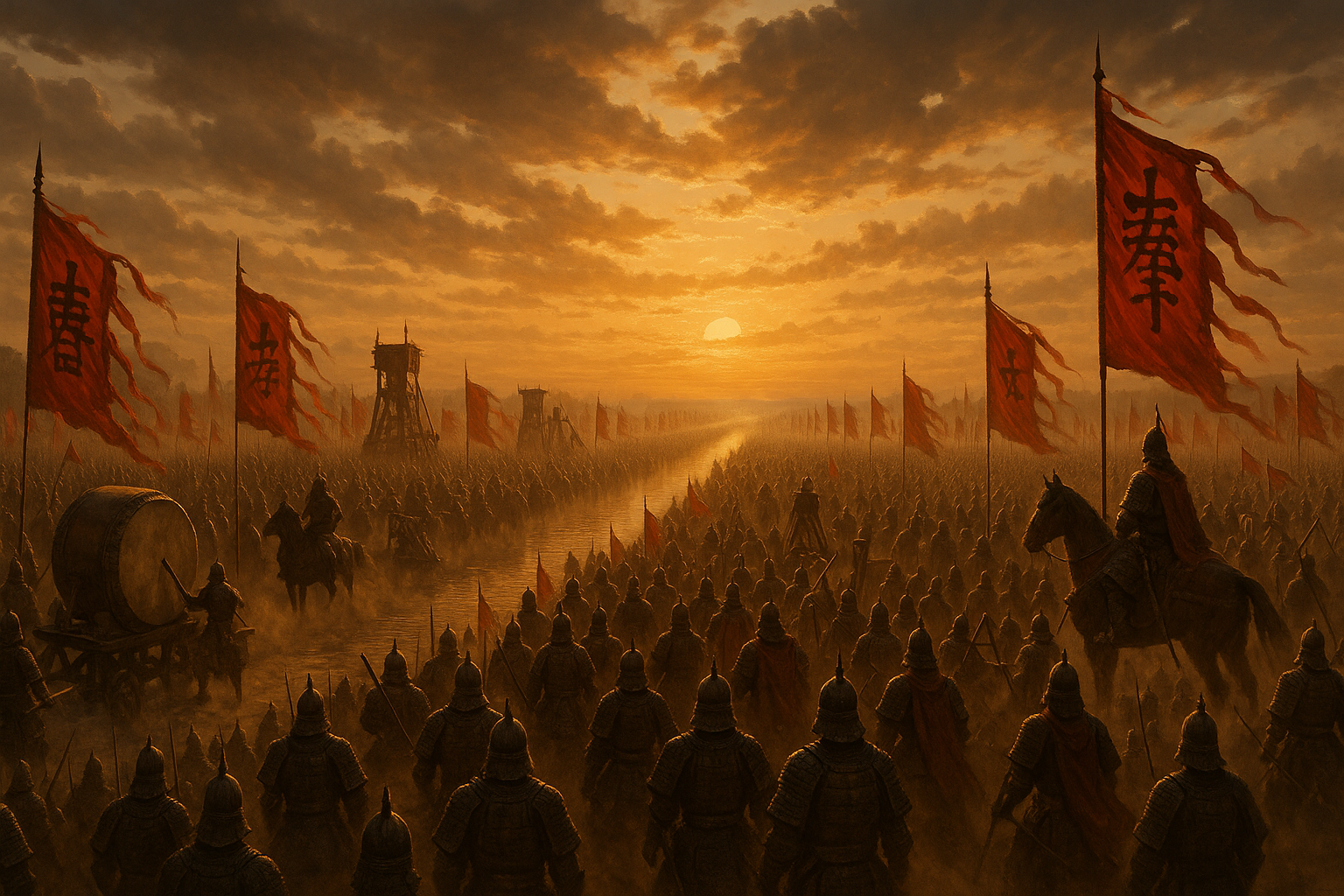
And at his side was his most trusted military commander, An Lushan. He wasn’t just a general; he was a favorite, a man of Sogdian and Turkic origin who had risen through the ranks to become a symbol of the empire’s meritocratic strength. The Emperor showered him with titles and authority, eventually giving him command over three strategic garrisons and an army of over 150,000 elite soldiers. He was the guardian of the northern frontier, the bulwark against external threats. No one, least of all the Emperor, could imagine that the greatest threat to the dynasty was not outside the walls, but the very man tasked with defending them.
The Parallel Revelation
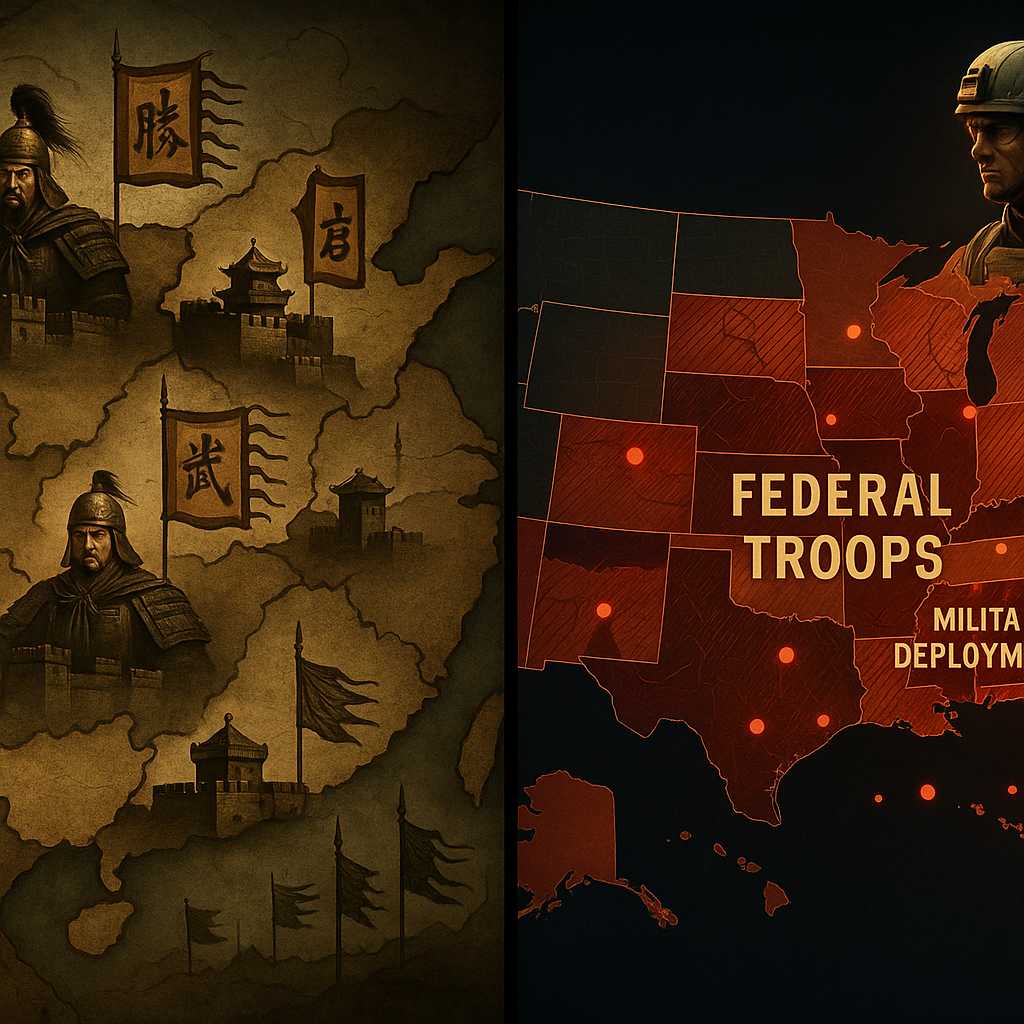
On December 16, 755, the unthinkable happened. Citing political rivalries at court as a pretext, An Lushan turned his massive, battle-hardened army inward. He marched away from the frontier and pointed his banners south, directly at the heart of the empire he had sworn to protect. The news struck the imperial court like a thunderbolt. This wasn’t a barbarian invasion; this was a betrayal from the inside, by the most powerful military figure in the empire.
The general’s advance was terrifyingly swift. He swept down the Grand Canal, and the eastern capital, Luoyang, fell in a matter of weeks. There, An Lushan declared himself the first emperor of a new dynasty, the “Great Yan.” The state’s own sword had been turned against it. The Emperor’s elite troops, designed for frontier warfare, were outmaneuvered. In a devastating blunder born of panic, the Emperor’s chief minister ordered the loyalist Tang armies to abandon their defensible mountain positions and attack An Lushan on the open plains. They were annihilated.
The path to the main capital of Chang’an was now wide open. The 71-year-old Emperor Xuanzong, the “Son of Heaven,” was forced to flee his own palace in humiliation, a refugee in his own empire. The trusted general had become the terrifying rebel, and the golden age was drowning in blood.
The Pattern Recognition
Why does this pattern repeat? How does a trusted protector become a nation’s destroyer? The story of An Lushan reveals a timeless truth about power. The Tang Dynasty had increasingly professionalized its military, creating powerful frontier commands led by generals with immense autonomy. This was efficient for dealing with external threats, but it concentrated an incredible amount of coercive power in the hands of a few men.
When that power is combined with political ambition and a central government weakened by infighting and paralysis—much like our modern government shutdowns—it creates a combustible mix. An Lushan, feeling his position at court was threatened, saw his army not as a tool of the state, but as his own personal force. The loyalty of his soldiers was to him, their paymaster and commander, not to a distant emperor in a gridlocked capital.
This is the ancient warning echoing in today’s headlines. When a nation’s military is deployed for domestic political purposes, it erodes the fundamental trust between the people, their government, and their protectors. The line between peacekeeper and occupier blurs, and the very definition of the state begins to fracture.
The Ancient Warning
The An Lushan Rebellion raged for eight years. It was one of the most catastrophic wars in human history, with a death toll estimated to be as high as 36 million people—by some calculations, a staggering one-sixth of the world’s population at the time. The Tang Dynasty, with the help of foreign mercenaries and by exploiting the rebels’ own internal betrayals (An Lushan was eventually murdered by his own son), finally crushed the rebellion.
But they never recovered. The war shattered the central government’s authority. To defeat the rebels, the Tang had to grant even more power to regional military governors, who became de facto warlords. The empire was saved on paper, but in reality, it was a hollow shell. The golden age was over, replaced by a century and a half of slow, painful decline. The ultimate lesson is a chilling one: even when you win a war against your own people, your nation can still lose everything.
5 Things You Can Do This Week to Prepare
History teaches that centralized power, especially when it turns its military inward, is a threat to individual liberty and stability. The time to prepare for disruptions is not when they arrive, but now.
1. Secure Your Sustenance. The chaos that follows state breakdown always hits the food supply first. Learn the principles of a resilient food source that doesn’t depend on fragile supply chains. A great place to start is the 4ft Farm Blueprint, which teaches you how to create a high-yield, self-sufficient food system in a tiny footprint.
2. Achieve Grid Independence. When institutions become unreliable, so do the services they provide. Explore options for off-grid power and water. SurvivalStronghold.com has articles on how to secure your home’s essential utilities before a crisis hits.
3. Build Local Networks. National unity may fray, but local communities are your lifeline. Get to know your neighbors. Establish networks for mutual aid and security. The Self-Reliance Report emphasizes the importance of community in overcoming large-scale challenges.
4. Fortify Your Health. Access to healthcare is one of the first casualties of societal disruption. Take control of your own well-being. FreedomHealthDaily.com offers insights into natural and holistic health strategies to keep your family strong, no matter what.
5. Master a Practical Skill. In a world of uncertainty, practical skills are true currency. Learn to repair, build, or grow something essential. Homesteader Depot is a resource for acquiring the timeless skills our ancestors used to thrive through any crisis.
—
*Sponsored: Are you worried about the fragility of our food supply? The 4ft Farm Blueprint offers a revolutionary way to ensure your family has a fresh, secure food source. This simple, step-by-step system allows you to grow an abundance of organic produce in just a 4×4 space, completely independent of the unpredictable grocery store. Don’t wait for the shelves to go empty. Click here to secure your food independence today!*
—
References:
[1] The Guardian. (2025, October 21). *Trump news at a glance: president can send national guard to Portland, for now*. https://www.theguardian.com/us-news/2025/oct/21/trump-administration-news-updates-today
[2] ThoughtCo. (2019, January 13). *The An Lushan Rebellion in Tang China*. https://www.thoughtco.com/the-an-lushan-rebellion-195114
[3] Wikipedia. *An Lushan Rebellion*. https://en.wikipedia.org/wiki/An_Lushan_rebellion
[4] Retrospect Journal. (2022, February 20). *An Lushan and the Fall of China’s Golden Age*. https://retrospectjournal.com/2022/02/20/an-lushan-and-the-fall-of-chinas-golden-age/


