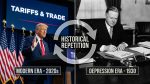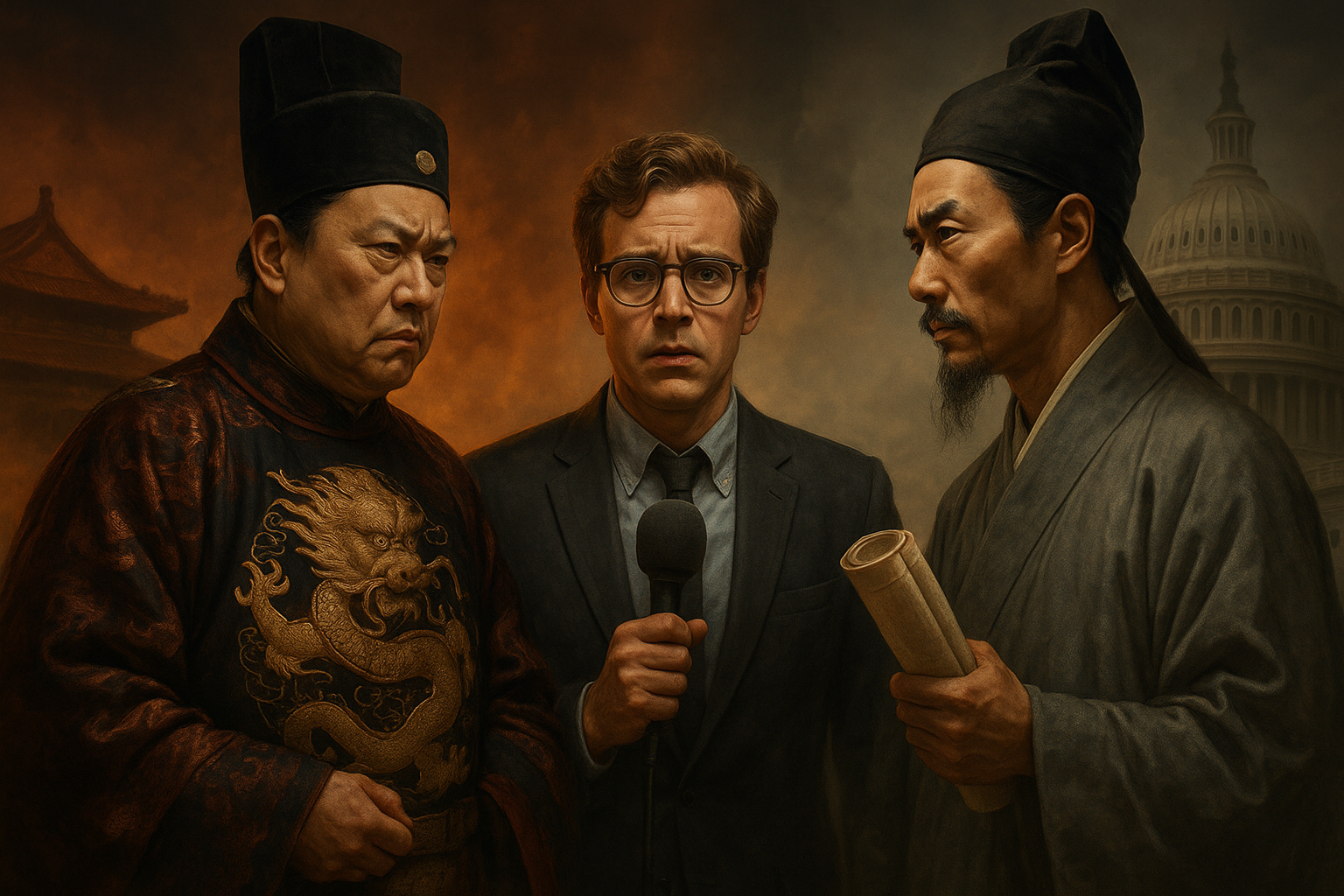
It feels like a slow-motion train wreck, doesn’t it?
The US government is paralyzed. Not by a foreign enemy, but by itself. We’re now living through the longest government shutdown in American history, a self-inflicted wound that’s costing billions, grounding flights, and shaking the faith of ordinary citizens in the very foundations of their country. [1]
Politicians scream at each other from the cable news trenches, each side claiming the moral high ground, each refusing to yield an inch. They talk of principles, of mandates, of non-negotiable demands. But to the millions of Americans watching their savings dwindle and their futures dim, it sounds like something else entirely: the chilling echo of a forgotten history.
Because this has all happened before.
Four hundred years ago, on the other side of the world, another superpower was tearing itself apart from the inside. The Ming Dynasty of China, a civilization that had given the world the compass, gunpowder, and the printing press, was about to learn a terrifying lesson: that the most dangerous enemy is the one you can’t see, the one that whispers in the ear of power and thrives on division.
This is the story of the Donglin Movement, a cautionary tale of what happens when a nation’s leaders become so consumed by their own righteousness that they would rather watch their country burn than compromise. It’s a story that feels eerily, uncomfortably relevant today.
The Time Portal: A Palace of Whispers and Shadows
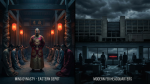
Picture the Forbidden City in the 1620s. It’s not the gleaming tourist attraction you see today. It’s a labyrinth of secrets, a place where power is a deadly game played in the shadows.
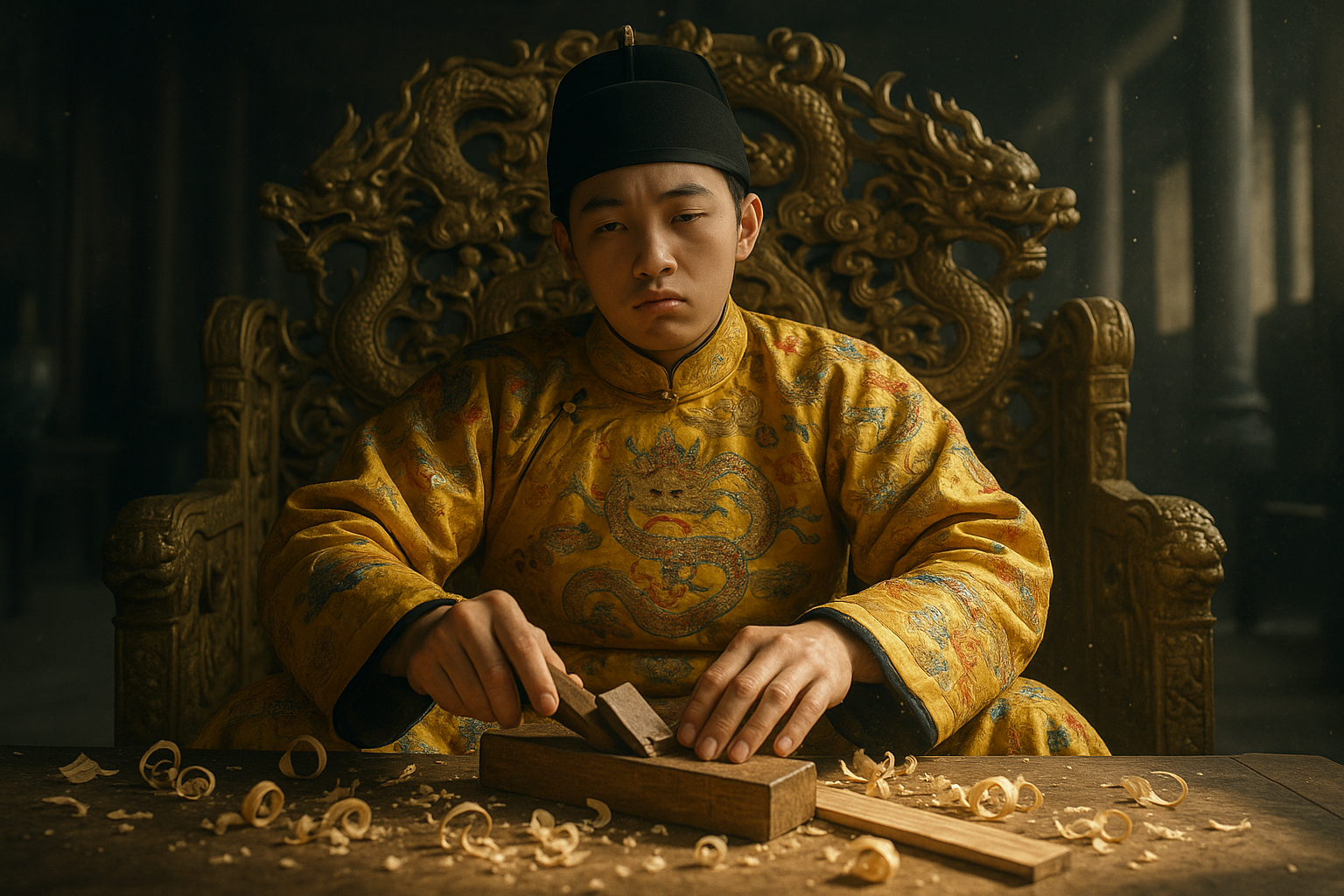
On the Dragon Throne sits the Tianqi Emperor, a teenager who would rather be a carpenter than a ruler. He’s a master craftsman, but a hopelessly incompetent emperor. He’s weak, indecisive, and utterly uninterested in the tedious business of governing. [2]
Into this power vacuum steps a man named Wei Zhongxian. Wei is a eunuch, a castrated servant of the imperial court. He’s also a master manipulator, a man who has spent his life learning how to turn weakness into power. He was the young emperor’s childhood companion, and with the help of the emperor’s former wet nurse, Madame Ke, he has the emperor’s complete trust. [3]
As the emperor retreats into his workshop, Wei and Ke take control. They are the real rulers of China. They appoint their cronies to high office, they levy extortionate taxes, and they build a network of spies that reaches into every corner of the empire. They are, for all intents and purposes, the government.
But there’s a problem. A group of idealistic Confucian scholars, the Donglin Academy, sees the rot spreading from the heart of the empire. They are men of principle, men who believe in virtue, in morality, in the old ways. They see Wei Zhongxian for what he is: a cancer on the body politic. And they decide to act.

The Parallel Revelation: When Virtue Becomes a Weapon
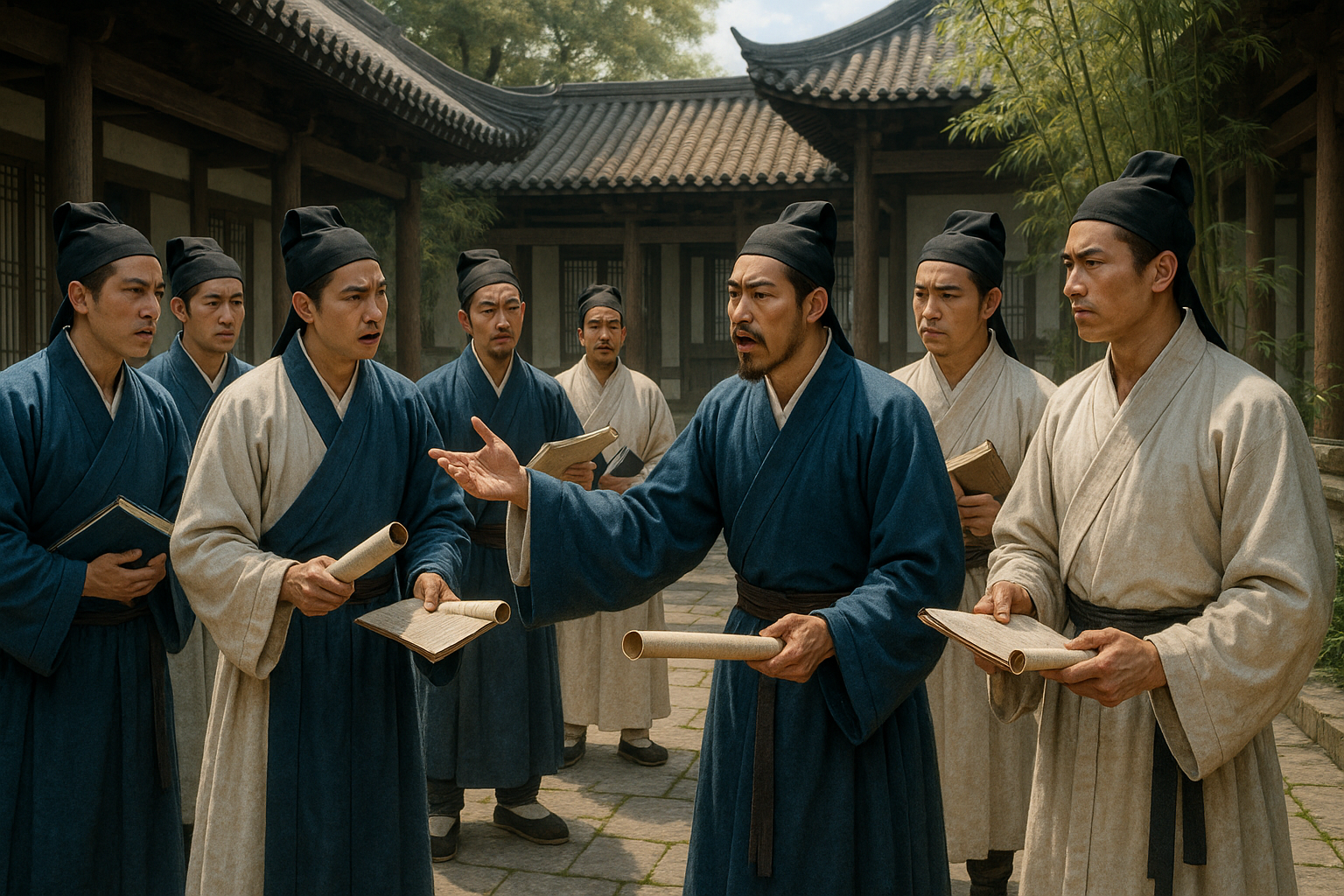
This is where the story gets interesting. The Donglin scholars weren’t just a group of concerned citizens. They were a political faction, a think tank and a political party rolled into one. Their goal was to purify the government, to restore the moral order that had been corrupted by Wei and his cronies. [4]
They were, in their own way, a lot like the fiscal hawks and progressive activists of today. They were absolutists. They believed that they, and only they, held the key to righteousness. Compromise was not just a political tactic; it was a moral failing. “Few could meet their standards,” one historian wrote. [5]
And so, they attacked. They wrote scathing memorials to the emperor, accusing Wei of corruption and Madame Ke of a “quasi-incestuous” relationship with the young ruler. They demanded that the emperor cleanse the court, that he restore the Confucian values that had made the Ming Dynasty great.
Does any of this sound familiar? A deeply divided government. Two factions, each convinced of its own moral superiority (much like the Nika Riots in Constantinople), each unwilling to compromise. A system so gridlocked that it can no longer perform its basic functions.
In 2025 America, we call it a government shutdown. In 1625 Ming China, they called it a purge.
Wei Zhongxian, with the emperor’s blessing, unleashed a reign of terror against the Donglin scholars. They were arrested, tortured, and murdered. One official, Zhou Zongjian, was tortured for three weeks with finger and ankle presses before being killed in a secret prison. His death was officially announced as an “illness.” [5]
Another, Zhou Shunchang, was so beloved in his hometown of Suzhou that the citizens rioted for eight days to prevent his arrest. They pelted the imperial police with roof tiles and stones, killing at least one. It was a scene of open rebellion, a sign of the deep cracks forming in the foundation of the dynasty.
By 1627, Wei Zhongxian was the most powerful man in China. Edicts were issued in his name alongside the emperor’s. Temples were built in his honor. The Donglin movement was declared a “villainous clique.” It seemed that the forces of corruption had won.
The Pattern Recognition: The Danger of Politicized Virtue
Why does this pattern repeat itself? Why do societies, separated by centuries and continents, fall into the same trap of self-destruction?
The answer lies in a dangerous human tendency: the politicization of virtue. When political factions believe that they have a monopoly on morality, they cease to see their opponents as fellow citizens with different ideas. They see them as enemies, as evil, as a cancer to be cut out.
This is what happened in Ming China. The Donglin scholars, for all their noble intentions, made a fatal mistake. They turned virtue into a weapon. They created a political purity test that no one, not even themselves, could pass. They made compromise impossible.
And in doing so, they played right into Wei Zhongxian’s hands. The eunuch didn’t care about virtue or morality. He cared about power. And the Donglin’s rigid, uncompromising stance gave him the perfect excuse to eliminate them.
Today, we see the same dynamic playing out in Washington. The language of politics has become the language of holy war. It’s not about policy differences anymore. It’s about good versus evil. It’s about saving the soul of America.
But as the Ming Dynasty learned, when you’re so focused on saving the soul of your nation, you can end up destroying its body.

The Ancient Warning: A Dynasty in Ruins
The end of the story is as tragic as it is predictable.
In 1627, the Tianqi Emperor died suddenly at the age of 21. His brother, the Chongzhen Emperor, took the throne. The new emperor, horrified by the corruption of Wei’s regime, immediately impeached the eunuch and ordered him into exile. Wei, knowing what was coming, hanged himself with his own belt. His corpse was later exhumed and ritually sliced to pieces. [3]
The Donglin scholars were vindicated. They were hailed as heroes, as martyrs who had given their lives to save the dynasty.
But it was too late.
For all their virtue, the Donglin had no practical solutions to the empire’s problems. Their years of factional infighting had paralyzed the government, leaving it unable to deal with the real crises facing the nation: famine, rebellion, and the growing threat of the Manchu invaders to the north.
Seventeen years later, in 1644, the last Ming emperor, the same Chongzhen who had vindicated the Donglin, stood on a hill overlooking his burning capital. The rebels were at the gates. His dynasty was in ruins. He wrote a final, desperate note on the lapel of his robe, and then he, too, hanged himself.
The dynasty the Donglin had tried to save had collapsed. And in a final, bitter irony, their own uncompromising virtue had helped to bring it down.
5 Things You Can Do This Week to Prepare
History is not a bedtime story. It’s a warning. And the story of the Donglin Movement is a warning that we cannot afford to ignore. When a government turns on itself, when its leaders are more interested in fighting each other than in solving problems, it’s the ordinary people who suffer.
Here are five things you can do this week to make yourself and your family more resilient, to build your own personal stronghold against the storms of history:
1. Build Your Own Food Supply. The 4ft Farm Blueprint is a revolutionary system that can teach you how to grow a surprising amount of food in a tiny space. It’s not about “gardening” or “hard work.” It’s about smart, efficient food production that can give you and your family a crucial buffer in times of crisis. Click here to learn more about the 4ft Farm Blueprint.
2. Secure Your Health. In a crisis, the healthcare system will be one of the first things to break down. Freedom Health Daily offers practical, no-nonsense advice on how to stay healthy and deal with common medical issues when professional help isn’t available. Check out their latest articles here.
3. Become More Self-Reliant. The Self-Reliance Report is a treasure trove of information on everything from off-grid energy to home security. It’s about taking back control of your life, one practical skill at a time. Find out how you can become more self-reliant today.
4. Connect with Your Community. In a crisis, your most valuable asset is your neighbors. Get to know the people on your street. Start a neighborhood watch. Build the bonds of community that can see you through the tough times. Homesteader Depot has great resources for building community.
5. Learn a New Skill. Whether it’s first aid, basic car repair, or how to purify water, every new skill you learn makes you less dependent on a fragile system. Survival Stronghold has a wealth of information to get you started.
Sponsor
Tired of paying outrageous prices for organic produce?
What if you could grow your own, fresher-than-organic food in a 4×4 space, with less work than you ever thought possible? The 4ft Farm Blueprint is a proven system that can help you do just that. It’s not a “gardening” course. It’s a step-by-step blueprint for creating a high-efficiency food production system in your own backyard. Click here to get your FREE 4ft Farm Blueprint and start your journey to food independence today!
References
[1] Reuters. “In shutdown fight, fiscal hawks in US Congress push for flat spending.” November 8, 2025. https://www.reuters.com/world/us/shutdown-fight-fiscal-hawks-us-congress-push-flat-spending-2025-11-08/
[2] Britannica. “Wei Zhongxian.” Accessed November 9, 2025. https://www.britannica.com/biography/Wei-Zhongxian
[3] Carter, James. “Donglin movement: Morality and repression in imperial China.” The China Project, December 15, 2021. https://thechinaproject.com/2021/12/15/donglin-movement-morality-and-repression-in-imperial-china/
[4] Dardess, John W. *Blood and History in China: The Donglin Faction and Its Repression, 1620-1627*. University of Hawaii Press, 2002.
[5] Brook, Timothy. *The Troubled Empire: China in the Yuan and Ming Dynasties*. Harvard University Press, 2010.