
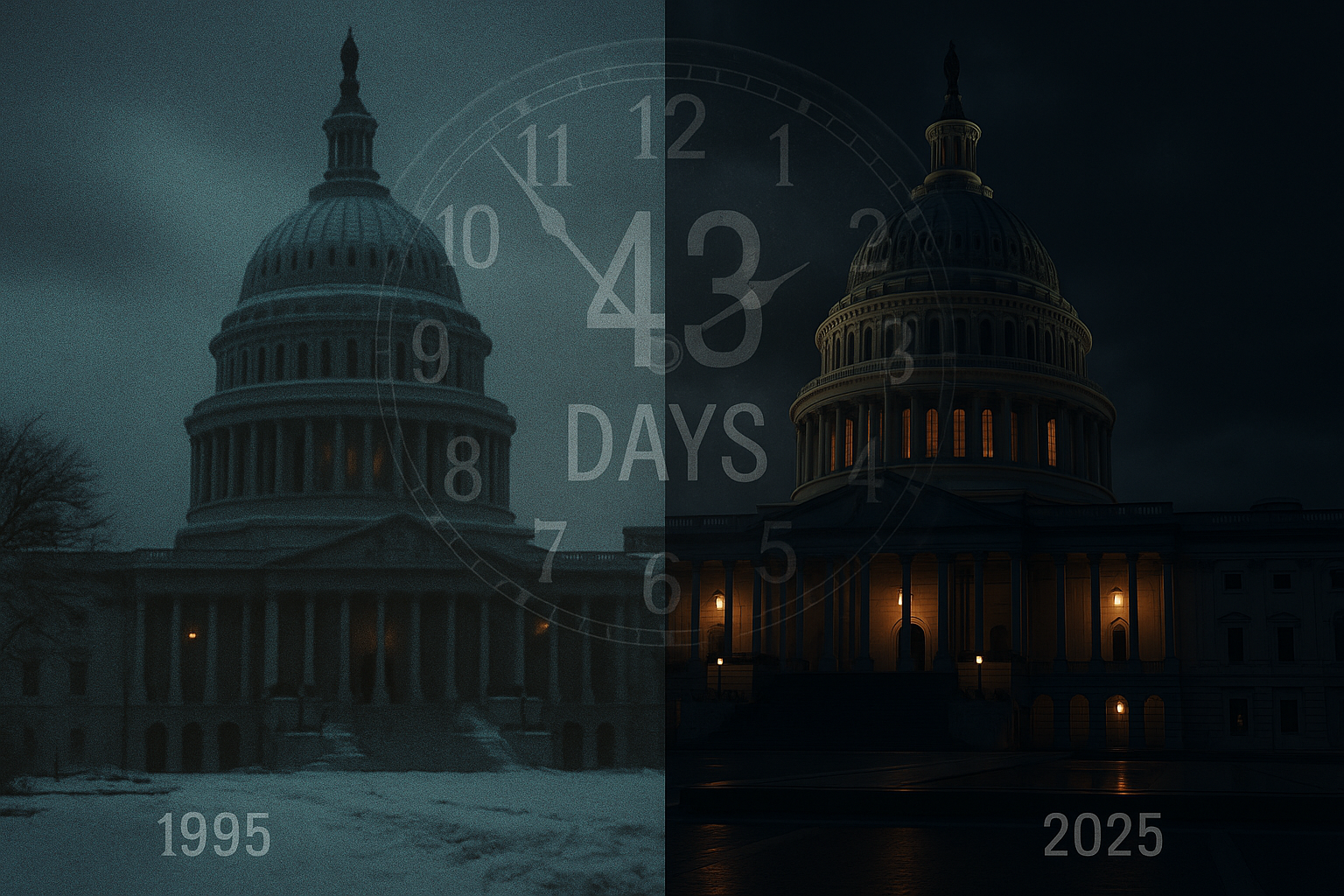
The silence in Washington D.C. is deafening.
After 43 agonizing days, the longest government shutdown in American history is over. Millions of federal workers can finally breathe a sigh of relief. The gears of government are slowly, painfully, grinding back to life.
But as the dust settles, a chilling question hangs in the air: what was it all for?
Forty-three days of chaos. Forty-three days of families wondering how they’d put food on the table. Forty-three days of our nation looking like a dysfunctional mess on the world stage.
And for what? A handshake deal? A vague promise to maybe, possibly, talk about the real issues later?
It feels like we’ve seen this movie before. And we have. But this time, the ending is even more terrifying.
The Historical Parallel: A Christmas of Chaos

Travel back with me to the winter of 1995. A fiery new House Speaker, Newt Gingrich, had just ridden a wave of populist anger into power with his “Contract with America.” He was a man on a mission, determined to slash the budget and shrink the government, no matter the cost.
In his way stood President Bill Clinton. The stage was set for a battle of wills, a high-stakes game of political chicken.
And on November 14th, 1995, Gingrich blinked. He shut down the government.
For six days, the government was closed. Then, after a brief reprieve, it shut down again on December 16th, this time for 21 long days, right through the Christmas holidays.
Imagine the scene. The national Christmas tree went dark. National parks were shuttered. Over 800,000 federal workers were sent home without pay, their holiday plans thrown into chaos.
Gingrich thought he had the upper hand. He believed the American people would thank him for his fiscal discipline. He even admitted, in a moment of stunning arrogance, that he was partly motivated by feeling “snubbed” by Clinton on Air Force One.
But he made a fatal miscalculation. He forgot who really pays the price for these political games.
The Unraveling of a Revolution
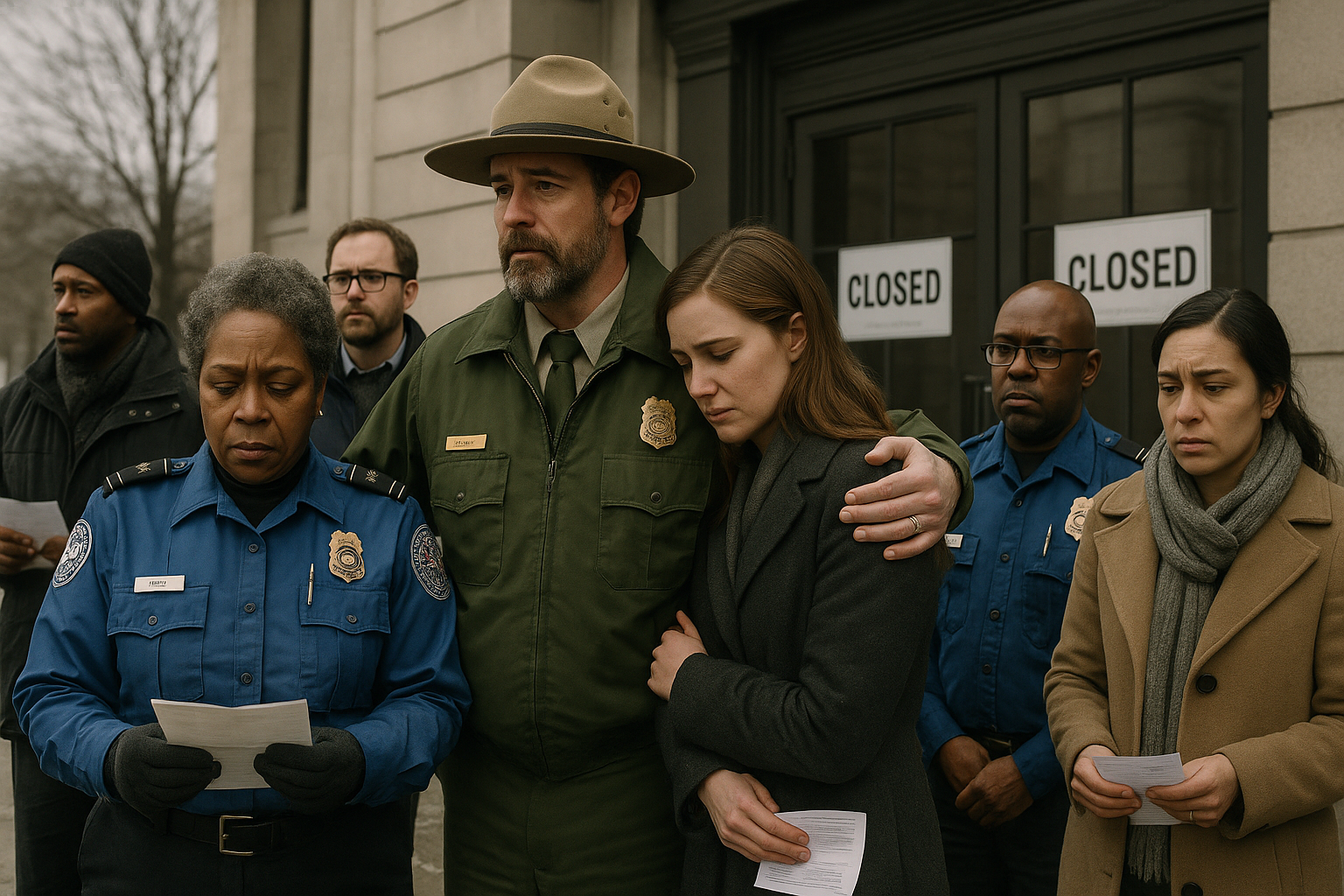
The American people were furious. They didn’t see a principled stand. They saw their lives being disrupted by the whims of politicians in Washington.
Public opinion turned decisively against Gingrich and the Republicans. The pressure mounted. The media narrative, once fascinated by Gingrich’s “revolution,” now painted him as a reckless ideologue holding the country hostage.
Even his own party started to crack. The legendary Republican leader Bob Dole, who was running for president at the time, knew a disaster when he saw one. He famously warned, “You know, you could shut the government down maybe one or two days, but you go beyond that they come looking for you.”
He was right. They came looking for Gingrich.
In the end, it was Clinton who emerged the victor. He stood firm, refusing to bow to Gingrich’s demands. He looked presidential, a steady hand in a storm of chaos. The shutdown, one of his own advisors later admitted, was “one of the deciding moments” that helped him win reelection in 1996.
Gingrich’s revolution fizzled out. He had overplayed his hand and lost the trust of the American people.
The Echo in 2025
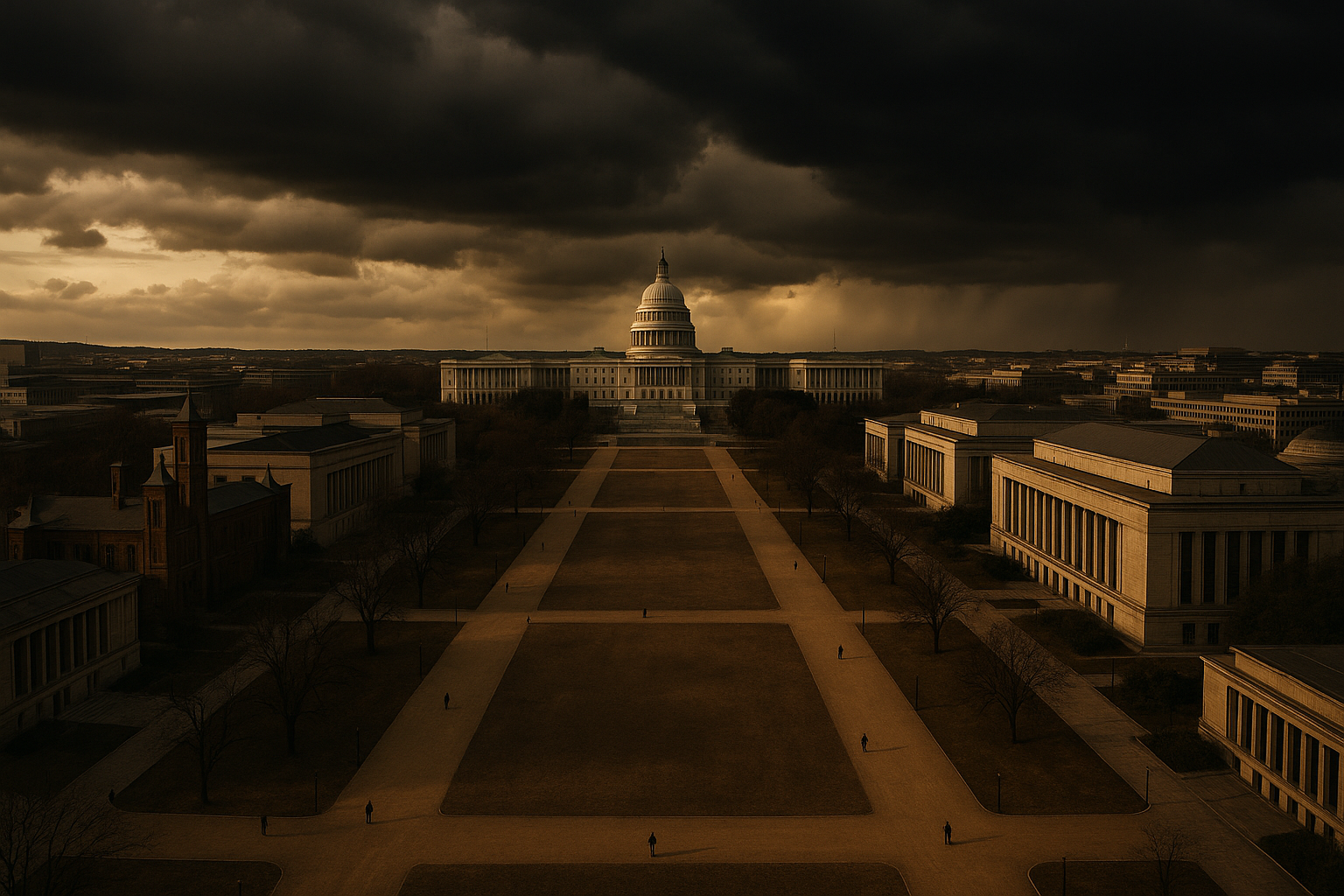
Fast forward 30 years. The names and faces have changed, but the script is eerily familiar.
A divided government. A bitter ideological battle. A shutdown that drags on for weeks, inflicting pain on millions of innocent Americans.
But here’s the terrifying difference. In 1996, the system worked. The public backlash was so severe that the party responsible for the shutdown paid a heavy political price. It was a painful lesson, but a necessary one.
In 2025, the shutdown was twice as long. The pain was even more widespread. And yet, what has changed?
The party that instigated the shutdown walked away with a handshake deal, a promise to talk later. There was no decisive victory, no clear political winner or loser. Just a collective shrug of exhaustion.
This is the ghost of shutdowns past, come back to haunt us. It’s the same story, but on steroids. The political brinkmanship is more extreme, the consequences more severe, and the resolution more hollow.
What happens when shutting down the government is no longer a political death sentence, but just another tool in the partisan playbook? What happens when the pain of the American people is no longer enough to break the fever?
History gave us a warning in 1996. In 2025, we ignored it. The question now is, how many more warnings will we get before the whole system comes crashing down?
Are You Prepared for the Next Shutdown?
Let’s be honest. The government isn’t going to save you. When the political games start, you’re on your own.
That’s why thousands of smart, self-reliant Americans are turning to the 4ft Farm Blueprint.
This isn’t about building a bunker and hiding from the world. It’s about taking control of your own food supply, right in your own backyard. It’s about the peace of mind that comes from knowing you can feed your family, no matter what happens in Washington.
The 4ft Farm Blueprint is a revolutionary system that allows you to grow your own fresh, healthy food in a tiny 4×4 foot space. It’s easy to set up, easy to maintain, and produces an incredible amount of food.
Don’t wait for the next crisis. Don’t be a victim of the next political game. Click here to learn more about the 4ft Farm Blueprint and take the first step towards true self-reliance.
5 Things You’re Not Supposed to Know About Government Shutdowns
- A shutdown is the government’s ultimate power play. It’s a declaration of war, not a negotiation tactic. And when the government declares war on itself, the people are always the first casualty. Discover the terrifying truth about what happens when the government turns on its own citizens in Is America About to Repeat One of History’s Bloodiest Mistakes?
- They’re not about saving money. They’re about power. In fact, shutdowns actually cost the taxpayer billions of dollars in lost productivity and back pay. It’s the ultimate fiscal insanity. Learn how governments have used financial chaos as a weapon in The Empire That Printed Itself to Death.
- The “non-essential” workers are the ones you rely on every day. From the people who inspect your food to the ones who process your Social Security checks, a shutdown brings the country to a grinding halt in ways you can’t even imagine. See what happens when the gears of government stop turning in Rome’s Final Shutdown: Is America Repeating History?
- A shutdown gives the President terrifying emergency powers. Once a national emergency is declared, over 100 special powers are unlocked. And ending that emergency isn’t as simple as you think. Uncover the hidden dangers of executive overreach in When the King Can’t Save You.
- This is not a new phenomenon. It’s a pattern as old as empires themselves. From the fall of Rome to the collapse of the Ottoman Empire, history is littered with the corpses of nations that tore themselves apart from the inside. Are we next? Find out in The One-Man Wrecking Ball: Is America Repeating Poland’s Fatal Mistake?


