
When the King Can’t Save You: An Ancient Warning About Emergency Powers
**The Modern Mystery**
Right now, as you read this, nine black-robed figures in Washington D.C. are deciding the fate of a power so absolute, it was once considered the stuff of legend—a power that, once unleashed, could not be taken back.
Today, November 5th, 2025, the Supreme Court is hearing arguments on whether a President can use a Cold War-era “emergency” law to impose massive taxes on the entire country, bypassing Congress entirely. President Trump has called the case “life or death” for American power.
But this isn’t just about tariffs. It’s about a hidden mechanism in our system that allows one person to declare an “emergency” and rewrite the rules. A mechanism that, once triggered, becomes almost impossible to stop.
It’s a terrifying thought. And it’s one that haunted the minds of ancient storytellers over 2,500 years ago. They told a story about a king who fell into this exact trap—a story that serves as a chilling warning about the irreversible nature of emergency powers.
**The Time Portal**
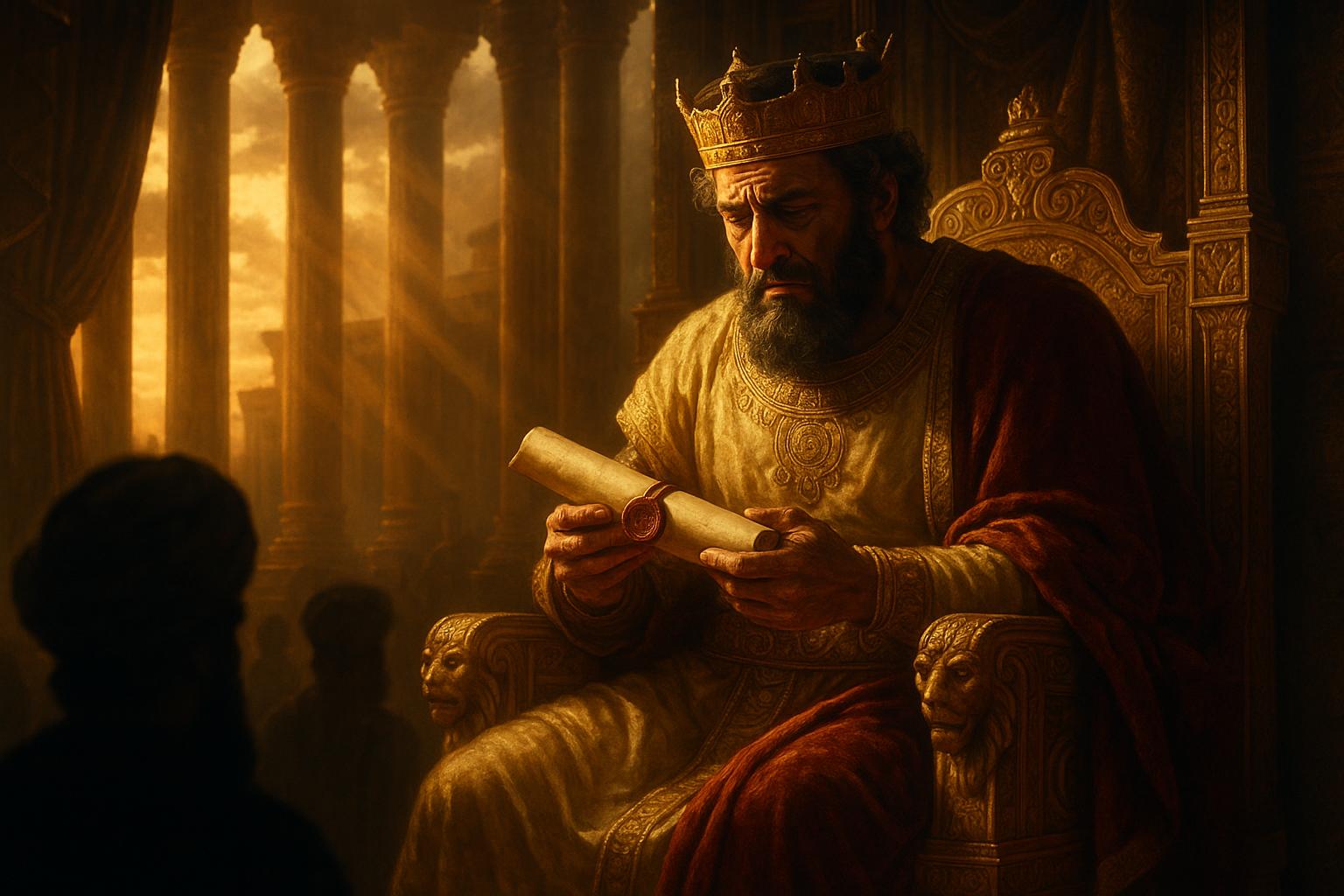
Picture the heart of the Persian Empire, around 539 B.C. The air in Babylon is thick with the scent of jasmine and the dust of a thousand caravans. King Darius, ruler of the known world, sits on a throne of carved cedar and gold.
He is the most powerful man alive. His word is law. But his own advisors, jealous of a brilliant administrator named Daniel, have devised a trap.
They convince Darius to sign a new “emergency” decree. For the next 30 days, they argue, no one can petition any god or man except the king himself. It’s a test of loyalty, they claim, a way to unify the sprawling, fractious empire under his singular authority.
Flattered, Darius agrees. He signs the decree. And in that moment, he unknowingly seals the fate of his most trusted advisor. The decree is now subject to the “Law of the Medes and Persians”—a law that, once written, can never be revoked. Not even by the king.
**The Parallel Revelation**
When Daniel is inevitably caught praying to his own God, Darius is horrified. He, the absolute ruler of 127 provinces from India to Ethiopia, is powerless. His own emergency decree has become his prison.
He cannot save the man he trusts. He cannot undo what he has done. The law, designed to project his ultimate power, has instead revealed his ultimate weakness.
Does this sound familiar? A leader, using an “emergency” to assert authority, only to create a situation that spirals out of control, bound by rules that cannot be easily undone.
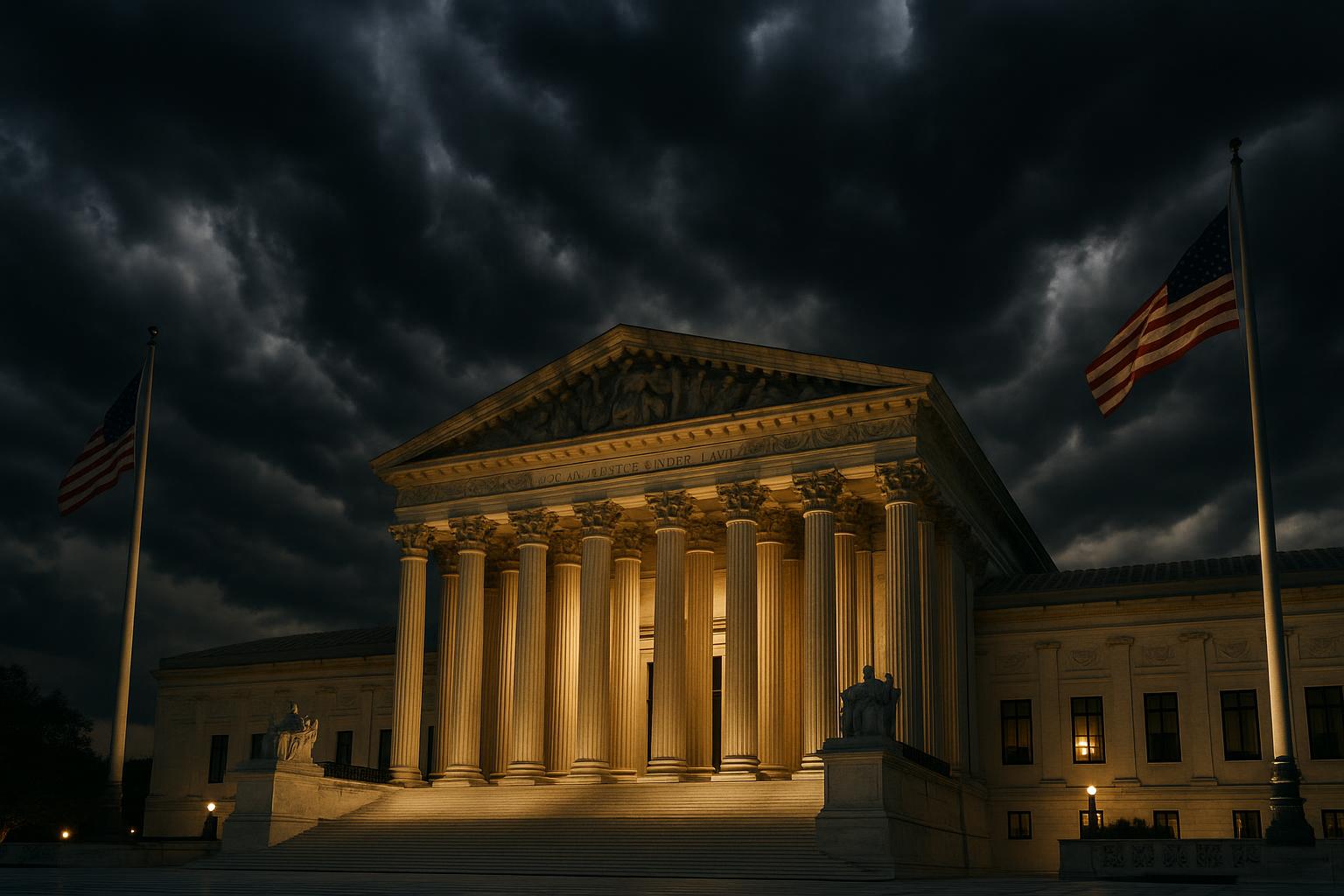
Today, the International Emergency Economic Powers Act (IEEPA) is our modern “Law of the Medes and Persians.” Passed in 1977 for genuine crises like hostage situations or foreign attacks, it is now being used to justify sweeping economic changes that affect every single American.
Once the President declares a national emergency, a cascade of over 100 special powers is unlocked. And ending that emergency isn’t as simple as flipping a switch. It becomes a political and legal battle of epic proportions, trapping the country in a state of permanent crisis.
**The Pattern Recognition**
Why does this pattern repeat? Because the promise of absolute power in an emergency is the ultimate temptation for any leader. It offers a shortcut through messy debates and political opposition.
But here’s the fascinating part: modern scholars now believe the “irrevocable law” of the Persians was likely a fictional invention. It doesn’t appear in any actual Persian records. It was a cautionary tale, a piece of political fiction created by ancient writers to warn about the very thing they feared most: a ruler so powerful he could make a mistake that no one—not even himself—could fix.
They understood a fundamental truth of human nature: we are all fallible. And granting any single person the power to make irreversible decisions in a moment of crisis is an invitation to disaster.
The story of Darius wasn’t a historical record. It was a warning.
**The Ancient Warning**
In the story, Daniel is thrown into the lions’ den. Darius, tormented by his powerlessness, spends a sleepless night fasting. He, the king, can only hope for a miracle.
While Daniel miraculously survives, the lesson is not about divine intervention. It’s about the terrifying moment a ruler realizes the emergency powers he so eagerly grasped have now bound him completely. The system he used to control others now controls him.
This is the ancient warning echoing in the halls of the Supreme Court today. When we allow our leaders to wield emergency powers for non-emergencies, we are forging a chain that may one day bind us all.
—
##
**A Message From Our Sponsor: The 4ft Farm Blueprint**
When the systems we rely on become unpredictable, self-reliance isn’t just a virtue—it’s a necessity. While politicians in Washington debate the limits of their power, you can take real power back into your own hands.
The **4ft Farm Blueprint** shows you how to turn a tiny 4×8 patch of your backyard into a perpetual source of fresh, healthy, and independent food. This isn’t about digging up your whole lawn. It’s about a simple, proven system for producing your own food supply, no matter what happens in the world.
Don’t wait for a crisis to learn these essential skills. **Click here to discover how the 4ft Farm Blueprint can give you true food independence and peace of mind.**
—
**5 Things You Can Do This Week to Prepare**
History teaches that the erosion of checks and balances is a slow, creeping process. Here are five practical steps you can take this week to build your own resilience:
1. **Secure Your Food Supply.** Don’t wait for shortages. Learn a real skill for producing your own food. A great place to start is by understanding how to create a high-yield garden in a small space. This article on **[“The Miracle of the 4-Foot Farm”](https://4ftfarmblueprint.com/the-miracle-of-the-4-foot-farm/)** is a perfect introduction.
2. **Strengthen Your Community.** In times of uncertainty, your neighbors are your most valuable allies. Get to know them. This article on **[“Building a Resilient Community”](https://selfreliancereport.com/building-a-resilient-community/)** from the Self-Reliance Report offers practical tips.
3. **Protect Your Health.** A strong body is your first line of defense. Learn about natural ways to boost your immunity and reduce your reliance on a fragile medical system. Freedom Health Daily has an excellent guide on **[“The Top 5 Immune-Boosting Herbs”](https://freedomhealthdaily.com/the-top-5-immune-boosting-herbs/)**.
4. **Learn a New Skill.** The more you can do for yourself, the less you are at the mercy of broken systems. Whether it’s basic home repairs or learning to preserve food, every new skill is a step toward freedom. Homesteader Depot has a fantastic list of **[“10 Essential Skills for Modern Homesteaders”](https://homesteaderdepot.com/10-essential-skills-for-modern-homesteaders/)**.
5. **Stay Informed, Not Anxious.** Understand the difference between the news that panics and the information that prepares. Focus on real, historical patterns, not the 24/7 outrage cycle. Reading articles like this one is a great first step. For deeper dives, explore the archives at **[Survival Stronghold](https://survivalstronghold.com/)**.
—
*This article is for informational purposes only and does not constitute legal or financial advice. The views expressed are those of the author and do not necessarily reflect the official policy or position of any other agency, organization, employer or company.*


