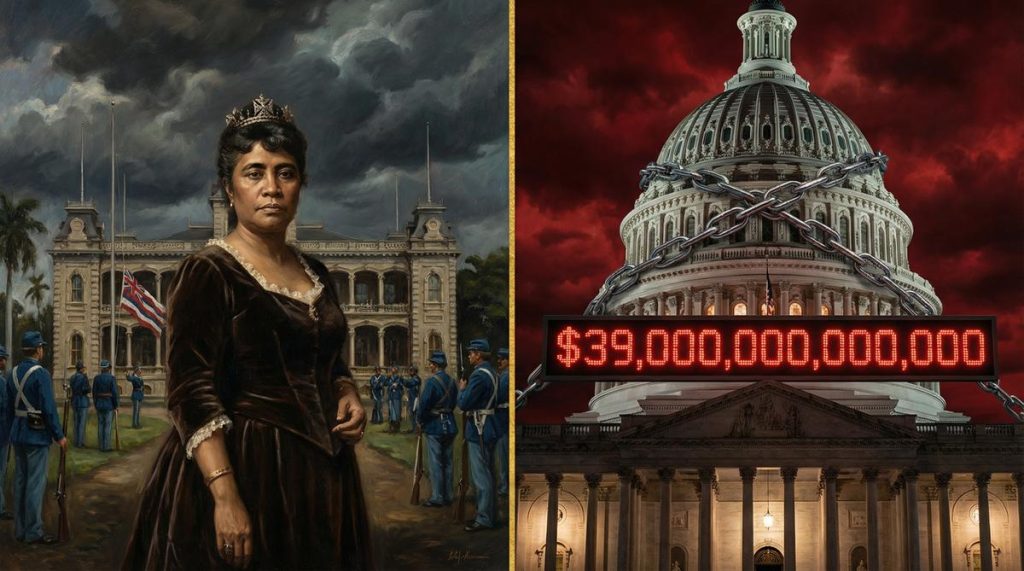
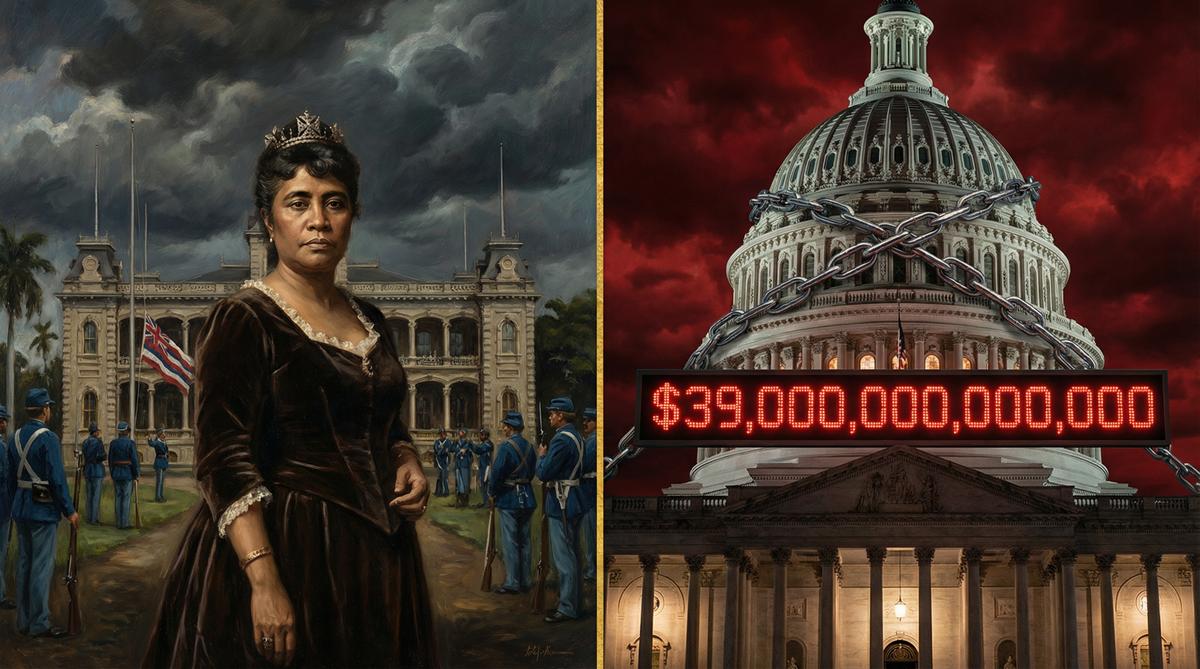
As of this week, the United States national debt has officially crossed the $39 trillion mark.
It is a number so large it defies human comprehension. But the consequences are entirely real. Net interest payments on this debt are now projected to exceed $1 trillion this fiscal year — nearly triple what they were just six years ago.
We are now spending more just to service our debt than we spend on national defense.
Meanwhile, the Federal Reserve remains frozen, holding interest rates steady as they desperately try to balance a cooling labor market against the inflationary pressures of the ongoing Iran war. Moody’s Analytics has just issued a stark warning: there is now a 49% chance of a U.S. recession in the next 12 months.
The American economic engine is sputtering under the weight of its own obligations. We are becoming a nation entirely beholden to our creditors.
We have seen this exact mechanism of collapse before. It is not a story of a nation conquered by foreign armies, but of a sovereign state quietly bought, leveraged, and ultimately dismantled by foreign financial interests.
It is the story of the Hawaiian Kingdom.
The Kingdom That Sold Its Soul for Sugar
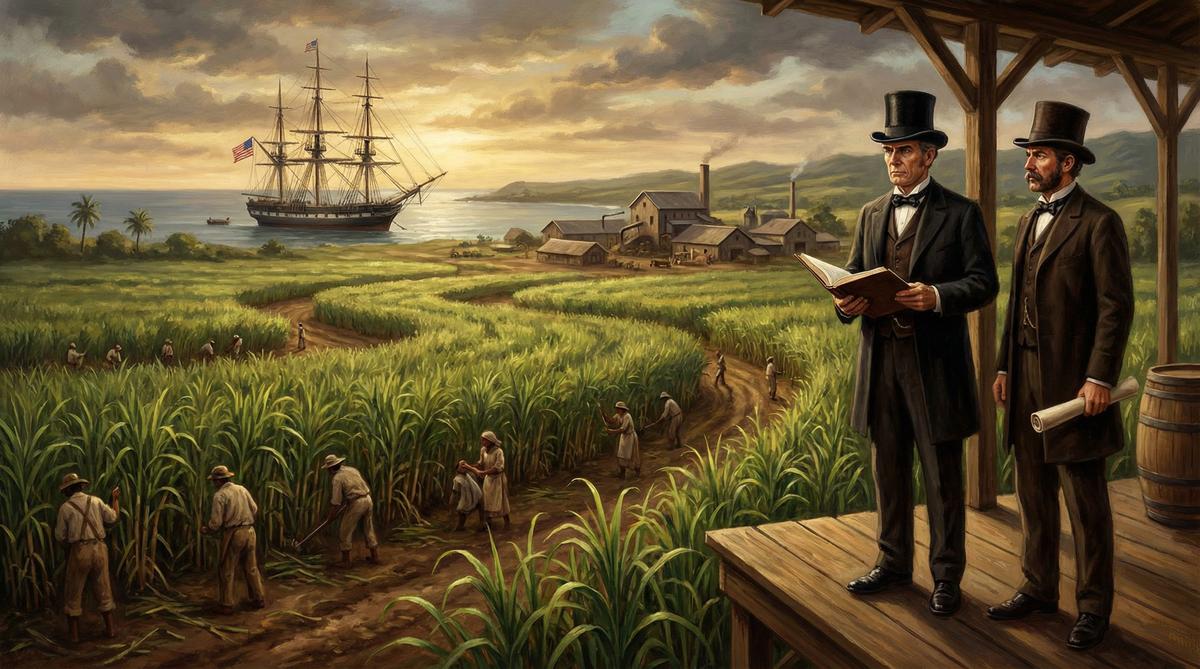
In the late 19th century, the Hawaiian Kingdom was a recognized, independent, and sovereign nation. But its economy had become dangerously dependent on a single, highly lucrative export: sugar.
American businessmen and sugar planters had flooded the islands, building massive plantations and generating enormous wealth. To facilitate this, the Hawaiian government entered into the Reciprocity Treaty of 1875 with the United States, allowing Hawaiian sugar to enter the U.S. duty-free.
The treaty created an economic boom. But it was a trap.
The Hawaiian economy became entirely reliant on the American market. The sugar barons — mostly foreign-born — grew so wealthy and powerful that they began to dictate terms to the Hawaiian monarchy. They demanded land, they demanded political representation, and they demanded control over the kingdom’s financial future.
The kingdom had traded its economic independence for short-term prosperity.
When King Kalākaua attempted to resist their growing influence, the foreign business interests forced him, under threat of violence, to sign the “Bayonet Constitution” of 1887. This document stripped the monarchy of its power and transferred control of the government — and its finances — directly into the hands of the wealthy elite.
“The kingdom was not conquered by force of arms, but by the slow, suffocating pressure of economic dependency and foreign financial control.”
The Hawaiian people watched as their nation was quietly bought out from under them.
The Tariff That Pulled the Trigger
The final blow came not from a military invasion, but from a tariff.
In 1890, the U.S. Congress passed the McKinley Tariff, which removed the special duty-free status of Hawaiian sugar. Overnight, the Hawaiian economy went into a tailspin. The value of their exports plummeted — from $13 million in 1890 to just $8 million by 1892.
The economic crisis created the perfect pretext for a political takeover.
Desperate to protect their wealth and secure permanent access to the U.S. market, the American planters orchestrated a coup. In January 1893, with the unauthorized backing of U.S. Marines, they overthrew Queen Liliʻuokalani.
The Hawaiian Kingdom ceased to exist, swallowed whole by the very economic forces it had relied upon.
The planters established a provisional government and immediately pushed for annexation by the United States. They understood that true power did not lie in the throne, but in the ledger. By controlling the debt, the exports, and the financial lifelines of the kingdom, they had effectively conquered it without firing a single shot in anger.
The American Mirror
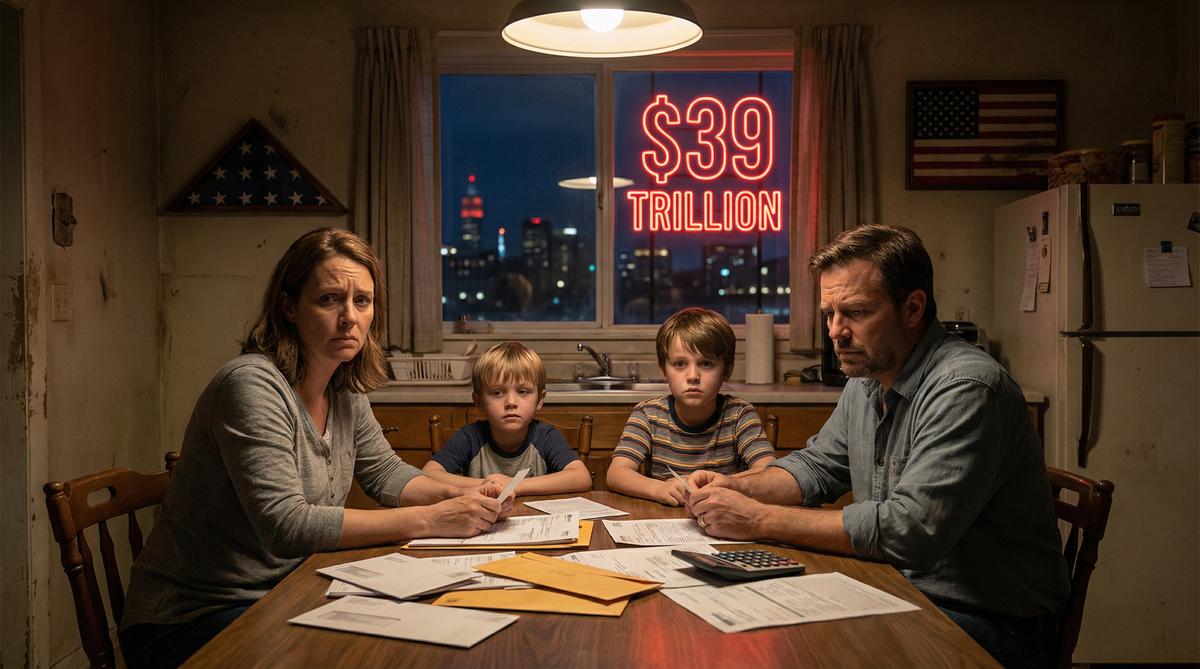
The parallels are not just historical — they are mathematical.
The Hawaiian Kingdom lost its sovereignty because it allowed foreign financial interests to dictate its economic survival. Today, the United States is spending over $1 trillion a year just to pay the interest on its debt — capital that is siphoned away from infrastructure, innovation, and the American people.
We are financing our present by selling off our future.
With Moody’s warning of a 49% chance of recession and the Federal Reserve paralyzed by stagflation, the illusion of endless American prosperity is shattering. Just as the McKinley Tariff exposed the fragility of the Hawaiian economy, the current global economic pressures are exposing the fatal weakness of a nation built on infinite leverage.
The bill is finally coming due.
The Hawaiian people learned too late that economic dependency is the first step toward total subjugation. When you owe the bank a thousand dollars, the bank owns you. When a nation owes $39 trillion, the creditors own the nation.
The question is no longer if the system will break. The question is what you will do when it does.
The Path to Resilience
It is easy to look at a $39 trillion debt clock and feel a profound sense of despair. To see the political paralysis in Washington and feel like a helpless passenger on a sinking ship.
But history teaches another, more powerful lesson.
When massive, centralized financial systems collapse under their own weight, they create a vacuum. And into that vacuum rushes the opportunity for something new. The people who survive the collapse of empires are not the ones who simply hide. They are the ones who rebuild, who focus on their local communities, who strengthen their own skills, and who create resilient networks of mutual support.
This is not a call to hide from the world. It is a call to build a better one, starting in your own backyard.
The end of the American debt super-cycle does not have to mean the end of your family’s prosperity. It simply means that the era of relying on a functioning, solvent federal government is over. The future belongs to those who recognize this reality and take immediate, decisive action to decouple their lives from a failing system.
True sovereignty is not granted by a government. It is built by individuals.
The Blueprint for Hope
Building a resilient future starts with a single, powerful step: taking control of your own foundational needs.
When the centralized systems fail, the most valuable assets will not be digital numbers on a screen, but tangible skills, local resources, and the ability to provide for your own family. This is the essence of true independence.
The 4ft Farm Blueprint is not just about growing food — it is about reclaiming your sovereignty. It is the first chapter in your family’s story of independence, a story where you are the builder, not the victim of a collapsing financial empire.
For the tools and knowledge required to build this resilient lifestyle, Homesteader Depot provides the essential gear that empowers you to step away from the fragile supply chains that a debt-ridden nation can no longer guarantee.
To understand the deeper patterns of history and prepare for the shifts ahead, the Self Reliance Report and Survival Stronghold offer the intelligence you need to navigate the coming transition.
And because true resilience requires physical vitality, Seven Holistics and Freedom Health Daily provide the foundational health strategies to ensure you have the strength to build the future you deserve.
The empire of debt is crumbling. It is time to start building your own stronghold.