
Is Washington Repeating a 1,300-Year-Old Mistake That Shattered an Empire?
Author: Shamus Gerry III
##
The Modern Mystery
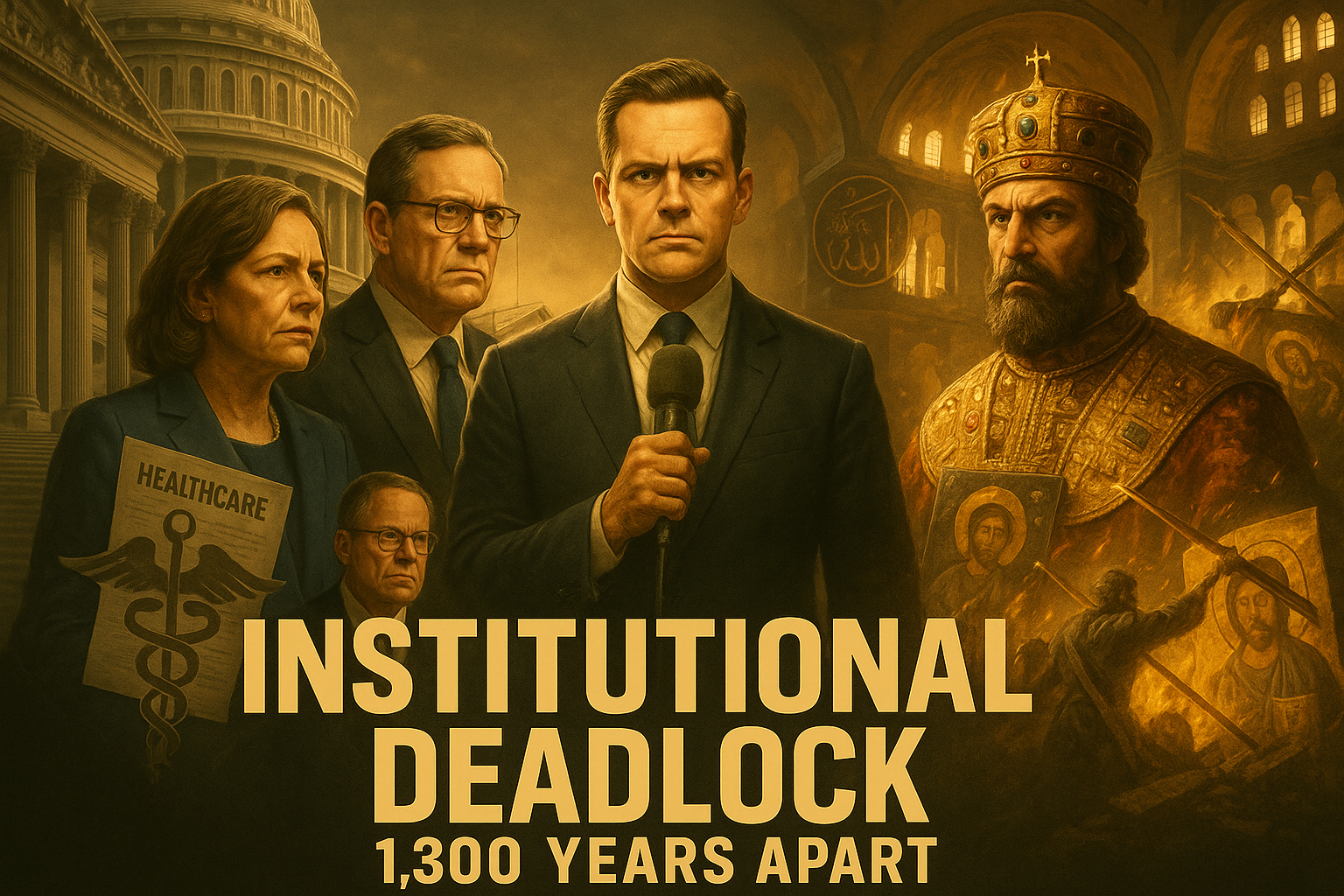
In the heart of Washington D.C., a familiar storm is brewing. As the September 30th deadline looms, the gears of government are grinding to a halt, threatening a full-blown shutdown. It’s a high-stakes political drama we’ve seen before, but this time, the script has a chilling new twist.
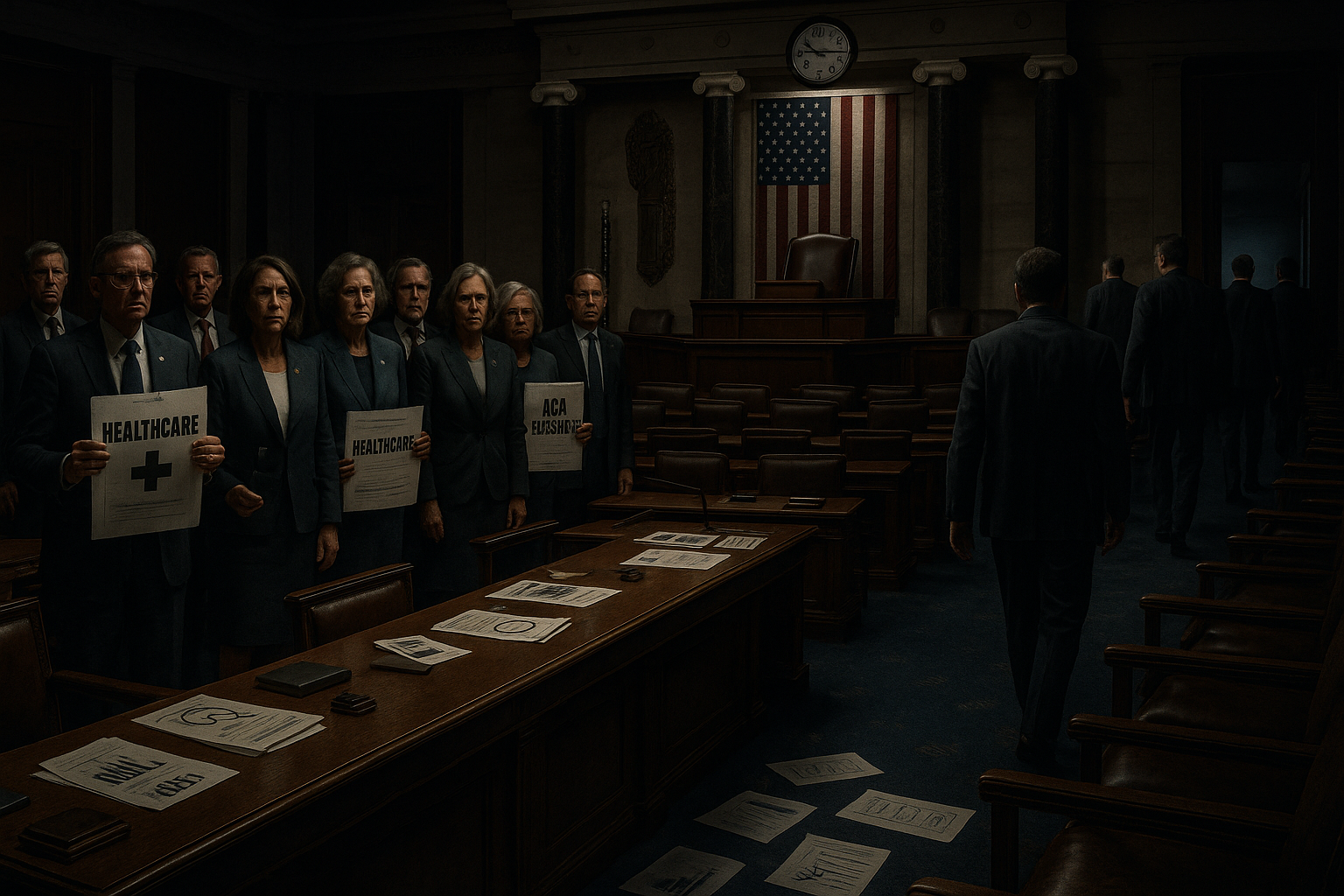
House Democrats are drawing a line in the sand. They’re refusing to pass a funding bill unless their demands on healthcare—specifically, restoring Medicaid cuts and extending critical ACA subsidies for 22 million Americans—are met. It’s a bold, defiant stand against the Trump administration, a political gamble where the well-being of millions hangs in the balance.
“”This sh*t is not normal,” declared Rep. Jason Crow, his frustration echoing through the halls of Congress. “And I’m not going to act like it is.” It’s a sentiment of deep institutional crisis, a feeling that the fundamental rules of governance are being broken. But is this unprecedented? Or is it a ghost from a distant, violent past, a pattern of self-destruction that has toppled empires before?
##
The Time Portal
Let’s wind the clock back 1,300 years. Forget the marble halls of Washington and picture the glittering, chaotic heart of the Byzantine Empire: Constantinople, 726 CE. The city is a crossroads of the world, a fortress of Christianity, but it’s seething with a conflict that has nothing to do with budgets or healthcare, and everything to do with faith and power.
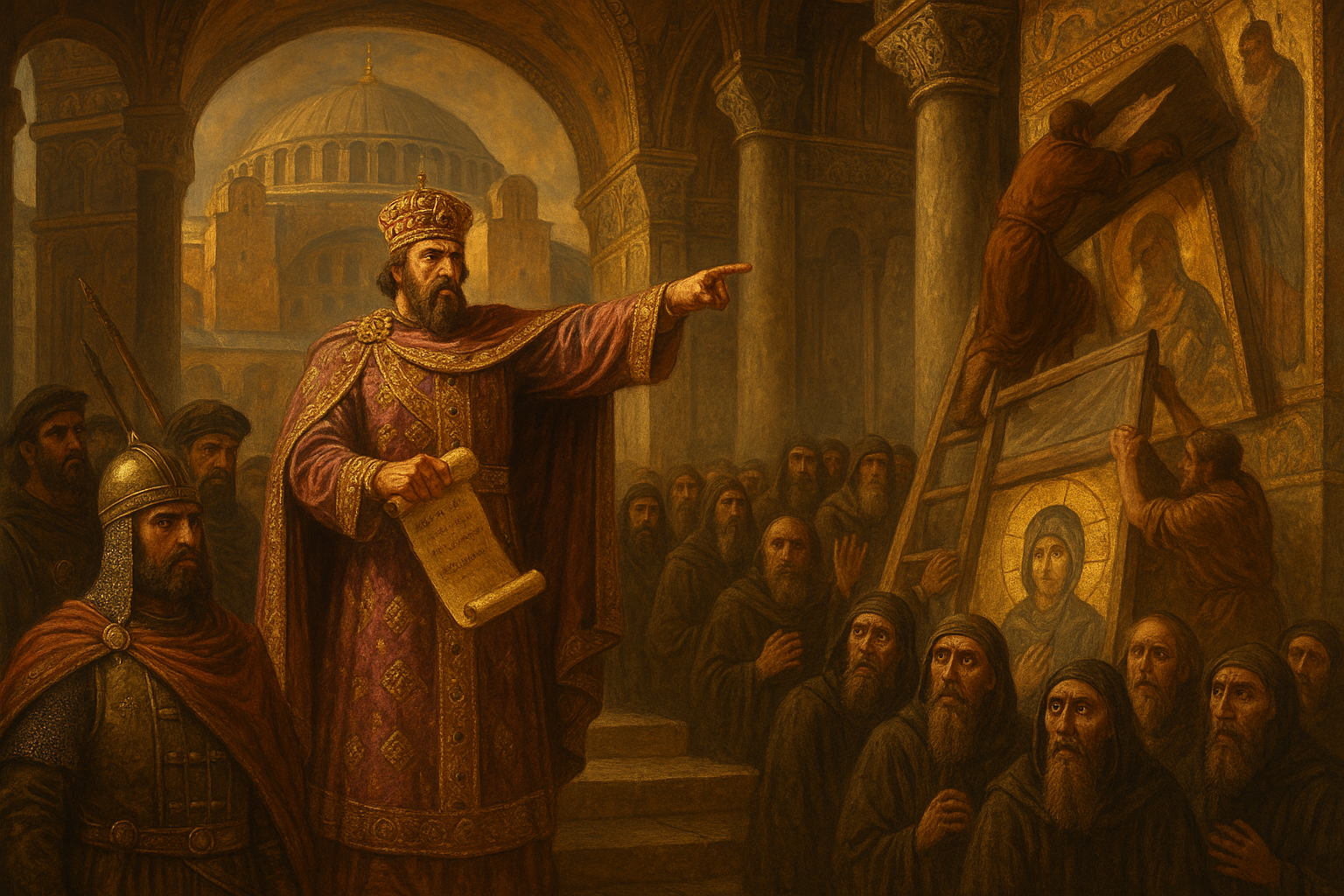
Emperor Leo III, a hardened soldier from the Syrian frontier, stands before a stunned populace. He is a man who believes God has granted him victory over the besieging Arab armies for a reason. He believes the Empire is sick, infected by a spiritual disease: the worship of religious images, or icons.
To Leo, these paintings and mosaics are a gateway to idolatry, a violation of God’s law that is bringing divine wrath upon his people. He issues a decree that will tear his empire apart for over a century. He orders the icons to be destroyed.
##
The Parallel Revelation
Suddenly, the 1,300 years separating Washington and Constantinople collapse. The issues are different—healthcare subsidies versus holy images—but the human drama is identical. In both scenarios, a powerful governing body is holding a fundamental public service hostage to enforce its ideological will.
For the Democrats in 2025, the non-negotiable principle is that healthcare is a human right. For Emperor Leo III, it was that the worship of icons was a sin threatening the salvation of his empire. In both cases, the opposition wasn’t just political; it was a moral crusade.
The “Iconodules” (servants of icons) in Byzantium, much like the Republicans today, saw the Emperor’s decree not as a policy dispute, but as an attack on the very soul of their faith and tradition. They refused to comply. Monks led protests, citizens rioted, and the bureaucracy ground to a halt as officials refused to enforce the Emperor’s will. The government was, in effect, shut down over a non-negotiable ideological demand.
Just as Democrats today fear being “vilified” for compromising, the Iconodules faced brutal persecution for their defiance. The political deadlock wasn’t just a debate; it was a violent, irreconcilable conflict that pitted neighbor against neighbor, and the state against the church.
##
The Pattern Recognition
Why does this pattern repeat? Because at its core, it’s not about policies; it’s about the psychology of power and conviction. When political disputes escalate into moral crusades, compromise becomes impossible. Each side believes it holds the absolute truth, making any concession a betrayal of principle.
In both 8th-century Byzantium and 21st-century America, we see the same dangerous ingredients:
1. A Crisis of Legitimacy: Both sides question the other’s right to govern.
2. Ideological Purity Tests: Compromise is seen as weakness and corruption.
3. The Weaponization of Public Services: The functioning of the state is used as a bargaining chip.
This isn’t just politics. It’s a breakdown of the shared understanding that allows a society to function. It’s what happens when the pursuit of a “higher good” justifies the destruction of the common good.
> Sponsored: The 4ft Farm Blueprint
> As institutional stability wavers, true security is found in self-reliance. The [4ft Farm Blueprint](https://4ftfarmblueprint.com/) offers a step-by-step guide to creating a high-yield, low-maintenance food source in your own backyard. Secure your family’s future, no matter what happens in Washington. [Click here to learn more.](https://4ftfarmblueprint.com/)
##
The Ancient Warning
What happened in Byzantium is a terrifying warning. The Iconoclast Controversy didn’t end in a neat compromise. It raged for 117 years.
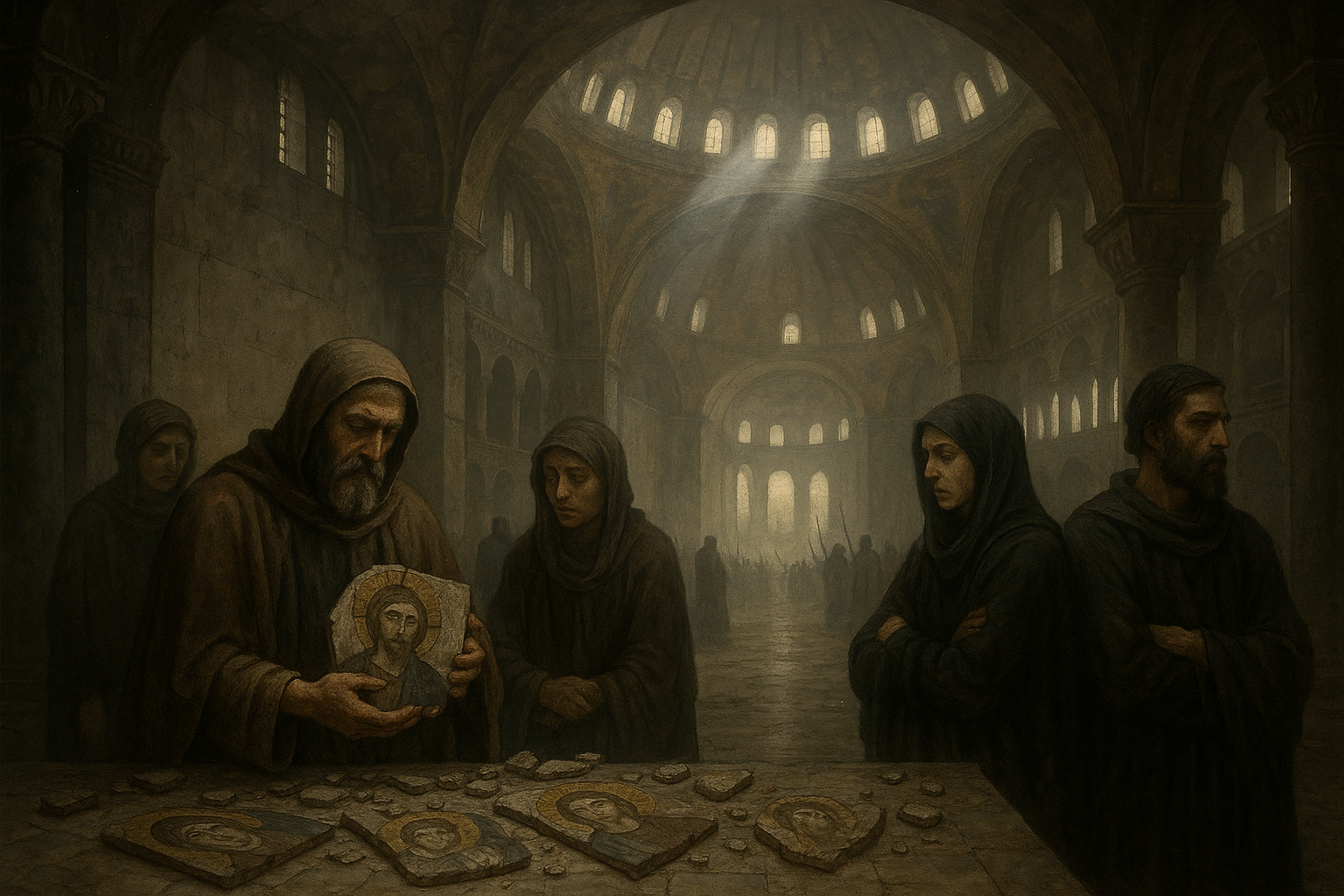
Emperors were overthrown. The military was purged. Monks were blinded and exiled. The conflict bled the empire of resources and unity, leaving it vulnerable to external enemies. It created a permanent schism with the West, as the Pope in Rome sided with the icon-worshippers, deepening the divide that would eventually split Christianity forever.
Even when the icons were finally restored in 843 CE by Empress Theodora—an event still celebrated as the “Triumph of Orthodoxy”—the scars remained. The empire had spent over a century tearing itself apart from the inside. It never fully recovered its former strength or unity.
The lesson is stark: when a nation turns its political machinery into a weapon for ideological warfare, the wounds can last for centuries. The government shutdown of 2025 isn’t just a temporary inconvenience; it’s a symptom of the same disease that crippled the Byzantine Empire.
##
5 Things You Can Do This Week
History’s warnings are only useful if we act on them. As our institutions buckle under the weight of this ancient, repeating pattern, here are five practical steps you can take to build resilience for yourself and your family.
1. Secure Your Food Supply. The most basic form of independence is not relying on a fragile supply chain. Learn the principles of long-term food storage and production. [Read more at Homestead Depot on how to start.](https://homesteaderdepot.com/category/food-storage/)
2. Achieve Financial Independence. Political instability inevitably leads to economic turmoil. Reduce your dependence on centralized financial systems by exploring alternative assets and getting out of debt. [Self-Reliance Report has a guide to financial freedom.](https://selfreliancereport.com/category/financial-freedom/)
3. Build a Strong Local Community. When national institutions fail, local networks become your lifeline. Get to know your neighbors and build a community of mutual support. [Survival Stronghold explains the power of a mutual assistance group.](https://survivalstronghold.com/category/community/)
4. Prioritize Your Health. A government that can’t agree on healthcare funding is a government you can’t rely on for your well-being. Take control of your own health through preventative measures and natural remedies. [Freedom Health Daily offers insights on taking charge of your health.](https://freedomhealthdaily.com/category/natural-remedies/)
5. Cultivate Mental and Spiritual Resilience. The greatest defense against chaos is a calm and centered mind. Develop practices that ground you in timeless truths, not the shifting sands of politics. [Seven Holistics provides guidance on mindfulness and spiritual well-being.](https://sevenholistics.com/category/mindfulness/)
—
References:
1. Britannica, T. Editors of Encyclopaedia (2023, October 20). *Iconoclastic Controversy*. *Encyclopedia Britannica*. [https://www.britannica.com/event/Iconoclastic-Controversy](https://www.britannica.com/event/Iconoclastic-Controversy)
2. Haldon, J. F. (2005). *Byzantium at war: AD 600-1453*. Routledge.
3. Ostrogorsky, G. (1969). *History of the Byzantine state*. Rutgers University Press.
4. Ferris, S. (2025, September 10). *As tensions mount, top Democrats seek to avoid another ugly clash over government funding*. CNN. [https://www.cnn.com/2025/09/10/politics/government-funding-shutdown-democrats](https://www.cnn.com/2025/09/10/politics/government-funding-shutdown-democrats)


