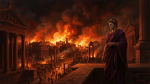
**The Modern Mystery**
A strange and unsettling event just occurred in the heart of the American empire. As a crippling government shutdown entered its 25th day, leaving 1.3 million active-duty military members facing the prospect of missed paychecks, an unprecedented solution emerged. Not from the halls of Congress, but from the private fortune of a single, reclusive billionaire.
Timothy Mellon, an heir to a Gilded Age banking fortune and a major political donor, quietly transferred $130 million to the Pentagon. A private citizen was now funding the United States military. A function once belonging solely to the state, paid for by the taxes of its citizens, was now being outsourced to the highest bidder. The transaction was presented as a patriotic act of generosity. But it was something else entirely. It was a symptom of a disease that has toppled empires before. It was a modern echo of a 1,600-year-old warning, a story of what happens when a nation’s power becomes a private commodity.
**The Time Portal**
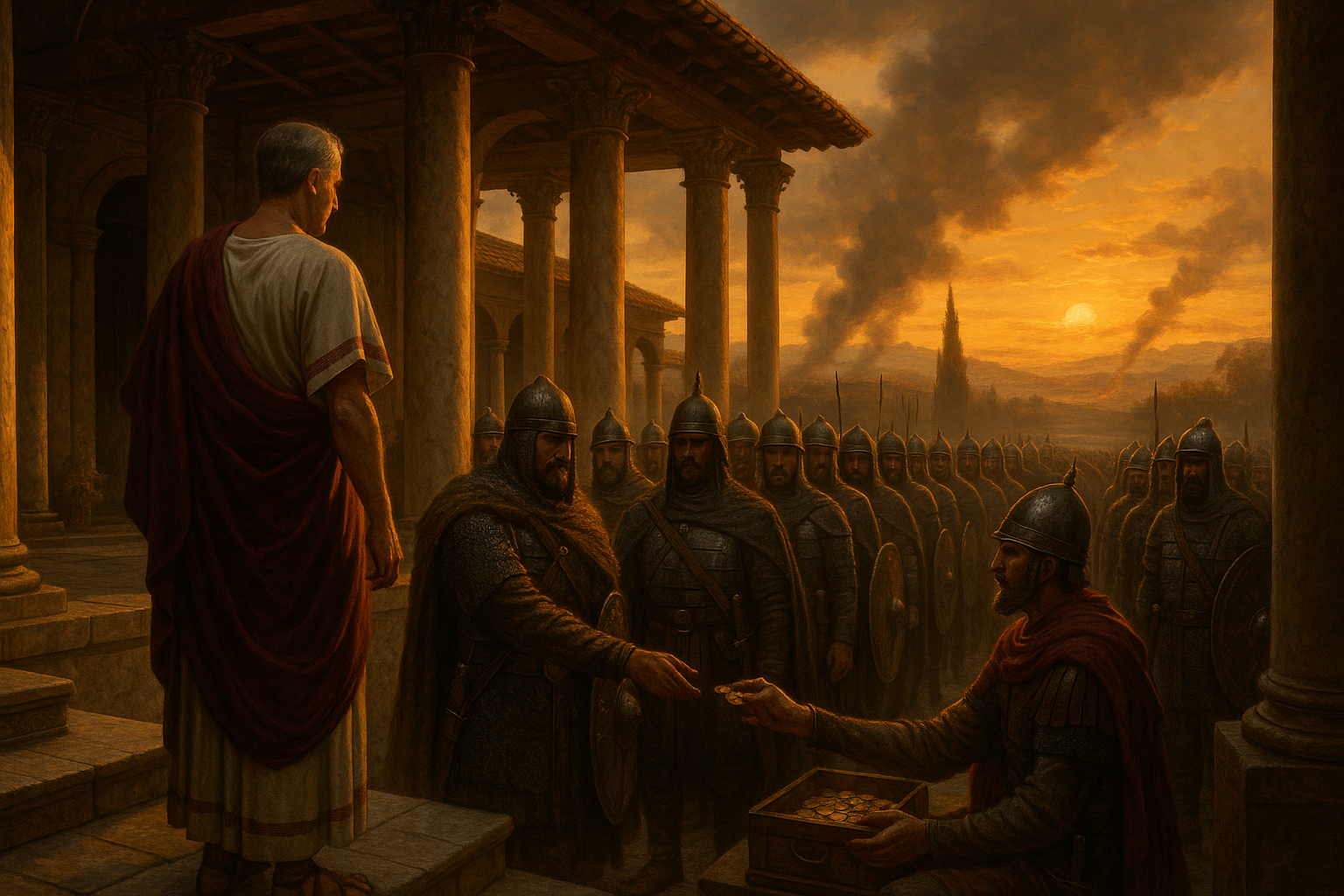
Let’s travel back in time. The year is 408 AD. The Western Roman Empire is a shadow of its former self. Its borders are crumbling, its treasury is empty, and its political system is paralyzed by corruption and incompetence. The once-mighty Roman legions, the state-funded armies that had conquered the known world, are now a hollow force. They are poorly paid, ill-equipped, and their loyalty is fractured.
In the sprawling villas of the countryside, a new kind of power is rising. Wealthy senators and landowners, men whose fortunes dwarf the state’s own coffers, look out at the chaos and see an opportunity. They can no longer rely on the state to protect them. So they take matters into their own hands. They begin to raise private armies.
These were the *bucellarii*, the “biscuit-eaters.” They were elite, private soldiers, recruited from the best warriors of the age—Goths, Huns, and disillusioned Romans. They were paid handsomely, armed with the finest weapons from the empire’s own factories, and they were loyal to one person and one person only: the man who paid them. Men like the great general Flavius Aetius, or the immensely powerful Belisarius, commanded armies of thousands of these private soldiers. They were, in effect, warlords operating within a dying state.
**The Parallel Revelation**
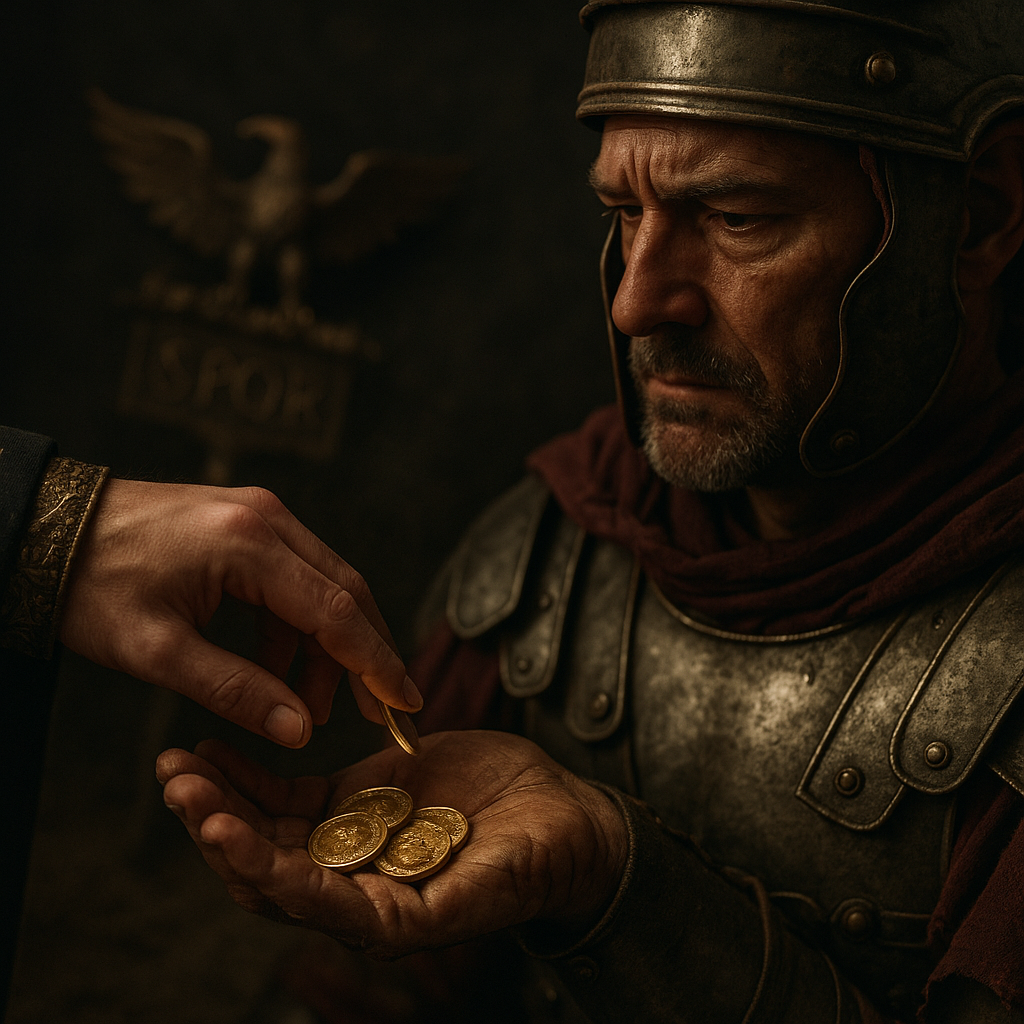
The parallels between the rise of the *bucellarii* and the private funding of the US military are as stunning as they are terrifying. In both cases, we see the privatization of a core state function. The Roman state, crippled by debt and political infighting, could no longer effectively fund its own military. In 21st century America, a political stalemate, a symptom of a deeply divided nation, leads to the same outcome. In both instances, private wealth steps in to fill the void left by a failing state.
The *bucellarii* were not loyal to the idea of Rome. They were loyal to their paymaster. They fought for the general who offered them the best deal. This shift in loyalty was the death knell for the Roman state. It signaled that the monopoly on violence, the very definition of a sovereign state, had been broken. When a billionaire can fund the military, who does the military ultimately answer to? The citizens who pay their taxes, or the wealthy patron who signs the checks?
**The Pattern Recognition**
This pattern is not a coincidence. It is a fundamental law of history. When a state can no longer perform its most basic functions, when it can no longer guarantee the security and well-being of its citizens, private power will always rush in to fill the vacuum. This is not a sign of strength or resilience. It is a sign of advanced decay.
The Roman historian Vegetius, writing in the late 4th century, lamented the decline of the Roman military. He saw that the state had become so corrupt and inefficient that it could no longer field a proper army. The rise of private armies was the inevitable result. Two centuries earlier, the fabulously wealthy Marcus Licinius Crassus had famously declared that “no one was truly rich if he could not fund an army from his own resources.” In his time, it was a boast. By the time of the *bucellarii*, it was a grim necessity.
**The Ancient Warning**
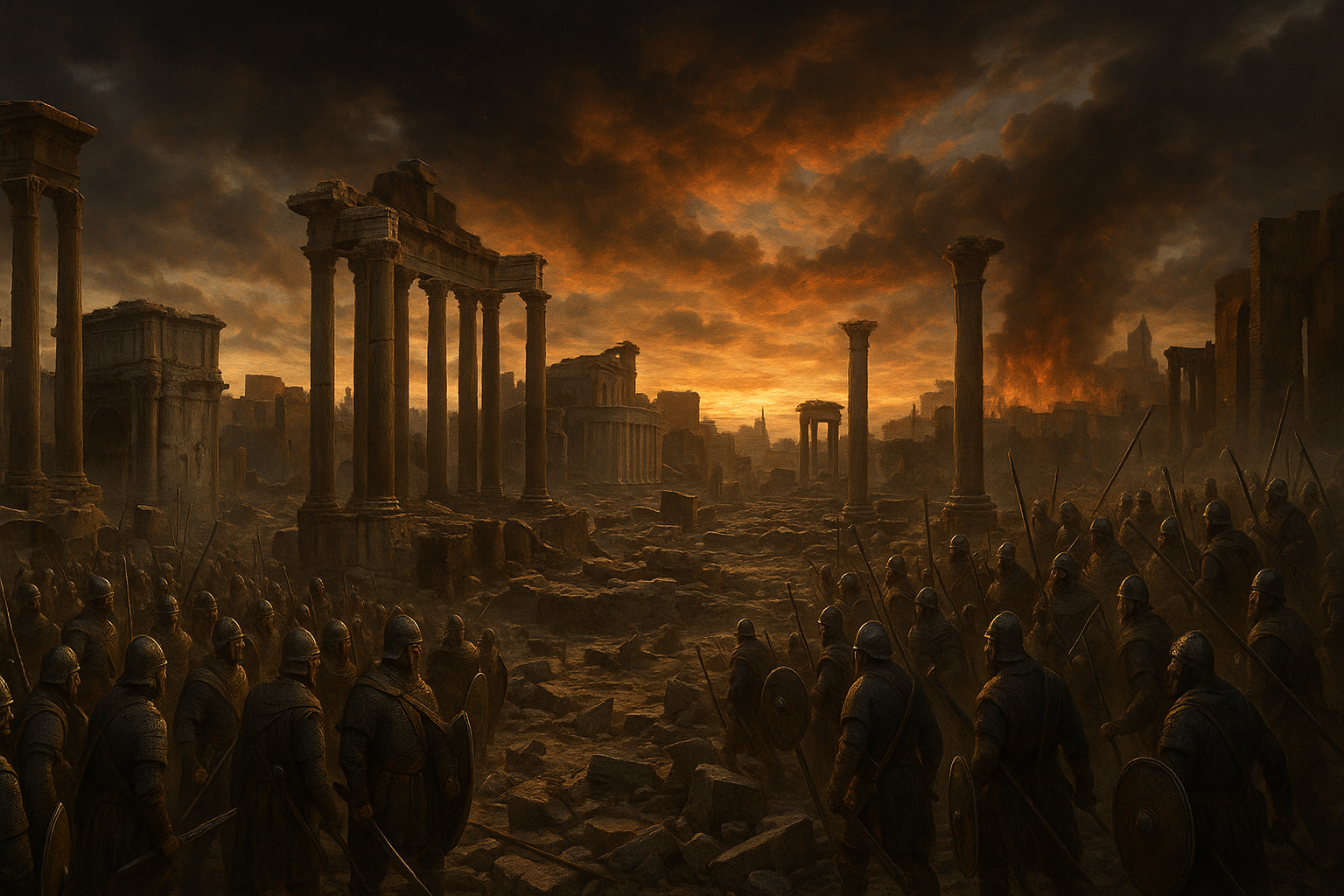
What happened next in Rome is a lesson for us all. The rise of the *bucellarii* did not save the empire. It accelerated its fall. The private armies, loyal only to their warlord commanders, turned on each other. The empire was torn apart by civil wars, fought not for the good of Rome, but for the personal power and enrichment of a few wealthy men. The state, having outsourced its own power, became an empty shell. In 476 AD, the last Western Roman Emperor was quietly deposed, not by a foreign invader, but by a barbarian general in command of his own private army. The empire did not fall with a bang. It was sold off, piece by piece, to the highest bidders.
**5 Things You Can Do This Week**
History is not a spectator sport. The story of the *bucellarii* is a warning. It is a call to action. Here are five things you can do this week to prepare for a future where the state may not be able to protect you:
1. **Build Your Own Fortress:** Your home is your castle. Learn the principles of home defense and fortification. The knowledge on sites like [Survival Stronghold](https://survivalstronghold.com) can help you turn your home into a sanctuary of safety in uncertain times.
2. **Achieve Food Independence:** The Romans learned the hard way that a hungry populace is a desperate populace. The [4ft Farm Blueprint](https://4ftfarmblueprint.com) can teach you how to grow your own food, even in a small space, ensuring that your family will never go hungry, no matter what happens to the supply chains.
3. **Master the Art of Self-Reliance:** The pioneers who built America understood that true freedom comes from self-reliance. The [Self-Reliance Report](https://selfreliancereport.com) is a treasure trove of information on how to become more independent and less reliant on fragile systems.
4. **Take Control of Your Health:** In a crisis, the healthcare system will be the first to break. [Freedom Health Daily](https://freedomhealthdaily.com) offers cutting-edge information on how to stay healthy and vibrant, naturally.
5. **Embrace the Power of Community:** The Romans who survived the collapse of their empire did so by banding together in small, tight-knit communities. Get to know your neighbors. Build local networks of mutual support. In the end, community is the only social safety net that truly matters.
—
**Sponsor**
**Is Your Family Prepared for the Next Crisis?**
The government can’t even pay its own soldiers. Do you really think they’ll be there for you when things get tough? The time to prepare is now. The **[4ft Farm Blueprint](https://4ftfarmblueprint.com)** is the ultimate guide to food independence. Learn how to turn any small space into a high-yield food production system. Don’t wait for the crisis to hit. Secure your family’s future today. **[Click here to learn more.](https://4ftfarmblueprint.com)**
—
**References**
* [1] Coulston, J. (2018). Bucellarii. In O. Nicholson (Ed.), *The Oxford Dictionary of Late Antiquity*. Oxford University Press.
* [2] MacGeorge, P. (2002). *Late Roman Warlords*. Oxford University Press.
* [3] Whittaker, D. (2020). Landlords and warlords in the later Roman Empire. In *War and society in the Roman world*. Taylor & Francis.
* [4] Medium. (2025). What Happened to the Immeasurable Wealth of Marcus Crassus After His Death at Carrhae? Retrieved from https://medium.com/@ancient.rome/what-happened-to-the-immeasurable-wealth-of-marcus-crassus-after-his-death-at-carrhae-86468c2ab7ec