The silence in Washington D.C. is deafening. After 43 agonizing days, the longest government shutdown in American history is over. Millions of federal workers can finally breathe a sigh of relief. The gears of government are slowly, painfully, grinding back to life. But as the dust settles, a chilling question hangs in the air: what was it all for?
Forty-three days of chaos. Forty-three days of families wondering how they’d put food on the table. Forty-three days of our nation looking like a dysfunctional mess on the world stage. And for what? A handshake deal? A vague promise to maybe, possibly, talk about the budget later?
For weeks, we watched the surreal spectacle of a 21st-century superpower acting like a failed state. We saw lines at food banks blocks long, filled with dedicated public servants who, just weeks before, were running the country. We saw airports descend into chaos. We saw the fear in the eyes of parents wondering if their SNAP benefits would be there to feed their children. All because the political machine in Washington D.C. ground to a halt.
It felt unprecedented. It felt uniquely American in its absurdity. But it wasn’t.
History is whispering a terrible warning to us. Two thousand years ago, another great power faced the exact same crisis. A crisis not of scarcity, but of political dysfunction. A crisis that ended in starvation, rebellion, and the brutal death of an emperor. The story of Wang Mang and the collapse of his dynasty is a chilling parallel to our own time. And it’s a story we need to understand, before we’re doomed to repeat it.
The Time Portal: An Emperor’s Grand Vision
Let’s travel back to 1st century China. The Han Dynasty, one of the great golden ages of Chinese history, had perfected a remarkable system for preventing famine: the “ever-normal granary.” The concept was simple but brilliant. In years of bumper crops, the government would buy and store surplus grain. In lean years, when drought or floods struck, they would open the granaries and sell the grain at a fair price. It was a national food insurance policy, a testament to a government that saw its primary duty as providing for its people.
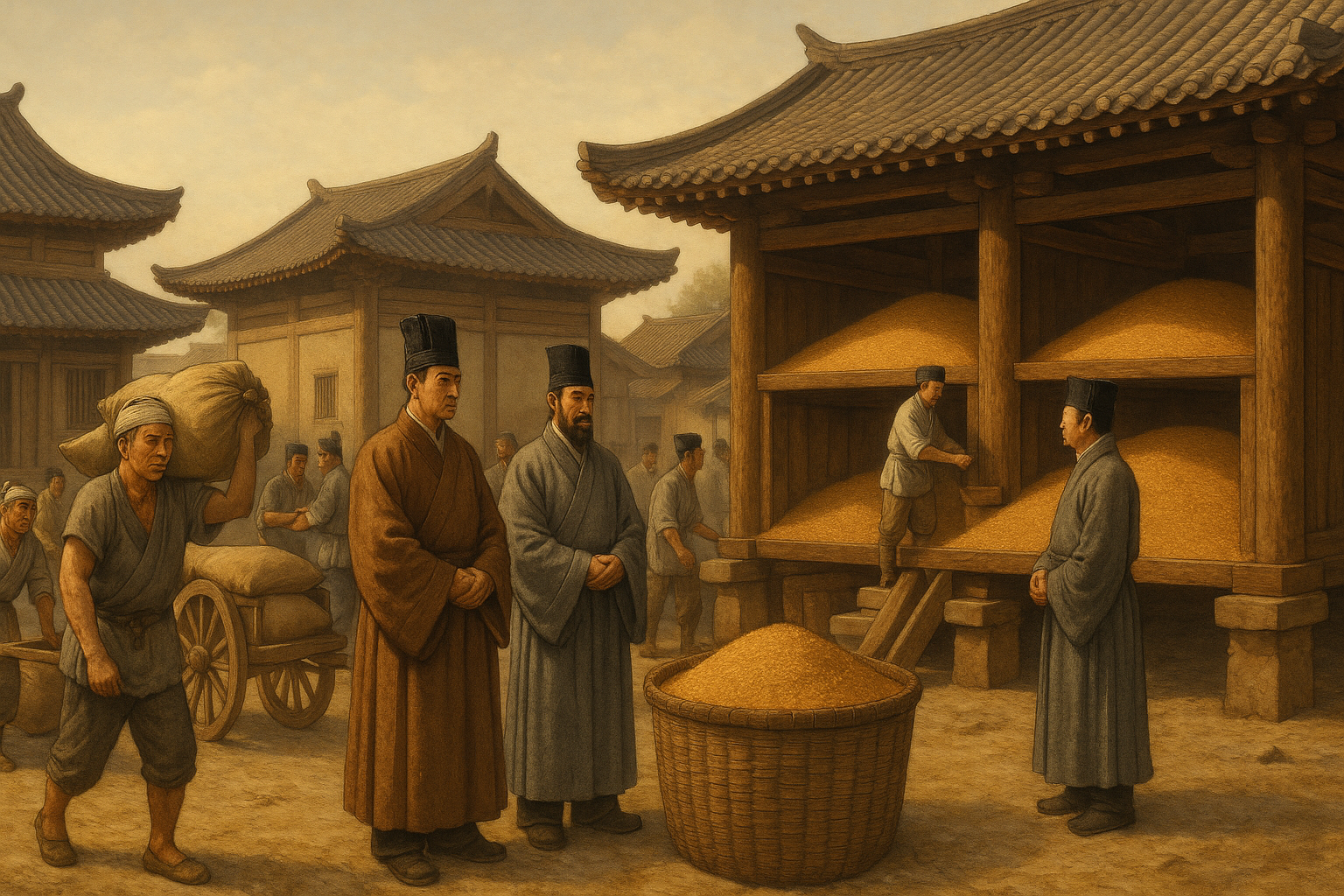
But then came Wang Mang. A brilliant, ambitious, and deeply ideological official, Wang Mang saw the Han Dynasty as corrupt and decadent. He believed he could create a perfect society, a Confucian utopia. In 9 AD, he usurped the throne, declared himself Emperor of the Xin (“New”) Dynasty, and launched a series of radical reforms that would shake China to its core.
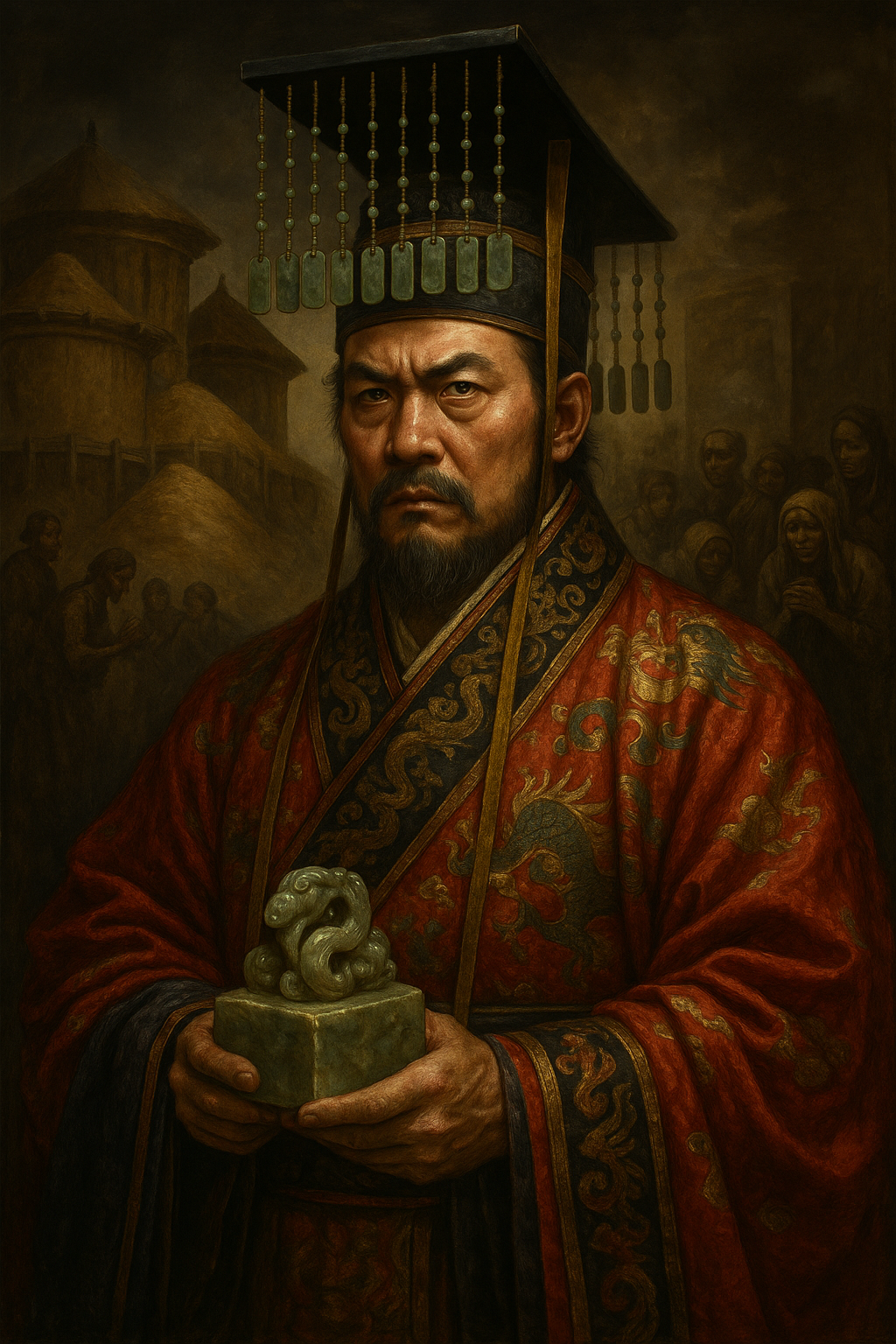
He nationalized all land. He abolished slavery. He completely overhauled the currency, replacing the gold-backed coins of the Han with a complex and confusing array of new bronze money. He created government monopolies on everything from iron and salt to liquor and mining. On paper, it was a breathtakingly modern vision of a socialist state. In reality, it was a catastrophe.
The Parallel Revelation: When The System Breaks
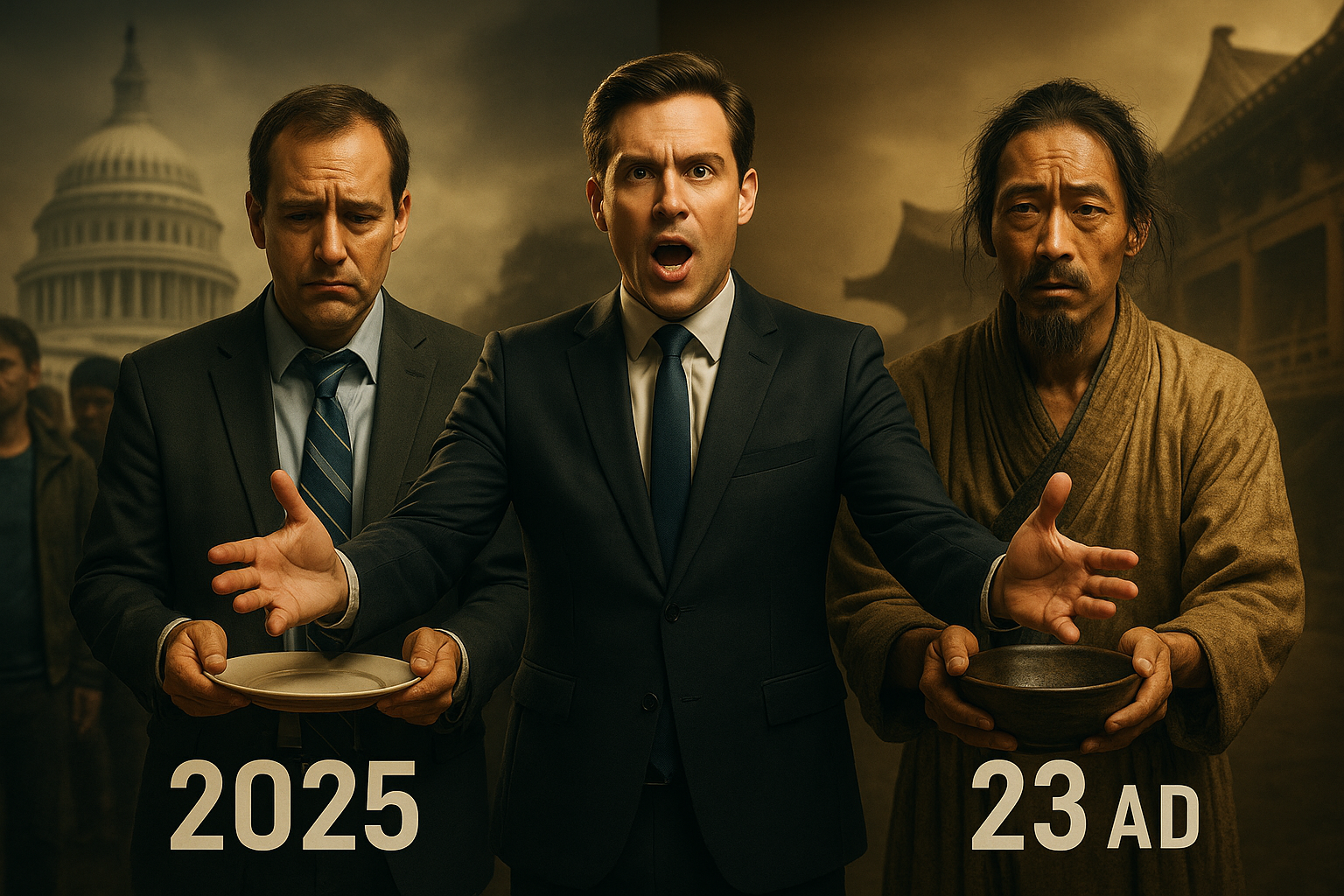
The parallels between Wang Mang’s disastrous reign and the 2025 government shutdown are so precise, they’re terrifying.
Wang Mang’s radical reforms threw the entire Chinese economy into chaos. The bureaucracy, overwhelmed by constant changes and new regulations, ground to a halt. Wealthy landowners and merchants, stripped of their assets, resisted his every move. The political gridlock was absolute.
Then, disaster struck. In 11 AD, the mighty Yellow River, “China’s Sorrow,” changed its course, unleashing catastrophic floods. Millions were left homeless. The harvest failed. This was exactly the kind of crisis the ever-normal granary system was designed to handle. The granaries were full. The grain was there.
But the government was broken. Paralyzed by political infighting and bureaucratic incompetence, the grain couldn’t get to the people who needed it. Local officials didn’t know what to do. The new currency was worthless. The transportation system was in shambles. And Wang Mang, obsessed with his grand vision, refused to compromise. He refused to release the grain from the imperial stores, hoarding it while his people starved.
Sound familiar? In 2025, America had no shortage of food. Our grocery stores were full. Our farmers produced a bounty. But for 43 days, a broken political system threatened to cut off the flow of food to millions of its own citizens. Federal workers, the very people who keep the system running, were forced to stand in line for charity. The problem wasn’t a lack of resources. It was a lack of political will. It was a government so consumed by its own internal battles that it forgot who it was supposed to serve.
The Pattern Recognition: Ideology Over People
Why does this pattern repeat? Why do powerful nations, at the height of their wealth and influence, suddenly become incapable of performing the most basic functions of government?
The answer is as timeless as human nature itself. It’s what happens when ideology becomes more important than people. When political leaders become so convinced of their own righteousness, so enamored with their own grand visions, that they lose sight of the real-world consequences of their actions.
Wang Mang wasn’t necessarily an evil man. He was a true believer. He genuinely thought his reforms would create a better world. But he was so blinded by his ideology that he couldn’t see the suffering he was causing. He was willing to let millions starve to prove he was right.
In 2025, we saw the same dynamic play out. Politicians on both sides dug in their heels, convinced of their own moral superiority. They were willing to hold the entire country hostage to score political points. The suffering of federal workers, the anxiety of families on food assistance, the damage to our national prestige – it was all just collateral damage in a larger ideological war.
The Ancient Warning: The Mob at the Gates
Wang Mang’s story did not end well. As the famine worsened, the people did what desperate people have always done: they rebelled. A massive peasant army, known as the Red Eyebrows for the color they painted their faces, rose up in the east. They were joined by other rebel groups, and soon, all of China was in flames.
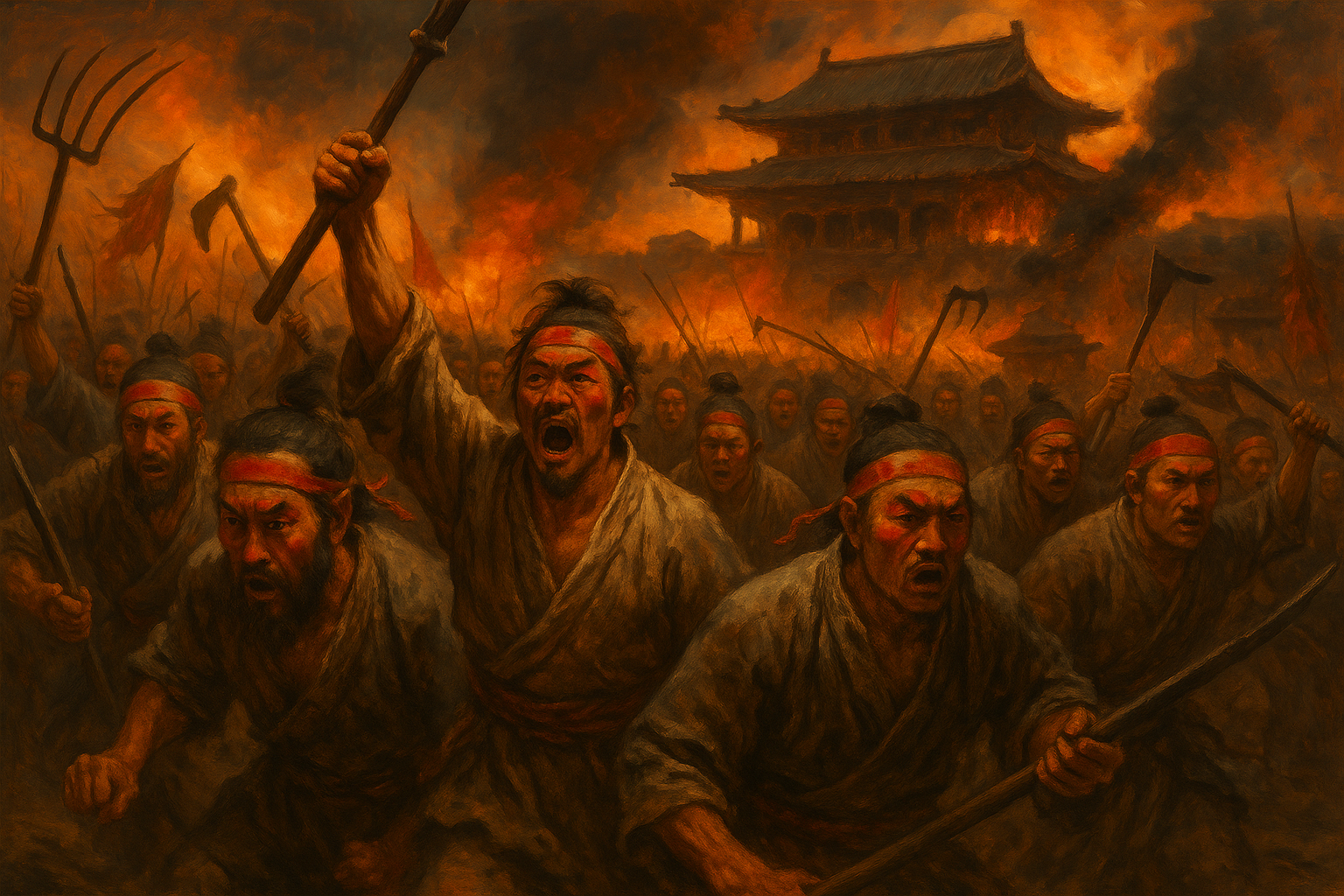
In 23 AD, the rebel armies reached the capital, Chang’an. They stormed the gates of the imperial palace. They found Wang Mang in a tower, clutching his ceremonial jade seals, surrounded by his last few loyal followers. They dragged him out, killed him, and dismembered his body. His head was put on display in the marketplace, a gruesome testament to the price of political failure.
This is the ancient warning. When a government proves itself incapable of providing for the basic needs of its people, the people will eventually rise up. When the social contract is broken, when the system itself becomes the source of suffering, the end is always violent. We are not there yet. But the 43-day shutdown was a glimpse into that abyss. It was a stress test that our system barely passed.
Tired of Worrying About Empty Shelves and Rising Food Prices?
The 4ft Farm Blueprint is a revolutionary system that allows you to grow a continuous supply of fresh, healthy food for your family in a space no bigger than a dining room table. No experience required. Stop being dependent on a fragile system.
5 Things You Can Do This Week to Prepare
History is not a spectator sport. The story of Wang Mang is a call to action. We cannot afford to be passive spectators to our own decline. Here are five practical things you can do this week to make your family more resilient and less dependent on a broken system:
1. Build Your Own “Ever-Normal Granary.” Don’t wait for the government to feed you. Start building a three-month supply of non-perishable food. Learn how to store food for the long term. This isn’t about hoarding; it’s about self-reliance. For a great guide on where to start, check out this article on SurvivalStronghold.com.
2. Declare Your Food Independence. You don’t need a huge farm to produce your own food. The 4ft Farm Blueprint shows you how to grow a surprising amount of food in a tiny space. Imagine the peace of mind that comes from knowing you can feed your family, no matter what happens in Washington D.C.
3. Get Your Financial House in Order. A government shutdown is a financial emergency for those who depend on a federal paycheck. But any number of things can disrupt your income. Build a robust emergency fund. Get out of debt. Reduce your dependence on a single source of income. The folks at SelfRelianceReport.com have some great resources on this.
4. Learn a Real Skill. In a crisis, practical skills are worth more than gold. Learn how to preserve food, how to purify water, how to make basic repairs. These are the skills that will see you through hard times. HomesteaderDepot.com is a treasure trove of information on this.
5. Build a Community. Your greatest asset in a crisis is your neighbors. Get to know the people on your street. Build a network of mutual support. A strong community is the ultimate insurance policy against systemic collapse.
When the Next Crisis Hits, Will Your Family Be Ready?
My Patriot Supply is America’s leader in emergency preparedness. Their long-term food storage kits are delicious, affordable, and last for up to 25 years. Don’t wait for the next shutdown, natural disaster, or power grid failure.
The parallels between Wang Mang’s China and modern America are too striking to ignore. When government becomes paralyzed by ideology and political gridlock, the people always suffer. The question is: will we learn from history, or are we doomed to repeat it?