
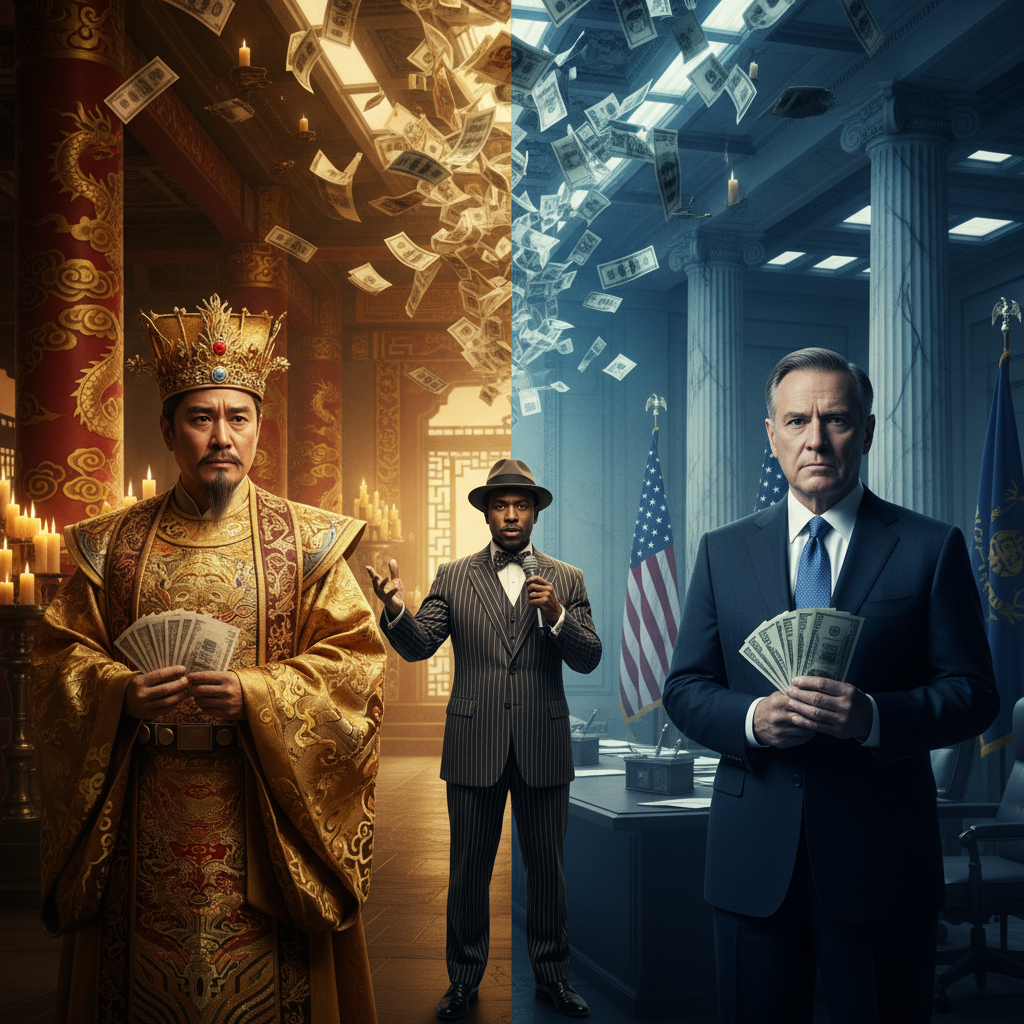
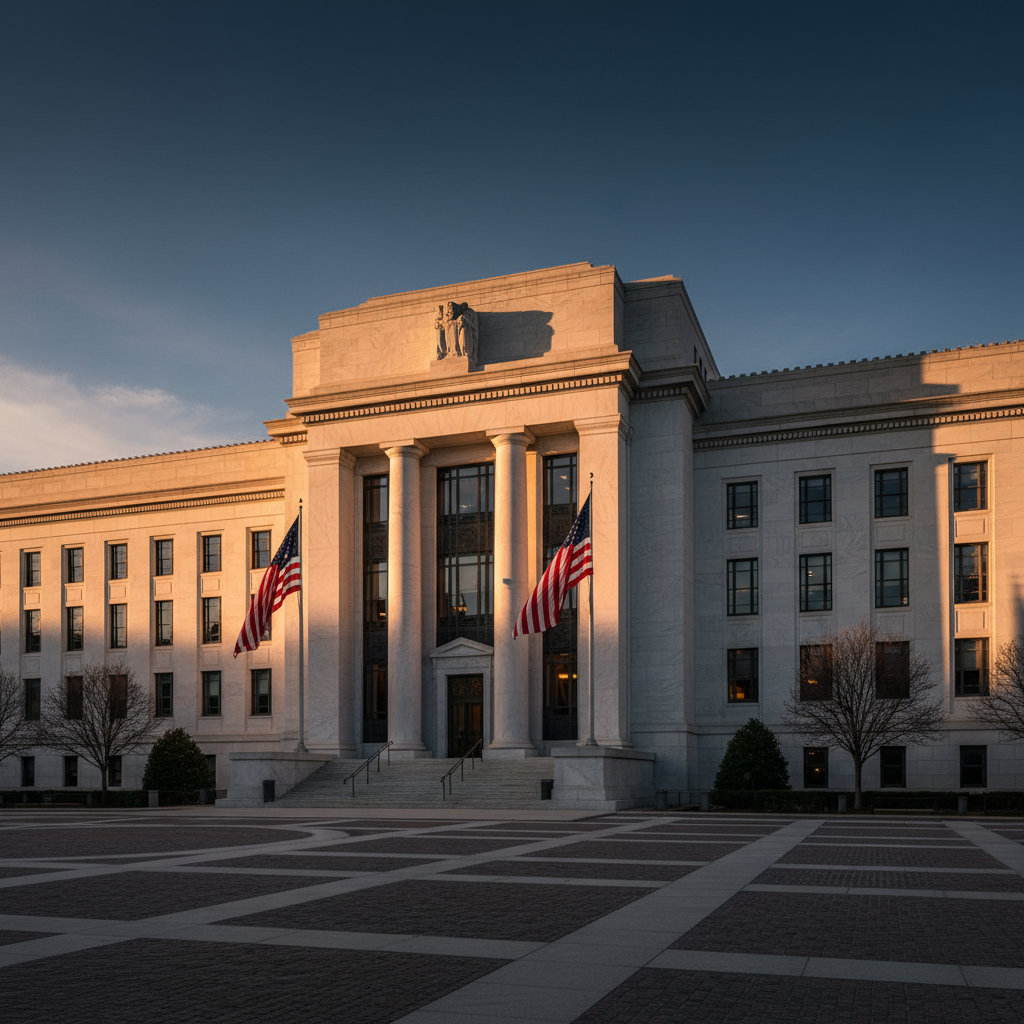
In the hallowed halls of American power, a quiet but seismic struggle is underway. It’s a battle not of armies or of laws, but of something far more fundamental: the very nature of money itself. The Federal Reserve, the stoic guardian of the nation’s economy, finds itself in the crosshairs of a political storm. Whispers of presidential displeasure and calls for new leadership have become a steady drumbeat, a constant pressure to bend monetary policy to the will of the executive branch.
This isn’t just another political squabble. It’s a high-stakes drama that could reshape the future of the American economy. The Fed’s independence, long considered a sacred pillar of financial stability, is being questioned. Will the institution that has steered the nation through countless economic crises be able to withstand this new political onslaught? Or will it succumb to the age-old temptation of political expediency, unleashing a torrent of economic consequences that could dwarf any of the challenges we face today?
As we watch this modern drama unfold, it’s easy to believe that we are witnessing something entirely new. But what if I told you that this same battle has been fought before, in a distant land and a different time? What if the fate of the American economy is tied to a 900-year-old story of emperors, paper money, and the catastrophic consequences of political interference in the world of finance? To understand our future, we must first journey back in time, to a place where the world’s first paper money was born, and where it ultimately met its demise.
The Time Portal

Our journey takes us to the heart of the Song Dynasty in 12th-century China, a civilization of breathtaking innovation and cultural brilliance. Imagine a world where cities teem with a million souls, where towering pagodas pierce the skyline, and where the air hums with the energy of commerce and invention. This is the era of gunpowder, the magnetic compass, and the world’s first government-issued paper money – a revolutionary concept that would forever change the face of commerce.
In the bustling markets of the capital, Kaifeng, a new kind of currency is circulating. It’s not the heavy copper coins of the past, but light, elegant pieces of paper, bearing the intricate seal of the emperor himself. This is “jiaozi,” the world’s first paper money, a symbol of the Song Dynasty’s economic genius. For a time, it works like a charm. Merchants and citizens alike embrace the convenience of this new currency, and the economy flourishes as never before. The government, in its wisdom, maintains strict control over the issuance of jiaozi, ensuring that each note is backed by a solid reserve of copper and silver.
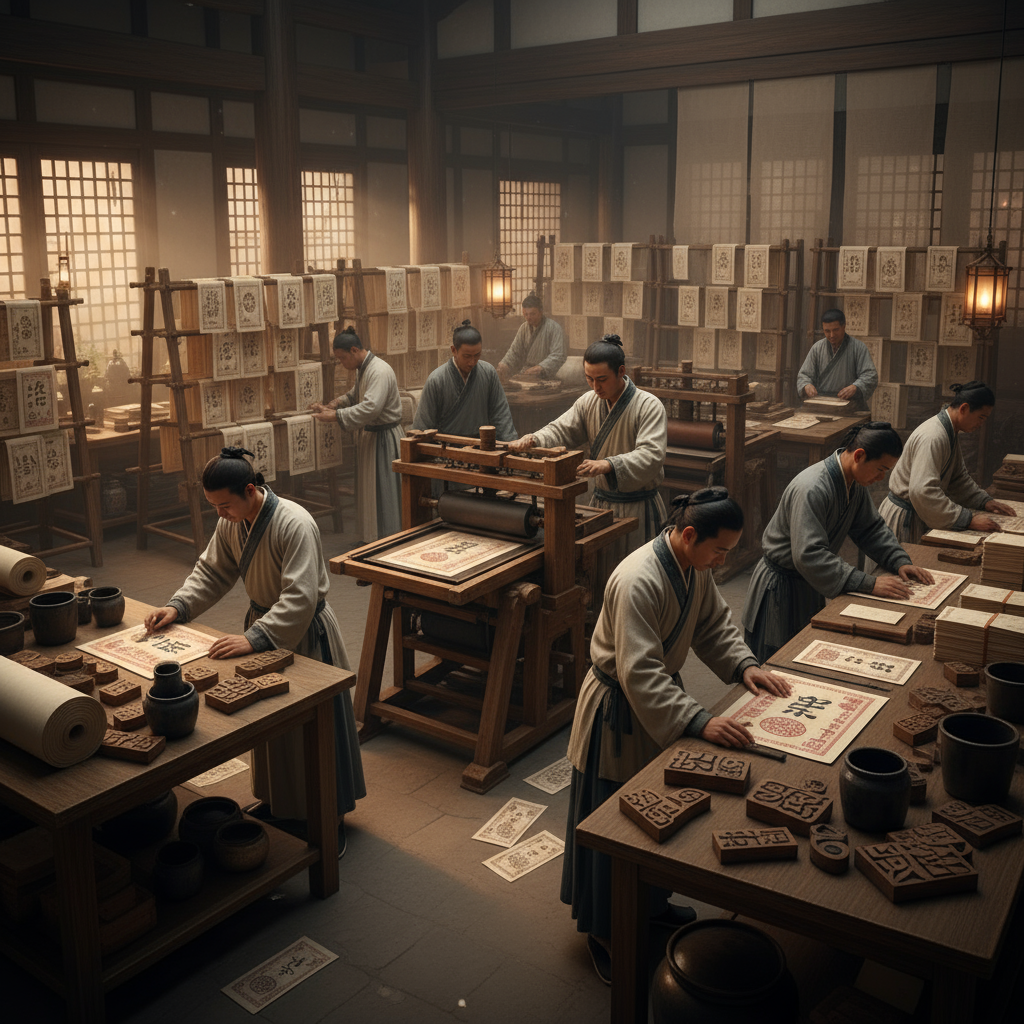
But the winds of change are blowing. To the north, the nomadic Jurchen tribes are growing in power, their armies a constant threat on the dynasty’s borders. The emperor, a man of great ambition but limited foresight, is consumed by the need to fund his military campaigns. The cost of defending the empire is staggering, and the traditional sources of revenue are no longer enough. The emperor’s advisors, eager to please their master, offer a deceptively simple solution: print more money. It’s a tempting proposition, a seemingly endless source of wealth that can be created with the stroke of a brush. And so, the printing presses begin to run, churning out ever-increasing quantities of jiaozi, each new note a little less valuable than the last.
The Parallel Revelation
As the Song Dynasty’s printing presses churned out ever-increasing quantities of paper money, a dangerous illusion took hold. The emperor and his court, blinded by the seemingly endless supply of wealth, failed to see the storm they were unleashing. The value of the jiaozi, once a symbol of economic stability, began to plummet. Prices for everyday goods soared, and the common people, who had once embraced the convenience of paper money, now found their savings wiped out by the silent thief of inflation.
The parallels to our own time are as striking as they are unsettling. Just as the Song emperors of old were tempted to print money to fund their political ambitions, so too are modern governments tempted to pressure their central banks for short-term economic gain. The Federal Reserve, like the monetary officials of the Song Dynasty, is tasked with maintaining the stability of the currency. But when political pressures mount, the temptation to sacrifice long-term stability for short-term expediency can be overwhelming.
In both ancient China and modern America, the fundamental conflict is the same: the struggle between the political will of the government and the economic discipline of the central bank. The Song Dynasty’s story is a cautionary tale, a stark reminder that the power to create money is also the power to destroy it. When that power is wielded not for the good of the nation, but for the benefit of a select few, the consequences can be catastrophic.
🌱 Build Your Food Independence Fortress
When empires fall and currencies collapse, those who can feed themselves survive and thrive. The 4ft Farm Blueprint is a revolutionary system that allows you to grow your own food in a small space, with minimal effort. Don’t depend on a fragile food system when you can create your own abundance.
The Pattern Recognition
Why does this pattern repeat itself across the centuries? Why do governments, separated by vast gulfs of time and culture, fall into the same trap of monetary self-destruction? The answer lies not in the complexities of economics, but in the timeless truths of human nature. The desire for power, the allure of easy money, the temptation to sacrifice the future for the present – these are the impulses that have driven rulers and governments to the brink of ruin since the dawn of civilization.
The Song Dynasty’s story is a powerful illustration of this timeless pattern. The emperors, faced with the immediate threat of foreign invasion, chose the path of least resistance. They printed money to fund their armies, ignoring the long-term consequences of their actions. They silenced the voices of their more prudent advisors, who warned of the dangers of inflation and currency debasement. In the end, their short-sighted policies not only failed to save the dynasty, but actually hastened its demise.
Today, we face a similar set of challenges. The political pressures on the Federal Reserve are immense. The temptation to use monetary policy as a tool of political expediency is ever-present. But the lesson of the Song Dynasty is clear: the path of monetary discipline is the only path to long-term prosperity. Any deviation from that path, no matter how well-intentioned, will ultimately lead to the same destination: economic chaos and social unrest.
The Ancient Warning

The story of the Song Dynasty does not have a happy ending. The once-mighty empire, weakened by internal corruption and economic instability, was unable to withstand the onslaught of the Mongol hordes. In 1279, the last Song emperor, a child of eight, was cast into the sea by a loyal minister, a final, tragic act of defiance against the inevitable. The dynasty that had given the world gunpowder, the compass, and paper money was no more.
The fall of the Song Dynasty is a stark reminder of the fragility of even the most advanced civilizations. It is a warning that economic prosperity, without the foundation of sound money and fiscal discipline, is but a fleeting illusion. The emperors of the Song, in their quest for short-term political gain, sowed the seeds of their own destruction. They chose the easy path of printing money, and in doing so, they unleashed a whirlwind of economic and social chaos that ultimately consumed them.
As we stand at our own historical crossroads, we would do well to heed the ancient warning of the Song. The choices we make today, the pressures we place on our own institutions, will determine the course of our nation for generations to come. Will we learn from the mistakes of the past, or are we doomed to repeat them? The answer to that question lies not in the hands of our leaders, but in the collective wisdom of a people who have not forgotten the lessons of history.
5 Things Readers Can Do This Week
History is not just a story of the past; it is a guide for the future. The fall of the Song Dynasty is a stark reminder that economic stability is not a given. It must be protected and preserved. Here are five things you can do this week to better prepare yourself and your family for the possibility of history repeating itself:
1. Educate Yourself on Sound Money: Understand the principles of sound money and the dangers of inflation. Read articles on websites like Survival Stronghold to learn how to protect your wealth from currency debasement.
2. Diversify Your Assets: Don’t put all your eggs in one basket. Explore alternative assets that are not tied to the traditional financial system. Learn about self-reliance and financial independence from resources like the Self-Reliance Report.
3. Build a Resilient Household: Take steps to make your household more resilient to economic shocks. Learn about homesteading and self-sufficiency from websites like Homesteader Depot.
4. Prioritize Your Health: A strong and healthy body is your most valuable asset. Learn about natural health and wellness from resources like Freedom Health Daily and Seven Holistics.
5. Get Your Financial House in Order: Take control of your finances and create a plan for the future. Learn how to build a financial fortress that can withstand any storm.


