

Something feels… off.
A strange tension is gripping the nation, a low-grade fever in the body politic that has little to do with the usual partisan squabbles. It’s a deeper, more structural tremor. In the last 24 hours, we’ve seen the President openly attack the independence of the Federal Reserve, demanding it bend to his will on interest rates. It’s a move that sent a quiet shockwave through the global financial community, with seasoned leaders at the European Central Bank calling it a “very serious danger.”
At the same time, a different kind of pressure is being applied elsewhere. The head of the Federal Communications Commission (FCC), a man who built his career championing free speech, issued a chilling ultimatum to one of the nation’s most prominent television networks over a comedian’s satirical jabs. The message was clear: silence the critic, or face the consequences. Within hours, the show was pulled from the air.
These aren’t just headlines. They are symptoms of a deeper malaise, a coordinated erosion of the very institutions designed to keep power in check. It feels like we are watching the deliberate dismantling of the guardrails of our republic. And it begs the question: have we seen this before? Is there a historical precedent for a powerful leader systematically undermining the independence of his own government’s institutions? The answer, buried deep in the annals of history, is a resounding and terrifying yes.
The Time Portal
Let’s step into a time machine and set the dial for Rome, mid-3rd century AD. But this isn’t the majestic Rome of Augustus, of gleaming marble and triumphant legions. This is a Rome on the brink of collapse, a sprawling, feverish empire in the throes of what historians now call the “Crisis of the Third Century.”
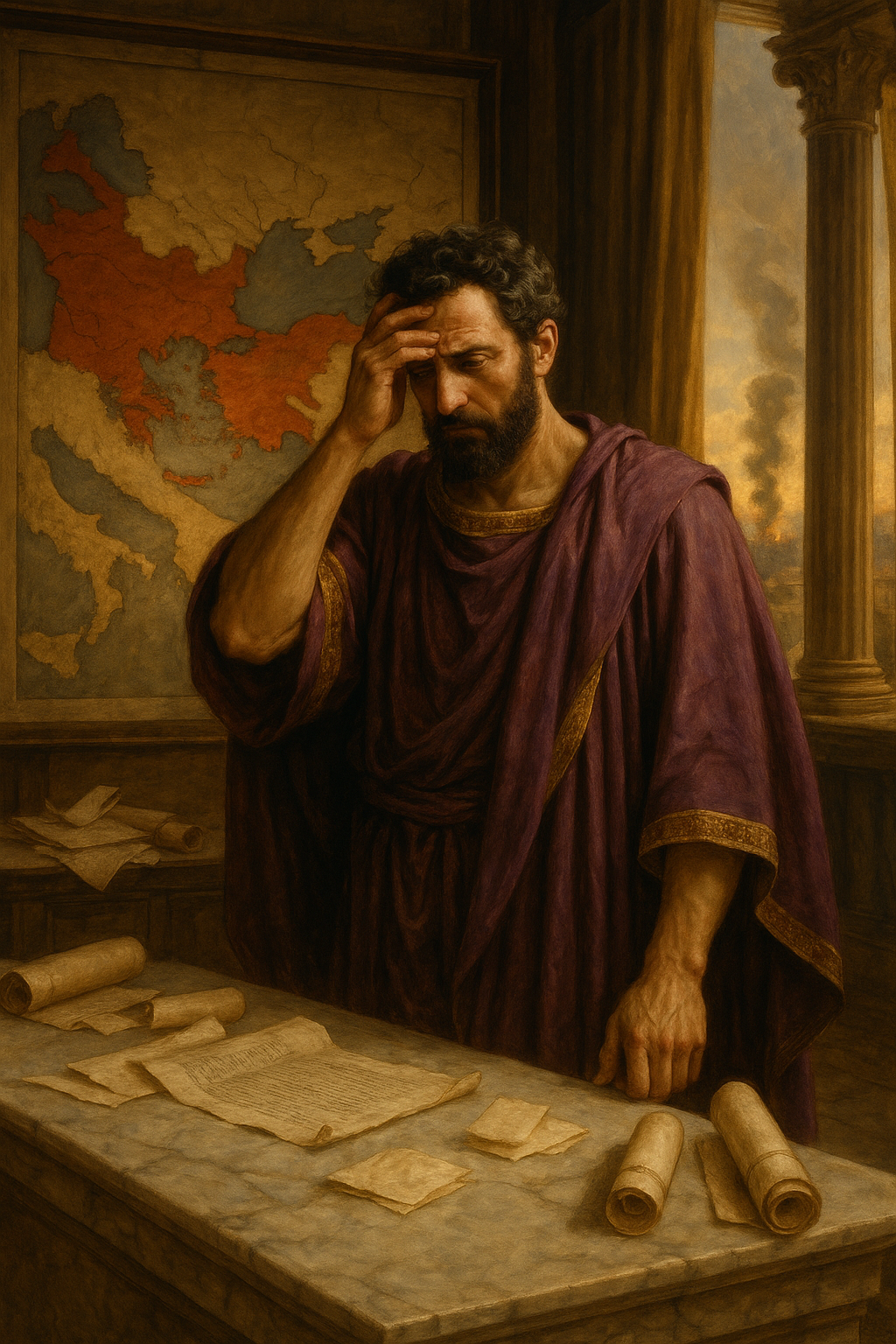
The year is 260 AD. The once-mighty empire is fractured, besieged by barbarian invasions on its borders and torn apart by civil war from within. The very foundations of Roman power are crumbling. And at the center of this swirling vortex of chaos sits an emperor few remember, but who held the fate of the Western world in his hands: Gallienus.
Imagine Gallienus, not as a marble bust in a museum, but as a man. He’s a cultured, intelligent ruler, a poet and a philosopher, but he’s also a man under siege. His father and co-emperor, Valerian, has just been captured by the Persian king Shapur I – a humiliation of unprecedented scale. The eastern provinces are in open revolt. Usurpers are rising in every corner of the empire, declaring themselves emperor and marching on Rome. The treasury is empty, the military is in a constant state of mutiny, and the people are starving.
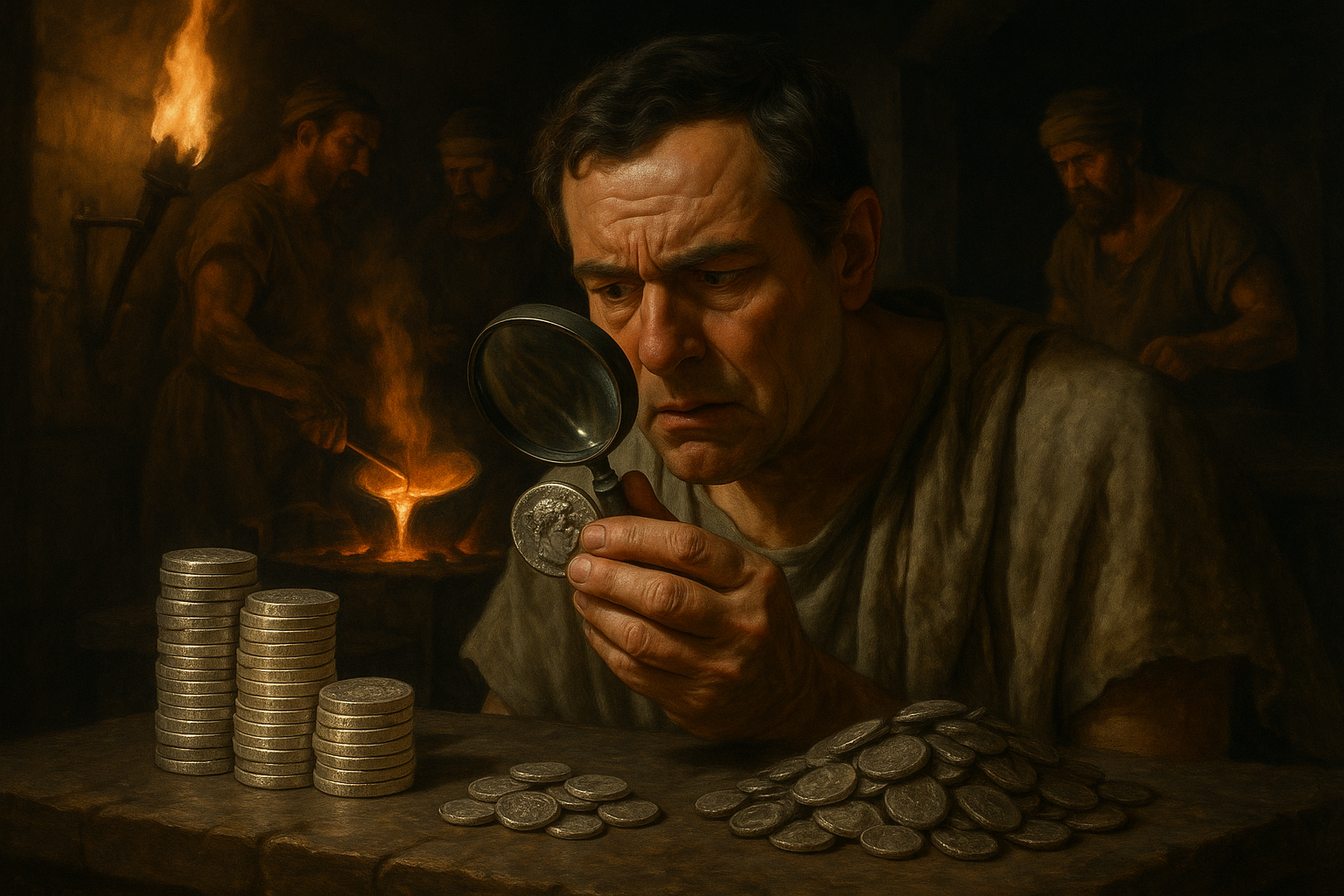
To pay his soldiers and keep his fragile hold on power, Gallienus is forced to make a desperate choice. He begins to systematically debase the currency, the silver denarius that had been the bedrock of the Roman economy for centuries. He orders the mints to mix the silver with base metals, stretching the precious metal to produce more coins. It’s a short-term fix, a way to meet the immediate demands of his legions, but it’s a decision that will have catastrophic consequences.
The Parallel Revelation
And here, in the desperate actions of a beleaguered Roman emperor, we find the chilling echo of our own time. The parallels are not just similar; they are structurally identical. Gallienus, facing a crisis of legitimacy and immense financial pressure, chose to undermine the integrity of his own monetary system for short-term political survival. He pressured the institution of the Roman mint, forcing it to abandon its long-held standards of purity. The result was a catastrophic loss of faith in the currency, leading to hyperinflation and economic chaos.
Fast forward 1,765 years. An American president, facing his own set of political and economic pressures, is publicly attacking the independence of the Federal Reserve. He is attempting to install loyalists who will do his bidding, to bend the institution of monetary policy to his will. The goal is the same: to manipulate the economy for short-term political gain, regardless of the long-term consequences. The world’s financial leaders are sounding the alarm, just as surely as Roman merchants began to hoard old, pure silver coins, because they see the same pattern Gallienus set in motion.
But the parallel doesn’t stop there. The Crisis of the Third Century was not just an economic crisis; it was a crisis of institutional collapse. As the emperor’s power became more absolute and arbitrary, other pillars of Roman society began to crumble. The Senate was sidelined, the rule of law was ignored, and dissent was brutally suppressed. While we don’t have records of Gallienus’s relationship with satirists, we know that in times of autocratic rule, humor and mockery are often the first casualties. The powerful cannot abide being laughed at.
And so, when we see the head of a modern regulatory agency, the FCC, using his power to threaten a media company into silencing a comedian, we are seeing the same ancient impulse at play. It is the raw exercise of power to crush dissent, to control the narrative, and to ensure that the leader is never the butt of the joke. It is the same fever that gripped Rome, a sickness that begins with the erosion of institutional independence and ends in ruin.
The Pattern Recognition
Why does this pattern repeat with such stunning precision across the millennia? The answer is as simple as it is unsettling: human nature doesn’t change. The technology evolves, the titles change, the empires rise and fall, but the fundamental drivers of human behavior—fear, greed, ambition, and the intoxicating allure of power—remain constant.
Leaders under pressure, whether they wear a toga or a business suit, will always be tempted by the same short-term solutions. Debasing the currency, whether by mixing silver with tin or by printing money with reckless abandon, is always easier than making hard fiscal choices. Silencing critics is always more appealing than engaging with their arguments. And consolidating power is always more seductive than respecting the institutions that limit it.
This isn’t about one man. It’s about a timeless pattern of executive overreach in the face of a crisis. When a society loses faith in its institutions, when the economy is fragile, and when the political system is polarized, a strongman can emerge who promises to fix everything by breaking the rules. He presents himself as the only one who can save the nation, and he justifies his actions as necessary to combat the unprecedented threats of the moment. But in reality, he is simply following a well-worn path to autocracy, a path that has been trodden by countless leaders throughout history.
The Ancient Warning
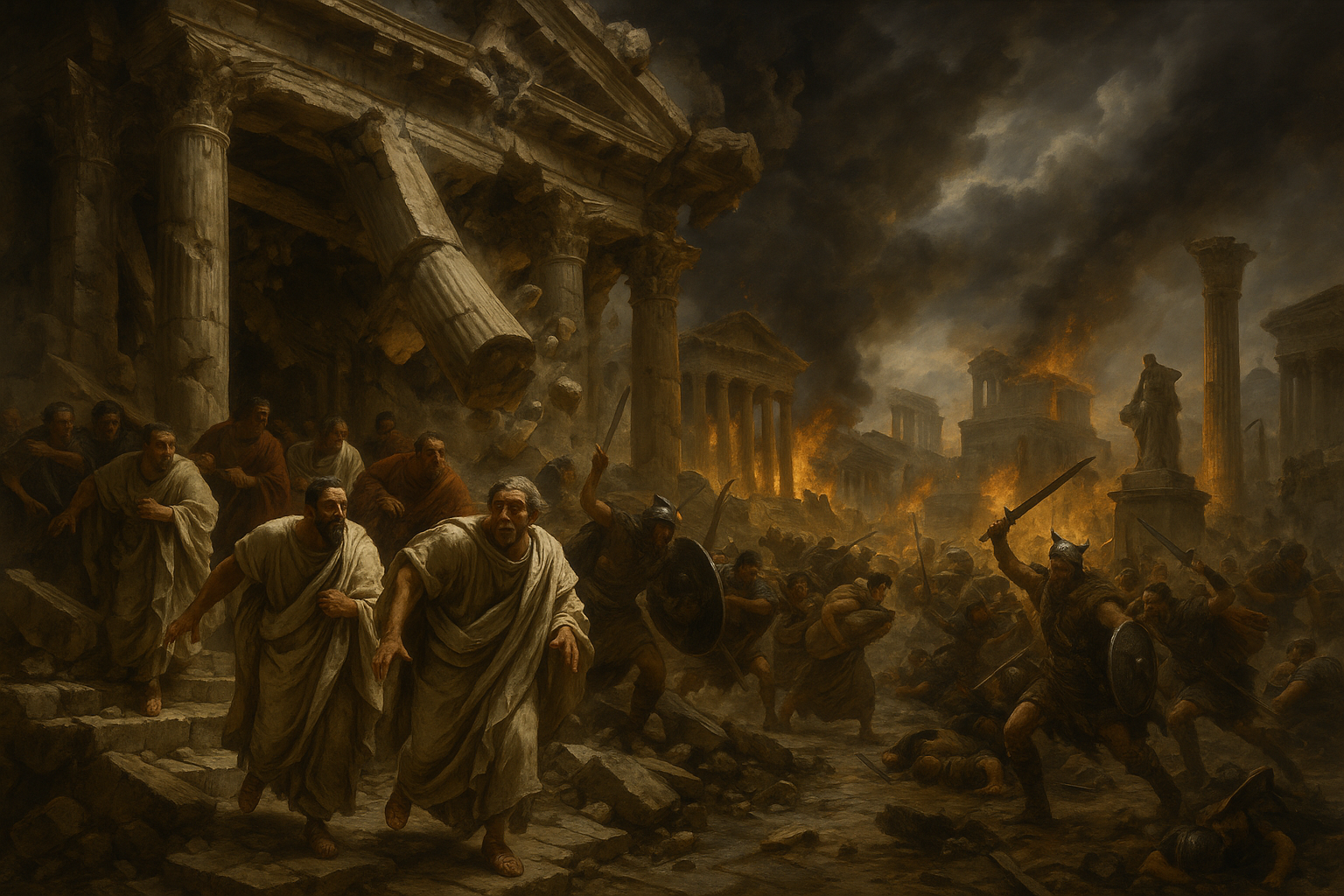
So, what happened next in our Roman story? What was the ultimate price of Gallienus’s desperate measures? The debasement of the currency, combined with the constant civil wars and invasions, plunged the Roman world into a half-century of chaos. The economy collapsed. Trade routes were severed. The empire fragmented into three separate, warring states. It was, in the words of one historian, “the dark age of Roman history.”
While the empire was eventually stitched back together by a series of ruthless and authoritarian emperors like Aurelian and Diocletian, it was never the same. The old Roman Republic, with its traditions of shared power and institutional checks and balances, was dead. In its place rose a new, more autocratic form of government, a militarized and bureaucratic state that was a mere shadow of its former glory. The Crisis of the Third Century was not just a temporary downturn; it was a fatal wound from which the Western Roman Empire would never truly recover. It was the beginning of the end.
5 Things You Can Do This Week
History is not a spectator sport. It is a living, breathing force that shapes our present and our future. The echoes of Rome’s collapse are a wake-up call, a warning that the institutions we take for granted are more fragile than we think. Here are five things you can do this week to better prepare yourself and your family for the unsettling parallels we see today:
- Secure Your Financial Future. The Romans who survived the Crisis of the Third Century were those who held real assets, not the debased currency of a failing empire. Learn how to protect your wealth from the modern-day equivalent of currency debasement. Read this article on Self-Reliance Report to understand how to weather an economic storm.
- Embrace Self-Reliance. When the Roman state faltered, communities that could provide for themselves were the ones that endured. The Self-Reliance Report offers comprehensive guides to becoming more independent, from growing your own food to securing your own water source.
- Build a Resilient Homestead. The collapse of the Roman economy led to widespread food shortages. Don’t be dependent on a fragile supply chain. Homesteader Depot provides practical guides to creating a productive and sustainable homestead, no matter where you live.
- Take Control of Your Health. In times of crisis, access to healthcare can become a luxury. Freedom Health Daily explains why a strong immune system is your best defense against the unknown, and how to build it naturally.
- Invest in Holistic Wellness. The stress of uncertain times can take a toll on your mental and physical health. Seven Holistics offers guides to a balanced and resilient life, grounded in timeless principles of well-being.
A Message From Our Sponsor
Tired of relying on a fragile system?
The story of Rome is a stark reminder that even the mightiest empires can fall. When the supply chains break and the grocery store shelves are empty, what will you do?
Don’t be a victim of history. Take control of your food supply with the 4ft Farm Blueprint. This revolutionary system teaches you how to grow a perpetual supply of fresh, healthy food in just 4 feet of space. It’s the ultimate insurance policy against a world in crisis.
Click here to learn more and secure your family’s future.


