
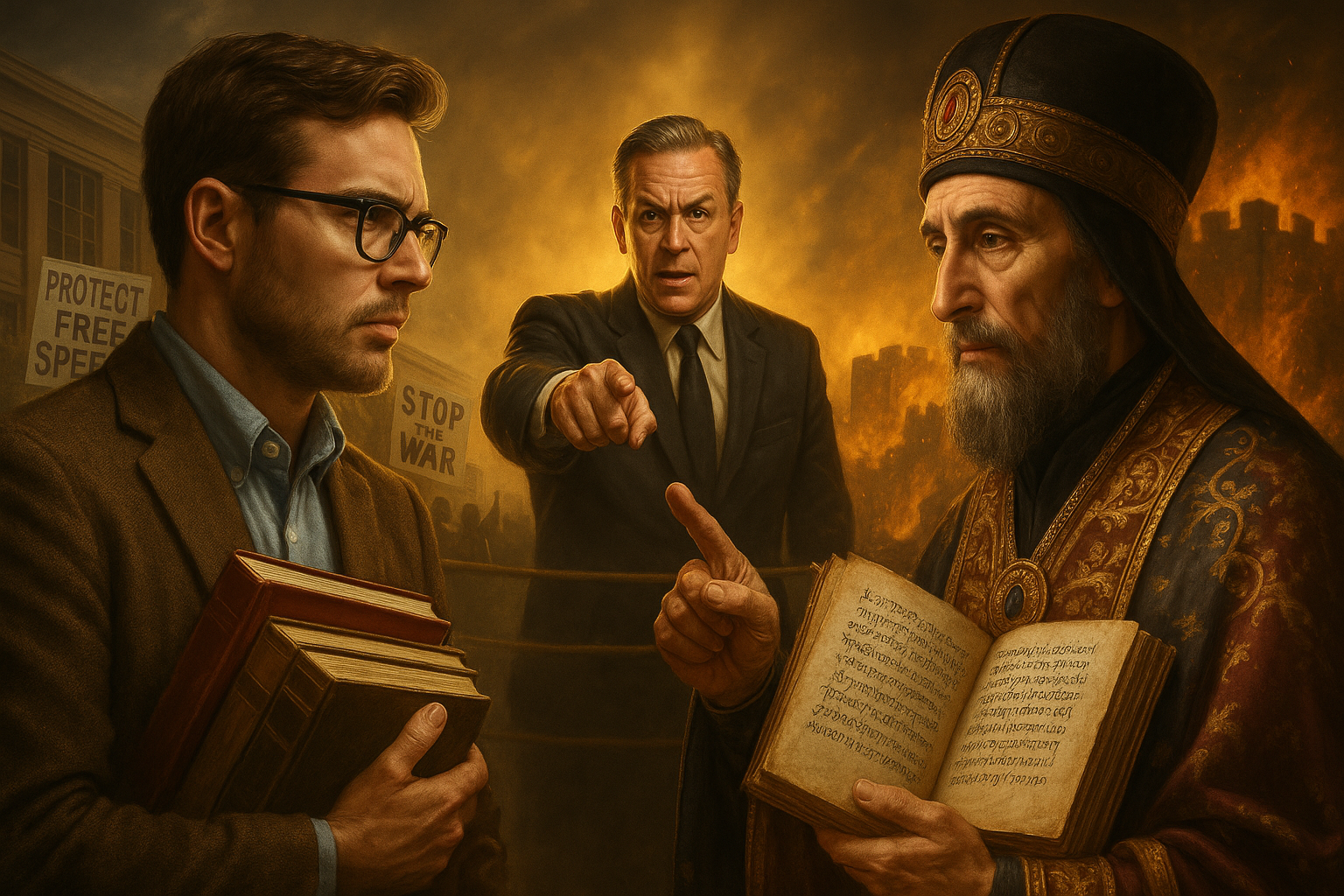
A quiet crisis is unfolding across the American South. It’s not a hurricane or a financial crash, but a slow, creeping exodus that threatens the very future of the region. Professors, the intellectual bedrock of society, are fleeing. A recent survey by the American Association of Professors reveals a startling trend: nearly half of all faculty in states like Florida, Texas, and Tennessee are either actively seeking jobs elsewhere or plan to do so soon. For the first time in modern history, the primary reason isn’t money; it’s the suffocating political climate and the erosion of academic freedom.
This isn’t just a local story. It’s a national alarm bell. When a society begins to silence its thinkers, when it pressures them to toe a political line, it’s a sign of a deeper sickness. It’s a pattern that has played out before, in the dying days of empires, with devastating consequences. To understand what’s happening in America today, we must look back to a time when another great civilization faced a similar choice, and the world was forever changed by the outcome.
The Time Portal
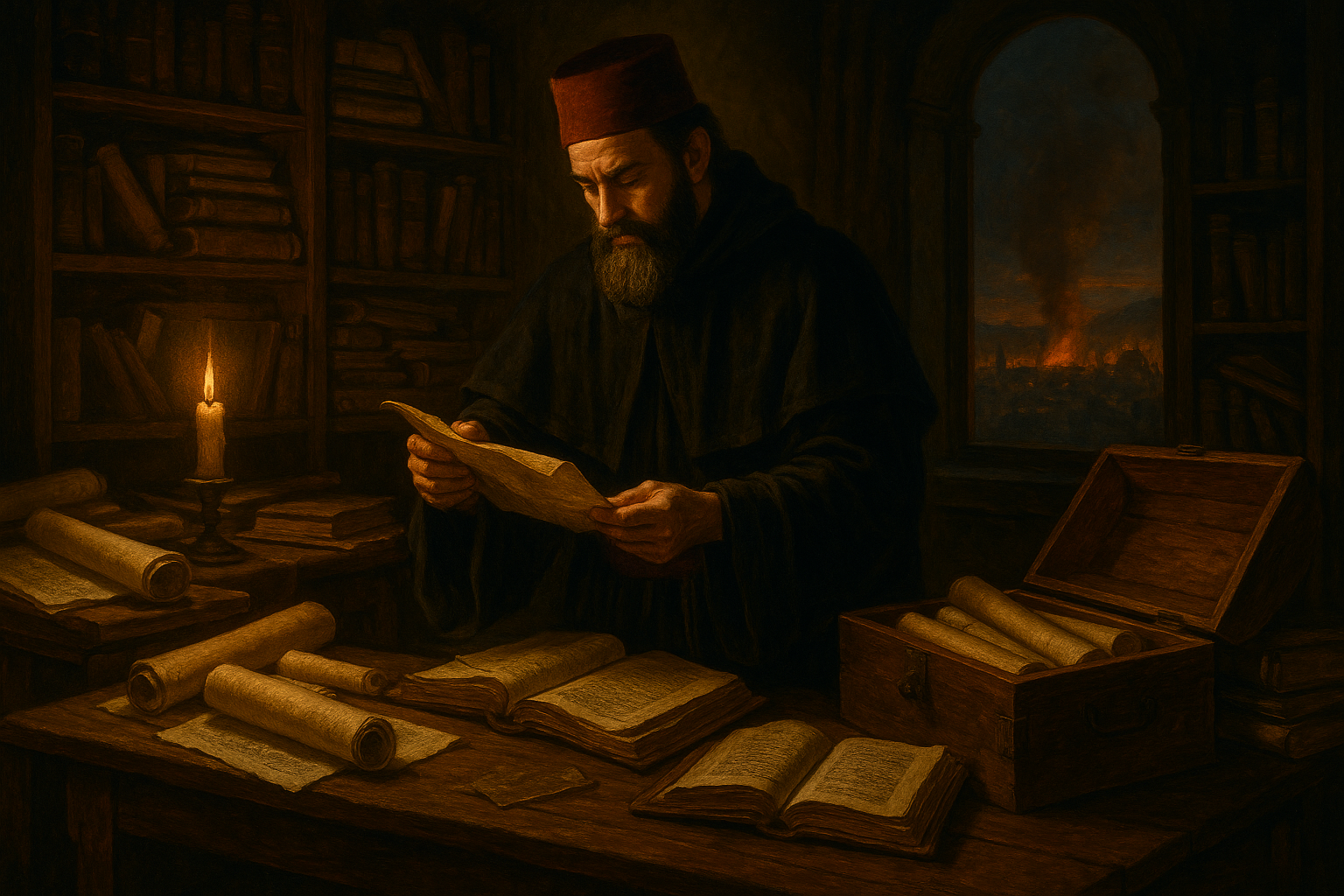
Imagine the year is 1453. The once-mighty city of Constantinople, the heart of the Byzantine Empire for a thousand years, is in its death throes. The air is thick with the smoke of cannons and the cries of the dying. Inside the city walls, a scholar named Bessarion, a man who has dedicated his life to the preservation of ancient Greek knowledge, faces an impossible choice.
Bessarion is not a soldier, but a man of letters. His library is his arsenal, his ideas his weapons. He has seen the writing on the wall for years. The political and religious fanaticism that has gripped the dying empire has made intellectual life increasingly perilous. Now, with the Ottoman armies at the gates, he knows that everything he holds dear – the accumulated wisdom of a civilization – is about to be extinguished.
He makes a decision that will alter the course of history. He will not stay and be silenced. He will not watch as the great works of Plato and Aristotle are put to the torch. He will flee, taking with him not just his books, but the very soul of his civilization. He will become an intellectual refugee, a carrier of a flame that is about to be snuffed out in its homeland.
The Parallel Revelation
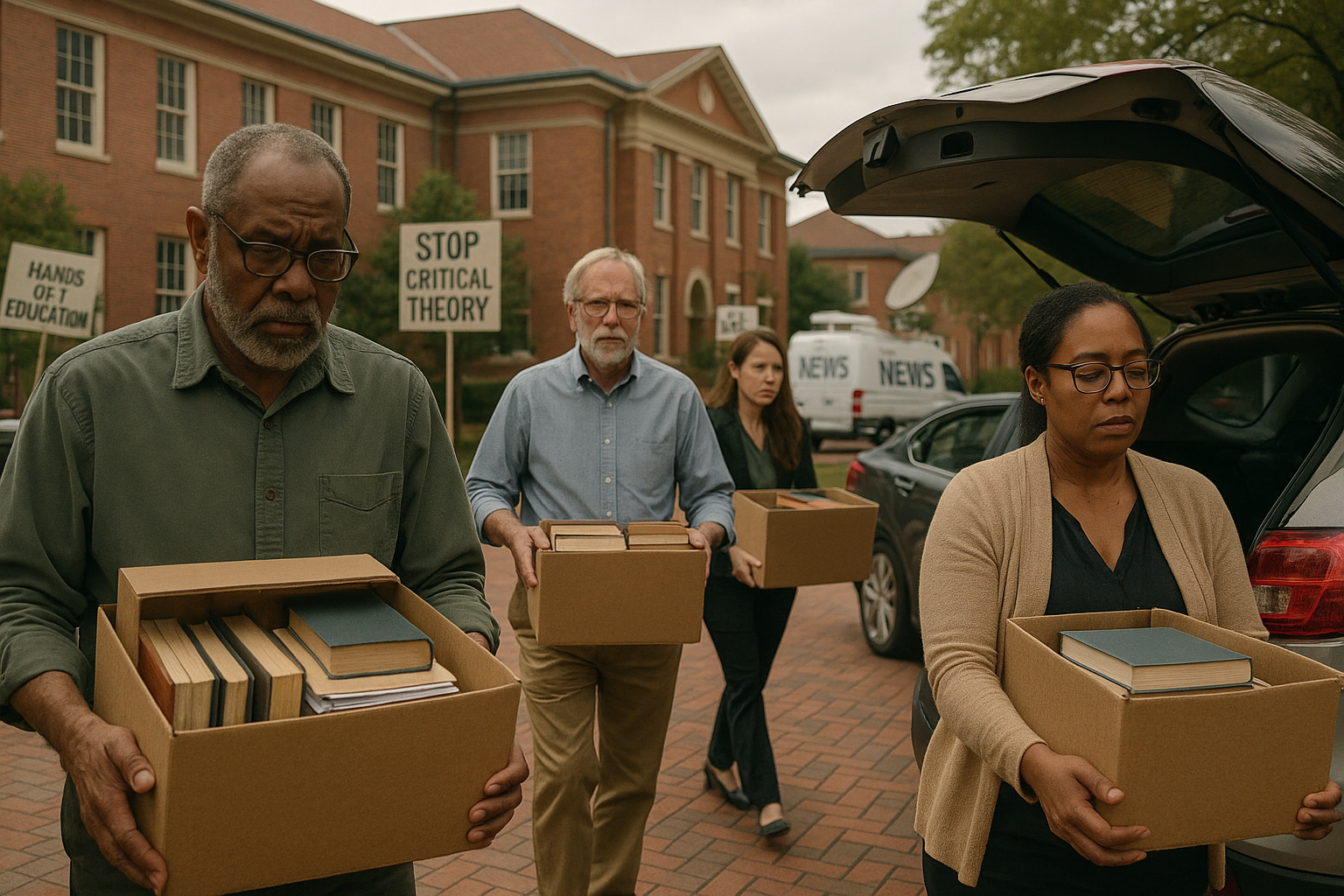
The story of Bessarion and the other Byzantine scholars who fled to the West in the 15th century is a chilling echo of what we are seeing in America today. The parallels are as undeniable as they are terrifying. Just as the Byzantine scholars faced a choice between their homeland and their intellectual freedom, so too are American professors being forced to choose between their careers and their conscience.
The political pressure in the American South, the legislative interference in what can be taught in the classroom, the chilling effect on research and open inquiry – these are the modern-day equivalents of the religious and political dogmatism that drove Bessarion from his home. The “brain drain” that experts are now warning about in the South is the same phenomenon that occurred in the final days of the Byzantine Empire.
When a society becomes hostile to its own thinkers, it is a sign that it is losing its way. It is a sign that it is valuing dogma over discovery, power over truth. The exodus of intellectuals is not the cause of a society’s decline; it is a symptom of it. It is a warning that the foundations are crumbling.
The Pattern Recognition
Why does this pattern repeat itself? Why do societies, on the brink of collapse, so often turn on their own thinkers? The answer lies in a fundamental human impulse: the fear of the unknown. When a society is facing a crisis, when its old certainties are being challenged, there is a natural tendency to retreat into the familiar, to cling to the old ways, to silence any voice that questions the established order.
Intellectuals, by their very nature, are a threat to this impulse. They are the ones who ask the uncomfortable questions, who challenge the received wisdom, who force us to confront the possibility that we might be wrong. In a healthy society, this is seen as a strength. In a dying society, it is seen as a threat.
The exodus of intellectuals is a self-inflicted wound. It is a society purging itself of the very people who are best equipped to help it navigate a crisis. It is a society choosing to blind itself at the very moment it most needs to see.
The Ancient Warning
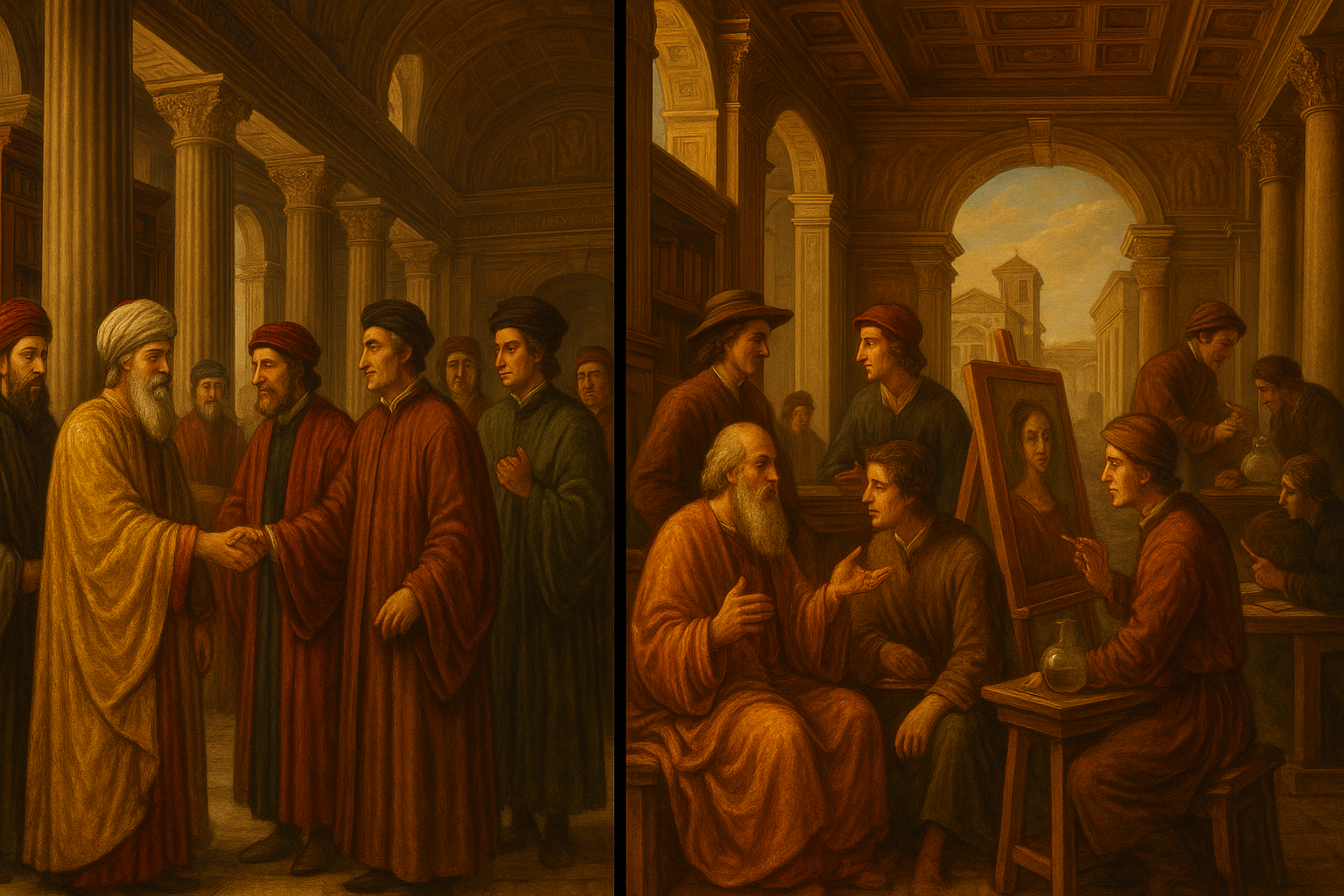
The story of the Byzantine exodus has a powerful lesson for us today. The scholars who fled Constantinople did not simply disappear. They carried the flame of Greek learning to Italy, where it ignited the Renaissance. The knowledge that they preserved, the texts that they saved, the ideas that they shared – these were the seeds of a new golden age for Western civilization.
But what of the civilization they left behind? The Byzantine Empire, once the most advanced and sophisticated in the world, fell into a long, slow decline. Its intellectual heart had been ripped out, and it never recovered. The warning is clear: a society that drives out its thinkers is a society that has chosen to die.
5 Things You Can Do This Week
1. Support Independent Media: Seek out and support news sources that are not beholden to corporate or political interests. A well-informed citizenry is the best defense against tyranny. Check out the resources at Self-Reliance Report for ideas on how to become more independent in your information consumption.
2. Read a Banned Book: Make a point of reading a book that has been challenged or banned in your local school district. This is a small but powerful act of defiance against censorship. Homesteader Depot has a great community of people who value self-sufficiency and freedom of thought.
3. Contact Your Representatives: Let your elected officials know that you support academic freedom and that you oppose any legislative interference in what can be taught in our schools and universities.
4. Support Your Local Library: Libraries are one of the last truly democratic institutions in our society. They are places where anyone can access information and ideas, regardless of their background or beliefs. See what resources your local library has to offer.
5. Have a Difficult Conversation: Talk to someone who has a different political or ideological perspective than you do. Listen to what they have to say, and try to understand their point of view. A society that can no longer engage in civil discourse is a society that is on the verge of collapse. Freedom Health Daily has some great articles on how to have productive conversations about difficult topics.
Sponsored by 4ft Farm Blueprint
Worried about the future? You should be. But worry without action is just anxiety. It’s time to take control of your family’s food security. The 4ft Farm Blueprint is a revolutionary system that allows you to grow your own food, even if you have no experience and limited space. Stop being dependent on a fragile system. Start being self-reliant. Click here to learn more.
Sponsored by Survival Stronghold
When the unthinkable happens, will you be ready? Don’t be a victim. Be a survivor. Survival Stronghold is your one-stop shop for all your preparedness needs. From long-term food storage to tactical gear, we have everything you need to protect yourself and your family. Don’t wait until it’s too late. Visit us today.


