
The Modern Mystery
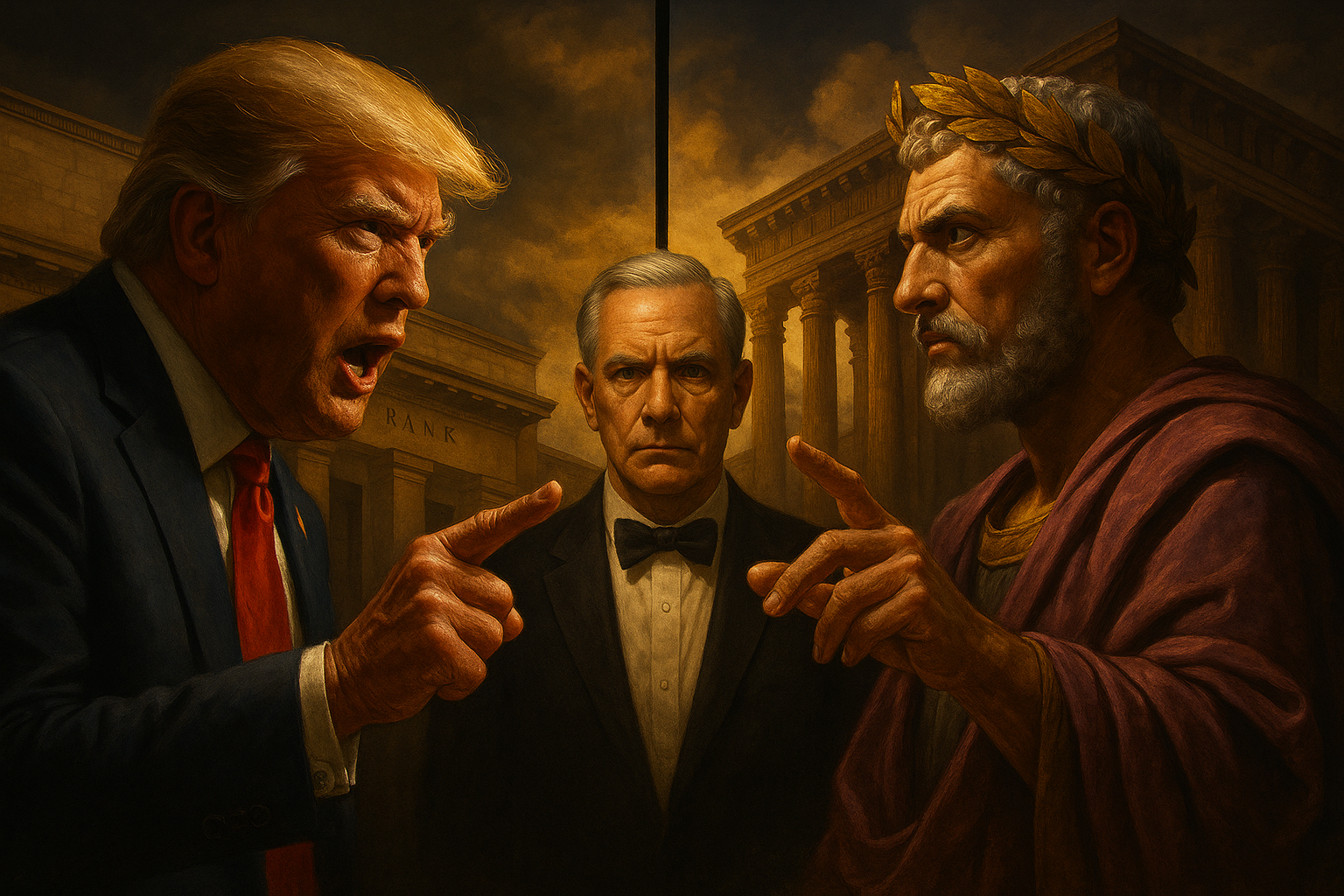
Something extraordinary happened in Washington this week that would have made a Roman emperor nod in grim recognition. President Trump ramped up his pressure campaign on Federal Reserve Chair Jerome Powell, demanding the central bank slash interest rates from their current 4.25-4.5% all the way down to 1%. When the Fed held steady on July 30th, two governors voted against the decision—the first time since 1993 that multiple Fed governors broke ranks on a rate decision.
But here’s what makes this moment historically electric: Trump isn’t just asking for a rate cut. He’s doing something that echoes through the corridors of power across millennia—a political leader demanding that monetary authorities bend to his will, consequences be damned. The pressure is so intense that former Fed officials are warning about “deeply counterproductive” interference that could damage the institution’s independence forever.
What Trump doesn’t seem to realize is that this exact scenario played out 1,700 years ago in the marble halls of ancient Rome. And the emperor who tried it? He nearly destroyed the greatest economy in the ancient world.
The Time Portal
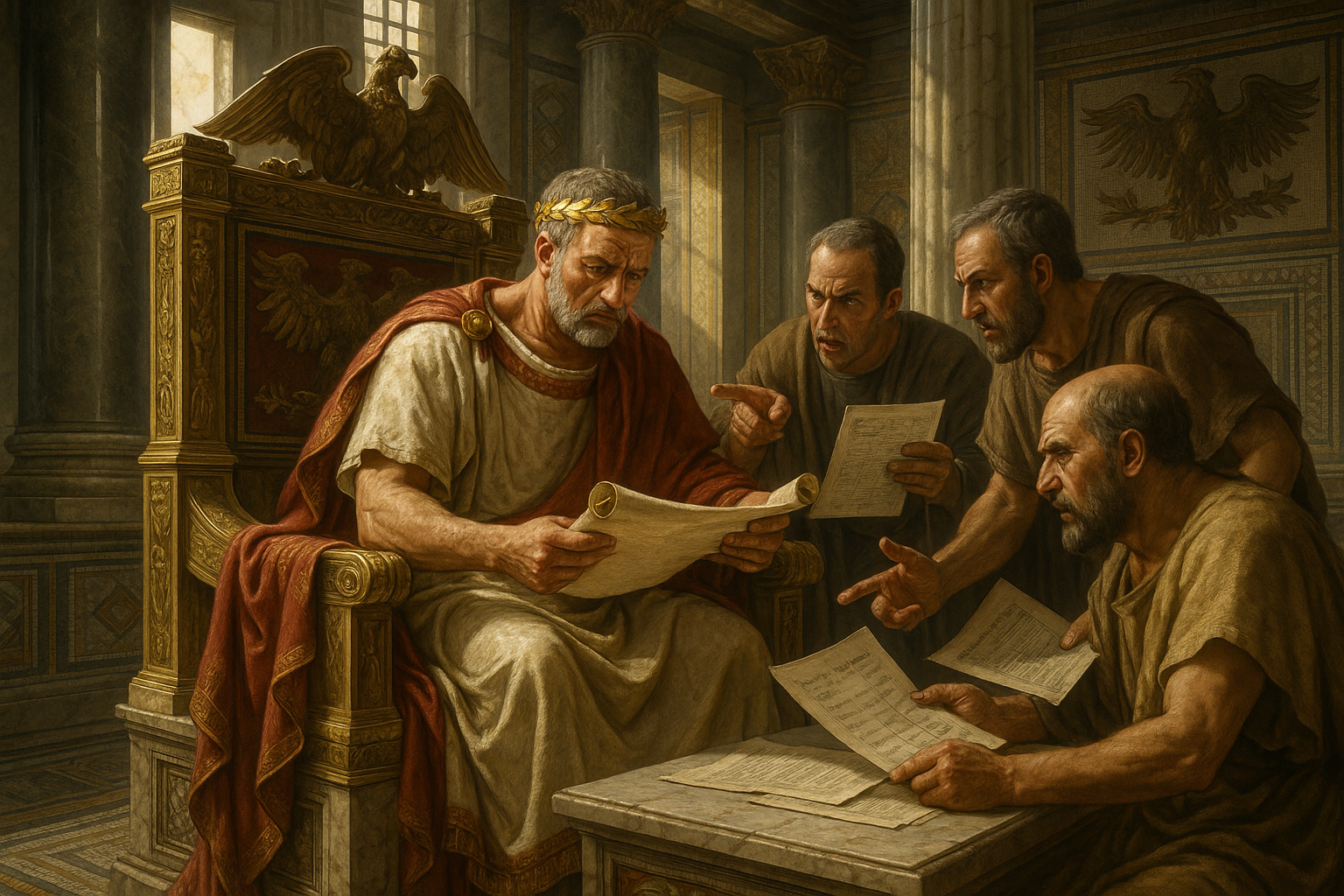
Picture this: It’s 301 AD, and Emperor Diocletian sits in his palace in Nicomedia, scrolling through reports that would make any modern president’s blood boil. Prices are skyrocketing across his vast empire. Citizens are rioting in the streets of Alexandria. Merchants in Gaul are charging outrageous prices for basic goods. The Roman economy—once the envy of the civilized world—is spiraling into chaos.
Diocletian was no ordinary emperor. This was a man who had clawed his way from humble origins as a Dalmatian soldier to become the absolute ruler of 50 million people. He had defeated usurpers, crushed rebellions, and reorganized the entire Roman government. If anyone could bend economic reality to his will through sheer political force, it was Diocletian.
But as he stared at those inflation reports, Diocletian faced the same maddening reality that confronts every powerful leader who discovers that markets don’t care about their authority: the economy was doing exactly what it wanted, not what he commanded.
The emperor’s advisors whispered the same seductive solution that political leaders have embraced for centuries: “The problem isn’t our policies, Caesar. It’s those greedy merchants and speculators. They’re the ones driving up prices. We just need to… control them.”
The Parallel Revelation
Here’s where the historical parallel becomes so precise it’s almost supernatural. Just as Trump is pressuring the Fed to artificially lower interest rates to stimulate the economy, Diocletian decided to artificially control prices throughout his empire to stop inflation. Both leaders faced the same fundamental challenge: economic forces that refused to obey political commands.
The similarities are stunning. Diocletian’s proclamation introducing his price controls reads like a modern presidential tweet storm: “We must check the limitless and furious avarice which with no thought for mankind hastens to its own gain… Concern for humanity in general persuades us to set a limit to the avarice of such men.”
Sound familiar? It’s the same populist rhetoric, the same finger-pointing at “greedy” market participants, the same belief that political power can override economic laws. Diocletian even threatened the death penalty for anyone who violated his price controls—the ancient equivalent of threatening to fire Fed officials who don’t comply.
But here’s the kicker: Diocletian’s inflation crisis wasn’t caused by greedy merchants any more than today’s economic challenges are caused by an “independent” Federal Reserve. The Roman inflation was caused by previous emperors doing exactly what Trump is demanding the Fed do now—manipulating the money supply for short-term political gain.
Starting with Nero, Roman emperors had discovered they could fund their spending by calling in silver coins “for repairs,” then filing off silver content or adding cheaper alloys before putting them back into circulation. By Diocletian’s time, the standard silver denarius contained only one-tenth of its original silver content. The emperors had been “cutting rates” on the value of money for decades.
The Pattern Recognition
This is the pattern that repeats across every civilization, in every era: political leaders discover they can manipulate monetary policy for immediate political benefit, then act shocked when economic reality eventually reasserts itself. The human psychology is identical whether you’re wearing a purple toga in ancient Rome or a red tie in modern Washington.
Both Trump and Diocletian faced the same political pressure. Citizens were angry about economic conditions. Both leaders needed quick fixes to maintain their popularity. Both believed their political authority could override market forces. And both targeted the institutions responsible for monetary policy when those institutions resisted political pressure.
The Federal Reserve’s independence exists for the same reason the Roman Senate originally controlled the treasury—to prevent exactly this kind of short-term political thinking from destroying long-term economic stability. When emperors seized control of Roman monetary policy, they could fund immediate political priorities, but they inevitably created the very inflation crises they later tried to solve through even more intervention.
Trump’s demand for 1% interest rates follows this exact pattern. Lower rates would provide short-term economic stimulus that could boost his political fortunes, but economists warn it could trigger the same inflationary spiral that destroyed Roman monetary stability. The Fed’s resistance isn’t bureaucratic stubbornness—it’s institutional memory of what happens when monetary policy becomes a political tool.
The Ancient Warning
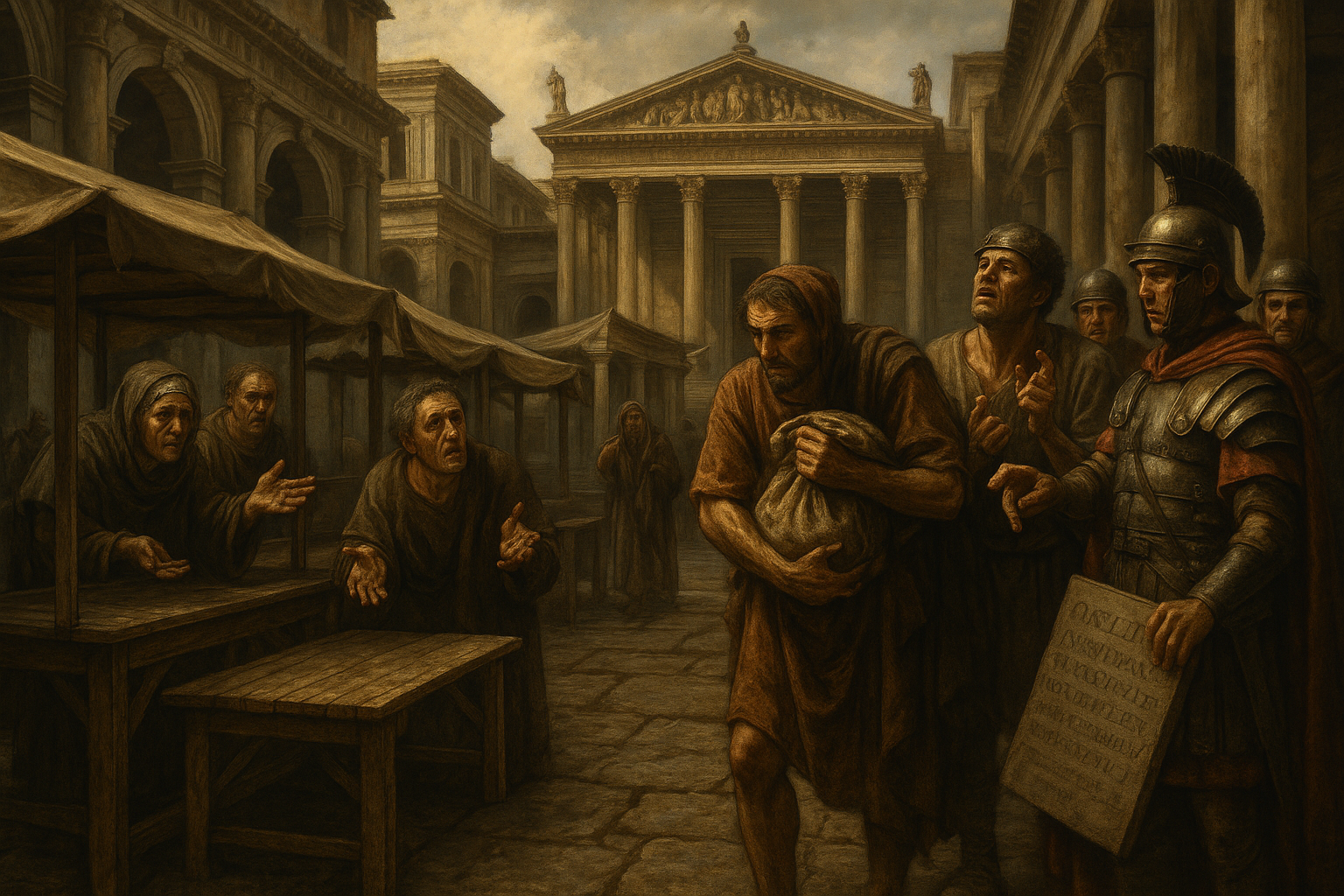
So what happened to Diocletian’s grand experiment in economic control? Despite being the absolute ruler of the known world, with legions of soldiers and secret police at his command, the emperor was forced to admit defeat within just a few years.
His price controls created exactly what economists predicted: massive shortages. When you tell merchants they can only charge a fraction of what goods actually cost to produce and transport, they simply stop selling. “Almost nothing was offered for sale,” recorded the historians, “and there was great scarcity of all goods.”
Diocletian was forced to repeal his Edict on Maximum Prices. The Roman economy only stabilized in 307 AD when the government finally stopped manipulating the money supply. The lesson was clear: political interference in monetary policy creates the very problems it claims to solve.
The emperor who thought he could command the economy learned what every leader eventually discovers—markets are more powerful than armies, and economic laws are more absolute than imperial decrees.
5 Things Readers Can Do This Week
History doesn’t repeat, but it rhymes with a precision that should make every American pay attention. Here’s how to prepare for what might come next:
🌱 Prepare for Economic Uncertainty with Food Security
Just like Roman citizens who survived Diocletian’s economic collapse by growing their own food, you can build resilience with the 4ft Farm Blueprint.
Learn how to grow a year’s worth of food in just 4 square feet – perfect for apartments, small yards, or uncertain times.
1. Diversify Your Savings Beyond Dollar-Denominated Assets
Roman citizens who held only denarii lost 90% of their wealth during the currency debasement. Consider allocating some savings to precious metals, foreign currencies, or assets that historically hold value during monetary instability. The 4ft Farm Blueprint can help you create food security that doesn’t depend on currency stability.
2. Build Skills That Remain Valuable During Economic Disruption
During Diocletian’s price controls, people with practical skills—blacksmiths, farmers, healers—could still trade their services even when normal commerce collapsed. Invest in learning practical skills that create real value regardless of monetary policy.
3. Create Multiple Income Streams
Roman merchants who depended on single trade routes were devastated when price controls disrupted commerce. Develop income sources that aren’t all dependent on the same economic system or currency.
4. Study Historical Precedents
Understanding how previous monetary crises unfolded gives you a roadmap for what might happen next. The patterns are remarkably consistent across cultures and centuries.
5. Build Community Networks
When Roman monetary systems collapsed, communities that had strong local networks survived better than those dependent on imperial institutions. Strengthen relationships with neighbors, local farmers, and skilled craftspeople who can provide goods and services outside the formal economy.
The ghost of Diocletian whispers a warning across the centuries: when political leaders start pressuring monetary authorities, citizens who prepare for the historical consequences fare better than those who trust that “this time is different.” History suggests it never is.


