
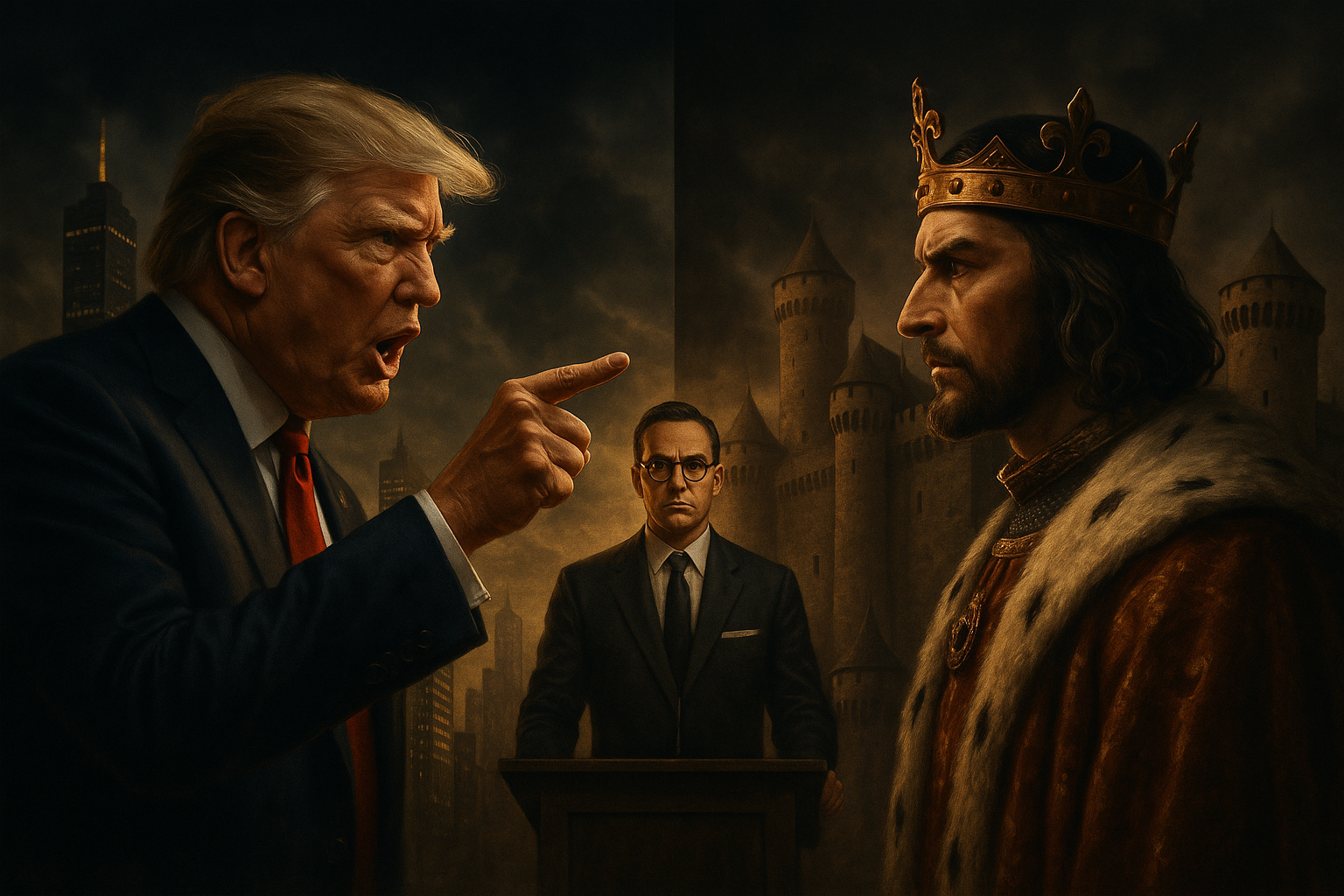
The Modern Mystery
The White House just declared financial war on America’s most powerful banks in a way that would make medieval tyrants proud. President Trump announced this week that his administration will “target banks” for what he calls systematic discrimination against conservative Americans—a practice he’s branded “debanking.” The message was crystal clear: comply with our political demands, or face the full weight of federal power.
This isn’t subtle regulatory pressure. This is weaponized government authority aimed directly at the heart of America’s financial system. Trump claims that JPMorgan Chase and Bank of America “debanked” him during the Biden administration, cutting off his access to financial services following January 6th. Now he’s promising retribution through “sweeping reviews” of banking practices that could reshape how financial institutions operate.
Multiple sources confirm that America’s largest lenders are already feeling the pressure. The administration’s order would require banks to conduct comprehensive audits of their business practices, potentially exposing them to federal lawsuits and regulatory penalties. Financial institutions that have operated independently for decades suddenly find themselves at the mercy of political winds.
But here’s what makes this moment truly chilling: we’ve seen this exact playbook before. Not in some distant, abstract historical period—but in a story so precisely parallel to our current moment that it feels like breaking news from 717 years ago.
The Time Portal
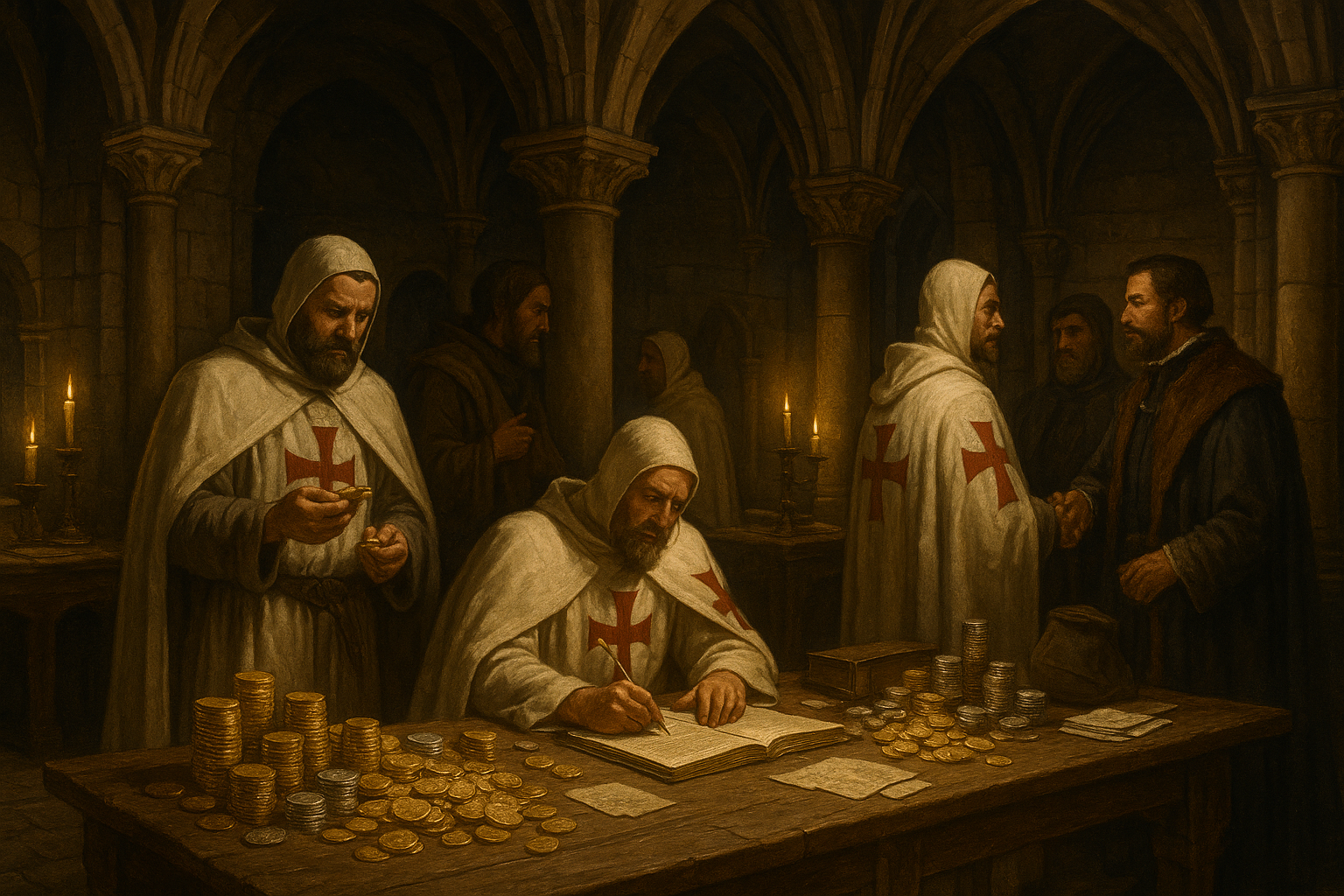
*Paris, France – October 12, 1307*
King Philip IV of France—known to history as “Philip the Fair”—paced the stone floors of his palace as dawn approached. Outside, the first light of Friday the 13th was breaking over a kingdom drowning in debt. Philip’s lavish military campaigns and grandiose building projects had emptied the royal treasury. Worse still, he owed staggering sums to the most powerful financial institution in medieval Europe: the Knights Templar.
The Templars weren’t just warrior monks anymore. Over two centuries, they had evolved into something far more dangerous to kings like Philip—they had become Europe’s first international banking empire. Their network of commanderies stretched from London to Jerusalem, facilitating loans, currency exchange, and financial transfers that made modern wire transfers look primitive. Nobles, merchants, and even kings deposited their wealth in Templar vaults, knowing it was safer there than in any royal treasury.
But what made the Templars truly untouchable wasn’t their military prowess—it was their financial independence. They answered only to the Pope, not to secular rulers. They were exempt from taxes, tolls, and tithes. Their houses served as sanctuaries where even kings couldn’t reach. In an age when monarchs controlled everything within their borders, the Templars had created something unprecedented: a financial system beyond royal control.
Philip stared out at the pre-dawn darkness, knowing that by sunset, he would either be the master of France’s financial destiny—or a king who had overplayed his hand against the most powerful bankers in Christendom.
The plan was audacious in its scope and terrifying in its precision. Across France, royal agents had spent weeks preparing. Sealed orders sat in the hands of bailiffs and seneschals in every major city. The charges had been carefully crafted: heresy, blasphemy, financial corruption. The timing was perfect—a coordinated strike that would happen simultaneously across the entire kingdom.
As the sun rose on Friday, October 13, 1307, Philip gave the signal that would destroy Europe’s first banking empire and change the course of financial history forever.
The Parallel Revelation

The similarities between Philip IV’s assault on Templar banking and Trump’s “debanking” campaign are so precise they’re almost supernatural. Both leaders faced the same fundamental challenge: financial institutions that had grown too powerful and independent for political comfort.
Philip’s Templars and Trump’s targeted banks share an identical profile. Both had evolved beyond their original purpose into financial powerhouses that operated with remarkable independence. The Templars had started as military protectors of pilgrims but became Europe’s premier banking network. America’s major banks began as local institutions but grew into global financial giants with international reach that rivals sovereign nations.
Both leaders used the same accusation: discrimination and corruption. Philip accused the Templars of heretical practices and financial impropriety. Trump accuses major banks of political discrimination and biased lending practices. Both claims served the same purpose—providing moral justification for what was essentially a power grab against financial independence.
The methods are virtually identical. Philip used coordinated government raids across France, seizing Templar assets and arresting their leadership simultaneously. Trump is using coordinated federal pressure, threatening “sweeping reviews” and regulatory penalties that could cripple banking operations. Both approaches rely on the element of surprise and the overwhelming power of centralized authority.
Even the timing reveals the same strategic thinking. Philip struck on Friday the 13th—a date chosen for maximum psychological impact that still resonates 717 years later. Trump announced his banking offensive during a week when financial markets were already nervous about regulatory changes, amplifying the pressure on institutional decision-makers.
Most chilling of all, both leaders faced the same fundamental problem: institutions that had grown wealthy and powerful enough to say “no” to political demands. The Templars’ papal protection made them immune to royal pressure. America’s largest banks have historically maintained independence from direct political control. Both situations represented intolerable challenges to leaders who demanded absolute loyalty.
The human psychology driving both campaigns is identical. Philip IV was described by chroniclers as brilliant but ruthless, a king who couldn’t tolerate any power center beyond his control. Trump’s own statements reveal the same mindset—a leader who views financial independence as political betrayal and institutional autonomy as personal insult.
The Pattern Recognition

This pattern repeats across millennia because it reveals something fundamental about human nature and power dynamics. When political leaders accumulate enough authority, they inevitably view independent financial institutions as existential threats rather than economic assets.
The psychology is always the same. Leaders like Philip and Trump don’t see banks as neutral service providers—they see them as either allies or enemies in a zero-sum game for control. Financial institutions that maintain independence are perceived as hostile forces that must be conquered or destroyed.
This explains why the accusations are always moral rather than purely economic. Philip didn’t simply claim the Templars were bad bankers—he accused them of heresy and corruption. Trump doesn’t just criticize banking practices—he frames “debanking” as discrimination and political persecution. Both leaders understood that destroying financial institutions requires moral justification that goes beyond mere policy disagreements.
The pattern also reveals why these campaigns always escalate beyond their original scope. Philip began by targeting Templar wealth but ended up reshaping the entire relationship between church and state in medieval Europe. Trump’s “debanking” offensive, if successful, would fundamentally alter how financial institutions interact with political power in America.
History shows us that when political leaders successfully subordinate financial institutions, the consequences extend far beyond banking. Philip’s destruction of the Templars contributed to the centralization of royal power that would eventually help trigger the French Revolution. The long-term effects of politicizing America’s banking system could be equally transformative.
The most disturbing aspect of this pattern is how it accelerates once it begins. Philip’s initial success against the Templars emboldened him to attack other independent institutions. If Trump’s banking pressure succeeds, it will likely expand to target other financial entities that maintain independence from political control.
The Ancient Warning
What happened next in Philip’s story should terrify anyone who values financial stability and institutional independence. The destruction of the Templars didn’t solve Philip’s problems—it created far worse ones.
Within five years of the Templar arrests, Philip’s kingdom was in financial chaos. The sophisticated banking network that had facilitated trade and commerce across Europe was gone, replaced by nothing. Merchants struggled to move money safely across borders. International trade slowed dramatically. The economic disruption contributed to famines and social unrest that would plague France for decades.
Philip himself died under mysterious circumstances in 1314, just seven years after his triumph over the Templars. According to legend, Jacques de Molay, the last Templar Grand Master, cursed Philip and Pope Clement V as he burned at the stake. Both men were dead within a year. Whether you believe in curses or not, the historical record is clear: Philip’s assault on financial independence unleashed forces that ultimately destroyed him.
The broader lesson is even more sobering. Medieval Europe never fully recovered the sophisticated financial infrastructure that the Templars had created. It took centuries for banking networks to reach the same level of international coordination and trust. The destruction of one institution created a financial dark age that lasted generations.
Modern America’s banking system is far more complex and interconnected than anything Philip could have imagined. If Trump’s campaign successfully subordinates major financial institutions to political control, the economic disruption could make Philip’s medieval chaos look manageable by comparison.
5 Things Readers Can Do This Week
The parallels between Philip’s medieval banking war and Trump’s modern campaign aren’t just historical curiosities—they’re urgent warnings about what’s coming next. Here are practical steps you can take to protect yourself and your family:
1. Diversify Your Financial Relationships
Don’t keep all your assets with institutions that might become political targets. Consider spreading your banking across multiple institutions, including smaller community banks and credit unions that may be less likely to face federal pressure. Learn from the Templars’ mistake—they concentrated too much power in too few hands.
2. Build Self-Reliant Food Systems
Medieval Europe’s financial chaos led directly to food shortages and famines. Modern banking disruption could create similar supply chain problems. Start building your own food security with proven techniques that work in any space. Even a small garden can provide crucial nutrition when larger systems fail.
3. Develop Alternative Financial Skills
The Templars’ clients were helpless when their banking network disappeared overnight. Don’t make the same mistake. Learn about precious metals, cryptocurrency, and other financial tools that operate independently of traditional banking. Visit Survival Stronghold for practical guides on building financial resilience.
4. Strengthen Community Networks
Philip succeeded because he isolated the Templars from potential allies. Build relationships with neighbors and local businesses that could provide mutual support during financial disruption. Check Homesteader Depot for resources on creating self-sufficient communities.
5. Prepare for Economic Volatility
History shows that attacks on financial institutions create unpredictable economic consequences. Build emergency funds, reduce debt, and develop skills that remain valuable regardless of economic conditions. Self Reliance Report offers detailed strategies for weathering financial storms.
The medieval world learned too late that destroying financial independence creates chaos that lasts for generations. We still have time to prepare for what’s coming—but only if we act now, while the warning signs are clear and the parallels are undeniable.
—
*Shamus Gerry III is a historical researcher and author specializing in the intersection of political power and financial systems. His work has appeared in numerous publications exploring how ancient patterns illuminate modern events.*
🌱 Prepare for Food Security Crisis
Medieval Europe’s banking collapse led directly to famines. Don’t let history repeat itself. Learn how to grow your own food security with proven techniques that work in any space.


