
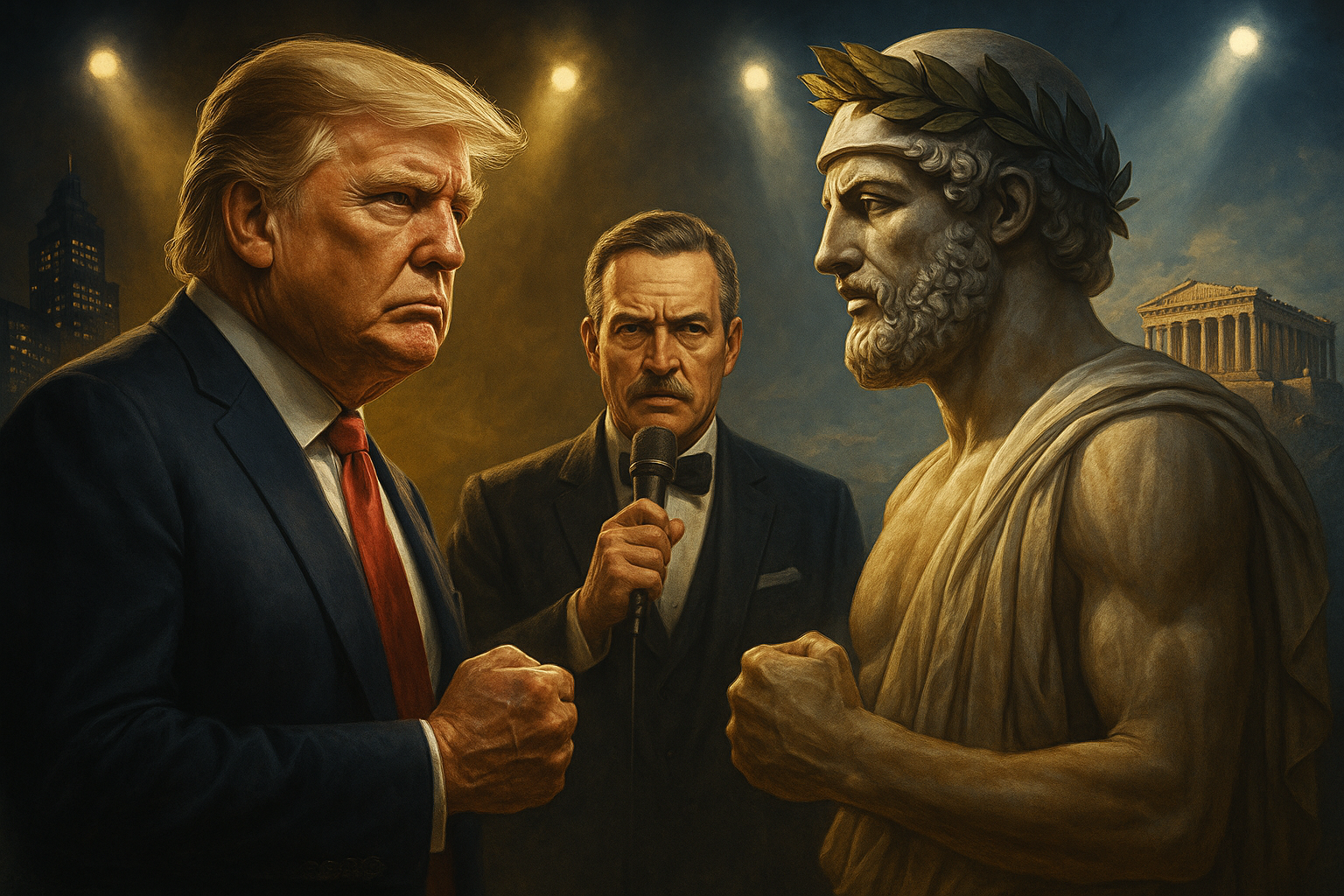
In the sweltering August heat of 2025, a familiar storm brewed in Washington. President Donald Trump, never one to shy away from a trade war, unleashed a digital broadside that sent shockwaves through the global tech industry.
In a series of fiery posts on Truth Social, he issued a stark ultimatum to the world: dismantle your digital taxes and regulations, or face the full force of American economic retaliation.
“Show respect to America and our amazing Tech Companies or, consider the consequences!” he thundered, his words echoing across the digital landscape. The threat was clear and unambiguous: substantial new tariffs on exports to the U.S. and crippling restrictions on the flow of American technology and chips. It was a move that targeted the very heart of the modern global economy, a high-stakes gamble that could either reshape the digital world or plunge it into chaos.
But as the world scrambled to react, a deeper question lingered beneath the surface of the breaking news. Was this a new and unprecedented act of economic aggression, a uniquely Trumpian power play? Or was it something older, a pattern of behavior that has repeated itself throughout history, a dangerous echo from a long-forgotten past?
The answer, it turns out, lies not in the gleaming server farms of Silicon Valley, but in the dusty ruins of ancient Greece, where a similar ultimatum once set the stage for a devastating war that would bring a golden age to its knees.
The Time Portal
Let’s step back in time, 2,457 years to be exact, to the bustling agora of ancient Athens. The year is 432 BC, and the city is at the zenith of its power, the shining jewel of the ancient world. Under the visionary leadership of Pericles, Athens has become a beacon of democracy, philosophy, and art, its magnificent Parthenon a testament to its glory. But beneath the veneer of this golden age, a dangerous current of imperial ambition flows.
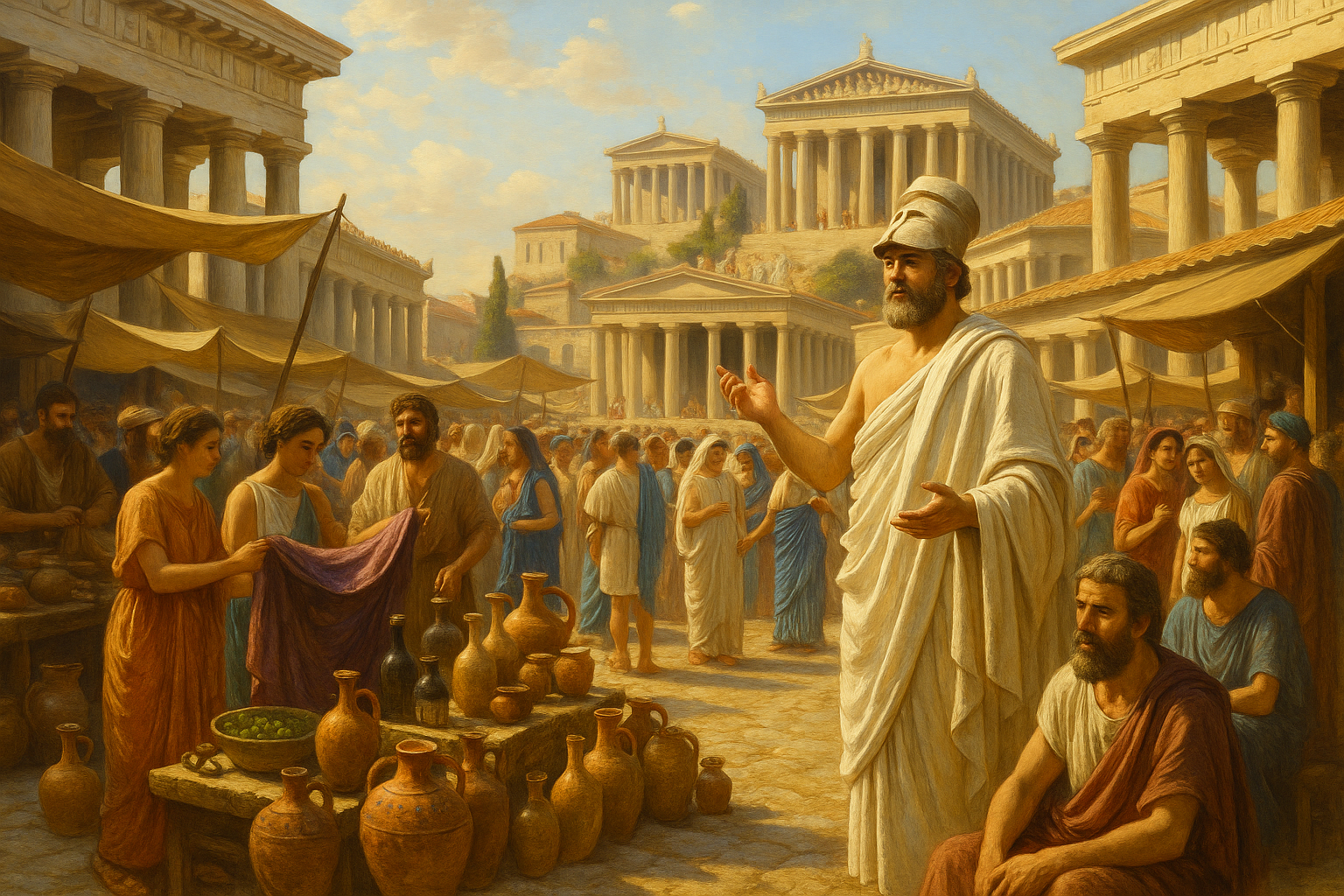
At the heart of this power is the Delian League, a confederation of Greek city-states that Athens has transformed into its own personal empire. With a powerful navy and a seemingly endless supply of tribute from its allies, Athens dominates the Aegean Sea, its influence stretching from the shores of Ionia to the coast of Thrace. But this dominance has bred arrogance, and a growing resentment among its rivals, particularly the militaristic city-state of Sparta.
Into this volatile mix steps a small but defiant city-state: Megara. A longtime rival of Athens, Megara has dared to defy the Athenian empire, its merchants competing with Athenian traders in the lucrative markets of the Aegean.
For Pericles, this is an act of insubordination that cannot be tolerated. And so, with the full backing of the Athenian assembly, he issues a decree that will seal Megara’s fate and set the stage for a conflict that will engulf the entire Greek world.
The Parallel Revelation
The Megarian Decree was a masterstroke of economic warfare, a peacetime trade embargo of unprecedented scale. It was a simple but brutal ultimatum: Megarian merchants were barred from all ports and marketplaces within the vast Athenian empire.
In an instant, Megara was cut off from its most vital trade routes, its economy strangled, its people facing ruin. The message was clear: submit to Athenian authority, or starve.

Does this sound familiar? A powerful leader, convinced of his nation’s exceptionalism, using economic weapons to punish a smaller rival for perceived transgressions. A refusal to back down, a doubling down on threats, a willingness to risk a wider conflict to enforce his will. The parallels between Pericles’ Megarian Decree and Trump’s digital tax ultimatum are as striking as they are unsettling.
In both cases, we see a leader wielding economic power as a tool of coercion, a way to force other nations to bend to their will. We see a disregard for the established norms of international relations, a belief that might makes right. And we see a dangerous escalation of tensions, a willingness to gamble with the fate of nations for the sake of national pride and economic advantage.
The Pattern Recognition
Why does this pattern repeat itself across the millennia? Why do we see the same story playing out, with different actors and different technologies, but with the same tragic results? The answer lies in the timeless and unchanging nature of human psychology. The same emotions that drove Pericles and the Athenians in 432 BC – pride, ambition, fear, and greed – are the same emotions that drive our leaders today.
The desire for dominance, the fear of losing control, the belief in one’s own righteousness – these are the powerful currents that have shaped human history from the very beginning. And when these emotions are combined with the immense power of a modern nation-state or an ancient empire, the results can be catastrophic.
Just as Pericles believed he was acting in the best interests of Athens, so too does Trump believe he is fighting for the future of American tech. But in both cases, the pursuit of narrow self-interest, fueled by a dangerous cocktail of pride and paranoia, threatens to unleash a whirlwind of unintended consequences.
The Ancient Warning
What happened next in our ancient story? The Megarian Decree did not bring Megara to its knees. Instead, it pushed them into the arms of Sparta, which saw Athens’ aggression as a direct threat to its own power. The Spartans issued an ultimatum of their own: revoke the decree, or face war. Pericles, convinced of Athens’ invincibility, refused to back down. The result was the Peloponnesian War, a brutal and devastating conflict that lasted for 27 years and left the entire Greek world in ruins.
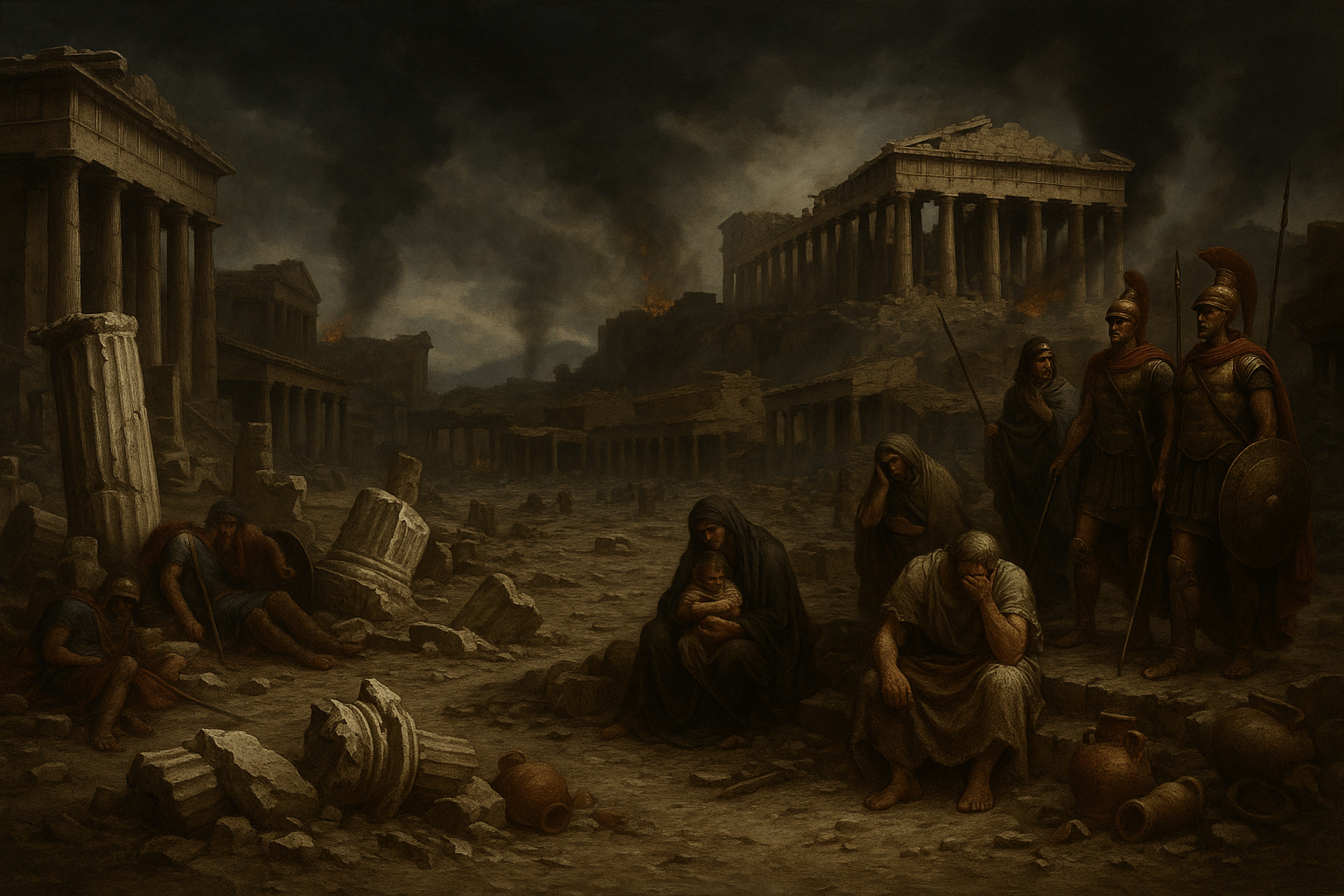
Athens, the once-mighty empire, was brought to its knees, its navy destroyed, its treasury empty, its people decimated by plague and famine. The golden age was over, and the dream of a united Greece was shattered forever. The Megarian Decree, intended as a tool of coercion, had become the catalyst for a catastrophe.
This is the ancient warning that echoes down to us today. The use of economic warfare, the issuance of ultimatums, the refusal to compromise – these are not signs of strength, but of a dangerous and self-destructive hubris. They are the first steps on a path that leads not to victory, but to ruin.
5 Things Readers Can Do This Week
History is not just a story of the past; it is a guide to the future. The echoes of the Peloponnesian War can be heard in the trade wars and political tensions of our own time. So what can we do to prepare for a future where history may be repeating itself? Here are five practical steps you can take this week:
- Diversify Your Assets: Just as the Athenians learned the hard way that a single source of income can be a single point of failure, so too should we learn to diversify our own financial assets. Don’t put all your eggs in one basket. Explore different investment options, from stocks and bonds to real estate and precious metals. For more on this, check out this article on Survival Stronghold.
- Build a Resilient Household: In times of uncertainty, self-reliance is key. Learn new skills, from gardening and food preservation to basic first aid and home repair. The more you can do for yourself, the less you will be at the mercy of external forces. Get started with these tips from Self-Reliance Report.
- Secure Your Food Supply: The ancient Greeks knew the importance of a stable food supply. In today’s world, that means having a well-stocked pantry and, if possible, a home garden. Learn how to grow your own food and preserve your harvest with these resources from Homesteader Depot.
- Prioritize Your Health: In times of stress, our health is often the first casualty. Make sure you are eating well, getting enough exercise, and managing your stress levels. A healthy body and mind are your best defense against the challenges of a changing world. Find out more at Freedom Health Daily.
- Cultivate a Strong Community: In the end, our greatest strength is each other. Build strong relationships with your neighbors, get involved in your local community, and create a network of mutual support. Together, we can weather any storm. Learn more about building community at Seven Holistics.
Advertisement:
Ready to build your own food-producing fortress?
The 4ft Farm Blueprint is your step-by-step guide to creating a high-yield, low-maintenance food garden in just 4 square feet. Perfect for preppers, homesteaders, and anyone who wants to take control of their food supply. Get your blueprint today at https://4ftfarmblueprint.com/.
Sponsored Content:
- Patriot Gold Group: Protect your retirement with a Gold IRA. Request your free investor guide today at https://tradepubs.com/news/pg/pg-gold-ira-guide-a/?wid=pg-gold-ira-guide-a&subid=1033264
- The Red-Pill Report: Get the uncensored truth about what’s really happening in America. Subscribe to The Red-Pill Report today at https://tradepubs.com/news/rpr/red-pill-report-a/?wid=red-pill-report-a&subid=1033264


