
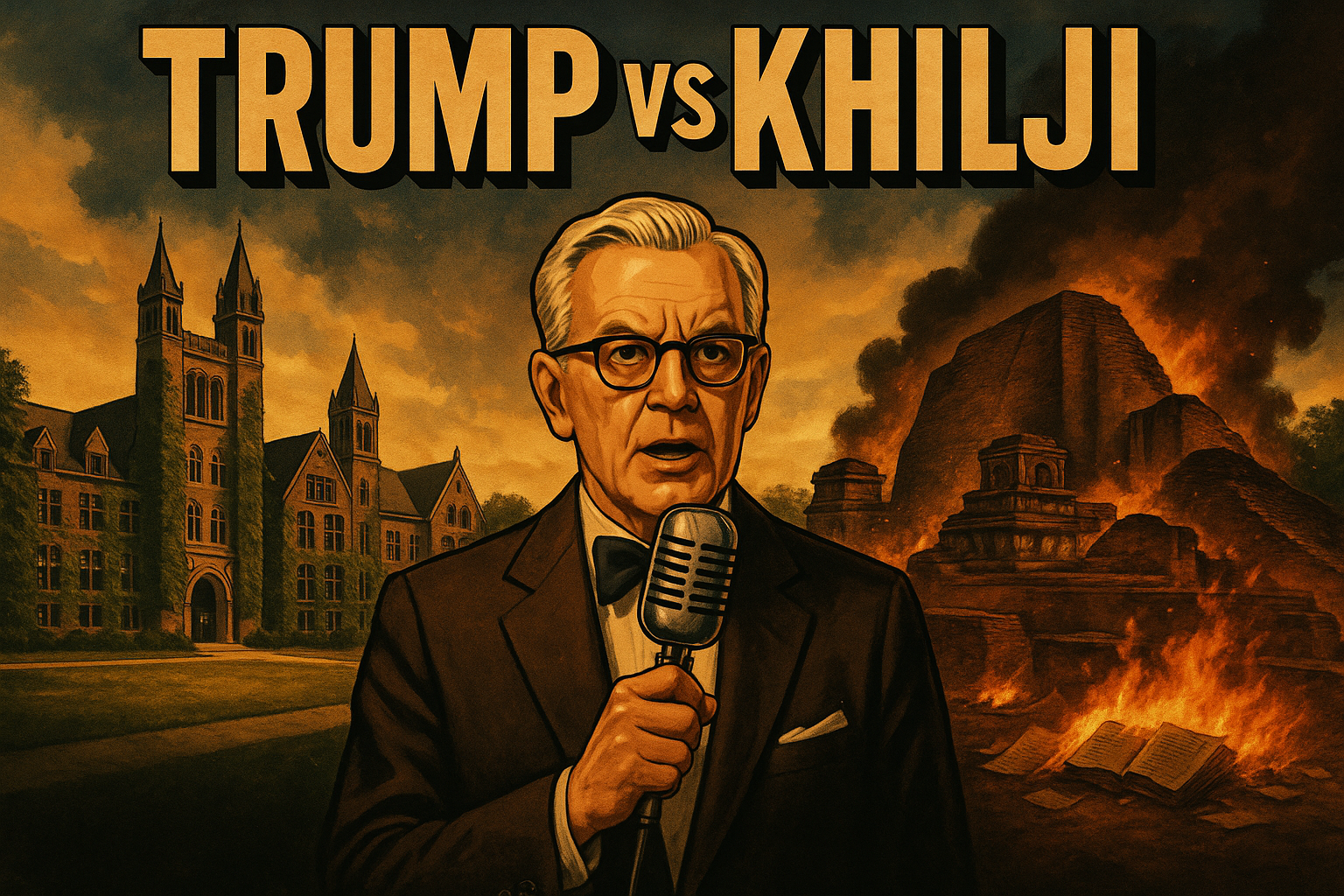
In the last 24 hours, a storm has gathered over American higher education. A political tempest, driven by the rhetoric of former President Donald Trump, threatens to defund and dismantle the very institutions that have long been the envy of the world. From the hallowed halls of the Ivy League to the sprawling campuses of state universities, a chill wind of uncertainty is blowing.
We see it in the headlines: federal funding for UCLA, a titan of public research, is on the chopping block. We hear it in the warnings from scholars who describe this as “the most intense assault in history” on academic freedom. We witness it in the pressure campaigns forcing universities to align with specific political agendas, and in the investigations into diversity and inclusion programs that were once celebrated as progress.
This isn’t just about budgets or bureaucracy. It’s about the very soul of a nation. It’s about whether we value independent thought, critical inquiry, and the pursuit of knowledge, or whether we will allow our centers of learning to become pawns in a political game. It’s a modern mystery with ancient echoes, a story that has played out before in the annals of history, with devastating consequences. To understand what’s at stake, we must travel back in time, to a place where knowledge was a beacon of light, and where a warlord’s ambition plunged a civilization into darkness.
The Time Portal
Let us journey back to the 12th century, to the ancient kingdom of Magadha in what is now Bihar, India. Here, nestled in a serene valley, stood Nalanda Mahavihara, a place that can only be described as the Harvard, Oxford, and Library of Alexandria of its time, all rolled into one. For over 700 years, Nalanda was the world’s greatest center of learning, a beacon of intellectual and spiritual life that drew scholars from across Asia and beyond.
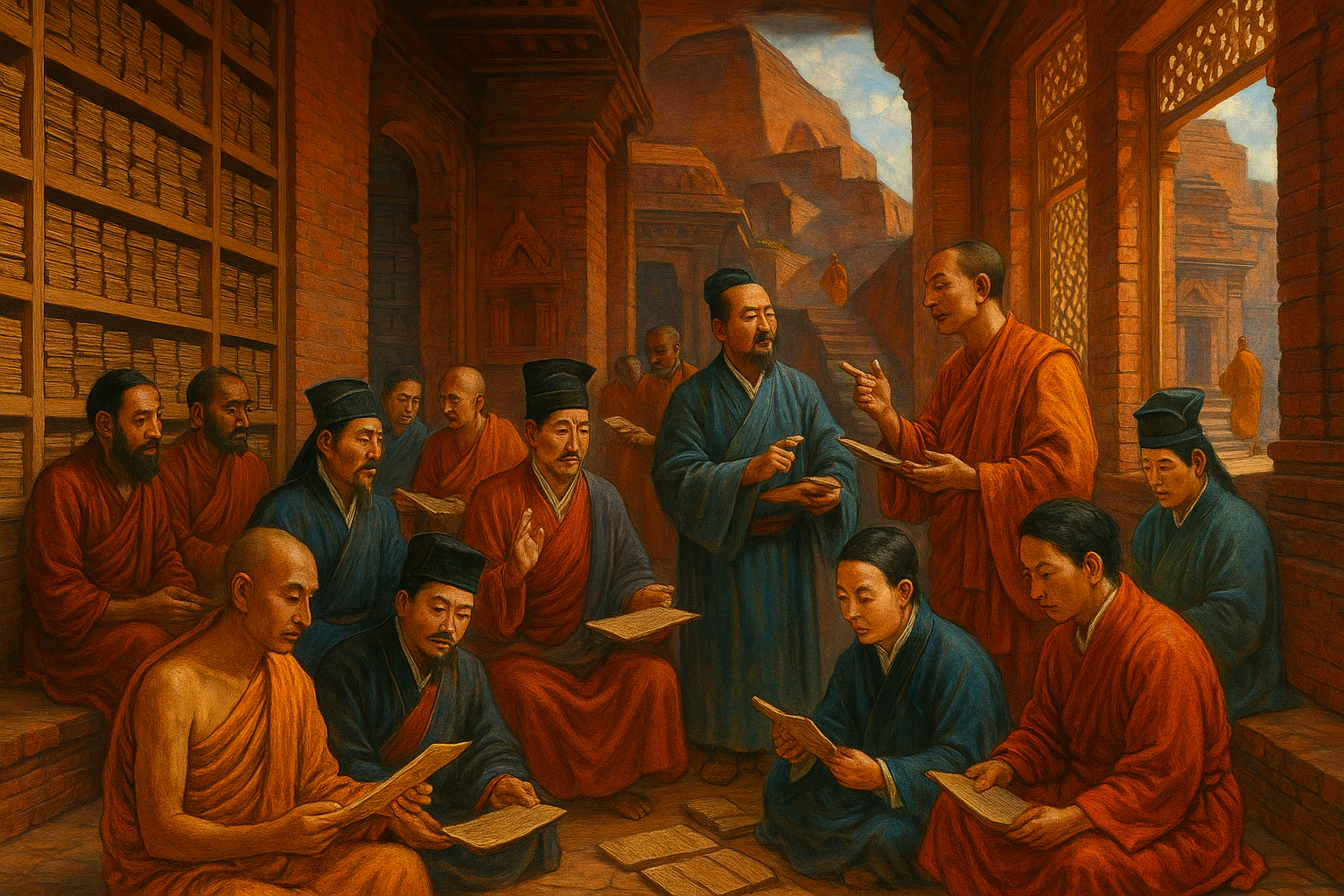
Imagine a sprawling campus of magnificent red brick monasteries, towering stupas, and serene meditation halls. Picture a library, the Dharma Gunj or “Mountain of Truth,” so vast that it was housed in three multi-storied buildings, one of which was nine stories high. Within its walls, an estimated nine million palm-leaf manuscripts held the accumulated wisdom of centuries, covering every subject imaginable: philosophy, science, mathematics, astronomy, medicine, and art.
Here, thousands of monks and scholars from as far away as China, Korea, Japan, Tibet, Mongolia, Turkey, and Sri Lanka lived and studied together in an atmosphere of peaceful inquiry. They debated the nature of reality, translated sacred texts, and pushed the boundaries of human knowledge. Nalanda was more than just a university; it was a testament to the power of international collaboration and the universal human thirst for understanding. It was a light that shone brightly in a world often shrouded in darkness. But that light was about to be extinguished.
The Parallel Revelation
In the year 1193 CE, a Turkish warlord named Bakhtiyar Khilji, a man driven by a lust for conquest and a fanatical intolerance for any belief system other than his own, swept through northern India. He saw Nalanda not as a center of learning, but as a symbol of a rival faith and a challenge to his authority. And so, he ordered its destruction.
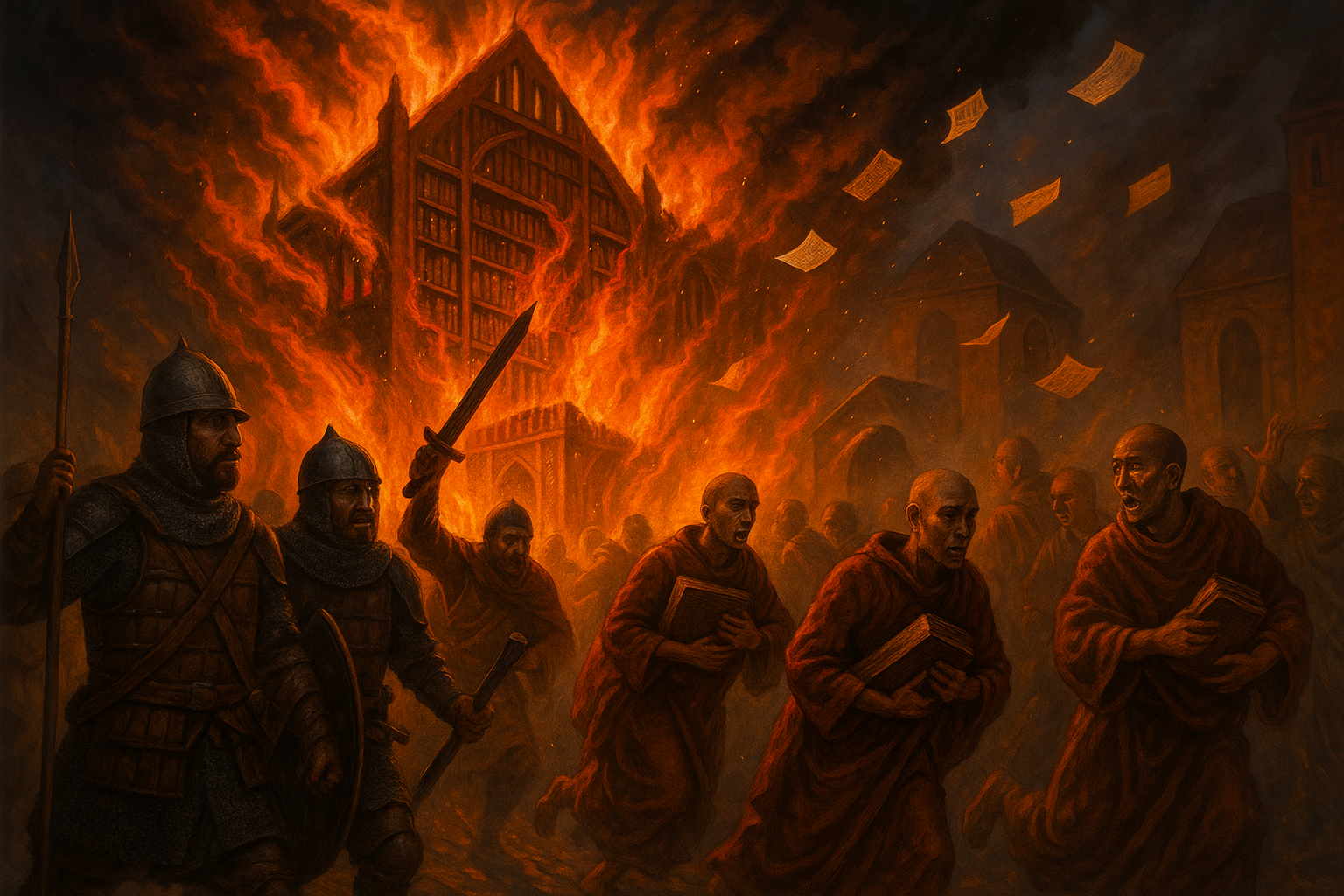
What followed was a cultural catastrophe of unimaginable proportions. Khilji’s forces descended upon Nalanda with fire and sword. They slaughtered the monks and scholars, who were armed only with their knowledge and their faith. They toppled the stupas, smashed the statues, and put the torch to the great library.
For three months, the fires raged. For three months, the accumulated wisdom of a civilization turned to ash. Nine million manuscripts, each one a precious thread in the tapestry of human knowledge, were lost forever. The smoke from the burning library, it is said, hung like a dark shroud over the horizon for miles.
Does this sound familiar? A ruler, threatened by independent thought, decides to attack the very institutions that foster it. A political agenda, fueled by intolerance, seeks to silence voices that challenge its narrative. A campaign of intimidation and destruction, aimed at dismantling a system of knowledge that has taken centuries to build. The parallels between Khilji’s assault on Nalanda and the current war on American universities are as chilling as they are undeniable.
The Pattern Recognition
Throughout history, from the burning of the Library of Alexandria to the Nazi book burnings, the first target of any authoritarian regime is always the centers of learning. Why? Because knowledge is power. Because independent thought is a threat to absolute control. Because a populace that is educated and informed is a populace that cannot be easily manipulated.
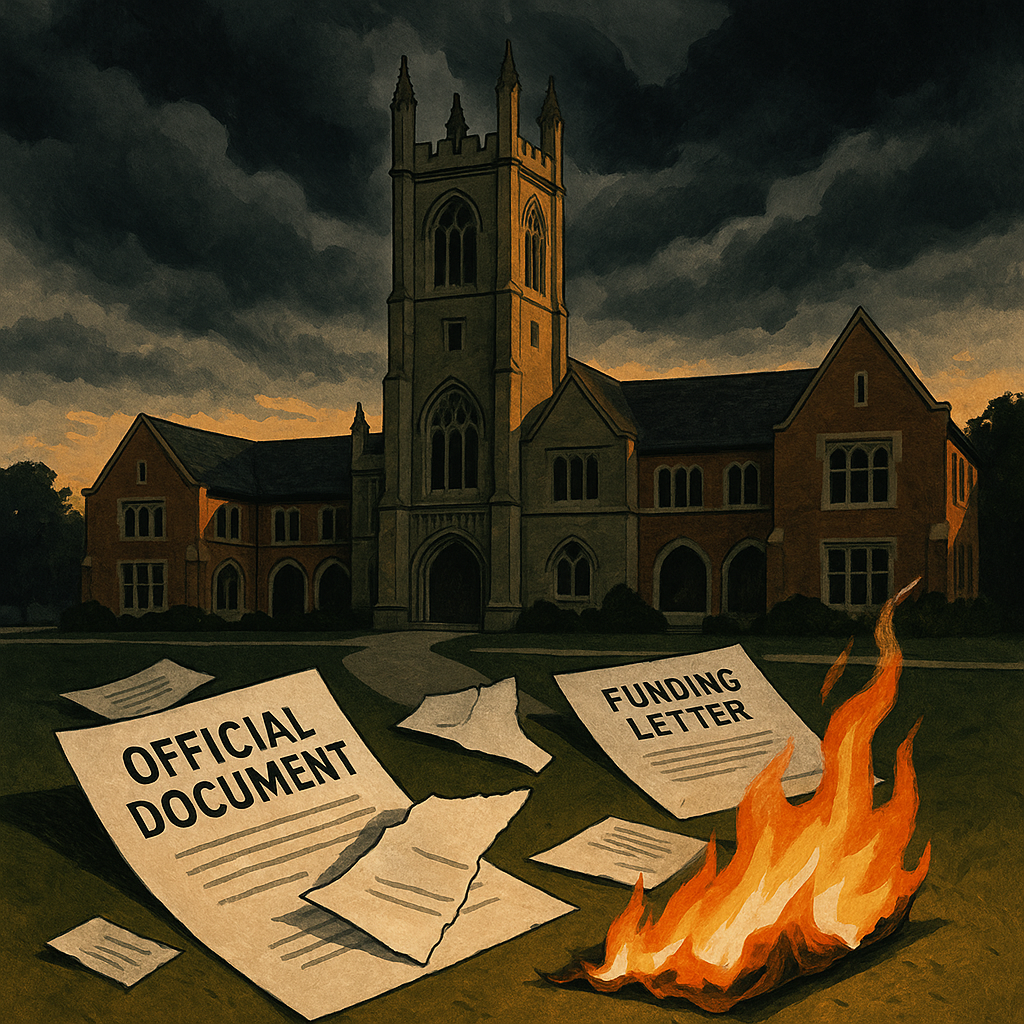
What we are witnessing today is not a new phenomenon. It is the latest chapter in a long and tragic story of rulers who fear the power of ideas. When a leader attacks a university, they are not just attacking a collection of buildings. They are attacking the very idea of a society based on reason, evidence, and open debate. They are attacking the future.
The Ancient Warning
The destruction of Nalanda was more than just the loss of a university. It was the beginning of a dark age for India. The light of knowledge was extinguished, and in its place, a long night of ignorance and decline descended. The intellectual and cultural vibrancy that had characterized the region for centuries was snuffed out, and it would take centuries to recover.
This is the ancient warning that echoes down to us today. When we allow our centers of learning to be attacked, we are not just risking the future of our children’s education. We are risking the future of our civilization. We are risking a return to a world where might makes right, where ignorance is celebrated as a virtue, and where the flame of knowledge is extinguished by the winds of political expediency.
5 Things Readers Can Do This Week
History is not just a story about the past. It is a guide to the present and a warning about the future. Here are five things you can do this week to protect our centers of learning and ensure that the tragedy of Nalanda is never repeated:
- Support Independent Media: Stay informed about the threats to academic freedom by supporting independent news organizations that are not afraid to speak truth to power. A great place to start is Self-Reliance Report, which provides in-depth analysis of current events and their historical context.
- Contact Your Representatives: Let your elected officials know that you support public funding for higher education and that you oppose any attempts to interfere with academic freedom.
- Donate to Your Local University: Even a small donation can make a big difference in helping universities weather the storm of political pressure and funding cuts.
- Promote Historical Literacy: Share this article and other resources with your friends and family to help them understand the historical context of the current crisis. For those interested in practical skills, Homesteader Depot offers a wealth of information on self-sufficiency and preparedness.
- Cultivate Your Own Knowledge: In an age of disinformation, the most powerful act of resistance is to think for yourself. Read books, take courses, and engage in civil debate. For those looking to improve their health and well-being, Freedom Health Daily and Seven Holistics offer a range of resources.
Sponsored By:
The 4ft Farm Blueprint
Discover how to grow your own food in a 4×4 space. The 4ft Farm Blueprint is a comprehensive guide to building a self-sufficient food source in your own backyard. Learn more here.


