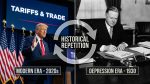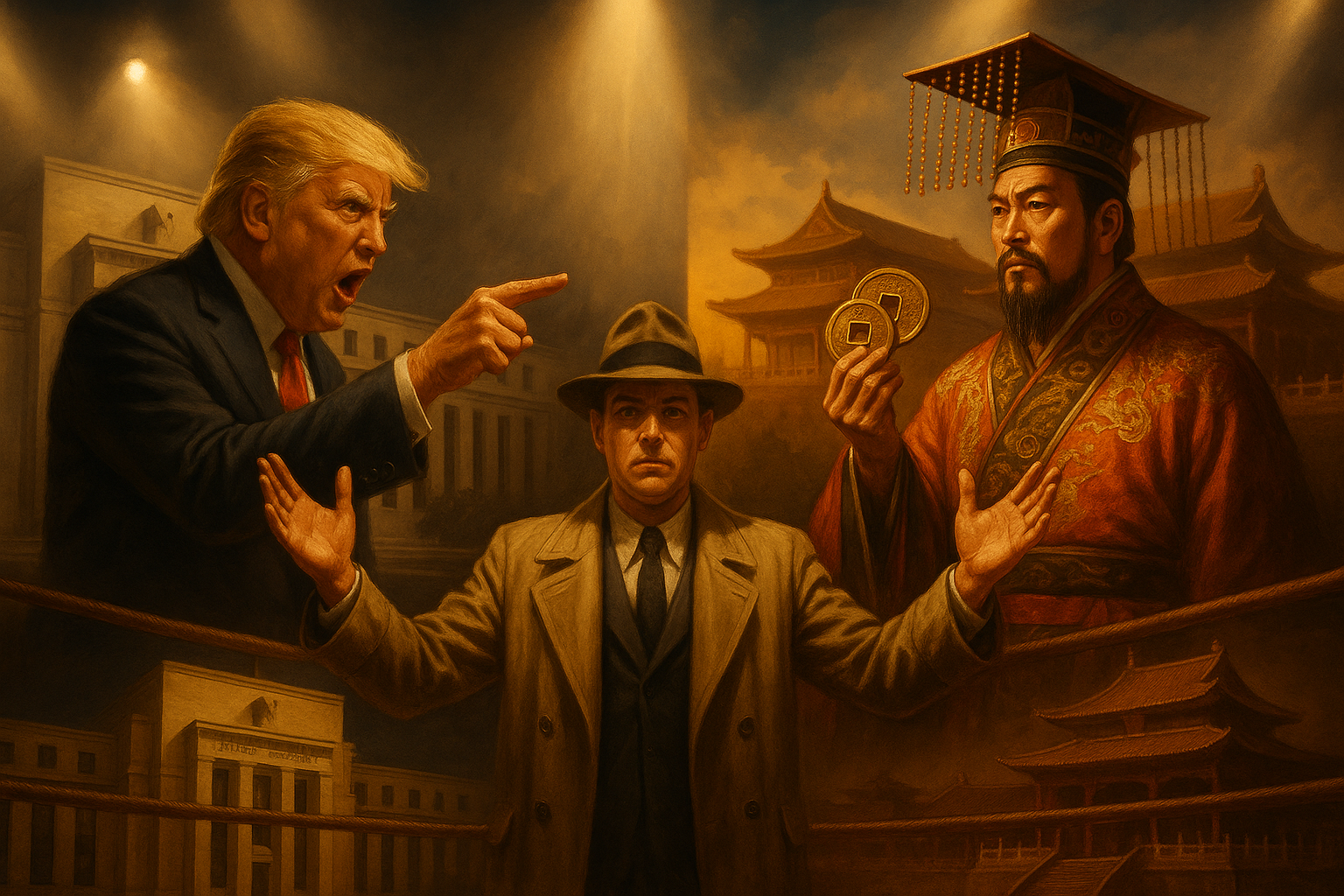
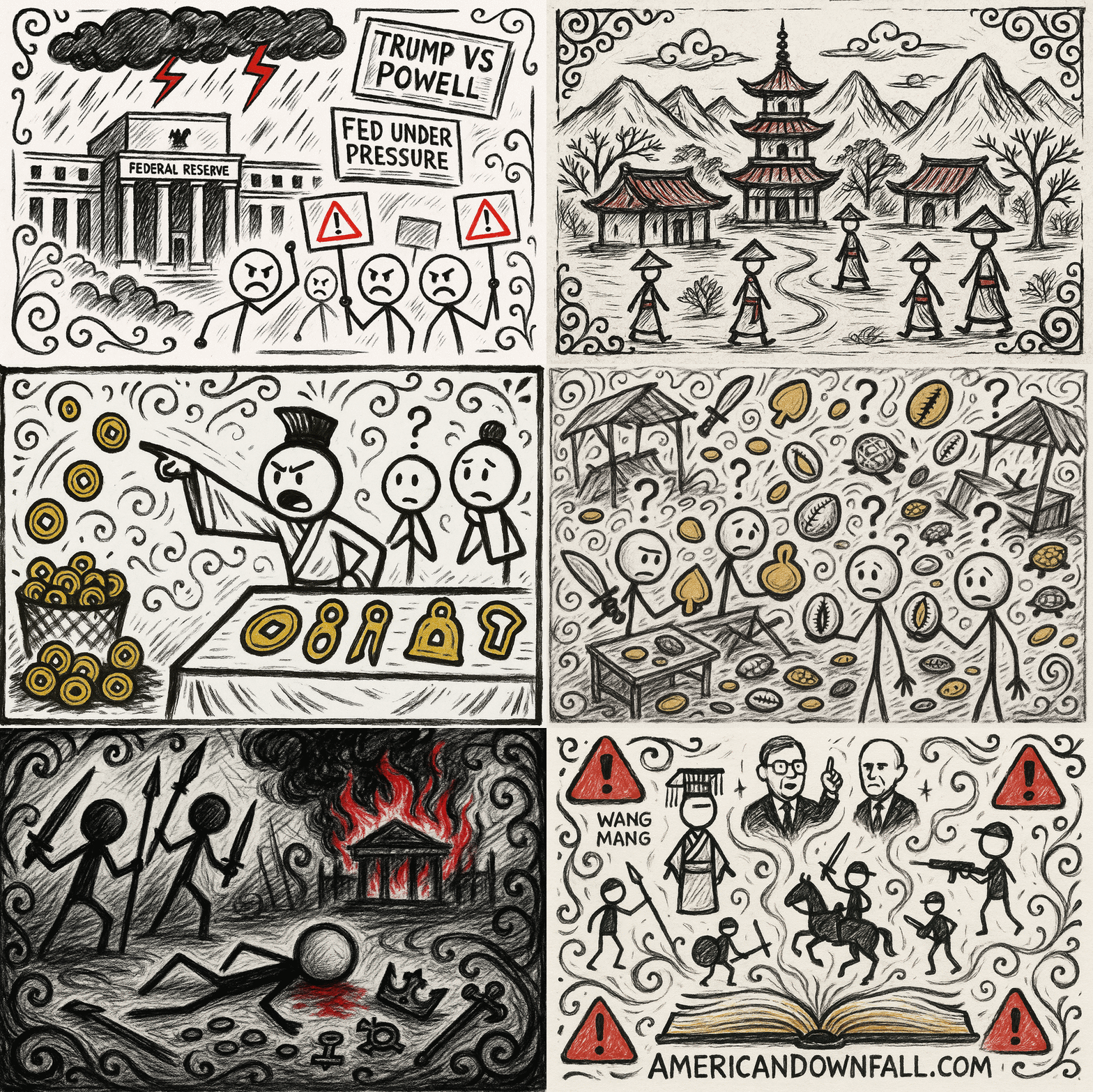
In the marble halls of the Federal Reserve building in Washington D.C., Jerome Powell sits behind his desk, staring at a decision that could define the next chapter of American economic history. Outside his window, the weight of presidential pressure bears down like a gathering storm. For the first time since 1993, two members of the Federal Reserve’s policy committee have broken ranks, creating fractures in an institution that has prided itself on measured consensus for over three decades.
The scene playing out in 2025 feels both unprecedented and strangely familiar. President Trump’s public demands for interest rate cuts echo through social media and press conferences, each tweet a digital battering ram against the fortress of Federal Reserve independence. “Cut rates NOW!” the messages proclaim, accompanied by threats that would make previous presidents blush. The specter of firing Powell looms large, a sword of Damocles hanging over the central bank’s autonomy.
But here’s where the story takes an unexpected turn. This isn’t the first time in human history that a powerful leader has looked at the guardians of monetary policy and thought, “I can do this better.” In fact, if we could peer through the mists of time, we’d discover that this exact drama—down to the personality transformations, the economic chaos, and the ultimate consequences—played out with stunning precision in ancient China, nearly two millennia ago.
The parallels are so precise they seem almost supernatural. A leader who started as a respected scholar and reformer. A systematic dismantling of established monetary institutions. The replacement of sound currency with political expedience. The enforcement of new monetary policies through threats and violence. And ultimately, a collapse so complete that it took generations to rebuild what was destroyed in just fourteen years.
What happened in ancient China offers more than just a historical curiosity—it provides a roadmap of exactly where the current Fed crisis could lead. The emperor’s name was Wang Mang, and his story reads like a prophecy written in blood and bronze, warning us about the price of sacrificing institutional independence on the altar of political ambition.
The question isn’t whether history will repeat itself. The question is whether we’re wise enough to recognize the pattern before it’s too late.
## The Time Portal
*Chang’an, China – 9 CE*
The morning mist clings to the walls of the imperial palace as Wang Mang adjusts his ceremonial robes, the silk whispering against itself like secrets being shared. At fifty-four, he has finally achieved what he’s dreamed of since his youth—absolute power over the Middle Kingdom. The bronze mirrors in his chamber reflect not just his image, but the transformation of a man who once embodied Confucian virtue into something far more dangerous.
Just months earlier, Wang Mang had been known throughout the empire as the model official. While his cousins lived in luxury, competing to see who could spend more on silk and jade, Wang wore the simple robes of a scholar. When his uncle, the powerful commander Wang Feng, lay dying, it was Wang Mang who tended to him day and night, earning a reputation for filial piety that spread throughout the court. Historians of the time described him as “wise, learned, gentle and generous, concerned with honor and piety.”
But power, as the ancient Chinese understood better than most, has a way of revealing a man’s true nature.
Now, as the newly proclaimed Emperor of the Xin Dynasty, Wang Mang stands before a table laden with bronze coins—the traditional wu zhu currency that has served China faithfully for generations. These round coins with square holes in their centers represent more than mere money; they embody the stability and continuity of Chinese civilization itself. The bronze gleams in the morning light, each coin a small testament to the economic order that has allowed the empire to flourish.
Wang Mang picks up one of the wu zhu coins, feeling its familiar weight. For a moment, something flickers across his face—perhaps the last vestige of the scholar he once was. But then his expression hardens. These coins, he has decided, represent the old order. They are obstacles to his vision of a perfect society, impediments to the radical reforms he believes will transform China into the harmonious kingdom described in the classical texts.
With a gesture that will echo through history, Wang Mang sweeps the coins from the table. The bronze pieces scatter across the marble floor with a sound like falling rain, each clink a note in the funeral dirge of monetary stability. “No more,” he declares to his assembled advisors, many of whom shift uncomfortably in their silk robes. “We will create something new. Something better.”
What Wang Mang doesn’t realize—what no one in that room can possibly foresee—is that this moment marks the beginning of one of history’s most catastrophic experiments in monetary manipulation. The coins lying scattered on the palace floor represent the last remnants of economic sanity in an empire about to descend into chaos.
In the workshops of Chang’an, craftsmen are already at work on Wang Mang’s revolutionary currency. But instead of the familiar round bronze, they’re creating bizarre knife-shaped coins, spade-shaped money, and currency made from cowrie shells and tortoise shells. The emperor has decreed that complexity will replace simplicity, that political will can override economic reality, and that the force of imperial decree can make worthless metal as valuable as gold.
The parallels to our modern moment are impossible to ignore. Just as Wang Mang believed he could improve upon centuries of monetary tradition through sheer force of will, today’s political pressures on the Federal Reserve represent the same dangerous impulse—the belief that institutional independence is a luxury that can be sacrificed for short-term political gain.
But Wang Mang’s story is just beginning, and the true horror of what happens when monetary policy becomes a tool of political ambition is yet to unfold.
## The Parallel Revelation
The parallels between Wang Mang’s assault on Chinese monetary independence and Trump’s pressure on the Federal Reserve are so precise they seem to follow an ancient script, as if human nature itself is condemned to repeat the same tragic patterns across millennia.
**The Institutional Target**: Just as Trump has set his sights on Jerome Powell and the Federal Reserve’s independence, Wang Mang identified the traditional wu zhu currency system as his primary obstacle. Both leaders viewed established monetary institutions not as stabilizing forces, but as impediments to their political vision. The wu zhu coins represented centuries of economic stability, just as Fed independence has anchored American monetary policy since 1951’s Treasury-Fed Accord. Both systems had earned their authority through proven performance, not political appointment.
**The Pressure Campaign**: Wang Mang’s approach to monetary transformation mirrors Trump’s Fed strategy with eerie precision. Rather than working within existing systems, both leaders chose confrontation. Wang Mang didn’t gradually reform currency—he banned the wu zhu coins entirely and flooded the market with bewildering alternatives. Similarly, Trump hasn’t simply suggested rate cuts; he’s threatened to fire Powell, publicly berated Fed decisions, and demanded immediate compliance with his economic preferences. Both campaigns represent the same fundamental belief: that institutional expertise should bow to political will.
**The Enforcement Mechanism**: Perhaps most chilling are the enforcement tactics. Wang Mang didn’t just create new currency; he made using the old currency a capital offense. Citizens caught with wu zhu coins faced execution or exile, and their families—along with their five nearest neighbors—could be enslaved. While Trump’s threats against Powell haven’t reached such extremes, the underlying psychology is identical: the belief that institutional resistance justifies increasingly severe consequences.
**The Economic Justification**: Both leaders wrapped their monetary manipulation in populist rhetoric. Wang Mang claimed his currency reforms would create a more equitable society, redistributing wealth and eliminating economic inequality. Trump frames his Fed pressure as fighting for ordinary Americans against an elite institution that keeps interest rates artificially high. Both narratives ignore the fundamental purpose of monetary independence: protecting the economy from precisely this kind of political interference.
**The Character Transformation**: Most remarkably, both stories feature the same psychological arc. Wang Mang began his career as a model of virtue—humble, scholarly, dedicated to public service. Contemporary accounts describe him as the antithesis of the corrupt officials who typically surrounded imperial power. Yet once he achieved absolute authority, he became “careless, greedy, and murderous,” according to historians. The transformation was so complete that it seemed like a different person entirely.
This pattern of power-induced transformation explains much about our current moment. Political leaders who once respected institutional boundaries often abandon those principles once they gain the power to override them. The temptation to use monetary policy as a political tool proves irresistible, regardless of the long-term consequences.
**The Market Response**: In both cases, markets responded with predictable chaos. Wang Mang’s currency reforms “drove sound coin and gold out of circulation, unleashing rampant inflation and severely disrupting commerce and industrial production.” Gresham’s Law—that bad money drives out good—operated with mathematical precision. People hoarded the reliable wu zhu coins while being forced to accept Wang Mang’s worthless alternatives for daily transactions.
Today’s markets show similar stress signals. The mere threat of Fed independence being compromised has created volatility and uncertainty. Bond markets, currency exchanges, and international investors all recognize that monetary policy independence isn’t just an academic concept—it’s the foundation of economic stability.
**The Resistance**: Both stories feature institutional resistance that only intensifies political pressure. Just as the Federal Reserve has maintained its rate decisions despite Trump’s demands, Chinese merchants and citizens found ways to resist Wang Mang’s monetary edicts. Black markets emerged for wu zhu coins, people developed elaborate schemes to avoid the new currency, and economic activity increasingly moved underground.
This resistance, rather than moderating Wang Mang’s approach, drove him to more extreme measures. He established checkpoints at “customs posts, fords, rest houses, city gates and palace gates” to ensure people carried his approved currency. The enforcement apparatus grew increasingly brutal as the economic system collapsed.
The pattern suggests that political pressure on monetary institutions tends to escalate rather than moderate. Each act of institutional resistance is interpreted as defiance requiring stronger countermeasures, creating a spiral that ends only in complete institutional destruction or political collapse.
**The International Dimension**: Both crises extend beyond domestic policy. Wang Mang’s monetary chaos disrupted trade relationships throughout East Asia, as foreign merchants refused to accept his experimental currencies. Similarly, Trump’s Fed pressure has international implications, as global markets depend on Federal Reserve stability for everything from dollar-denominated trade to international lending rates.
The revelation is clear: we’re not witnessing a unique modern crisis, but the latest iteration of an ancient pattern. The same human impulses that drove Wang Mang to destroy Chinese monetary stability are driving contemporary attacks on Fed independence. The technology has changed, but the underlying psychology remains identical—and so, history suggests, will the consequences.
## The Pattern Recognition
Why does this pattern repeat with such devastating consistency across cultures and centuries? The answer lies in fundamental aspects of human psychology that transcend time, technology, and political systems.
**The Illusion of Control**: Both Wang Mang and contemporary political leaders fall victim to what psychologists call the “illusion of control”—the belief that complex systems can be managed through willpower and authority alone. Monetary policy appears deceptively simple from the outside: just set interest rates or create new currency, and economic outcomes will follow. This illusion is particularly seductive for political leaders accustomed to seeing immediate results from their decisions.
Wang Mang genuinely believed that replacing wu zhu coins with knife-shaped currency would create a more harmonious society. The complexity of monetary systems—the delicate balance of trust, stability, and market psychology—was invisible to him. Similarly, the belief that Fed independence is merely an obstacle to better economic outcomes reflects the same fundamental misunderstanding of how monetary systems actually function.
**The Corruption of Virtue**: Perhaps most disturbing is how power transforms even virtuous individuals. Wang Mang’s early career was exemplary—he was known for humility, scholarship, and genuine concern for public welfare. Yet absolute power revealed or created a completely different personality. This transformation suggests that the problem isn’t necessarily bad people gaining power, but power itself corrupting good people.
This pattern explains why institutional independence matters more than the character of individual leaders. Systems that depend on personal virtue inevitably fail when virtue proves insufficient against the corrupting influence of unchecked authority. The Federal Reserve’s independence isn’t designed to protect against obviously corrupt leaders—it’s designed to protect against the corruption that power inflicts even on well-intentioned people.
**The Seductive Appeal of Simple Solutions**: Both historical moments feature leaders who promised that complex problems could be solved through bold, simple actions. Wang Mang’s currency reforms were presented as elegant solutions to economic inequality and social discord. Contemporary attacks on Fed independence similarly promise that removing institutional constraints will unleash economic prosperity.
This appeal to simplicity resonates across cultures because monetary policy is genuinely complex and often counterintuitive. The idea that experts might understand these systems better than political leaders challenges democratic instincts and populist rhetoric. Yet the historical record is unambiguous: every attempt to subordinate monetary policy to direct political control has ended in economic disaster.
**The Escalation Dynamic**: Once political leaders begin pressuring monetary institutions, the dynamic tends to escalate regardless of initial intentions. Wang Mang didn’t start with plans to execute people for using traditional currency—that extreme emerged as his initial reforms failed and resistance mounted. Each failure was interpreted not as evidence that the approach was flawed, but as proof that more dramatic measures were necessary.
This escalation pattern suggests that the current Fed pressure campaign, regardless of its initial scope, contains the seeds of more extreme measures. Political leaders who begin by questioning Fed decisions often progress to demanding specific policies, then to threatening personnel changes, and ultimately to attempting direct control over monetary policy. The progression follows an internal logic that’s difficult to stop once it begins.
**The Time Horizon Problem**: Political leaders operate on electoral cycles, while monetary policy effects unfold over years or decades. This fundamental mismatch creates irresistible pressure to prioritize short-term political benefits over long-term economic stability. Wang Mang needed immediate results to justify his revolutionary changes, just as contemporary politicians need economic improvements within their terms of office.
Institutional independence serves as a buffer against this time horizon problem, allowing monetary policy to operate on economically appropriate timescales rather than politically convenient ones. When that independence is compromised, the inevitable result is policies optimized for political rather than economic outcomes.
The pattern recognition reveals a sobering truth: the human impulses that drive attacks on monetary independence are not aberrations or historical curiosities. They represent fundamental aspects of political psychology that will continue to emerge in every generation. The only protection against these impulses is institutional design that anticipates and constrains them—exactly the kind of independence that’s currently under assault.
Understanding this pattern doesn’t just illuminate the past; it provides a roadmap for recognizing and resisting these destructive impulses before they reach their inevitable conclusion. Wang Mang’s story isn’t just history—it’s prophecy, written in the universal language of human nature and political power.
## The Ancient Warning
The final chapters of Wang Mang’s story read like a horror novel written by economists. What began as monetary reform ended in civilizational collapse, offering a stark preview of where current Fed pressures could ultimately lead.
By 20 CE, just eleven years after Wang Mang’s currency revolution began, the Chinese economy had entered a death spiral. The complex array of knife-shaped coins, cowrie shells, and tortoise-shell currency had created such confusion that commerce ground to a halt. Merchants refused to accept the new money, citizens hoarded the banned wu zhu coins, and black markets flourished despite increasingly brutal enforcement.
The human cost was staggering. Historian Pan Ku records that “the population of the empire had been reduced by half” during Wang Mang’s fourteen-year reign. Famine became endemic as agricultural production collapsed under the weight of economic chaos. The historical accounts describe scenes that haunt the imagination: “people ate each other” as social order disintegrated alongside monetary stability.
Wang Mang’s response to these failures followed the escalation pattern with terrifying consistency. Rather than acknowledging that his monetary experiments had failed, he doubled down with increasingly desperate measures. Citizens found with traditional currency faced not just execution, but the enslavement of their families and five nearest neighbors. Checkpoints proliferated throughout the empire, turning daily commerce into a gauntlet of potential death sentences.
The emperor who had once been praised for his humility and scholarship became a paranoid tyrant, hoarding over 150 tons of gold in his palace while his people starved. The transformation was so complete that it seemed like a different person entirely—a warning about how monetary manipulation corrupts not just economies, but the leaders who implement it.
The end came with brutal swiftness. In October 23 CE, rebel armies stormed Chang’an, the imperial capital. Wang Mang died in the battle, and his body was literally “ripped to shreds” by citizens whose lives had been destroyed by his monetary experiments. His head was preserved in a box for three centuries—a grisly reminder of what happens when political ambition overrides economic wisdom.
But perhaps the most telling detail is what happened next. The moment Wang Mang died, his entire monetary system was abandoned. Every knife-shaped coin, every cowrie shell currency, every complex reform was immediately discarded. The traditional wu zhu coins reappeared as if by magic, and economic stability began its slow return. The speed of this reversal reveals how completely artificial Wang Mang’s monetary system had been—a political construct with no foundation in economic reality.
The restoration took generations. The Han Dynasty was eventually reestablished, but the scars of Wang Mang’s monetary chaos lingered for decades. Trade relationships had to be rebuilt, trust in currency had to be reestablished, and the institutional knowledge of stable monetary policy had to be painstakingly reconstructed.
This historical warning carries urgent relevance for our current moment. The Federal Reserve’s independence, like the wu zhu currency system, represents centuries of accumulated wisdom about monetary stability. It exists not as an obstacle to political will, but as protection against the kind of catastrophic experiments that Wang Mang inflicted on China.
The pattern suggests that attacks on Fed independence, if successful, would follow a similar trajectory. Initial political victories would give way to economic chaos as markets lost confidence in monetary policy. The resulting instability would demand increasingly extreme measures to maintain control, creating a spiral of authoritarianism and economic collapse.
Wang Mang’s story offers no comfort for those who believe that modern institutions are somehow immune to these ancient patterns. The fundamental dynamics of political pressure on monetary policy remain unchanged, and the consequences of institutional capture are as devastating today as they were two millennia ago.
The ancient warning is clear: monetary independence isn’t a luxury or an academic concept—it’s the foundation upon which economic civilization rests. Destroy it, and everything else follows into chaos.
## Five Things You Can Do This Week to Prepare for History Repeating
Wang Mang’s story isn’t just a historical curiosity—it’s a blueprint for what happens when monetary institutions collapse under political pressure. While we can’t control whether history repeats itself, we can prepare for the possibility. Here are five concrete steps you can take this week to protect yourself and your family:
**1. Diversify Your Currency Holdings Beyond the Dollar**
Just as Chinese citizens who hoarded wu zhu coins survived Wang Mang’s monetary chaos better than those who trusted his experimental currency, modern families should maintain holdings in multiple currencies and stores of value. This week, consider allocating 10-20% of your liquid savings to foreign currencies (Swiss francs, Norwegian kroner), precious metals (gold, silver), or cryptocurrency (Bitcoin, Ethereum). The goal isn’t to bet against the dollar, but to ensure you’re not entirely dependent on any single monetary system.
**2. Build Local Economic Relationships and Barter Networks**
When Wang Mang’s currency system collapsed, communities that had maintained local trade relationships survived better than those dependent on imperial commerce. Start building relationships with local farmers, craftspeople, and service providers this week. Join or create community groups focused on local exchange, skill-sharing, or mutual aid. Learn what goods and services your neighbors produce, and identify what you can offer in return. These relationships become invaluable when traditional monetary systems face stress.
**3. Acquire Practical Skills That Retain Value Regardless of Currency**
During monetary collapses, people with practical skills—farming, crafting, repair work, medical knowledge—maintain their economic value even when currency becomes worthless. This week, identify one practical skill you can begin learning: food preservation, basic mechanical repair, first aid, gardening, or a traditional craft. Enroll in a class, buy instructional materials, or find a mentor. Skills can’t be devalued by political decree.
**4. Stockpile Essential Goods That Hold Value During Economic Disruption**
Wang Mang’s monetary experiments led to severe shortages of basic goods as commerce collapsed. Build a strategic reserve of non-perishable essentials: food with long shelf lives, medical supplies, tools, batteries, water purification materials, and fuel. Aim for a three-to-six-month supply of basics. These items serve dual purposes: they protect against supply disruptions and can function as trade goods if traditional currency fails.
**5. Create Multiple Income Streams Independent of Traditional Employment**
Monetary instability typically devastates traditional employment as businesses struggle with currency chaos and economic uncertainty. This week, begin developing alternative income sources: freelance skills you can market directly, small-scale production of goods people need, or services you can provide regardless of economic conditions. The goal is reducing your dependence on any single employer or economic system.
These preparations aren’t about paranoia or pessimism—they’re about learning from history’s clearest lessons. Wang Mang’s subjects who prepared for monetary instability survived his reign; those who trusted entirely in imperial currency did not. The same principles apply today: diversification, local relationships, practical skills, strategic reserves, and multiple income streams provide resilience against the kind of institutional collapse that political pressure on monetary policy can trigger.
The most important preparation, however, is psychological: understanding that monetary stability isn’t guaranteed and that political pressure on institutions like the Federal Reserve represents a genuine threat to economic civilization. Wang Mang’s story teaches us that even the most stable systems can collapse when political ambition overrides institutional wisdom.
History doesn’t have to repeat itself, but it often does when people ignore its warnings. The choice is ours: learn from Wang Mang’s catastrophic experiment, or risk repeating it on a scale that would make ancient China’s suffering seem small by comparison.
—
*The parallels between Wang Mang’s monetary destruction and contemporary Fed pressure aren’t coincidental—they reflect fundamental patterns of human nature and political power that transcend time and culture. Understanding these patterns is the first step toward preventing their repetition. The question isn’t whether such pressures will emerge again, but whether we’ll be wise enough to recognize and resist them before they reach their inevitable conclusion.*