
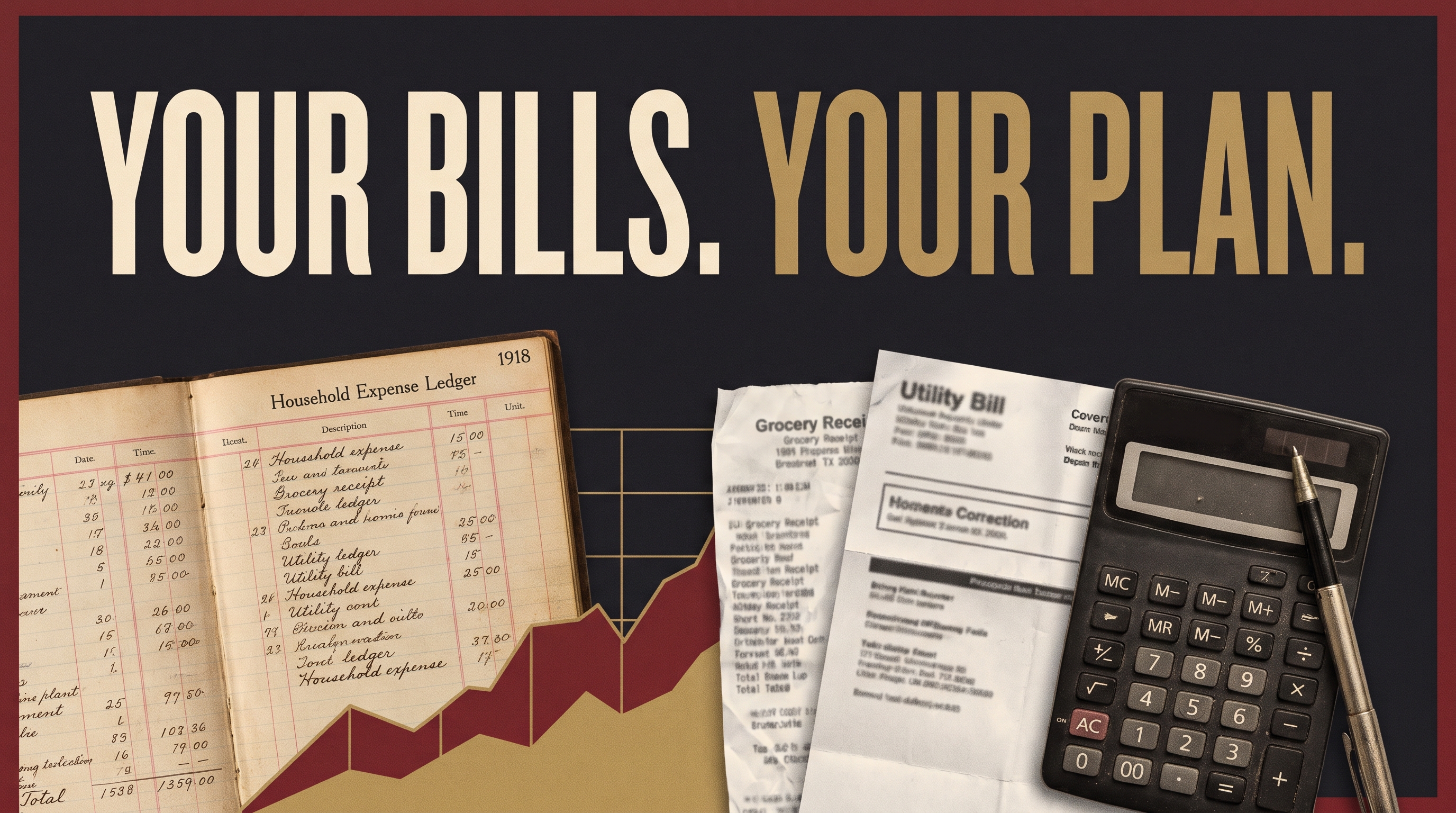
Your Daily Install connects what’s happening now with a useful pattern from the past—and one simple step you can take today to make your household more resilient.
Print the action worksheet below, fill it in, and add it to your Household Resilience Network binder.
What’s happening now?
A better economic headline can arrive on the same day as a bigger bill. Both can be real.
On October 27, the Conference Board reported that consumer confidence rose after four monthly declines. That tells us something about how surveyed households feel. It does not tell you what your next grocery trip or power bill will cost.
Before one headline changes your spending plans, check three numbers from your own home.
Has this happened before?
During World War I, rising living costs created a very practical question: what did it take for a working family to get by?
In 1917–1919, the Bureau of Labor Statistics carried out a major study of family spending. Instead of asking only how people felt, researchers gathered what families spent on food, housing, clothing and other needs.
An expense written in a household budget could tell a different story from a broad claim about good times or bad times.
What happened next?
Those family spending studies helped build the record used to understand the cost of living. They made everyday purchases part of the larger economic picture.
Use the same habit at home: feelings are a signal; bills give you the next decision. Three bills will not describe the whole economy. They can show where your own month needs attention.
Before a gold pitch gets near your savings…
You worked too hard for that money to wing the next decision. Get the free guide with five questions to ask about a gold retirement account—before a sales call starts.
Tap Here to Request the Free Gold Guide →What can I do?
Take 15 minutes. Pull one recent grocery receipt, your latest home-energy bill and one other must-pay bill. Write the amounts and next due dates. Mark any amount that is an estimate.
If you have the prior bill, compare it. Check whether a higher total came from a higher price, more use, a longer billing period or a fee. Those call for different responses.
Choose one move you can make this week: ask about an odd charge, set a due-date reminder or plan meals around food already on hand. Keep the page for next month’s check.
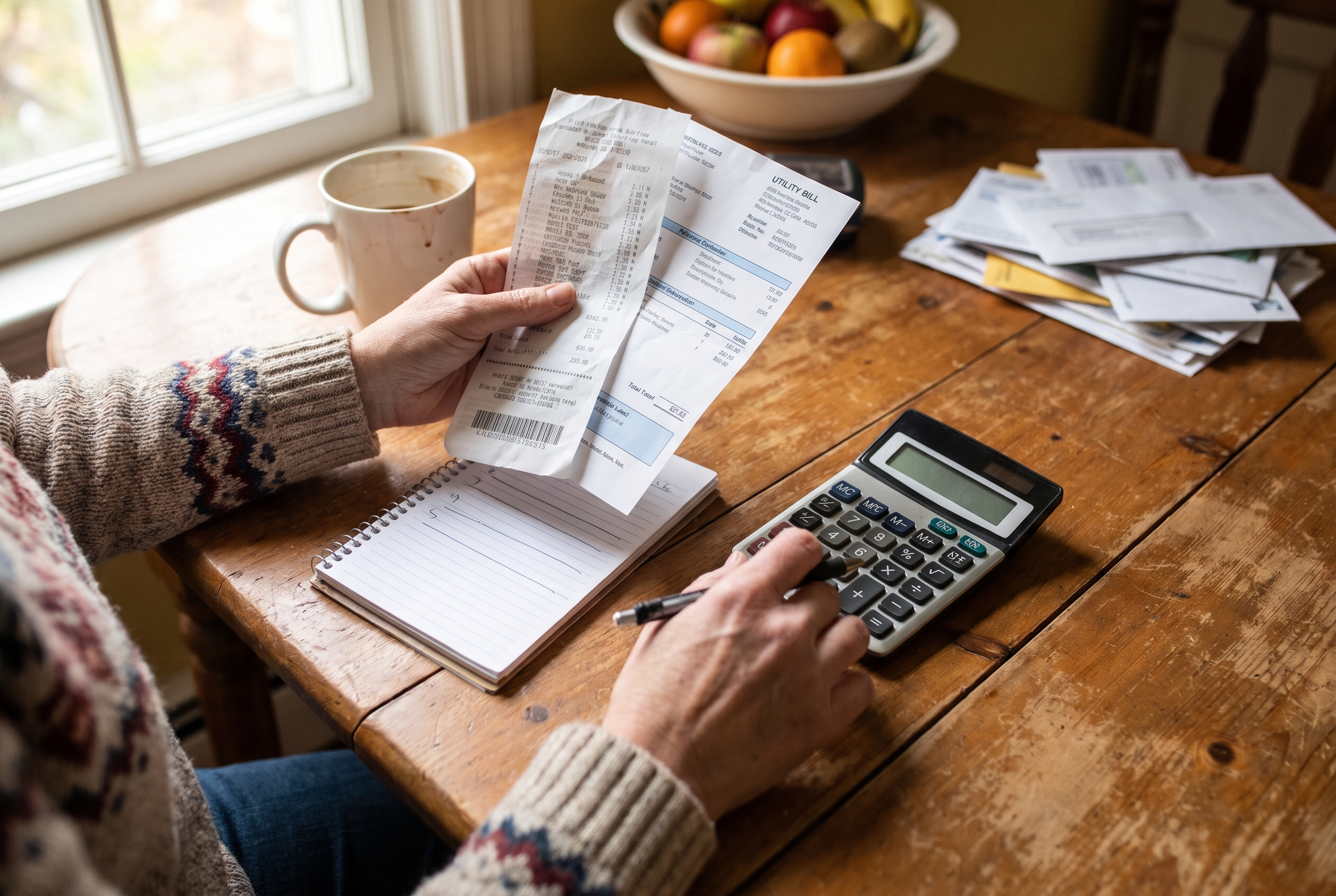
Illustrative household example. Use the worksheet for your own details.
My Three-Bill Check
Date: __________ File under: Household Money
Write the real amounts
Groceries / date / amount:
Home energy / next due / amount:
Other must-pay / next due / amount:
Choose one response
Change I found, or question to ask:
One action / date:
☐ Estimates marked. ☐ Next bill check saved.
Today’s win: You have three real amounts and one action—not just another headline to worry about.
What if the next fresh handful came from home?
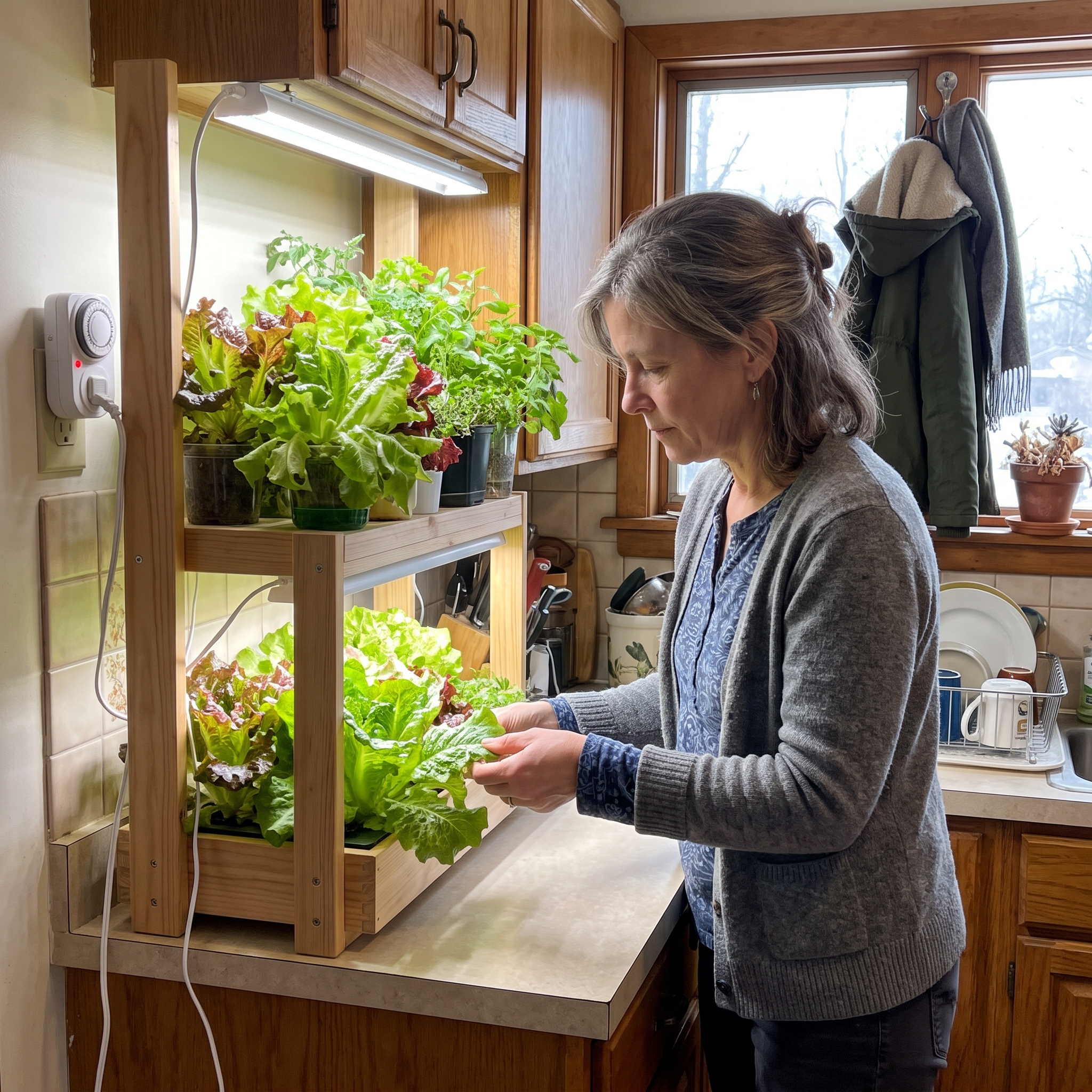
You do not want another expensive hobby. You want food you can pick and use.
The COMPLETE Blueprint shows how to start small, indoors or out. See the setup, choose a food you enjoy and follow the steps in pictures.
What could you grow in the space you already have? Take a look before another grocery run.
| Tap Here to See the COMPLETE Blueprint → |
Stay steady,
Seamus Gerry III
American Downfall
P.S. Which bill surprised you most this month? Reply with the type of bill, not private account details. Share this with someone who likes a clear next step.
P.P.S. You cannot set the prices at the store. But what if some of the food you buy could keep giving you more? Our friends at 4 Foot Farm show where to start. Tap Here to See the Grocery-Run Method →