
Your Daily Install connects what’s happening now with a useful pattern from the past—and one simple step you can take today to make your household more resilient.
Print the action worksheet below, fill it in, and add it to your Household Resilience Network binder.
What’s happening now?
The payment fits this month. That does not mean the balance is getting cheap to carry.
Yesterday, October 28, the Federal Reserve kept its target rate range at 3.75%–4%. That is a policy rate—not the rate printed on your credit-card bill. Your own interest rate and balance still decide what carrying that debt costs.
Before another holiday purchase goes on the card, find the minimum-payment warning. It shows the cost of a choice that can feel small one month at a time.
Has this happened before?
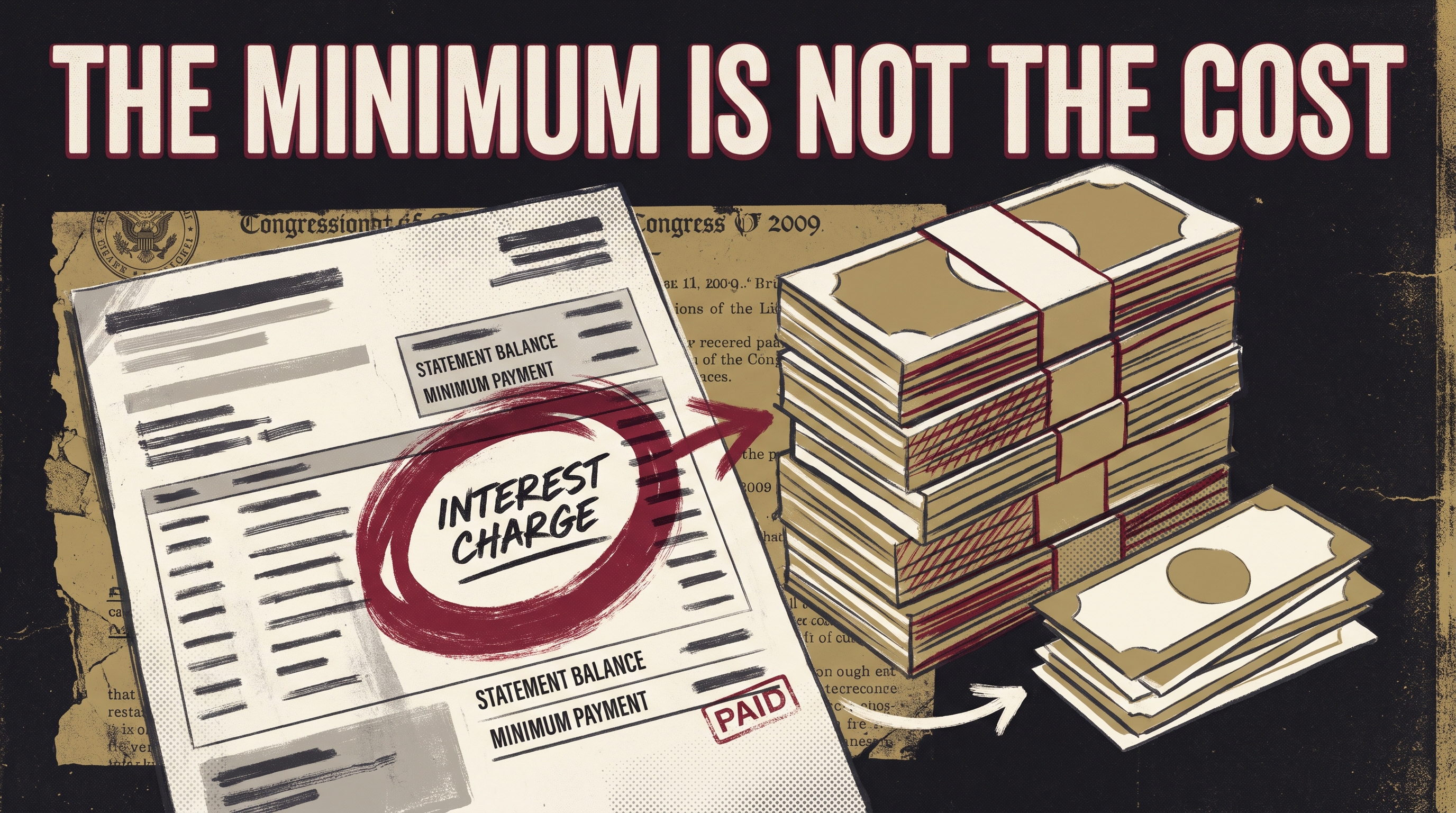
In 2009, Congress passed the Credit CARD Act. One change put a harder question on monthly statements: how long would repayment take if a customer paid only the minimum?
The statement also had to show a payment aimed at paying the current balance off in about three years, when the disclosure rules apply. A smaller monthly number could now sit beside a much longer road.
That was a shift in what the bill asked people to notice. The old question was, “Can I make this payment?” The new box made room for, “How much does stretching this out cost?”
The same balance could look manageable when seen as this month’s payment—and very different when seen over years.
What happened next?
The warning did not erase interest or choose a payment for the household. It made more of the trade-off visible.
Look past the payment to the full cost. The three-year figure is based on your current balance. New purchases, fees or rate changes can move the finish line. Find the number before adding another purchase.
The bill arrives. The power still goes out.
You keep paying the power bill. Yet one outage can leave you hunting for a charger. Why does this backup-power video begin with a Vietnam veteran’s “anti-grid” idea? Take a look at what he has put together.
Tap Here to Watch the Power-Backup Video →What can I do?
Give one card statement 15 minutes. Find the purchase interest rate, the minimum due and the minimum-payment warning. Write down the estimated repayment time and the three-year payment if shown.
Check the due date and any promotional rate’s end date. If the box is missing or unclear, ask the issuer to explain it. Do not put private card numbers on the worksheet.
Choose one next step: ask about a charge, review a payment you can afford, or speak with a reputable nonprofit credit counselor. Keep enough for essentials and required payments. Reading the box is today’s job; taking on new debt is not.

Illustrative household example. Use the worksheet for your own details.
My One-Card Cost Check
Date: __________ File under: Household Money
Find the full picture
Purchase interest rate:
Minimum due / due date:
Minimum-only repayment time:
Choose one next step
Three-year payment, if shown:
Question for issuer / date:
☐ No card or account number on this page.
Today’s win: You can see the repayment path behind one small monthly payment.
Useful skills. Even when your phone is dead.

The how-to is saved on your phone. But the screen will not come on.
Keep practical food and household skills in a book you can open without power. Pictures and steps cover growing, storing food and other skills worth having close.
What would you want on the shelf before you needed it? Look inside The Lost Frontier Handbook.
| Tap Here to Look Inside the Printed Handbook → |
Stay steady,
Seamus Gerry III
American Downfall
P.S. Was that repayment box easy to find? Hit reply and tell me. Forward this to someone sorting out holiday spending before it lands on a statement.
P.P.S. Want one part of the food bill closer to your own control? Our friends at 4 Foot Farm show the small-space steps, with indoor options. Start with a food you already like to eat. Click Here to See the COMPLETE Blueprint →