
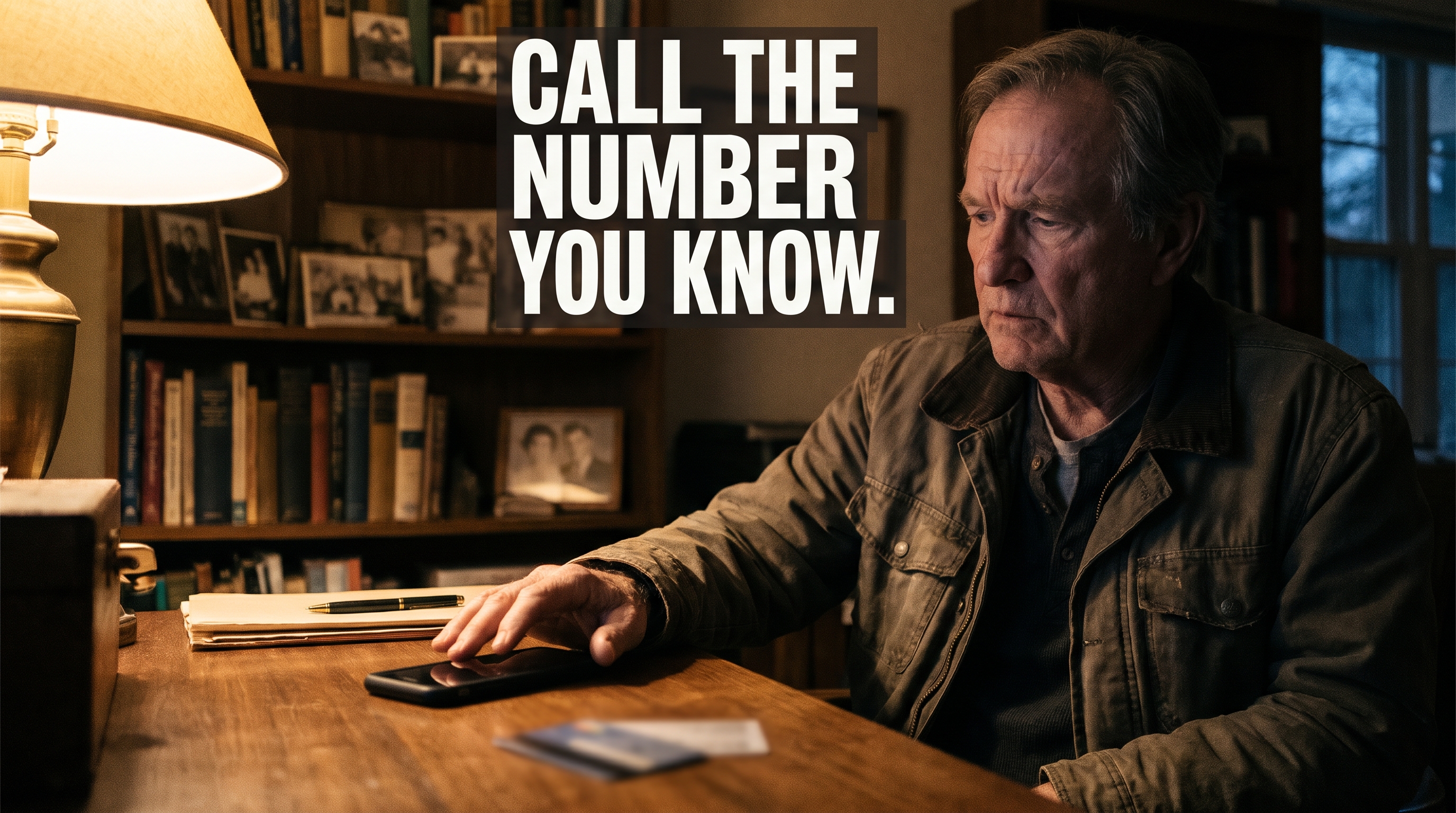
The caller knows your name. The screen even shows the bank’s name. Then comes the urgent instruction: move the money, read out a code, or act before the account is locked.
The part that looks official is the part you need to check.
SPONSORED · 4 FOOT FARM BLUEPRINT
Want one part of your grocery routine closer to home?
Start with a food you use every week. The COMPLETE digital 4 Foot Farm Blueprint shows small-space growing steps, including indoor options. See the $7 Black Friday offer and pick a first project that fits the home you already have.
| TAP Here for the COMPLETE Blueprint → |
Tonight’s Install
One useful change for the home you already have. Print the worksheet below and add it to your Household Resilience Network binder.
ACTION BRIEF
Time: 8 minutes
Do: Save the official contact number for one financial account.
Win: you can reach the bank without using anything an unexpected caller sends.
What’s happening now?
Holiday shopping is approaching, and AARP’s current holiday-fraud guide highlights the scams that travel with the season. A bank alert can sound more believable when you have been buying things online. The FTC’s rule is simple: end the unexpected contact and call the number on your card or a recent statement.
When a bank message reached the whole country

Illustrative historical reconstruction.
On March 6, 1933, Franklin Roosevelt declared a national bank holiday. Banks closed while the new administration dealt with a banking crisis. For households, the question was immediate: what was happening to the place holding their money?
On March 12, Roosevelt addressed the country by radio. His first fireside chat explained the banking situation and the steps being taken. The address came through a public channel, at a known time, with an identifiable speaker.
The closures and reopening were real government actions. They were not a private caller telling one person to move savings into a secret account. That difference is central to our comparison.
A message about money can create a powerful urge to act. Clear information can help people understand a real problem. A convincing voice can also be copied or misused.
The subject of the message does not establish who sent it.
The 1933 crisis was a system-wide event, not a model for today’s impersonation scams. We should not suggest a modern caller is connected to that history, or that a radio address solved every banking problem.
The useful question is narrower: can you check the message through a route that did not come from the person pressuring you?
Today, you have a route printed on the back of a bank card or listed on a statement. Use that route. You can ask whether there is a real problem without accepting the caller’s instructions first.
An urgent claim deserves an independent check. The ability to make that check is something you can prepare before the next unexpected call arrives.
Why roll a tiny stone over wet clay?
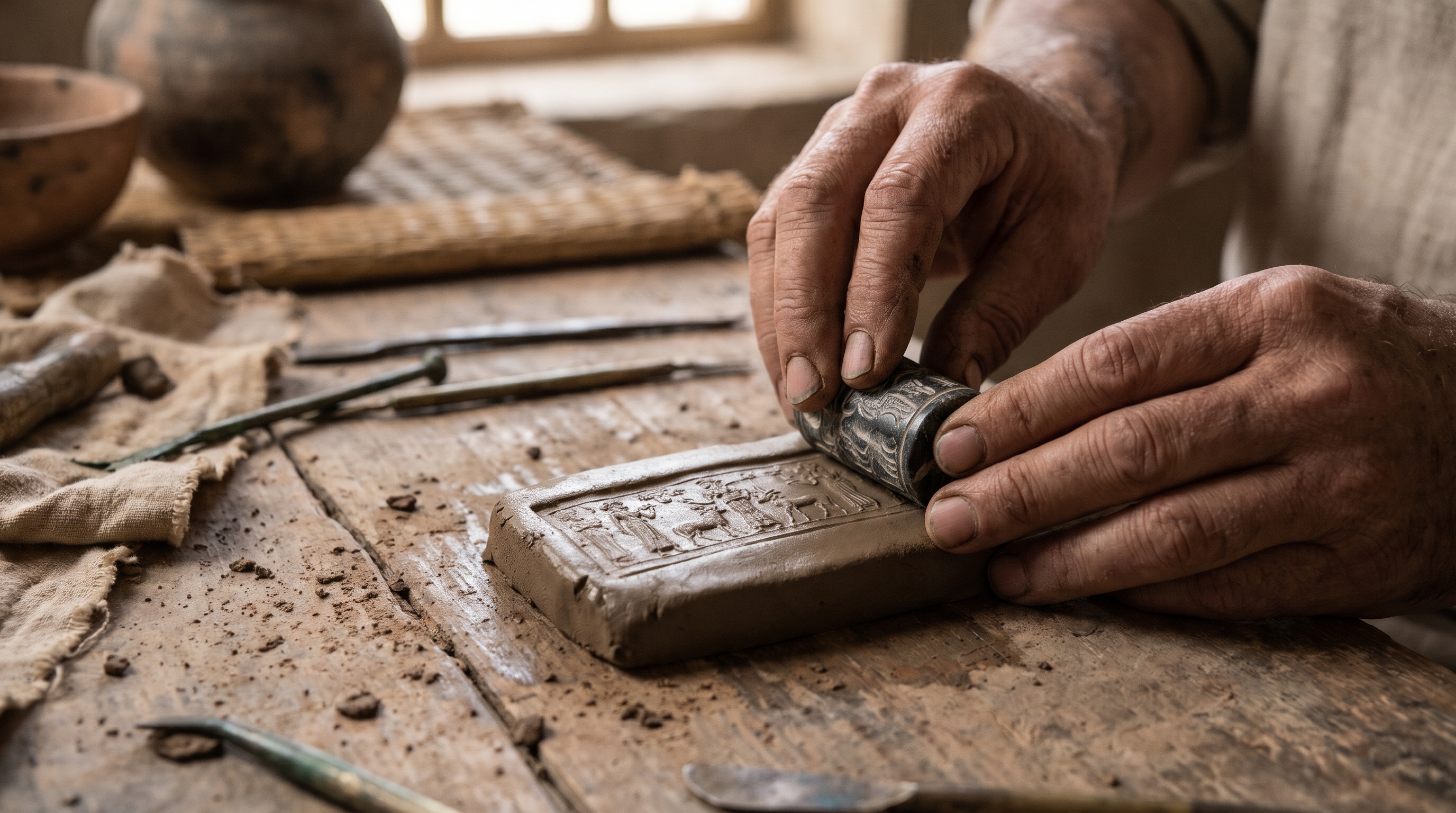
Illustrative historical reconstruction.
In ancient Mesopotamia, a small carved cylinder could carry a person’s identifying mark. Rolled over wet clay, it left a repeating image. These seals were used in business and administration to show ownership, identity, or authority.
The Metropolitan Museum holds an Old Babylonian example from about the eighteenth to seventeenth century BC. Other collections show how seals were used on documents and clay closures. A little object could leave a mark on a much larger transaction.
The mark mattered because trade required more than a spoken claim. People needed ways to connect goods or records with the person responsible for them. The seal gave them one physical method.
We should not confuse a cylinder seal with secure modern banking. A seal could be lost, stolen, or misused. Ancient people also faced problems of trust.
A mark alone did not make every transaction honest.
That limit makes the comparison more useful, not less. A familiar symbol can help identify a source, but it can also create confidence that someone else may try to exploit.
Today’s version may be a bank logo, a familiar name on caller ID, or a message that uses the right colors. Those things can be copied. They are clues, not a complete check.
Your independent callback changes the process. Instead of trusting the mark placed in front of you, you choose the route to the real institution yourself.
The stone seal and the phone screen belong to very different worlds. The shared question is still worth asking: what links this message to the person or institution it claims to represent? Do not let a familiar-looking surface answer that question for you.
SPONSORED · Prostadine
Another bathroom trip before morning?
Another trip down the hall. Another broken stretch of sleep. Why does this prostate-support story begin with astronauts in zero gravity?
| TAP Here for the Astronaut Connection → |
THE PATTERN TO KEEP
Across BOTH examples, a money message needed a checkable source; an official-looking surface was not the whole transaction.
What can I do tonight?
Take one bank card or recent statement. Save its official service number under a clear name in your phone. Write it in your household contact book, too.
If an unexpected caller claims trouble, hang up and use that saved number. Do not share a one-time code or move money because the caller tells you to.

HOUSEHOLD RESILIENCE NETWORK · BINDER WORKSHEET
Call the Number You Already Know
Date: __________________
Bank or account name—no account number
Official number saved?
Where is the paper copy?
Household callback rule agreed?
Status Check
Win: you can reach the bank without using anything an unexpected caller sends.
SPONSORED · 4Patriots
What could you keep running in a blackout?
Your phone is fading. The fridge has gone quiet. A rechargeable power station gives chosen devices another source of power. Could this one cover the essentials you would miss first?
The takeaway
Save the official contact number for one financial account. Keep the change small enough to finish, and leave a record you can check again.
Stay steady,
Seamus Gerry III
American Downfall
Know the pattern. Keep your choices.
P.S. Has a caller ever tried to keep you on the line while you “fixed” an account? Reply with the tactic, without sharing private details. Forward this to the person who handles the household bills.
One more useful read: Put a second address inside the parcel →
P.P.S. · 4 FOOT FARM BLUEPRINT
Start with one food your household already eats. See the Modern Victory Garden →
AARP: holiday fraud
FTC: independent callbacks
FDIC: bank impersonation
FDR Library: banking address
FDIC: 1930–1939
Met: Babylonian seal
Smithsonian: what seals did
Images are illustrative reconstructions, not archival photographs.