
Your Daily Install connects what’s happening now with a useful lesson from the past—and one small thing you can do at home.
Print the worksheet, fill it in, and add it to your Household Resilience Network binder.
What’s happening now?
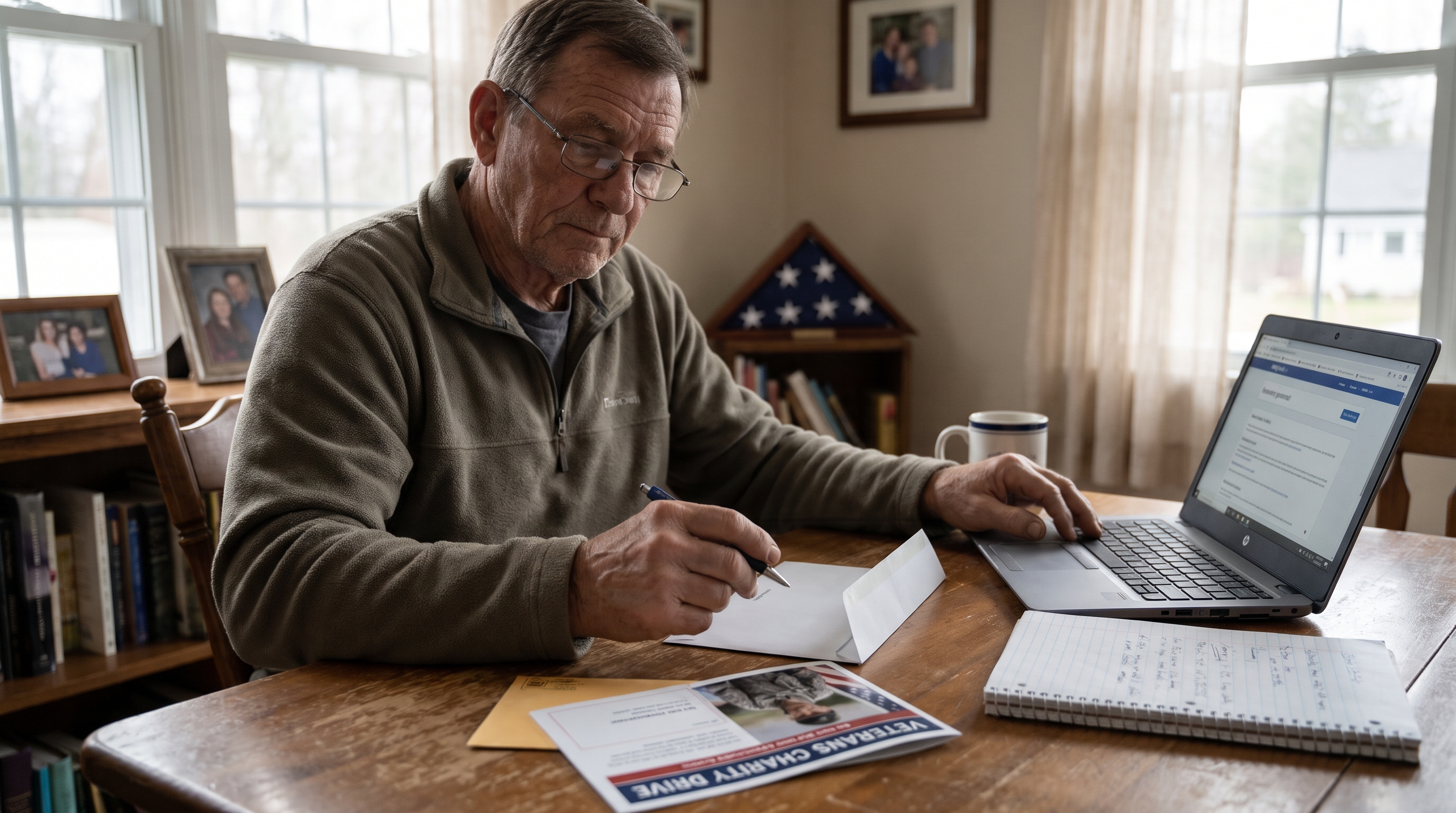
The letter has a flag. The name sounds familiar. You want your gift to reach someone who served—not disappear into a story built to make you give quickly.
Veterans Day is November 11, five days away. Before responding to an appeal, use the FTC’s advice: check the exact organization and how its donations are used.
A cause and an organization are two different things. Supporting veterans does not require trusting the first caller, mailing or donation link that uses the word.
Has this happened before?

In July 2018, the FTC and state partners announced Operation Donate with Honor. It brought together more than 100 actions against schemes falsely promising to help veterans and service members.
One case concerned Help the Vets. Between 2014 and 2017, the organization had taken in about $20 million. Its appeals described help with medical care, suicide prevention and family retreats.
Those were powerful reasons to care. But the FTC alleged that 95 percent of donations went to fundraising, administrative costs, and the operator’s salary and benefits.
A donor could recognize the need and still know very little about the group asking for money. Several names were used, including names that sounded like separate veterans causes.
What happened next?
The case led to court orders and restrictions, and the wider effort included public education. Enforcement came after people had already given. A convincing appeal had moved faster than the donor’s check.
That does not make every veterans charity suspect. It shows why a familiar cause should lead to one more question: which exact group will receive this money, and what does it do with it?
You can choose a group yourself, look at independent reports, and give through its verified website. The caller does not need to choose the route for you.
Why are the first steps the stiffest?
You stand up, then wait for those first stiff steps to ease. This joint-support video starts with the fluid inside your joints. What does that have to do with its daily formula?
| Watch the Joint-Fluid Story → |
What can I do?
Spend 15 minutes checking one appeal. Write the exact legal name and website. Search that name with “complaint,” “fraud” and “scam.” Read an independent report such as BBB Wise Giving Alliance or CharityWatch. Leave the donation decision until after the check.

My Give-With-Confidence Check
1. Identify the group
☐ Name matches the appeal, not just a similar name
2. Check the work
☐ Fundraising and program spending reviewed
3. Choose my next step
☐ No rushed payment or personal account used
A search result or tax-exempt listing alone does not prove a group uses gifts well. Read the actual report. Use a payment method you can track, and keep your receipt.
Today’s win: one appeal has been checked, and your choice is based on the group rather than the pressure.
What if the next handful came from home?

Herbs for dinner. Greens for a sandwich. The COMPLETE 4 Foot Farm Blueprint shows how to start with food you already eat, using a small outdoor spot or an indoor setup.
See the current $7 offer: all 10 Action Plans, both bonuses and instant digital access.
| See the $7 Complete Blueprint → |
Stay steady,
Seamus Gerry III
AmericanDownfall.com
P.S. What usually makes you choose a charity: local work, someone you know, or an independent report? Hit reply and tell me. Forward this to someone planning a Veterans Day donation.
P.P.S. Two useful next reads: