
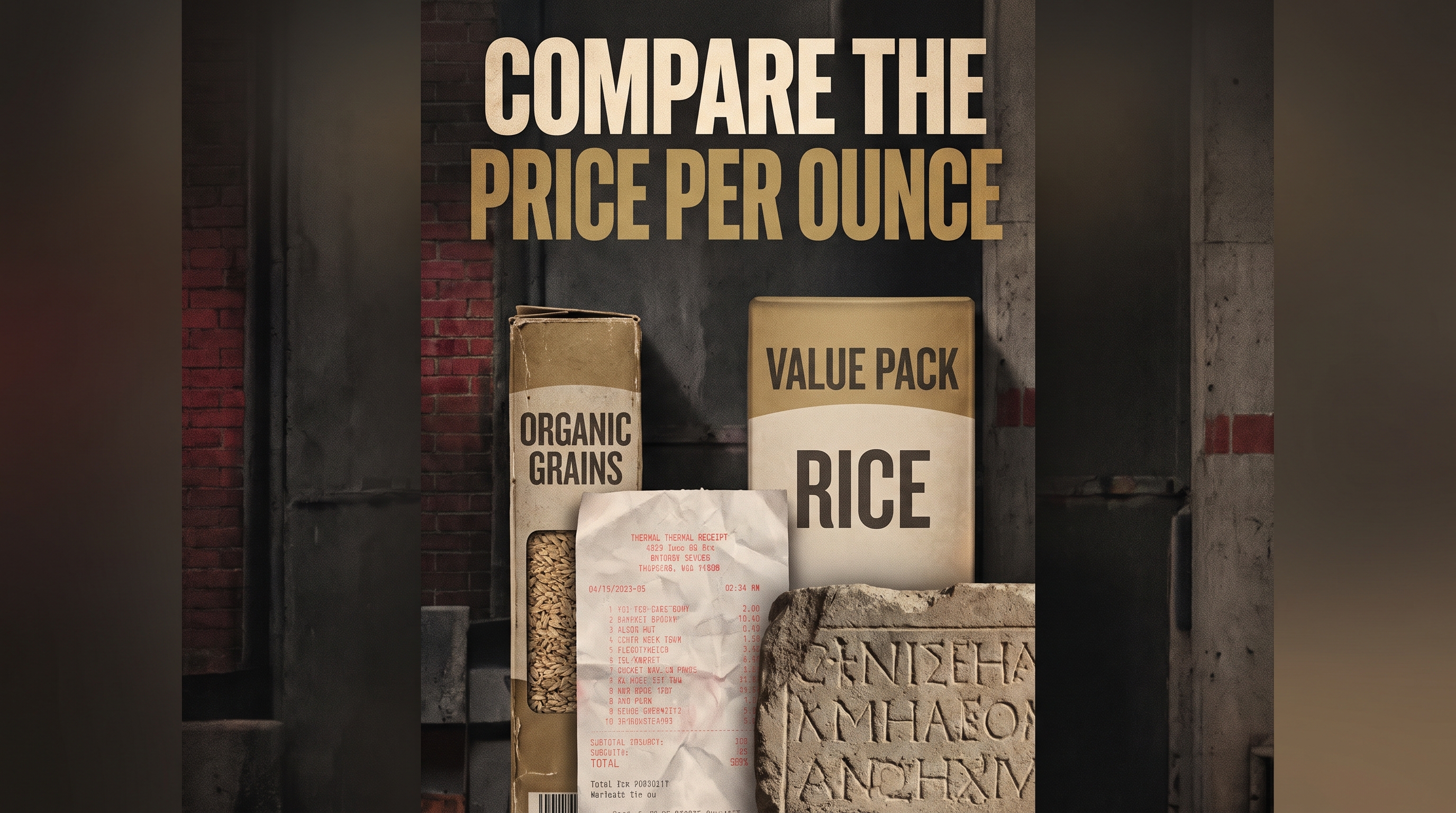
The box looks familiar. The price looks familiar. You put it in the cart. Only at home do you see that it runs out a little sooner.
Today’s check takes about 10 minutes.
What would your backup power actually run?
Check the devices and the outlets before you put money down on a battery station. The walkthrough gives you a place to start.
| See the 2200X Setup → |
Today’s Install
Print the worksheet, fill it in, and add it to your Household Resilience Network binder.
Action brief
Time · About 10–15 minutes
Cost · Use what you already have
Win · You know the real price difference for one food you buy often.
What’s happening now?
The Bureau of Labor Statistics is due to release October’s Consumer Price Index on Tuesday, November 10. That report tells us how prices changed across a wide set of goods and services. At your shelf, there is a smaller question you can answer today. How much does one ounce cost now, compared with the last box or a different size?
Has this happened before?
The small shelf tag that made the math visible
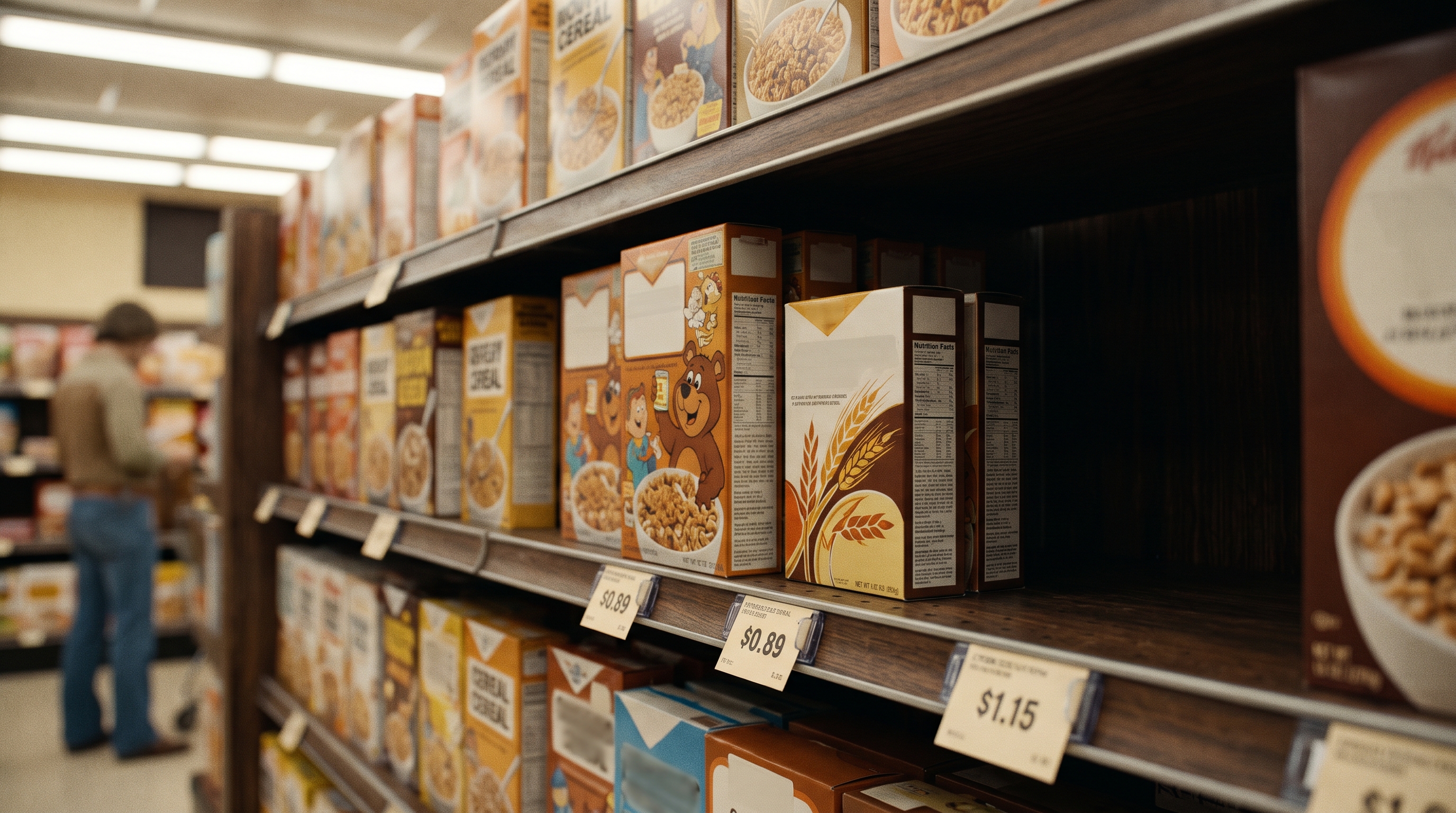
By the early 1970s, U.S. stores were trying different ways to show what a given amount of food cost. A shopper could see the price of a box on the shelf. To compare a tall box with a short one, the shopper had to find the weight, do the math, and hope both packages used the same measure.
The National Institute of Standards and Technology traces modern U.S. unit pricing to that era. In 1979, the National Conference on Weights and Measures adopted a model rule for it. States could use the rule as a guide. It was not one change that put the same tag in every store at once.
A unit price is the price of a set amount, such as one ounce. That little number answers a question the shelf price cannot. If two boxes cost four dollars but one holds ten ounces and the other holds twelve, the shopper can see which one gives more for the money.
The shelf tag helps only when it uses the same unit for both boxes. A price per pound can look bigger than a price per ounce even if the food costs exactly the same by weight. That is why the layout and the words on the tag matter.
The model rule was a step toward making a fair comparison easier at the shelf. You can do the same thing with a phone calculator when the tag is missing or uses a different measure. Start by finding out what each dollar actually buys.
What happened next?
A price is only useful for comparison when it is tied to a clear amount.
Which five questions would you ask about a gold IRA?
The name on an account tells you little about the work and costs that come with it. Use the free guide to put five questions on paper before moving money.
| Request the Free Gold IRA Guide |
What can I do?
If the price is the same and the package holds less, you pay more per ounce. A lower price per ounce helps only if you can use the food before it goes to waste.
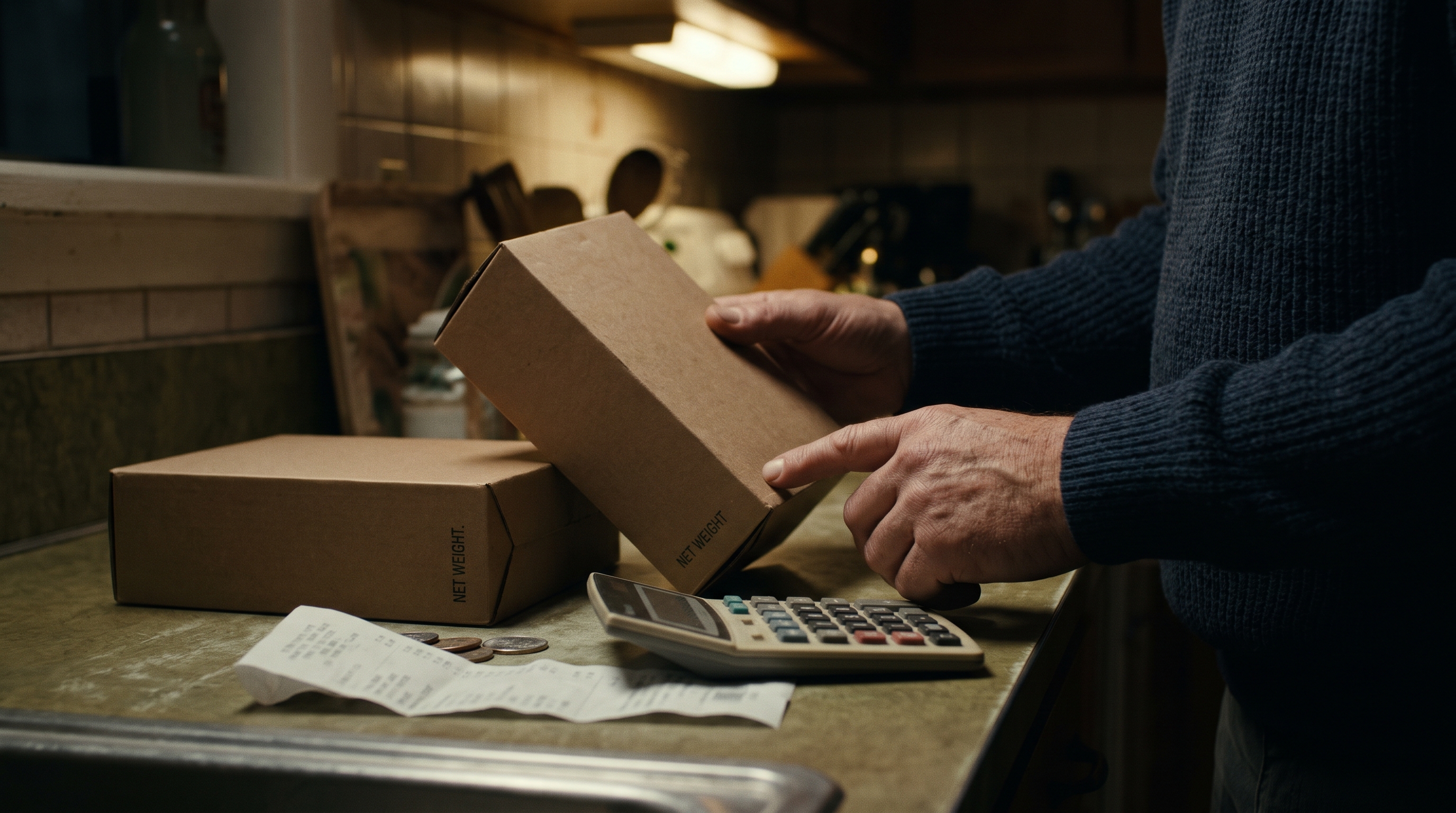
1. Pick two sizes of the same kind of food, or use the old and new packages.
2. Divide each price by the number of ounces. In an example, a $4 twelve-ounce box is about 33 cents per ounce. A $4 ten-ounce box is 40 cents per ounce.
3. Write down the better value you can actually use. Take that number with you next time.
My Two-Box Check
☐ I finished the check or set a date for the next step.
Status check. You know the real price difference for one food you buy often.
Takeaway. Put the amount next to the price.
Stay steady,
Seamus Gerry III
AmericanDownfall.com
P.S. Which package in your kitchen seems to run out faster than it used to? Hit reply and tell me. If this would help a friend, forward it to them.
P.P.S. Two useful next reads:
What fresh food could you cross off a future receipt?
Pick one ingredient you buy on repeat. The Modern Victory Garden shows ways to start in a container, on a patio, or indoors.
| See the Modern Victory Garden → |