
The Supreme Court just struck down the Trump administration’s emergency tariff regime.
But the victory lap was short-lived. Within hours, the administration announced a new plan: a sweeping 15% global tariff, enacted under different executive authority.
The wall is being rebuilt before the dust has even settled.
Right now, the average American household is already paying an estimated $600 to $700 per year in hidden tariff costs. The Strait of Hormuz is choked off by conflict, driving the fastest rise in gasoline prices in three decades. And the national debt just breached $39 trillion.
We are watching a superpower try to tax its way out of a structural decline.
The assumption in Washington is that the United States is simply too big, too wealthy, and too central to the global economy to fail. They believe the world must trade with us, on our terms, no matter the cost.
But history is littered with the ruins of empires that believed their economic dominance was permanent.
And the most terrifying parallel to America’s current crisis isn’t found in Rome or London. It’s found in the sands of West Africa.
The Empire That Controlled Everything
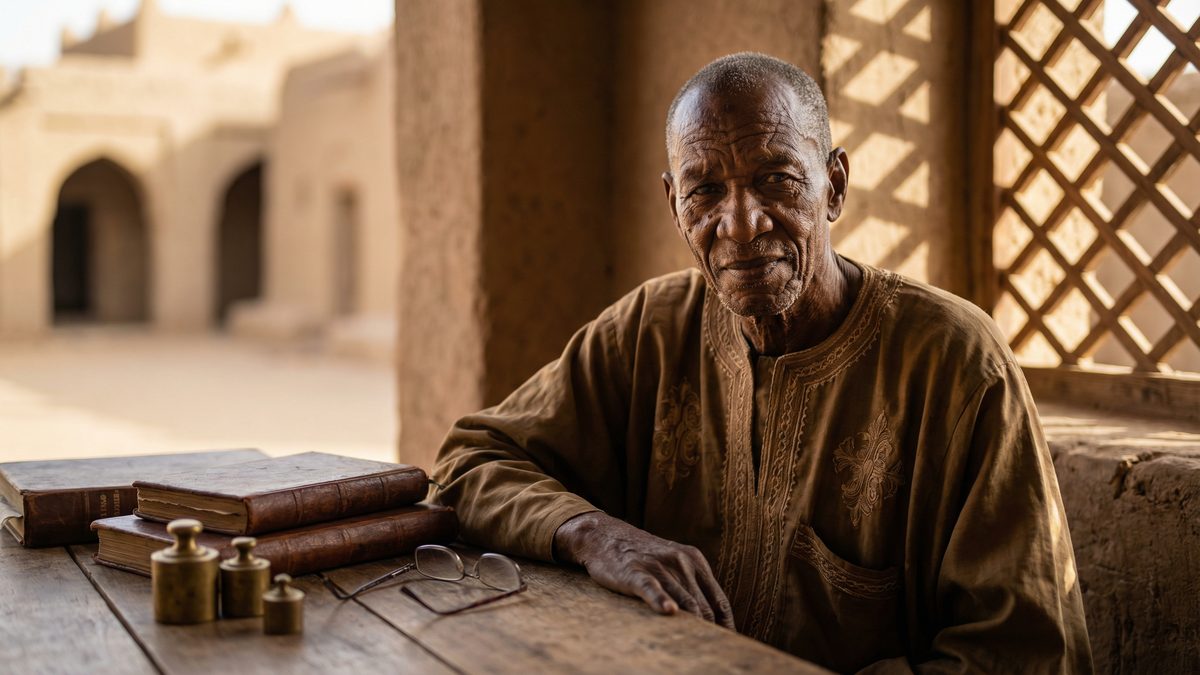
In the 16th century, the Songhai Empire was the wealthiest and most powerful economic engine on earth.
Stretching across modern-day Mali, Niger, Nigeria, and Senegal, the Songhai controlled the “reserve currency” of the medieval world: the trans-Saharan trade routes. Every ounce of gold, every block of salt, and every luxury good moving between sub-Saharan Africa and the Mediterranean had to pass through their territory.
They were the undisputed masters of global commerce.
Under the rule of Askia Daud, the empire reached its zenith. The capital city of Gao was a metropolis of wealth. The cultural center of Timbuktu housed the greatest libraries and universities in the world.
The Songhai believed their position was unassailable.
Because they controlled the critical chokepoints—specifically the vital salt mines of Teghazza—they assumed the rest of the world would always have to play by their rules. They grew complacent, bureaucratic, and internally divided by political succession crises.
They didn’t realize that the world was already building workarounds.
The 72-Hour Collapse
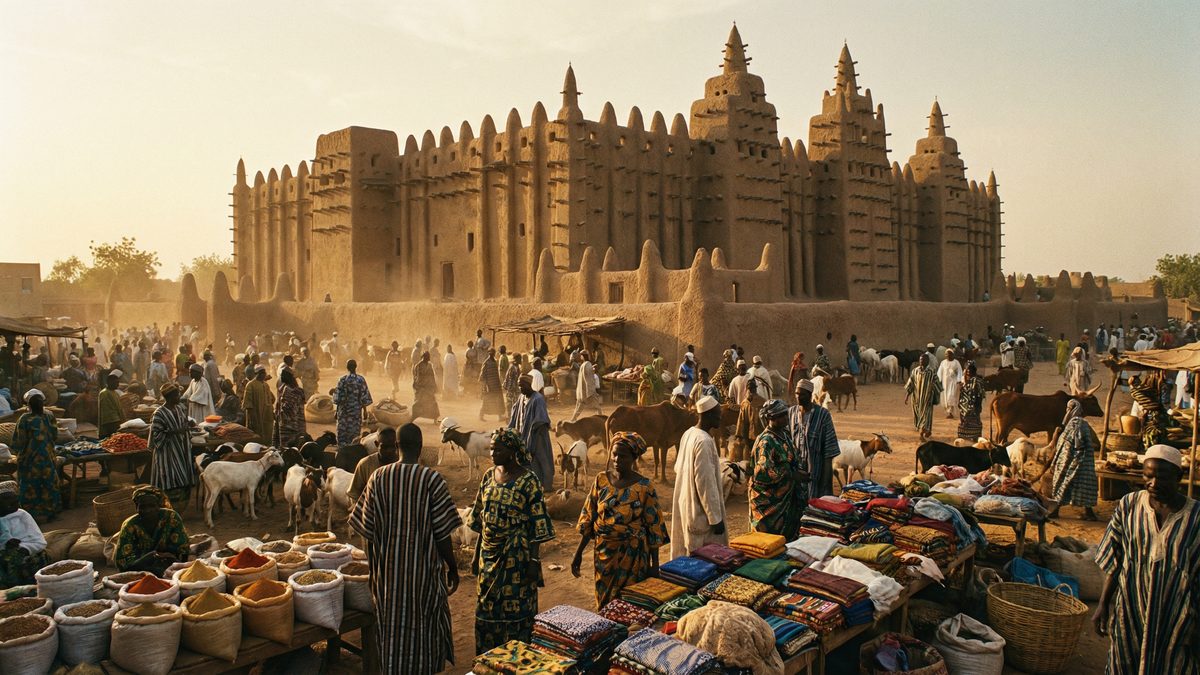
While the Songhai elites fought over political power in Gao, their rivals were adapting.
Portuguese merchants began establishing coastal trade routes, slowly draining wealth away from the interior. But the fatal blow came from the north.
Morocco’s Sultan Ahmad al-Mansur coveted the Songhai wealth. He knew he couldn’t beat their massive army in a traditional war. So he didn’t try.
He used asymmetric leverage.
In 1585, Moroccan forces seized the Teghazza salt mines, cutting off the Songhai’s primary revenue stream. Then, in March 1591, a small Moroccan expeditionary force marched across the Sahara and met the massive Songhai army at the Battle of Tondibi.
The Songhai fielded 30,000 men armed with traditional spears and arrows. The Moroccans brought a fraction of that number—but they brought early muskets called harquebuses.
The wealthiest empire on earth collapsed in a single afternoon.
The Moroccan firearms routed the Songhai forces. The capital was sacked. The trade networks shattered. The region descended into a fragmentation from which it never fully recovered.
The Songhai didn’t fall because they were poor. They fell because they relied on a legacy system while their adversaries embraced new technology and new trade routes.
The Modern “Muskets”
America is currently playing the role of the Songhai Empire.
We control the global reserve currency. We control the financial chokepoints through SWIFT and sanctions. And we assume the world has no choice but to accept our terms, our tariffs, and our debt.
But the world is already building the workarounds.
While Washington fights over Supreme Court rulings and 15% global tariffs, our adversaries are moving. In 2025, China redirected its trade away from US markets and posted a $1 trillion trade surplus. Nations are actively de-dollarizing their reserves.
The tariffs aren’t protecting our economy; they are accelerating our isolation.
Just as the Portuguese coastal trade bypassed the Songhai interior, the BRICS nations are building financial infrastructure that bypasses the US dollar.
And just as the Moroccan muskets rendered the Songhai spears obsolete, the new global economic architecture is rendering America’s tariff walls irrelevant. We are trying to protect a 20th-century industrial model while the rest of the world builds a 21st-century supply chain.
The Illusion of Invincibility
The most dangerous phase of any empire is the moment it begins to believe its own propaganda.
For the Songhai, this was the belief that the Sahara Desert was an impenetrable barrier. They assumed that no army could cross the desert in sufficient numbers to threaten their core territory. They were right about the numbers, but wrong about the technology.
They prepared for the last war, not the next one.
Today, American policymakers operate under a similar delusion. They believe the oceans protect us, and that our financial hegemony is a permanent law of nature. They assume that because the dollar has been the reserve currency for 80 years, it will be the reserve currency forever.
But financial gravity always wins.
When you run a $39 trillion national debt, you are borrowing from the future to pay for the present. When you impose sweeping tariffs, you are taxing your own citizens to protect inefficient industries. You are not projecting strength; you are projecting vulnerability.
The Songhai learned this lesson the hard way. When the Moroccan forces arrived at Tondibi, the Songhai attempted a desperate tactic: they tried to stampede a herd of cattle into the Moroccan lines.
It was a tactic from a bygone era. The noise of the Moroccan muskets terrified the cattle, causing them to turn around and trample the Songhai lines instead.
Their own defensive measure became the instrument of their destruction.
This is precisely what is happening with America’s tariff policy. Designed to protect American workers, the tariffs are instead driving up the cost of living, fracturing supply chains, and accelerating the very economic decline they were meant to prevent.
The Wealth Extraction Engine
To understand the true cost of this policy, you have to look past the political rhetoric and examine the math.
The average American household is now paying an estimated $600 to $700 per year in hidden tariff costs. This is not a tax paid by foreign governments; it is a tax paid by you at the checkout counter.
It is a wealth extraction engine disguised as patriotism.
And it is happening at the exact moment when the American consumer is already stretched to the breaking point. The Strait of Hormuz conflict has driven gasoline prices to their fastest rise in three decades. The cost of basic necessities continues to climb.
The system is squeezing the middle class from every direction.
Goldman Sachs has raised its recession probability to 30%. Moody’s puts it at 49%. The New York Fed’s DSGE model is flashing red. The economic indicators are all pointing toward a significant contraction.
Yet, instead of reducing the burden on the American people, the government is doubling down on the policies that caused the problem in the first place. They are rebuilding the tariff wall, ignoring the fact that the world is already walking around it.
The Psychology of Collapse
When an empire begins to fracture, the first casualty is trust.
The Songhai citizens didn’t wake up one morning and decide to abandon their empire. They lost faith in the system gradually, as the government proved incapable of protecting the trade routes that sustained their way of life.
When the state fails to provide security, the people seek it elsewhere.
We are seeing the exact same psychological shift in America today. The anxiety isn’t just about the price of groceries or the cost of gas. It’s a deeper, more profound realization that the institutions we relied on are no longer functioning.
The social contract is being rewritten in real-time.
When the government prints trillions of dollars to fund foreign wars while domestic infrastructure crumbles, trust evaporates. When politicians debate the nuances of tariff law while working families struggle to afford basic necessities, the system loses its legitimacy.
The Songhai elites in Gao were completely disconnected from the reality of the Tuareg salt workers in Teghazza. They lived in a bubble of wealth and privilege, assuming the system would hold simply because it always had.
Our modern elites suffer from the same fatal disconnect. They view the economy through the lens of stock market indices and GDP growth, ignoring the lived reality of the American middle class.
The Pivot to Localism
The collapse of the Songhai Empire wasn’t the end of the world. It was simply the end of a specific, centralized system of control.
For the people who survived, the collapse was a transition. It forced them to abandon their reliance on the imperial trade network and build something new.
They traded global dependence for local resilience.
This is the pivot that every American family must make today. The era of cheap, abundant goods flowing seamlessly across the globe is over. The tariff wars, the geopolitical conflicts, and the fracturing of the dollar reserve system guarantee that the future will be more expensive and less predictable.
You cannot vote your way out of a structural economic shift.
But you can build a firewall around your household. You can create a micro-economy that operates independently of the chaos in Washington and the conflict in the Strait of Hormuz.
The Songhai citizens who thrived after the fall of Gao were the ones who already knew how to survive without it. They had the skills, the tools, and the mindset to adapt to a decentralized world.
The Hidden Cost of Complacency
The most tragic aspect of the Songhai collapse is that it was entirely preventable.
The empire had the resources, the manpower, and the intelligence to adapt to the changing world. They simply lacked the political will to do so. They were paralyzed by internal divisions and blinded by their own past success.
They chose the comfort of the familiar over the necessity of change.
America is facing the exact same choice today. We can continue to rely on the legacy systems of the 20th century, hoping that tariffs and debt will somehow protect us from the realities of the 21st century. Or we can acknowledge that the world has changed and adapt accordingly.
The longer we wait, the more painful the transition will be.
Every day that we delay building local resilience is a day that we remain vulnerable to the next supply chain shock, the next geopolitical crisis, or the next economic contraction.
The Songhai learned this lesson too late. When the Moroccan muskets fired at Tondibi, the debate was over. The time for preparation had passed.
We still have time. But the window is closing rapidly.
Building Your Own Taoudeni

When the Moroccans seized the Teghazza salt mines, the native Tuareg workers didn’t surrender.
They refused to work for the new regime. Instead, they migrated south to Taoudeni and built a completely new supply chain from scratch. They survived the collapse of the empire because they had the skills to operate outside of it.
That is the exact blueprint for the American family today.
You cannot stop the $39 trillion debt crisis. You cannot stop the tariff-driven inflation that is about to hit your grocery bill. But you can decouple your household from the fragile imperial system.
True wealth is what you can produce, not what you can purchase.
The families who will thrive in the coming decade are those building local resilience right now. They are the ones who recognize that the system is breaking and are taking proactive steps to insulate themselves from the fallout.
If you want to protect your family from the coming supply chain shocks, you need to start producing your own calories. The 4ft Farm Blueprint is the most efficient way to turn a tiny space into a high-yield food asset, completely independent of global trade wars.
For the physical tools and off-grid skills required to maintain your household when the system fractures, Homesteader Depot provides the exact gear you need to build your own local infrastructure.
And to understand the deeper timeline of this economic shift, The Ready Report and The Self Reliance Report track these historical patterns in real-time, giving you the early warning system the Songhai never had.
The empire’s walls are crumbling. It’s time to build your own.