The United States is currently burning roughly $1 billion every single day on a war with no defined exit strategy.
In just five weeks, Operation Epic Fury has drained an estimated $35 billion from the American treasury. That is money that will never fix a bridge, never secure the power grid, and never pay down the crushing $39 trillion national debt.
But the true cost is much higher.
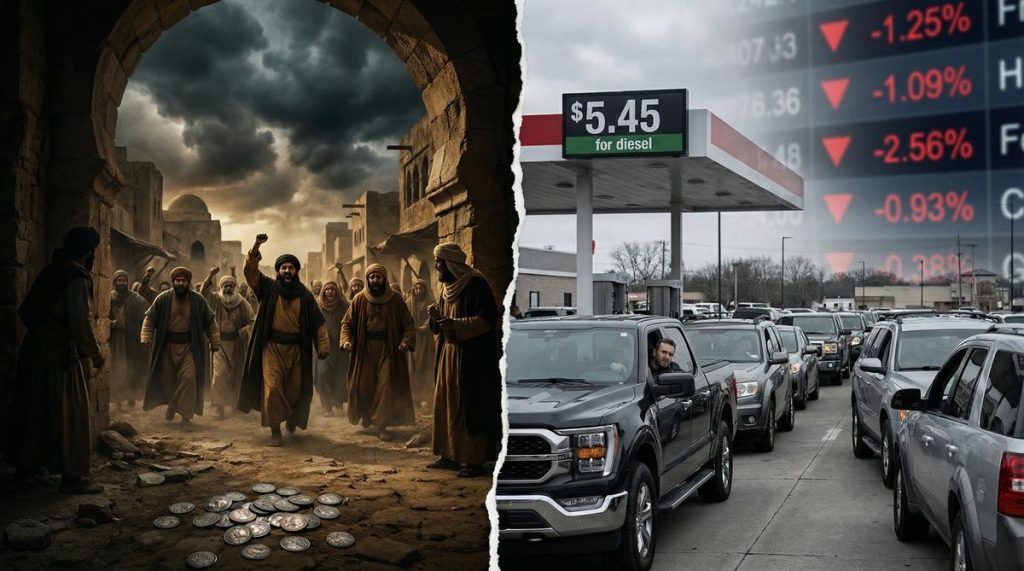
When you factor in the skyrocketing price of diesel, the fertilizer shocks hitting American farmers, and the $5.4 trillion wiped out of the stock market, the average American household is paying a hidden tax of over $400 a month just to keep this conflict going.
And the Strait of Hormuz remains closed.
We are watching the real-time financial exhaustion of a superpower. The Federal Reserve is paralyzed. The national debt requires over $1 trillion a year just in interest payments. And yet, the political establishment continues to fund a multi-front global conflict while the domestic economy cracks under the pressure.
We have seen this exact pattern before.
It is the story of the largest empire the world had ever seen, an empire that conquered three continents in record time—only to bankrupt itself and collapse into civil war in less than three years.
The Empire That Conquered the World
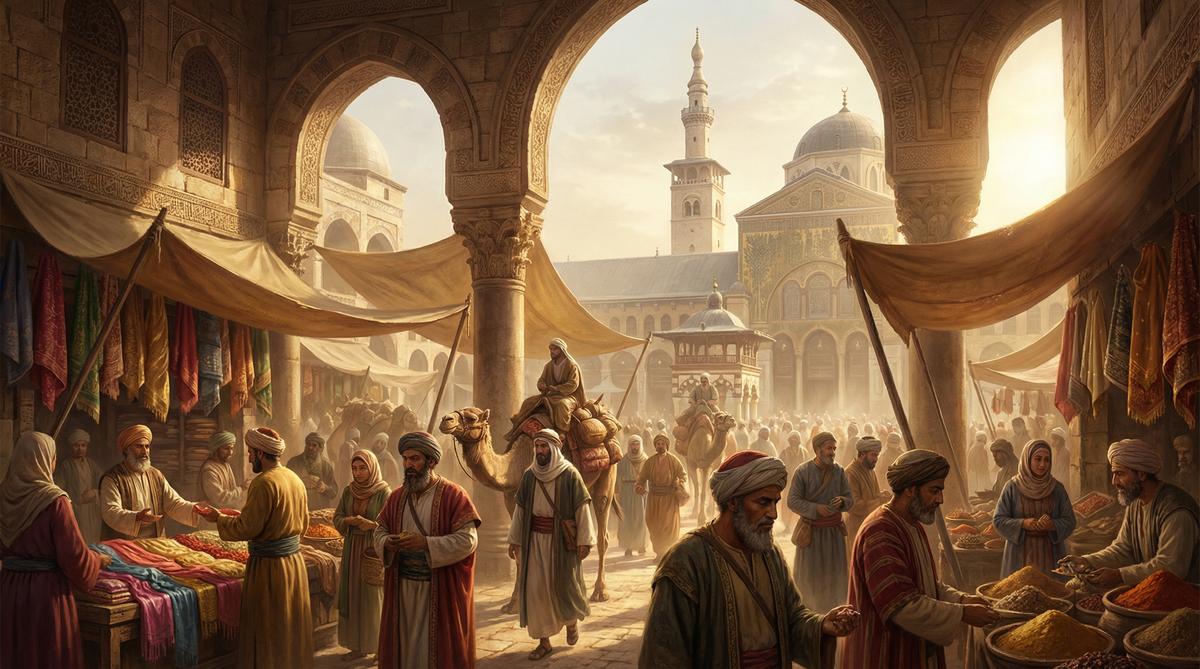
In the early 8th century, the Umayyad Caliphate was the undisputed superpower of the globe.
Ruling from Damascus, their empire stretched from the sun-baked plains of Spain in the west to the rugged mountains of Central Asia in the east. They controlled the wealth of North Africa, the trade routes of the Middle East, and the agricultural heartlands of the Mediterranean.
They were a military juggernaut.
They conquered the Iberian Peninsula in just seven years. They pushed deep into India. They seemed entirely invincible, fueled by a relentless expansionist doctrine and a massive, highly trained standing army.
But their strength was an illusion.
The Umayyads were fighting on three fronts simultaneously. They were bleeding silver and gold to maintain garrisons thousands of miles from their capital. The cost of their endless wars was staggering, and the burden fell entirely on the working class.
To fund their military overextension, the Umayyad elite squeezed their own citizens. They imposed crushing taxes on the mawali—the non-Arab converts who made up the backbone of the empire’s economy.
The people who grew the food, built the cities, and paid the taxes were treated as second-class citizens, bled dry to fund foreign wars they did not support.
The Breaking Point
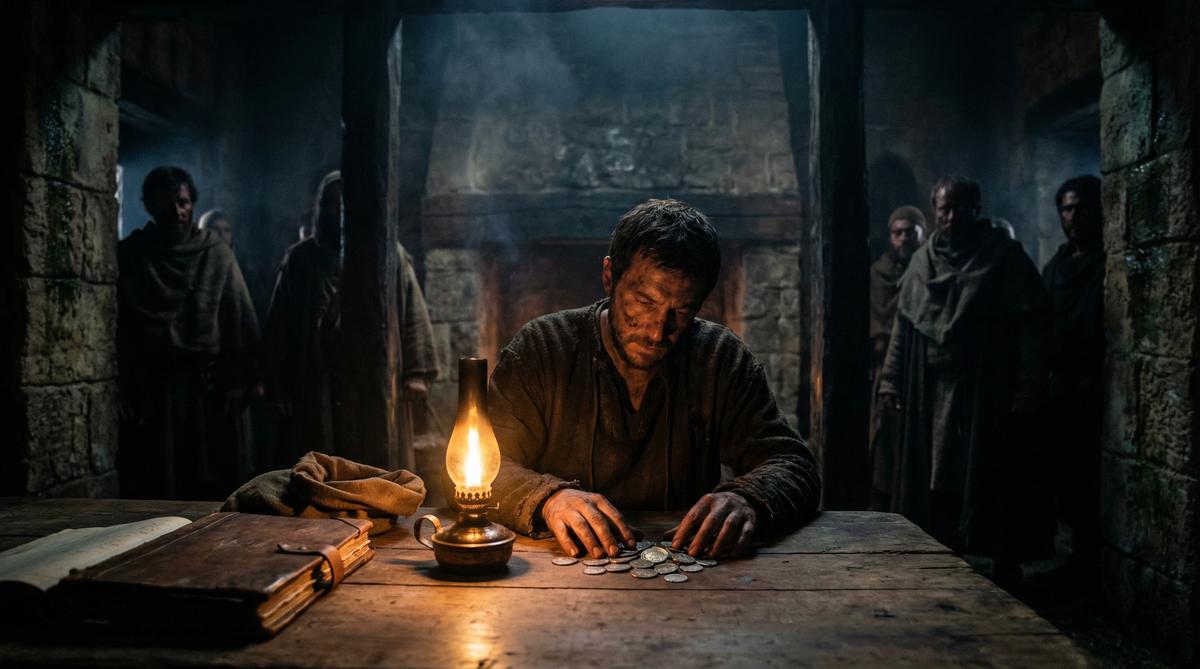
The breaking point did not come from a foreign invasion. It came from within.
In 747 AD, the Abbasid Revolution began in the eastern province of Khorasan. It was not a sudden, unpredictable event. It was the inevitable mathematical result of decades of financial exhaustion and political arrogance.
The empire had simply run out of money and goodwill.
When the revolt began, the Umayyad military was too stretched, too exhausted, and too underfunded to stop it. The very people the empire relied on to fight its wars had turned against it.
In less than three years, the largest empire in human history collapsed. The ruling family was overthrown, the capital was moved, and the centralized power structure shattered.
The parallel to modern America is terrifying.
Today, the United States is fighting a proxy war in Ukraine, launching airstrikes in Somalia, engaging in a massive trade war with China, and burning $1 billion a day in the Middle East.
We are funding this global overextension with printed money and debt, while the American middle class is crushed by inflation, $4-a-gallon gasoline, and a cost of living that makes basic survival feel like a luxury.
The Umayyads proved that you cannot fund a global empire by bankrupting your own citizens. The math always catches up.
The Path to Resilience
It is easy to look at the fragility of these global systems and feel a sense of despair. To see yourself as a pawn in a game of empires, watching the value of your labor evaporate to fund endless conflicts.
But history teaches another, more powerful lesson.
When the great, centralized systems fail, they create a vacuum. And into that vacuum rushes the opportunity for something new. The survivors of the Umayyad collapse weren’t the ones who simply hid. They were the ones who rebuilt, who focused on their local communities, who strengthened their own skills, and who created resilient networks of mutual support.
The Umayyad prince who survived the collapse, Abd al-Rahman I, didn’t try to save the dying empire. He fled to Spain and built a new, thriving civilization from the ground up.
This is not a call to hide from the world. It is a call to build a better one, starting in your own backyard.
When the federal government is paralyzed by debt and the global supply chains break down, the only security that matters is the security you have built with your own hands.
The Blueprint for Hope

Building a resilient future starts with a single, powerful step: taking control of your own resources.
You cannot control the price of oil in the Strait of Hormuz. You cannot stop the Federal Reserve from printing money. But you can absolutely control the food that goes on your family’s table.
The 4ft Farm Blueprint is not just about survival; it’s about sovereignty. It’s the first chapter in your family’s story of independence, a story where you are the builder, not the victim.
Every raised bed you plant is a direct hedge against inflation. Every calorie you produce is a declaration of independence from a fragile, overextended system.
If you want to understand the deeper cycles of history and how to position your family ahead of the curve, you need to read The Pattern Ledgers. It is the definitive guide to recognizing the historical rhymes that the mainstream media ignores.
For the tactical skills required to build true local resilience, Survival Stronghold and Self Reliance Report provide the daily intelligence you need to turn your property into a fortress of stability.
And when you are ready to build the infrastructure of independence—from water catchment to off-grid power—Homesteader Depot has the tools and the knowledge to make it happen.
The empire may be overextended, but your family doesn’t have to be. Start building today.