A special report from Shamus Gerry III
Another week, another wave of grim headlines. The national debt spirals past any recognizable limit, political factions dig in for a war of attrition, and the very systems that keep the country running feel like they’re grinding to a halt.
It feels unprecedented. It feels terminal.
But it is not.
More than 900 years ago, nestled in the highveld of Southern Africa, a city of stunning sophistication rose and fell. It was a center of immense wealth, trade, and power, built by an indigenous African civilization.
It was called Great Zimbabwe.
And its silent, empty ruins offer a chilling prophecy for what happens when a society exhausts its resources, severs its economic lifelines, and allows internal divisions to fester.
The Gilded Cage of Power
At its peak in the 14th century, Great Zimbabwe was a global player. It was the heart of a vast trade network that stretched to China, Persia, and the Arab world. Gold, ivory, and exotic goods flowed from its territories.
In return, the elites of Great Zimbabwe adorned themselves with Chinese porcelain, Persian faience, and Syrian glass.
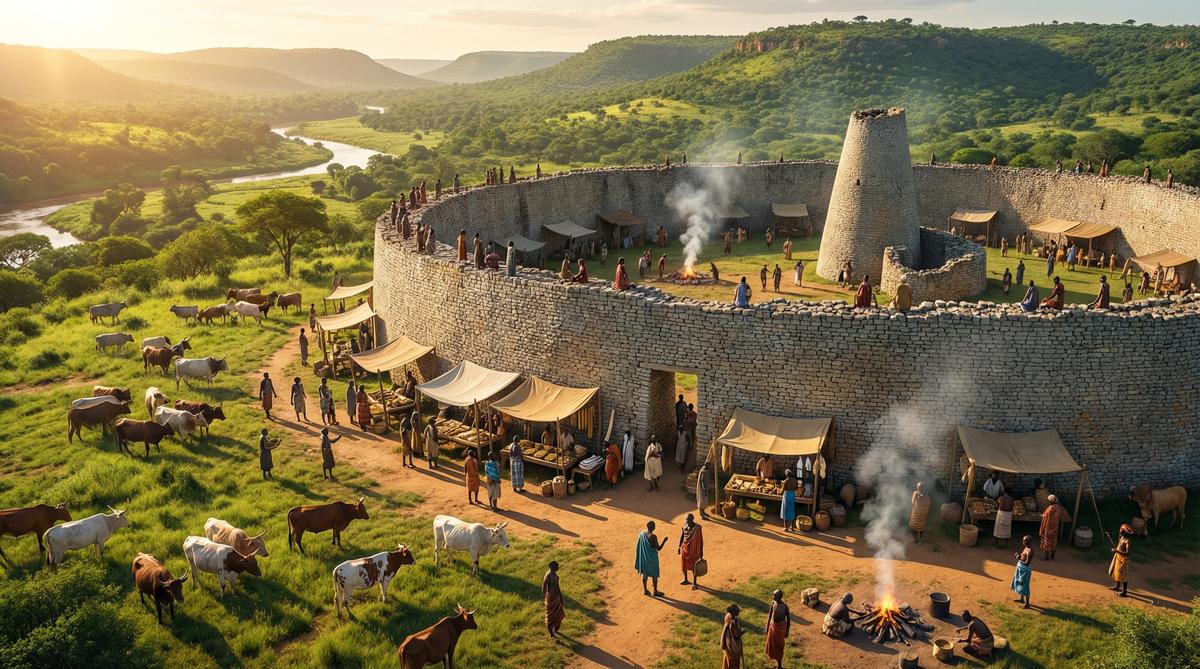
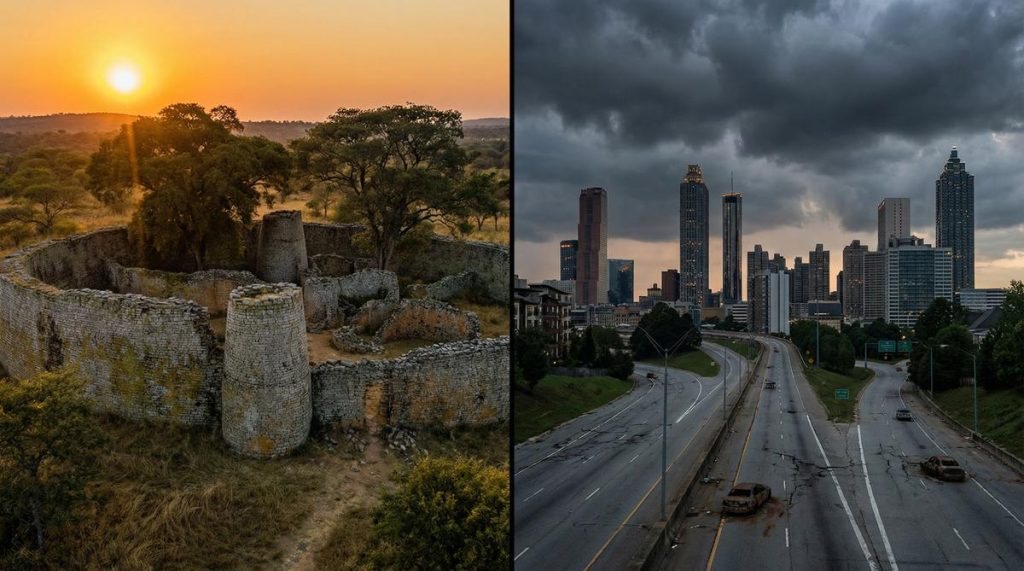
The city’s most famous feature, the Great Enclosure, was built with walls over 11 meters high, constructed from millions of granite blocks fitted together without a single drop of mortar. It was a statement of power, permanence, and prestige.
This was no primitive settlement. It was the capital of a kingdom of up to 20,000 people, a bustling metropolis that dominated the region for over 300 years.
They controlled the gold mines. They controlled the trade routes. They were, for a time, invincible.
Until they weren’t.
The Rot from Within
The collapse of Great Zimbabwe was not a single, cataclysmic event. It was a slow, creeping decay. A death by a thousand cuts, driven by the very factors that had made it so powerful.
First, they exhausted their environment. The massive population, the intensive cattle ranching, and the constant demand for firewood to fuel their gold-smelting forges stripped the surrounding land bare.
Deforestation and overgrazing led to soil erosion and the depletion of critical resources. The land that had sustained them for centuries began to die.
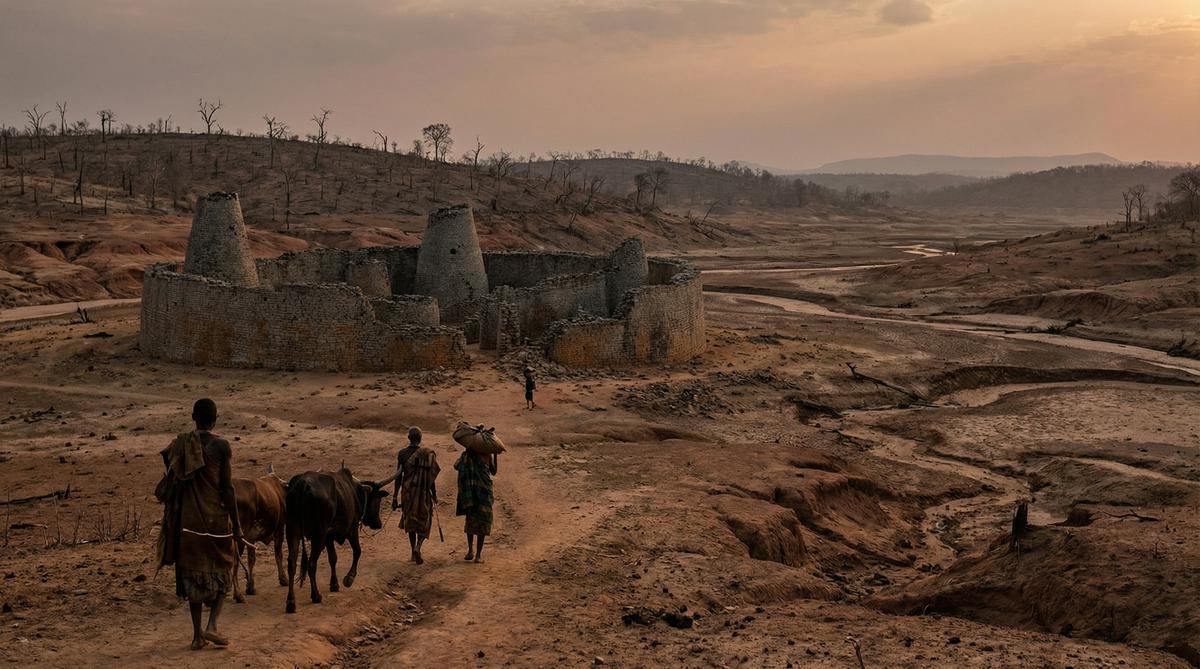
Second, their economic lifelines were severed. As the global economy of the 15th century shifted, trade routes moved from the African interior to the coast. The demand for their gold waned.
The flow of wealth that had built the stone towers and paid for the imported luxuries began to dry up. The economic engine of the state sputtered and stalled.
Finally, and most fatally, the kingdom fractured from within. As resources became scarcer and wealth harder to come by, political infighting among the elite intensified.
Oral traditions speak of a prince, Nyatsimba Mutota, leading a large portion of the population north in search of salt—a story that may be a metaphor for a search for new opportunities and a flight from a failing state.
The once-unified kingdom broke apart into competing successor states.
By the late 15th century, the great stone city was largely abandoned. The walls remained, but the power, the wealth, and the people were gone.
It had become a ghost town.
The Echo in the Present
Look around today. Does any of this sound familiar?
A nation buried under a mountain of debt, with its economic dominance challenged by shifting global trade. A political system paralyzed by factionalism, where compromise is seen as weakness and gridlock is the norm.
A society that consumes its resources at an unsustainable rate, ignoring the long-term consequences for short-term gain.
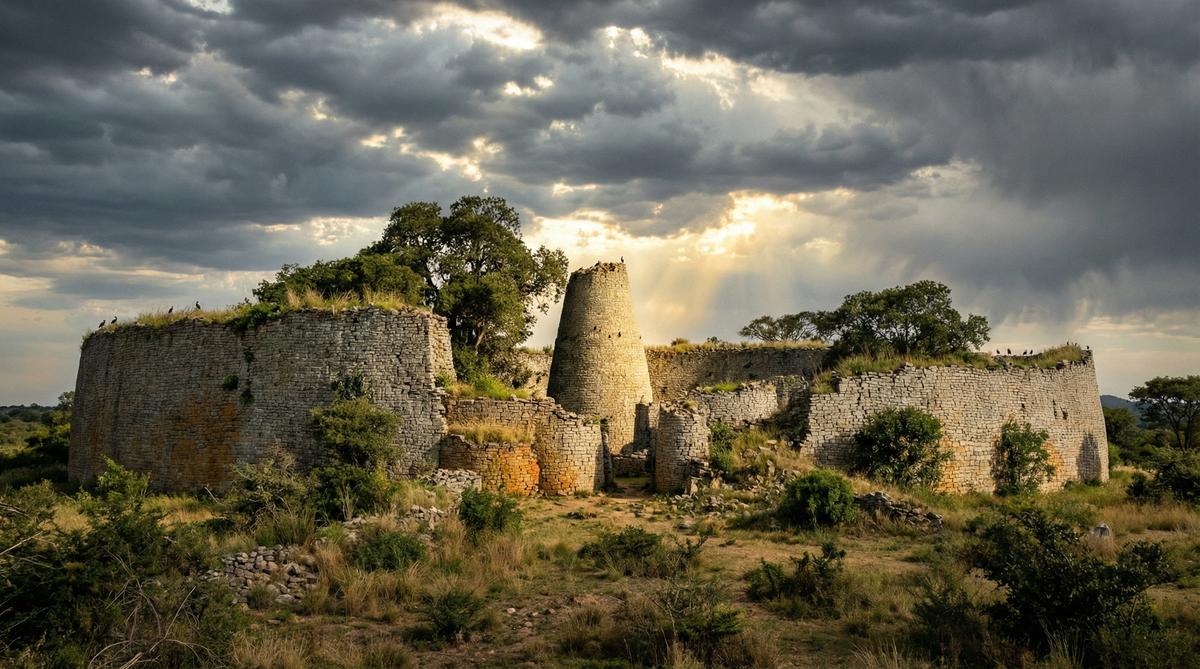
“A great civilization is not conquered from without until it has destroyed itself from within.” — Will Durant
Great Zimbabwe is a stark reminder that no amount of past glory, no amount of wealth, and no amount of architectural grandeur can save a society that turns on itself and devours its own foundations.
The empty stone ruins are a testament to the fact that political fragmentation and resource depletion are a fatal combination.
We are not immune to these forces. The same dynamics that brought down a 14th-century African kingdom are at play in 21st-century America.
We are watching the same slow-motion collapse, just with skyscrapers instead of stone towers.
The Choice Before Us
The people of Great Zimbabwe likely didn’t realize they were living through a collapse until it was too late. They made small, seemingly rational decisions day by day that, in aggregate, led to their ruin.
We have the benefit of their example. We can see the warning signs.
The question is whether we will heed them.
When the systems you rely on are brittle and breaking, the only rational response is to build your own. When the national economy is a house of cards, you must create your own household economy.
When the political class is more interested in fighting each other than solving problems, you must become self-reliant.
This isn’t about predicting the future. It’s about preparing for the inevitable consequences of our current path.
Take Action Now
That’s why we created the 4ft Farm Blueprint. It’s a step-by-step guide to creating a resilient, self-sufficient food source in your own backyard.
It’s a declaration of independence from the fragile systems that are failing us.
Learn more and get started today. Because when the great structures of a society begin to crumble, the only safe place to be is on solid ground of your own making.
For more insights into surviving and thriving during times of turmoil, explore our other publications:
- Homesteader Depot — Practical guides for modern homesteading
- Self Reliance Report — Preparedness strategies that work
- Freedom Health Daily — Take control of your health
- The Ready Report — Premium intelligence for serious preppers
- Seven Holistics — Natural health solutions