
At first, the warning does not sound dramatic.
The Federal Reserve is talking about one transitory shock after another. The IMF is talking about high debt, rising risks, and elevated financial-stability pressure. Those phrases sound technical enough to be ignorable. 1 3
But they are not.
They are polite ways of saying that a system can still look powerful while its margin for error is quietly shrinking. Energy shocks arrive before the last shock is digested. Debt grows while interest burdens rise. Employers hesitate to hire, hesitate to fire, and become easier to tip over when the next hit lands. 1 3
That is the part most people miss.
A modern superpower does not usually announce its danger with one clean breaking-news moment. It announces it through a series of smaller admissions that sound manageable on their own and far more dangerous when placed side by side.
The IMF says global public debt rose to just under 94 percent of world GDP in 2025 and is now on track to hit 100 percent by 2029, one year earlier than previously projected. It also warns that the erosion of the U.S. Treasury’s safety premium is amplifying repricing risk in sovereign debt markets. 3
That should make you stop.
Because when the world’s default refuge starts looking a little less untouchable, the real question is no longer whether America is still powerful. The real question is how much power depends on confidence that can vanish faster than institutions can rebuild it.
Philip II Looked Like the Strongest Man in the World
If you wanted to see strength in the 16th century, you looked at Spain.
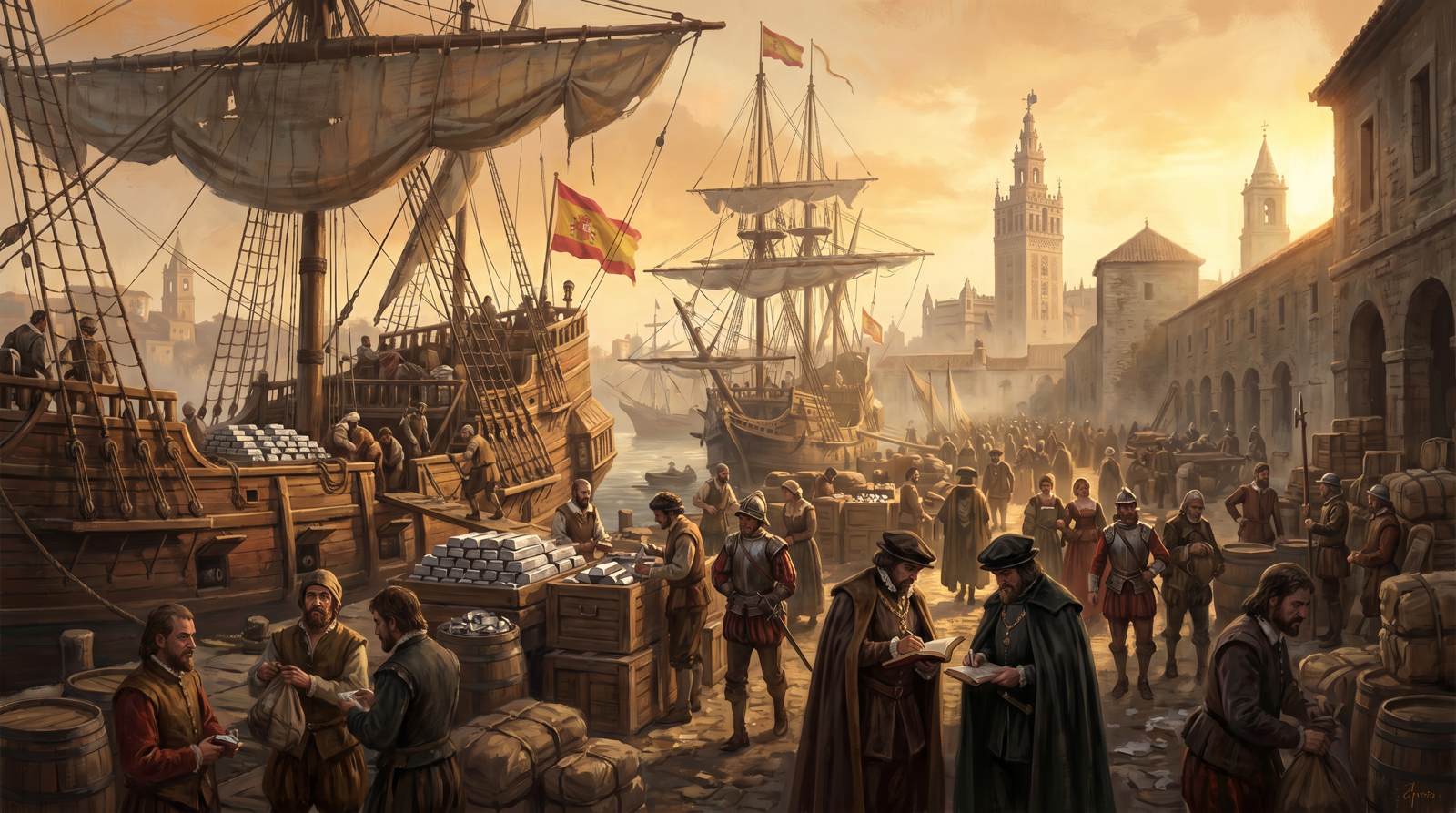
Under Philip II, the Spanish crown commanded armies, controlled territory across continents, and received silver from the Americas. It had bureaucracy, archives, administrators, war capacity, and the prestige that comes from looking like the center of the world. 4
On the surface, it looked unbreakable.
That is what makes the story useful.
Philip was not some drunken fool setting fire to his own kingdom. The IMF’s Vitor Gaspar describes him as an experienced and systematic administrator with an obsession for detail. He organized records, modernized administration, and earned the nickname Philip the Prudent. 4
And still he defaulted.
Not once. Four times. In 1557, 1560, 1575, and 1596. 4
That fact matters because it breaks a lazy myth.
Systems do not get into debt trouble only when they are chaotic, stupid, or visibly collapsing. Sometimes they get there when they are sophisticated enough to keep postponing the reckoning.
Silver Made the Problem Easier to Ignore
Spain had a gift and a curse.
The gift was silver. The curse was what that silver allowed the state to believe about itself.
American silver kept arriving just often enough to make the next round of borrowing seem survivable. Expensive short-term loans could be justified. Political concessions could be postponed. Structural discipline could wait for another day because another convoy, another payment stream, another tactical fix always seemed close enough to touch. 4
That is how dependence hides inside abundance.
Gaspar’s account makes the political temptation plain. By relying on costly short-term borrowing, Philip could avoid giving up control or making difficult concessions to representative bodies whose approval was needed for more stable financing. Short-term money bought him time, preserved appearances, and protected discretion. 4
It also made the crown fragile.
The scholarly literature tells the same story in colder language. Drelichman and Voth note that Philip II accumulated debts of over 50 percent of GDP while repeatedly suspending payments. 5
So the issue was not a shortage of imperial grandeur.
The issue was that yesterday’s promises had to keep being rolled into tomorrow under worsening terms. Once a state grows dependent on that rhythm, strength becomes increasingly theatrical.
It still looks like control.
Until it doesn’t.
The Dangerous Part Was Not the First Loan
The dangerous part was the habit.
One emergency. One campaign. One temporary gap. One more expensive instrument. One more assumption that future revenue would close the hole.
That pattern should sound familiar.
Governor Christopher Waller warned on April 17 that today’s economy is dealing with a chain of shocks layered on top of each other: tariffs, the war-linked energy shock, and the risk that repeated temporary price pressures start changing household and business behavior in more lasting ways. He also warned that labor-force growth is now near zero, which means the economy has less natural cushion than many people assume. 1
The IMF’s April 2026 Global Financial Stability Report pushes the warning further. It says elevated public debt and greater reliance on short-term issuance are increasing rollover risk in core sovereign bond markets, even while markets still appear orderly on the surface. 2
That surface calm is the part to fear.
Because debt systems usually fail in two stages. First, they become structurally more brittle while public language stays reassuring. Then one day, the need to refinance stops feeling routine and starts feeling political, psychological, and expensive.
Philip II suspended payments on asientos, the crown’s short-term, high-cost debt instruments. The IMF is now warning that reliance on short-term issuance in sovereign markets raises rollover risk and vulnerability to repricing. The centuries are different. The mechanism is not. 2
America is not Habsburg Spain.
But the rhyme is close enough to hear.
A nation with immense prestige, unmatched administrative depth, and global financial centrality can still become dependent on the assumption that the next refinance will always clear cleanly.

What Changes When the Safe Asset Loses a Little Shine
Most households do not trade sovereign paper.
They do not sit around discussing term premiums, auction tails, or the sovereign-bank nexus.
But they feel what comes next.
When the safe asset loses some of its special status, borrowing becomes more sensitive. Fiscal choices get uglier. The room to cushion shocks gets smaller. Leaders start sounding more theatrical because the math is becoming less cooperative. 2
And everyday life starts paying the spread.
That cost shows up in slower hiring. More expensive credit. Worse refinancing terms. More pressure to cut, delay, or reprice. It shows up when every official assurance sounds like it is trying to buy a little more time than it is offering real resolution.
That is why the IMF’s language matters so much. It is not merely warning about debt in the abstract. It is warning that the structure of debt markets is changing in ways that make the old reflexes less safe than before. Global public debt is higher. Interest burdens are heavier. Leveraged intermediaries matter more. The Treasury safety premium is no longer an unexamined constant. 2
That is a civilization-level warning disguised as market commentary.
Spain’s mistake was not borrowing once.
Its mistake was allowing a powerful empire to become reliant on financing habits that made real strength harder to distinguish from borrowed time.
America should read that carefully.
Because once a system gets used to rolling pressure forward, every future shock arrives at a worse angle than the last.
The Turn: Real Margin Is Built Before the Panic
It is easy to read this pattern and feel trapped.
It is easy to think ordinary families have no influence over central banks, war shocks, Treasury issuance, or sovereign financing games.
But history teaches a more useful lesson than that.
When large systems lose margin, small systems with real production gain value. Families that can grow food, store essentials, reduce debt dependence, and strengthen local relationships are not opting out of reality. They are rebuilding margin where margin still obeys effort.
That is the deeper point.
The answer to fragile centralized systems is not theatrical panic. It is productive sovereignty.
Philip’s Spain kept reaching for another financial maneuver because maneuvers are always easier than reform. Modern households face the same temptation in miniature. Finance one more convenience. Delay one more hard skill. Assume one more month of abundance will be enough to keep dependency painless.
But it usually works the same way at every scale.
A system that owns less of what it needs becomes easier to push around.
So the hopeful reading of this story is not that collapse is inevitable. It is that margin can still be built locally even when it is being lost centrally.
You can reduce exposure. You can increase competence. You can build food, storage, skills, trust, and options before a fragile system decides for you what your next set of concessions will be.
That is not fear.
That is dignity.

The Blueprint for Hope Starts With One Form of Real Output
If the world is entering a period where debt is heavier, policy room is thinner, and the old safe assumptions are less safe than they looked, then the practical response is not despair.
It is to start building the kinds of assets that do not depend on perfect macro conditions to remain valuable.
Food production is one of those assets.
A backyard system cannot fix sovereign debt. But it can lower your dependence on fragile supply chains, rising prices, and the monthly stress of systems that are losing slack. It can turn a household from a pure consumer of instability into a small producer of stability.
That is why the 4ft Farm Blueprint matters. It is not a bunker fantasy. It is a practical first step toward household-level sovereignty while the larger system grows more brittle.
If you want to widen your margin from multiple angles, build a small information stack around it.
Read Homesteader Depot for tools and practical self-sufficiency. Read Self Reliance Report for capability-minded resilience. Read Survival Stronghold for preparedness under real-world strain. Read Seven Holistics if you want the body-level resilience that makes every other plan easier to carry. And read The Ready Report if you want a higher-level briefing lens on the forces reshaping household freedom.
The point is simple.
When empires start relying on expensive refinancings and polished reassurances, do not build your future on polished reassurances.
Build it on things that produce.
Build it on skills that compound.
Build it on relationships that hold.
Build it on a household that gets harder to corner with every season.
That is how you answer an age of borrowed power.
You do not wait for the center to recover its honesty.
You create margin of your own.