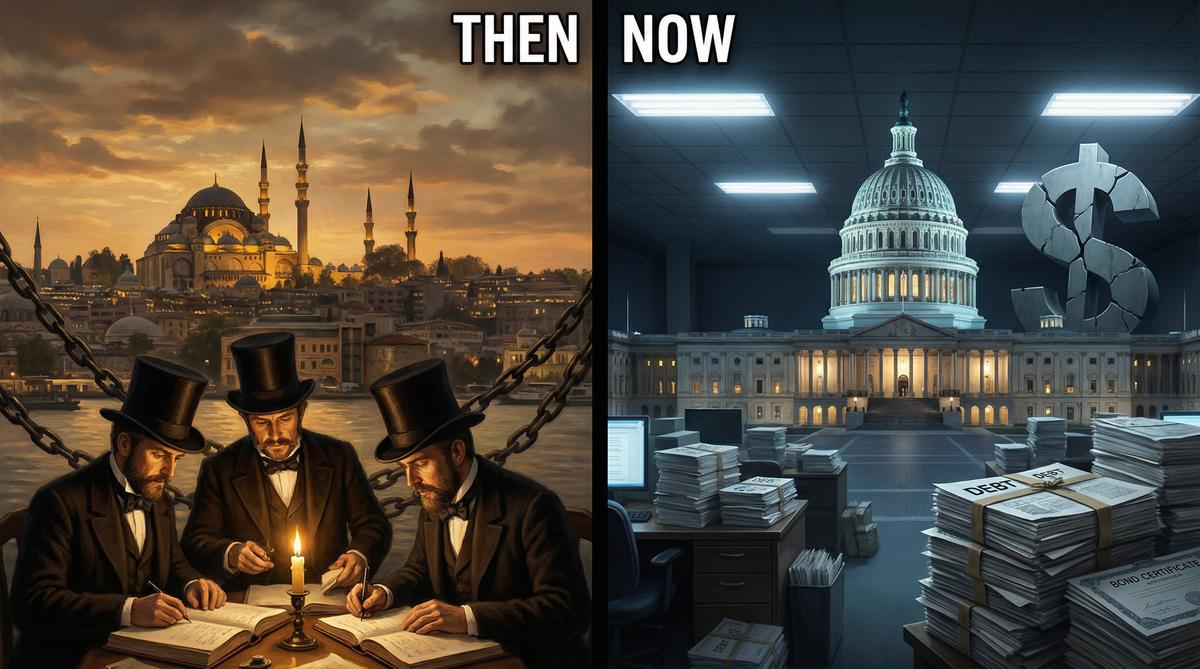
The numbers are staggering. A $64 trillion national debt projected by the Congressional Budget Office. A federal deficit soaring to $1.9 trillion this year alone. A stock market shuddering under the weight of inflation and geopolitical shocks.
It feels like the ground is giving way.
For the first time in a generation, the bedrock of American prosperity seems to be cracking. The headlines scream of a coming recession, of a nation drowning in red ink, of a system spiraling out of control.
But this is not a new story.
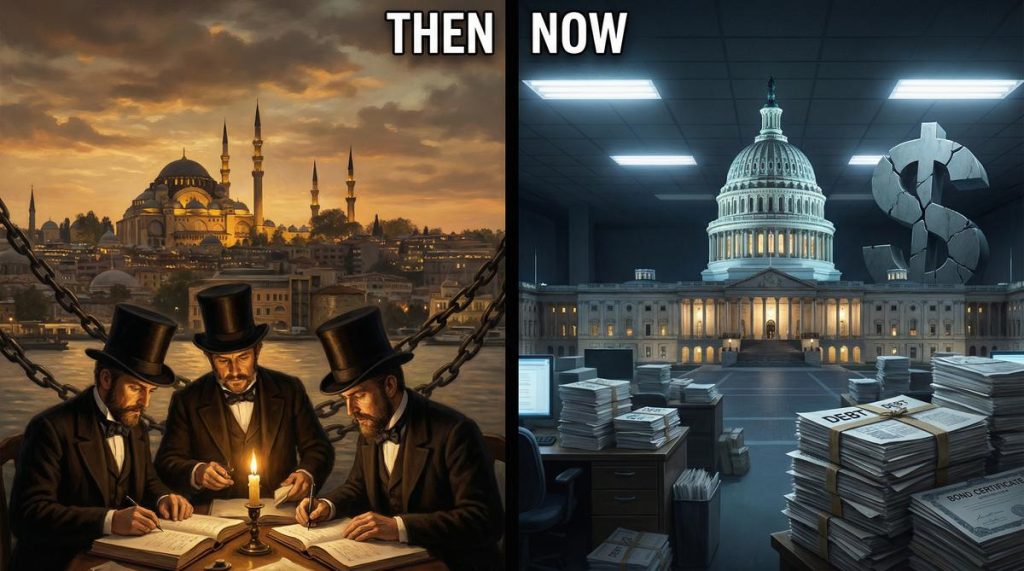
This is a story that has played out before. It is a story of an empire that, like America, once stood astride the world, only to find itself shackled by its own financial recklessness. A story of how a nation can lose its sovereignty not to a foreign army, but to a foreign bank ledger.
This is the story of the Ottoman Empire, and it is a chilling warning of what comes next.
The Sultan’s Empty Coffers
In the mid-19th century, the Ottoman Empire was the “Sick Man of Europe.” A sprawling, ancient power facing a modern world it couldn’t keep up with.
To modernize its army and bureaucracy, the Empire did what many nations do: it borrowed. And then it borrowed more.
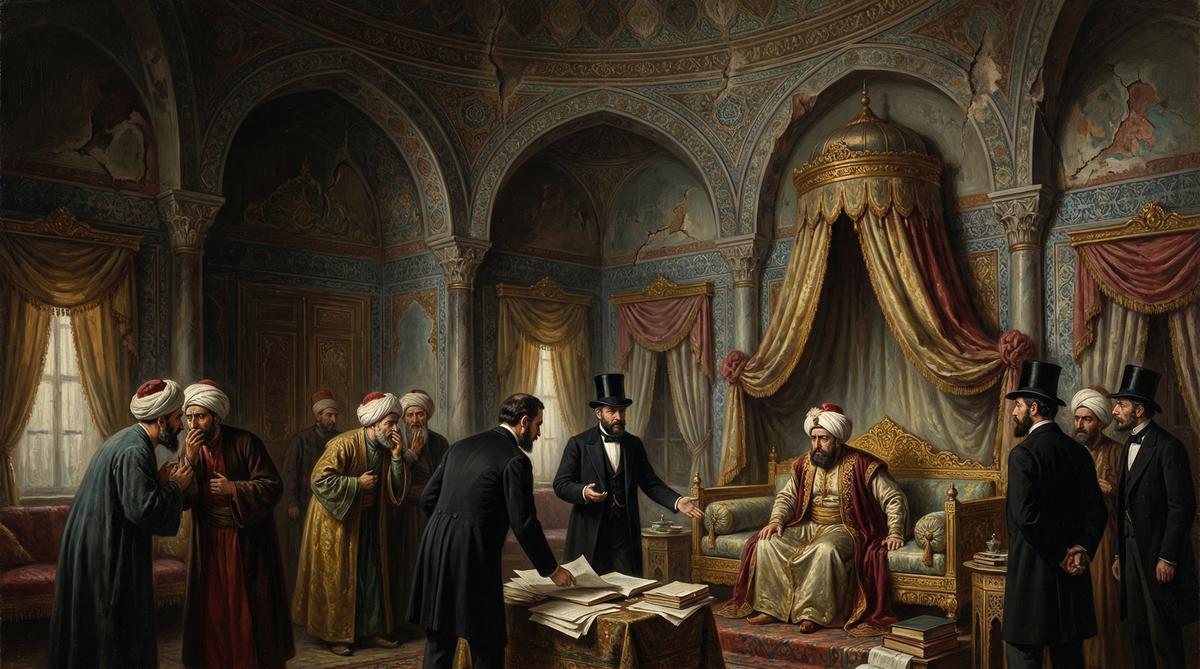
Between 1854 and 1874, the Ottoman Empire entered into 15 loan agreements with European powers. Much of the borrowed money was spent in ways that did not lead to an increase in state revenue.
European bankers, flush with cash from the industrial revolution, were happy to oblige. They extended loans at high interest rates, knowing the Empire was a desperate customer. The Ottoman government, plagued by a corrupt and inefficient tax system, had no other way to pay its bills.
It became a vicious cycle. New loans were taken out simply to pay the interest on old ones. The debt spiraled. The Empire was trapped.
The world watched, and waited.
By 1875, the breaking point arrived. A stock market crash in Europe, the “Panic of 1873,” made it impossible to secure new credit. Floods and droughts crippled tax revenues. The Ottoman government, unable to even pay the salaries of its own officials, had no choice.
It defaulted. The Empire was bankrupt.
The Price of Surrender
Bankruptcy was not the end. It was the beginning of a new, more humiliating chapter.
The European creditors, led by British and French banks, did not forgive the debt. Instead, they took control.
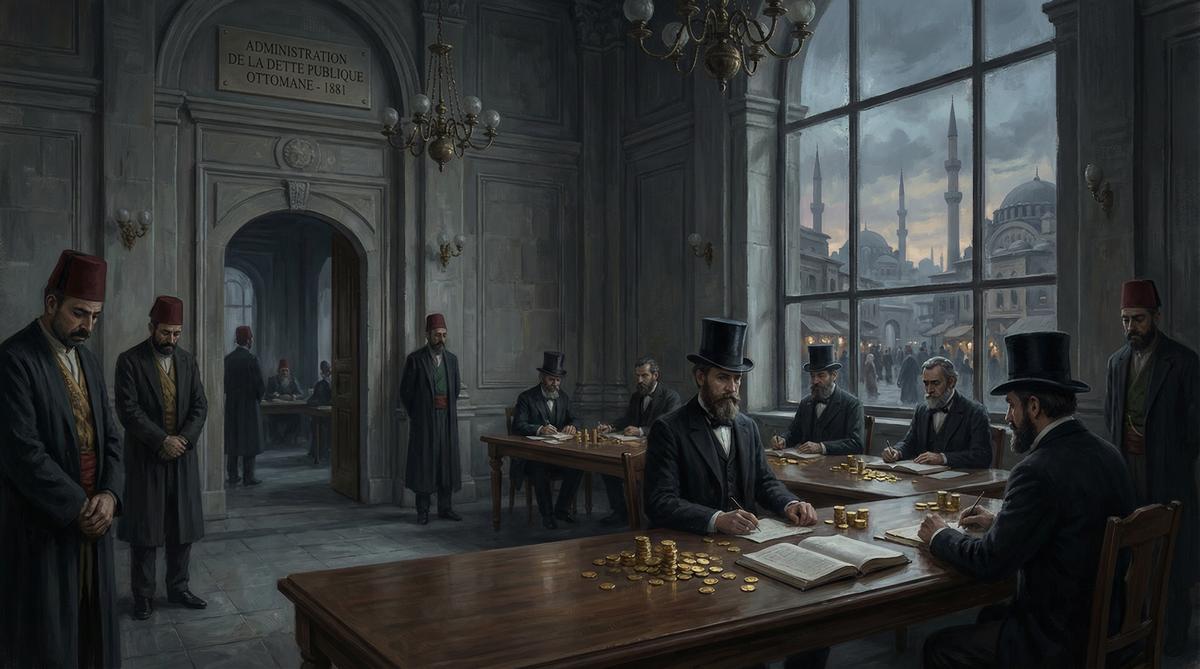
In 1881, through the “Decree of Muharrem,” they forced the Sultan to accept the creation of the Ottoman Public Debt Administration (OPDA). This was not a bailout. It was a hostile takeover.
The OPDA was run by Europeans and was subject to minimal Ottoman control. It was given the rights to collect the most valuable taxes in the Empire — from stamps and spirits to salt and silk. At its peak, the OPDA employed more people than the Ottoman finance ministry itself.
An independent government within the government, the OPDA’s sole purpose was to repay foreign bondholders. It siphoned off the wealth of the nation, funneling it directly to European banks. It gave foreign companies lucrative contracts for railways, mines, and forests, effectively selling off the Empire piece by piece.
The Ottoman Empire had lost its economic sovereignty. It was an empire in name only, a puppet state dancing on the strings of its creditors.
It took another 40 years for the Empire to officially die, but the mortal wound was struck in 1875. It was a death by a thousand cuts, all signed and sealed on a balance sheet.
The Echoes of History
Look at America today. A $64 trillion debt. A government that spends trillions more than it takes in, year after year. A nation dependent on foreign creditors, like China and Japan, to buy its bonds and keep the system afloat.
We tell ourselves we are different. That the U.S. dollar is the world’s reserve currency. That we can print our way out of any problem.
The Ottomans told themselves they were different, too.
The parallels are undeniable. The same reckless borrowing. The same inability to control spending. The same slow, creeping surrender of economic independence.
The question is not if our breaking point will come. The question is when.
And what happens when it does? What happens when the foreign creditors who hold our debt decide they want to be repaid not in depreciating dollars, but in real assets? In land, in infrastructure, in our children’s future?
This is how empires die in the 21st century. Not with a bang, but with a balance sheet.
The Turn: The Path to Resilience
It is easy to look at this pattern and feel a sense of despair. To see yourself as a passenger on a sinking ship.
But history teaches another, more powerful lesson. When the great, centralized systems fail, they create a vacuum. And into that vacuum rushes the opportunity for something new. The survivors of the Ottoman collapse weren’t the ones who simply clung to the old system. They were the ones who rebuilt, who focused on their local communities, who strengthened their own skills, and who created resilient networks of mutual support.
This is not a call to hide from the world. It is a call to build a better one, starting in your own backyard.
The Action: The Blueprint for Hope

Building a resilient future starts with a single, powerful step: taking control of your own food supply. The 4ft Farm Blueprint is not just about survival; it’s about sovereignty. It’s the first chapter in your family’s story of independence, a story where you are the builder, not the victim.
While the world’s financial systems tremble, you can be planting the seeds of a more secure future. A future where your family’s well-being doesn’t depend on the whims of central bankers or foreign creditors.
This is the path to true self-reliance. It is a path that leads away from the fragile, top-down systems of the past and toward a more decentralized, resilient, and hopeful future.
To learn more about building a life of independence and security, explore these resources from our network:
- Homesteader Depot — Tools and supplies for the modern homesteader building real-world resilience.
- Self Reliance Report — In-depth guides and analysis for the self-reliant individual who refuses to be a victim of the system.
- Survival Stronghold — Essential gear and knowledge for navigating any crisis, financial or otherwise.
- Seven Holistics — Natural health solutions for a resilient body and mind, because your health is your most important asset.
- The Ready Report — High-level intelligence for those who want to be prepared for what’s coming before it arrives.